Aldurazyme®
Ukraine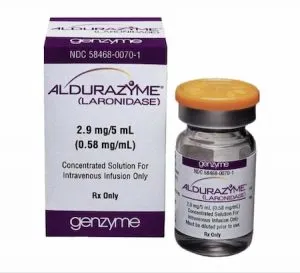
Table of Contents
INSTRUCTIONS FOR MEDICAL USE OF THE MEDICINAL PRODUCT ALDURAZYME® (ALDURAZYME®)
Composition:
Active substance: laronidase;
1 ml of solution contains 100 activity units (U) (approximately 0.58 mg) of laronidase;
Excipients: sodium chloride, sodium dihydrogen phosphate monohydrate, sodium hydrogen phosphate heptahydrate, polysorbate 80, water for injections.
Pharmaceutical form. Concentrate for solution for infusion.
Main physicochemical properties: clear or slightly opalescent solution, colorless or pale yellow.
Pharmacotherapeutic group. Enzymes. Laronidase. ATC code A16AB05.
Pharmacological properties.
Pharmacodynamics.
Diseases characterized by accumulation of mucopolysaccharides arise due to deficiency of specific lysosomal enzymes required for glycosaminoglycan (GAG) catabolism. Mucopolysaccharidosis type I (MPS I) is a heterogeneous, multisystemic disorder characterized by deficiency of α-L-iduronidase – a lysosomal hydrolase that catalyzes the hydrolysis of dermatan sulfate and heparan sulfate by cleaving terminal α-L-iduronic acid residues. Reduced or absent activity of α-L-iduronidase leads to accumulation of glycosaminoglycans, specifically dermatan sulfate and heparan sulfate, in multiple cell types and tissues.
Mechanism of action.
The fundamental principle of enzyme replacement therapy is restoration of enzymatic activity to a level sufficient for hydrolysis of accumulated substrate and prevention of its further accumulation. After intravenous infusion, laronidase rapidly leaves the circulatory system and is taken up by cells, reaching lysosomes—most likely via mannose-6-phosphate receptors.
Purified laronidase is a glycoprotein with a molecular weight of 83 kDa. Laronidase consists of 628 amino acids following cleavage of the N-terminal portion of the molecule. The molecule contains 6 N-linked oligosaccharide modification sites.
Clinical efficacy and safety.
The efficacy and safety of Aldurazyme® were evaluated in three clinical studies. One study primarily assessed the effect of Aldurazyme® on systemic manifestations of MPS I, such as fatigue, restrictive lung disease, obstructive upper airway disease, reduced joint range of motion, hepatomegaly, and visual impairment. Another study focused mainly on evaluating the safety and pharmacokinetics of Aldurazyme® in patients under 5 years of age, while also assessing certain efficacy parameters. A third study was conducted to investigate the pharmacodynamics and safety of different dosing regimens of Aldurazyme®.
Currently, there are no clinical data demonstrating advantages of this product in treating neurological manifestations of the disease.
The safety and efficacy of Aldurazyme® were evaluated in a randomized, double-blind, placebo-controlled Phase III study involving 45 patients aged 6 to 43 years. Patients with all disease phenotypes were enrolled, although the majority had the intermediate phenotype and only one patient had the severe phenotype. Patients included in the study had forced vital capacity (FVC) less than 80% of predicted normal values, were able to stand for 6 minutes, and could walk at least 5 meters. Patients received either Aldurazyme® at a dose of 100 U/kg body weight or placebo once weekly for 26 weeks. Primary efficacy endpoints were changes in FVC (as percentage of predicted normal FVC) and the absolute distance walked during the 6-minute walk test (6MWT). After this period, all patients were enrolled in an open-label extension phase of the study, during which all received Aldurazyme® at a dose of 100 U/kg body weight once weekly for an additional 3.5 years (182 weeks).
After 26 weeks of treatment, patients receiving Aldurazyme® showed improvement in respiratory function and walking capacity compared to the placebo group, as shown below.
| Phase 3, 26 weeks of treatment with Aldurazyme® compared to placebo |
||||
| p-value |
Confidence interval (95%) |
|||
| Percent predicted FEV1 (percentage point) |
mean |
5.6 |
|
|
| median |
3.0 |
0.009 |
0.9–8.6 |
|
| 6MWT (meters) |
mean |
38.1 |
|
|
| median |
38.5 |
0.066 |
|
|
During the open-label extension phase of the study, improvement and/or stabilization of these effects was observed over a period of up to 208 weeks in the Aldurazyme®/Aldurazimed® group and over 182 weeks in the placebo/Aldurazyme® group, as shown in the table below.
| Alduressim®/Alduressim® |
Placebo/Alduressim® |
|
| after 208 weeks of therapy |
after 182 weeks of therapy |
|
| Mean change from baseline prior to therapy initiation |
||
| Percent of predicted FEV1 (%)1 |
|
|
| 6MWT (meters) |
+39.2 |
+19.4 |
| Apnea-hypopnea index (AHI) |
|
|
| Shoulder joint flexion amplitude (degrees) |
+13.1 |
+18.3 |
| Disability index according to the Children’s Health Assessment Questionnaire / Health Assessment Questionnaire (CHAQ/HAQ)2 |
|
|
1 A reduction in the percentage of predicted FEV1 is not clinically significant over this time period, and absolute lung volume continued to increase in line with growth in pediatric patients who continued to grow.
2 The observed values in both groups exceeded the threshold for minimum clinically important difference (–0.24).
Of the 26 patients who had hepatomegaly at study entry, 22 patients (85%) had normal liver size at the end of the study. A rapid reduction in urinary glycosaminoglycan (GAG) levels (in µg/mg creatinine) was also observed within the first 4 weeks, and this effect was maintained throughout the study. Urinary GAG levels decreased by 77% and 66% in the placebo/Aldurazyme® and Aldurazyme®/Aldurazyme® groups, respectively; by the end of the study, urinary GAG levels reached normal levels in 1/3 of patients (15 out of 45 patients).
To account for heterogeneity in disease manifestations among different patients, a composite endpoint was developed, combining clinically meaningful changes across 5 efficacy parameters (percentage of predicted normal FEV1, 6MWT distance, shoulder joint range of motion, apnea-hypopnea index AHI, and visual acuity). Overall assessment of treatment response was as follows: improvement in 26 patients (58%), no change in 10 patients (22%), and worsening in 9 patients (20%).
An open-label Phase 2 study of 1-year duration primarily evaluated the safety and pharmacokinetics of Aldurazyme® in 20 patients aged up to 5 years at study entry (16 patients with severe phenotype and 4 with intermediate phenotype). Patients received weekly intravenous infusions of Aldurazyme® at a dose of 100 U/kg for 52 weeks. In 4 patients, urinary GAG levels increased at week 22, prompting an increase in dose to 200 U/kg, which was administered during the final 26 weeks of the study.
Eighteen patients completed the study. Aldurazyme® was well tolerated under both treatment regimens. Mean urinary GAG levels decreased by 50% at week 13 and by 61% at study end. After completion of the study, all patients showed a reduction in liver volume, and liver size normalized in 50% of patients (9 out of 18). The proportion of patients with mild left ventricular hypertrophy decreased from 53% (10 out of 19) to 17% (3 out of 18), and mean left ventricular mass indexed to body surface area decreased by 0.9 Z-scores (n = 17). Increased growth (n = 7) and body weight (n = 3) according to age-adjusted Z-scores were observed in several patients. Normal cognitive development was observed in the youngest patients with severe phenotype (< 2.5 years) and in all four patients with intermediate phenotype, whereas cognitive improvement was limited or absent in older patients with severe phenotype.
A Phase 4 study was conducted to evaluate pharmacodynamic effects on urinary GAG levels, liver volume, and 6MWT performance under different dosing regimens of Aldurazyme®. In this open-label 26-week study, 33 patients with MPS I received Aldurazyme® under one of four dosing regimens: 100 U/kg intravenously once weekly (recommended dose); 200 U/kg intravenously once weekly; 200 U/kg intravenously once every 2 weeks; and 300 U/kg intravenously once every 2 weeks. No clear advantages were observed with doses higher than the recommended dose. The dosing regimen of 200 U/kg intravenously once every 2 weeks may be an acceptable alternative for patients in whom weekly infusions are challenging; however, it is unknown whether the long-term clinical efficacy of these two regimens is equivalent.
Pharmacokinetics.
Pharmacokinetic properties were assessed at weeks 1, 12, and 26 during intravenous administration of laronidase at a dose of 100 U/kg body weight via a 240-minute infusion.
| Parameters |
Infusion 1 Mean ± standard deviation |
Infusion 12 Mean ± standard deviation |
Infusion 26 Mean ± standard deviation |
| Cmax (IU/mL) |
0.197 ± 0.052 |
0.210 ± 0.079 |
0.302 ± 0.089 |
| AUC∞ (h·IU/mL) |
0.930 ± 0.214 |
0.913 ± 0.445 |
1.191 ± 0.451 |
| CL (mL/min/kg) |
1.96 ± 0.495 |
2.31 ± 1.13 |
1.68 ± 0.763 |
| Vz (L/kg) |
0.604 ± 0.172 |
0.307 ± 0.143 |
0.239 ± 0.128 |
| Vss (L/kg) |
0.440 ± 0.125 |
0.252 ± 0.079 |
0.217 ± 0.081 |
| t1/2 (h) |
3.61 ± 0.894 |
2.02 ± 1.26 |
1.94 ± 1.09 |
Cmax increased over time. The volume of distribution decreased over time with continued treatment, which may be related to antibody formation and/or reduction in liver volume.
The pharmacokinetic profile in patients under 5 years of age was similar to that in older patients with a milder form of the disease.
Laronidase is a protein, therefore its metabolic degradation is expected to occur via peptide hydrolysis. Thus, any clinically significant impact of impaired liver function on the pharmacokinetics of laronidase is not expected. Renal elimination is considered a minor pathway of laronidase clearance (see section "Dosage and administration").
Clinical characteristics.
Indications. Mucopolysaccharidosis type I (MPS I, α-L-iduronidase deficiency): long-term enzyme replacement therapy for the treatment of manifestations of the disease not related to central nervous system involvement.
Contraindications. Severe hypersensitivity reactions (e.g., anaphylactic reaction) to the active substance or to any of the excipients (see sections "Special precautions" and "Side effects").
Interaction with other medicinal products and other forms of interaction.
Drug interaction studies with this medicinal product have not been conducted. Due to the metabolic characteristics of laronidase, drug interactions mediated by cytochrome P450 appear unlikely.
Alglucosidase alfa (Aldurazyme®) must not be administered concomitantly with chloroquine or procaine due to the potential risk of their influence on intracellular uptake of laronidase.
Special precautions for use.
Traceability
In order to improve traceability of biological medicinal products, the name and batch number of the administered product should be clearly recorded in the patient's medical records.
Hypersensitivity reactions (including anaphylaxis)
Hypersensitivity reactions, including anaphylaxis, have been reported in patients receiving Aldurazyme® (see section "Adverse reactions"). Some of these reactions were life-threatening and included respiratory failure/distress, stridor, obstructive airway disease, hypoxia, arterial hypotension, bradycardia, and urticaria.
Appropriate supportive care measures, including equipment for cardiopulmonary resuscitation, should be readily available during administration of Aldurazyme®.
If anaphylaxis or other severe hypersensitivity reactions occur, infusion of Aldurazyme® should be immediately discontinued. Caution should be exercised if epinephrine is considered for patients with MPS I due to the increased prevalence of ischemic heart disease in these patients. Desensitization procedures to Aldurazyme® may be considered in patients with severe hypersensitivity. If a decision is made to re-administer the product, extreme caution should be exercised and appropriate resuscitation measures should be readily available.
In case of mild or moderate hypersensitivity reactions, the infusion rate may be reduced or the infusion temporarily stopped.
If the patient tolerates the infusion well, the dose may be increased to achieve the intended dose.
Infusion-related reactions
Infusion-related reactions have been reported in patients receiving Aldurazyme®. These are defined as any application-related adverse events occurring during or on the day of infusion (see section "Adverse reactions").
Patients experiencing acute exacerbations of chronic conditions have an increased risk of infusion-related reactions during treatment with Aldurazyme®. The patient's clinical status should be carefully evaluated prior to initiating Aldurazyme® therapy.
At the initiation of Aldurazyme® treatment or upon re-initiation after a treatment interruption, premedication (antihistamines and/or antipyretics) is recommended approximately 60 minutes prior to the start of infusion to minimize the likelihood of infusion reactions. Premedication may be considered for subsequent infusions based on clinical need. Due to limited experience with treatment re-initiation after prolonged interruptions, the product should be administered cautiously, as a theoretically increased risk of hypersensitivity reactions exists following treatment interruption.
Severe infusion-related adverse reactions have been reported in patients with a history of severe upper airway disease. Therefore, such patients should be closely monitored, and Aldurazyme® should only be administered in appropriate clinical settings with resuscitation equipment available for emergency medical intervention.
In the event of a severe infusion-related reaction, the infusion should be stopped immediately until symptoms resolve; symptomatic treatment may be appropriate (e.g., administration of antihistamines and antipyretic/anti-inflammatory agents). The benefit-risk balance should be assessed before continuing Aldurazyme® after severe infusion reactions. Re-initiation of the infusion may be considered at a reduced rate of 1/2–1/4 of the rate at which the reaction occurred.
In cases of recurrent moderate infusion-related reactions or after re-initiation following a severe initial infusion reaction, premedication (with antihistamines and antipyretic/anti-inflammatory agents and/or corticosteroids) should be considered, and the infusion rate should be reduced to 1/2–1/4 of the rate at which the previous reaction occurred.
In case of mild or moderate infusion-related reactions, symptomatic treatment (e.g., antihistamines and antipyretic/anti-inflammatory agents) and/or reduction of the infusion rate to 1/2 of the rate at which the reactions occurred may be required.
If the patient tolerates the infusion, the dose may be increased to achieve the intended dose.
Immunogenicity
Data from a randomized, double-blind, placebo-controlled phase 3 clinical trial indicate that IgG antibodies to laronidase are expected to develop in nearly all patients, typically within three months of starting treatment. As with other intravenously administered protein medicinal products, serious hypersensitivity allergic-type reactions may occur with this product. Infusion-related reactions and hypersensitivity reactions may occur independently of antibody formation to the medicinal product.
Caution should be exercised when administering Aldurazyme® to patients who develop antibodies or experience infusion-related adverse reactions (see sections "Contraindications" and "Adverse reactions").
Patients receiving Aldurazyme® therapy should be closely monitored, and any occurrence of infusion-related reactions, delayed-type reactions, or possible immunological reactions should be reported. Antibody levels should be regularly monitored and results documented.
Infusion-related reactions observed during clinical trials were generally manageable by reducing the infusion rate and/or premedication with antihistamines and/or antipyretics (e.g., paracetamol or ibuprofen), after which patients were able to continue treatment.
Excipients
This medicinal product contains 30 mg of sodium per vial, equivalent to 1.5% of the WHO recommended maximum daily dietary intake of 2 g sodium for an adult. It is administered as an intravenous solution diluted in 0.9% sodium chloride solution (see section "Method of administration and dosage"). Caution should be exercised when administering to patients on a sodium-restricted diet.
Use during pregnancy or breastfeeding.
Pregnancy. There are insufficient data on the use of Aldurazyme® in pregnant women. Animal studies have not shown any direct or indirect harmful effects of this product on pregnancy, embryonic/fetal development, parturition, or postnatal development (see section "Pharmacological properties"). Since the potential risk to humans is unknown, Aldurazyme® should not be used during pregnancy except when clearly necessary.
Breastfeeding. Laronidase may be excreted into breast milk. Due to the lack of data on the effects of laronidase in newborns exposed via breast milk, breastfeeding should be discontinued during treatment with Aldurazyme®.
Fertility. There are currently insufficient data on the effects of Aldurazyme® on fertility. Preclinical studies have not revealed any significant adverse effects.
Ability to affect the speed of reactions when driving vehicles or operating machinery. No studies on the effect of this medicinal product on the ability to drive vehicles or operate machinery have been conducted.
Method of Administration and Dosage
Method of Administration
Treatment with Aldurazyme® must be administered under the supervision of a physician experienced in the management of patients with MPS I or other inherited metabolic diseases.
Administration of Aldurazyme® should be performed in an appropriately equipped clinical setting with resuscitation and intensive care facilities readily available in case of emergency situations.
Dosage
The recommended dosage regimen is 100 U/kg body weight once weekly by intravenous infusion. The initial infusion rate is 2 U/kg/hour, which may be increased every 15 minutes, if tolerated, up to a maximum rate of 43 U/kg/hour. The entire volume of the prepared solution should be infused over approximately 3–4 hours. Information regarding premedication measures is provided in the section "Special Warnings and Precautions for Use."
Dose adjustment is not required for pediatric patients.
The safety and efficacy of Aldurazyme® in patients aged 65 years and older have not been established; therefore, there are no specific recommendations for dosage regimen in these patients.
The safety and efficacy of Aldurazyme® in patients with renal or hepatic impairment have not been established; therefore, there are no specific recommendations for dosage regimen in these patients.
Preparation and Administration of the Solution
Each vial of Aldurazyme® is intended for single use only. The concentrate for infusion solution should be diluted with 9 mg/mL (0.9%) sodium chloride solution for infusion under aseptic conditions. When administering the prepared solution, it is recommended to use an intravenous infusion set equipped with a 0.2 µm filter.
Aldurazyme® 100 U/mL, concentrate for solution for infusion, reconstituted with 0.9% sodium chloride solution, has an osmolarity of 415–505 mOsm/kg and pH of 5.2–5.9.
Preparation of Aldurazyme® Infusion Solution
- Determine the required number of Aldurazyme® vials based on the patient's body weight. Remove the vials from the refrigerator approximately 20 minutes before administration to allow the solution to warm to room temperature (not exceeding 30 °C).
- Before dilution, inspect each vial for particles and clarity. The solution should be clear or slightly opalescent, colorless or pale yellow, and free of visible particles. Do not use vials containing solution with visible particles or altered coloration.
- Determine the total volume of 0.9% sodium chloride solution required for administration based on the patient's body weight: 100 mL if body weight is ≤20 kg, or 250 mL if body weight is >20 kg.
- Withdraw from the 0.9% sodium chloride solution vial an amount of diluent equal to the volume of Aldurazyme® to be added.
- Withdraw the required volume of Aldurazyme® from the vials and combine the withdrawn volumes.
- Add the required volume of Aldurazyme® concentrate to the 0.9% sodium chloride infusion solution.
- Gently mix the resulting infusion solution.
- Visually inspect the prepared solution before use to ensure absence of foreign particles. Use the solution only if it is clear, colorless, and free of foreign particles.
The diluted solution should be used immediately. The diluted solution is stable for up to 24 hours when stored at 2–8 °C (only if the solution was prepared under controlled and validated aseptic conditions).
Any unused medicinal product or waste material should be disposed of in accordance with local requirements.
Home Infusion Therapy
Home infusion of Aldurazyme® may be considered for patients who tolerate their infusions well and have not experienced moderate or severe adverse reactions over several months. The decision to switch to home infusion should be made after patient evaluation and recommendation by the physician.
Conditions for home infusions must be ensured, including availability of resources and implementation of measures, including training, accessible to healthcare professionals. Home infusions must be supervised by a healthcare professional who must remain available during and for a certain period after the infusion. Necessary information must be provided to the patient and/or caregiver by the physician and/or nurse prior to initiating home infusion therapy.
The dose and infusion rate should not be altered during home infusions, as this requires medical supervision.
If the patient experiences adverse reactions during home infusion, the infusion should be stopped immediately and appropriate medical treatment initiated (see section "Special Warnings and Precautions for Use"). Subsequent infusions may need to be administered in a hospital or appropriate outpatient setting until the adverse reaction resolves.
Children
The medicinal product is used in pediatric practice.
Overdose
Incorrect administration of laronidase (overdose and/or infusion rate exceeding the recommended) may be associated with the occurrence of adverse reactions. Rapid infusion of laronidase may cause nausea, abdominal pain, headache, dizziness, and dyspnea.
In such cases, and depending on the patient's clinical condition, the infusion should be stopped immediately or the infusion rate reduced. Further treatment may be required based on medical indications.
Adverse Reactions
Most adverse events associated with the use of this medicinal product observed during clinical trials were classified as infusion-related reactions, occurring in 53% of patients participating in the phase 3 clinical study (with treatment duration up to 4 years) and in 35% of patients under 5 years of age (with treatment duration up to 1 year). Some of these reactions were severe. The frequency of such reactions decreased over time. The most commonly observed adverse reactions (ARs) included: headache, nausea, abdominal pain, rash, arthralgia, back pain, limb pain, flushing, pyrexia, infusion site reactions, increased blood pressure, decreased oxygen saturation, tachycardia, and chills. Post-marketing surveillance data on infusion-related reactions have reported cases of cyanosis, hypoxia, tachypnea, pyrexia, vomiting, chills, and erythema, some of which were severe.
Adverse reactions observed during the phase 3 study and its extension period in 45 patients aged 5 years and older (treatment duration up to 4 years) are listed in the table below using the following frequency criteria: very common (≥ 1/10), common (≥ 1/100 to < 1/10), uncommon (≥ 1/1,000 to < 1/100), rare (≥ 1/10,000 to < 1/1,000), very rare (< 1/10,000), and not known (cannot be estimated from available data). Due to the small number of patients, each adverse reaction observed, even in a single patient, was categorized as "Common".
| Organ systems (according to MedDRA) |
Preferred term according to MedDRA |
Frequency |
| Investigations |
Increased body temperature, decreased blood oxygen saturation |
Common |
| Specific antibodies to the medicinal product, neutralizing antibodies, increased blood pressure |
Frequency unknown |
|
| Cardiac disorders |
Tachycardia |
Common |
| Bradycardia |
Frequency unknown |
|
| Nervous system disorders |
Headache |
Very common |
| Paresthesia, dizziness |
Common |
|
| Respiratory, thoracic and mediastinal disorders |
Respiratory distress syndrome, dyspnea, cough |
Common |
| Cyanosis, hypoxia, tachypnea, bronchospasm, respiratory arrest, laryngeal edema, respiratory failure, pharyngeal edema, stridor, obstructive airway disorder |
Frequency unknown |
|
| Gastrointestinal disorders |
Nausea, abdominal pain |
Very common |
| Vomiting, diarrhea |
Common |
|
| Lip swelling, tongue swelling |
Frequency unknown |
|
| Skin and subcutaneous tissue disorders |
Rash |
Very common |
| Angioedema, facial swelling, urticaria, pruritus, cold sweat, alopecia, hyperhidrosis |
Common |
|
| Erythema, facial edema |
Frequency unknown |
|
| Musculoskeletal and connective tissue disorders |
Arthropathy, arthralgia, back pain, limb pain |
Very common |
| Muscle and bone pain |
Common |
|
| Vascular disorders |
Flushing |
Very common |
| Arterial hypotension, pallor, peripheral coldness |
Common |
|
| Arterial hypertension |
Frequency unknown |
|
| General disorders and administration site conditions |
Pyrexia, infusion site reaction* |
Very common |
| Chills, feeling of warmth, feeling of cold, increased fatigue, influenza-like syndrome, injection site pain |
Common |
|
| Extravasation, peripheral edema |
Frequency unknown |
|
| Immune system disorders |
Anaphylactic reaction |
Common |
| Hypersensitivity |
Frequency unknown |
|
| Psychiatric disorders |
Feeling of uneasiness |
Common |
* During clinical trials and in the post-marketing period, infusion/injection site reactions included, in particular: swelling, erythema, edema, discomfort, urticaria, pallor, maceration, and sensation of warmth.
In one patient with pre-existing obstructive respiratory tract disease, a severe adverse reaction developed 3 hours after initiation of the infusion (on week 62 of treatment), manifested as urticaria and airway obstruction, requiring tracheostomy. This patient had a positive IgE response.
Furthermore, severe reactions, including bronchospasm, respiratory arrest, and facial swelling, occurred in several patients with a history of severe upper respiratory tract and lung involvement due to MPS I (see section "Special precautions for use").
Pediatric population
The list of adverse reactions to the medicinal product Aldurazyme® observed during a Phase 2 study involving a total of 20 patients up to 5 years of age, mostly with severe phenotypic manifestations of the disease, who received the drug for up to 12 months, is provided below. All these adverse reactions were of mild to moderate severity.
| Organ system (according to MedDRA) |
Preferred term according to MedDRA |
Frequency |
| Investigations |
Increased blood pressure |
Very common |
| Decreased oxygen saturation in blood |
Very common |
|
| Cardiac disorders |
Tachycardia |
Very common |
| General disorders and administration site conditions |
Pyrexia |
Very common |
| Chills |
Very common |
In a phase 4 study, 33 patients with MPS I received treatment according to one of four dosing regimens: 100 IU/kg body weight intravenously once weekly (recommended dose); 200 IU/kg intravenously once weekly; 200 IU/kg intravenously once every 2 weeks; or 300 IU/kg intravenously once every 2 weeks. Patients in the recommended dose group had the lowest incidence of adverse reactions and infusion-related reactions. The profile of infusion-related reactions was similar to those observed in other clinical trials.
Description of individual adverse reactions.
Immunogenicity
Antibodies to laronidase of the IgG class developed in nearly all patients. In most patients, seroconversion occurred within three months after initiation of treatment; however, in patients under 5 years of age with more severe phenotypic manifestations of the disease, seroconversion occurred in most cases within the first month of treatment (on average, 26 days compared to 45 days in patients aged 5 years and older). At the end of the phase 3 study (or at the time of premature withdrawal from the study), 13 out of 45 patients tested negative for antibodies by radioimmunoprecipitation (RIP), including three patients who never seroconverted. Stable reduction in urinary glycosaminoglycan (GAG) levels was observed in patients with absent or low antibody levels, whereas reduction in GAG levels was variable in patients with high antibody titers. Higher antibody titers against the drug were also observed in patients from the MPS I registry with severe disease course. Patients with persistently high antibody titers against the drug tended to have less reduction in urinary GAG levels. During phase 2 and phase 3 studies, an in vitro neutralization assay was performed in 60 patients. In 4 patients (3 from the phase 3 study and 1 from the phase 2 study), threshold or low levels of in vitro inhibition of laronidase enzymatic activity were observed, which is considered not to affect clinical efficacy and/or reduction in urinary glycosaminoglycan levels.
In patients with clinical worsening, assessment of urinary GAG levels, drug-specific antibodies, and neutralizing antibodies should be considered.
The presence of antibodies is not always correlated with the frequency of infusion-related reactions, although the onset of these reactions typically coincided temporally with the development of IgG antibodies. Clinical trials and observational studies indicate that IgE antibody tests were positive in only a small number of patients. The development of IgE antibodies may be associated with hypersensitivity or anaphylactic reactions.
Reporting of suspected adverse reactions. Reporting of adverse reactions after drug registration is of great importance. It enables continuous monitoring of the benefit-risk balance of the drug. Medical and pharmaceutical professionals, as well as patients or their legal representatives, should report all suspected adverse reactions and lack of drug efficacy through the Automated Pharmacovigilance Information System at: https://aisf.dec.gov.ua.
Shelf life. 3 years.
Storage conditions.
Store at 2–8 °C (in a refrigerator) in a place inaccessible to children.
Incompatibilities. In the absence of compatibility studies, this medicinal product must not be mixed with other medicinal products except those specified in the section "Dosage and administration."
Packaging. No. 1: 5 mL in a vial, one vial in a cardboard box.
Prescription status. Prescription only.
Marketing Authorization Holder. Sanofi B.V., The Netherlands / Sanofi B.V., The Netherlands.
Manufacturer.
Labeling, secondary packaging, GLP quality control (excluding sterility testing), batch release:
Genzyme Ireland Limited, Ireland.
Manufacturer's address and site of operations.
IDA Industrial Park, Old Kilmeaden Road, Waterford, Ireland / IDA Industrial Park, Old Kilmeaden Road, Waterford, Ireland.