Actilise®
Ukraine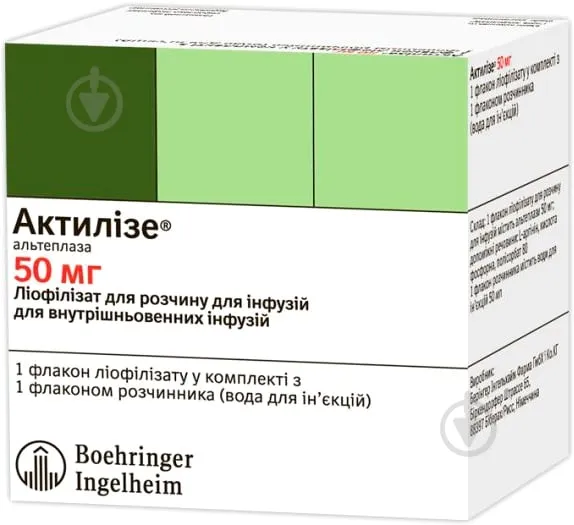
Table of Contents
INSTRUCTIONS FOR MEDICAL USE OF THE MEDICINAL PRODUCT Actilyse® (Actilyse®)
Composition:
Active substance: alteplase;
1 vial of lyophilisate for solution for infusion contains 50 mg of alteplase;
1 vial of solvent contains 50 ml of sterile water for injections.
Alteplase is produced using recombinant DNA technology with Chinese hamster ovary cells. The specific activity of the manufacturer's alteplase standard is 580,000 IU/mg, which has been confirmed by comparison with the second WHO international standard for t-PA. The specific activity of alteplase is 522,000 – 696,000 IU/mg;
Excipients: L-arginine, phosphoric acid[1], polysorbate 80.
Pharmaceutical form. Lyophilisate for solution for infusion.
Main physicochemical properties: white to light yellow fused powder.
Pharmacotherapeutic group. Antithrombotic agents.
ATC code B01AD02.
Pharmacological Properties.
Pharmacodynamics.
Mechanism of action
The active substance of the medicinal product Actilyse is alteplase, a recombinant human tissue-type plasminogen activator, a glycoprotein that directly converts plasminogen into plasmin. After intravenous administration, alteplase remains relatively inactive in the bloodstream. Upon binding to fibrin, alteplase becomes activated, inducing the conversion of plasminogen to plasmin, resulting in the dissolution of the fibrin clot.
Pharmacodynamic effects
Due to its relative fibrin specificity, alteplase at a dose of 100 mg causes a slight reduction in circulating fibrinogen levels to approximately 60% within 4 hours, which usually recovers to more than 80% within 24 hours. Levels of plasminogen and alpha-2-antiplasmin decrease to about 20% and 35%, respectively, at 4 hours and return to more than 80% by 24 hours. Only in a few patients was a significant and prolonged reduction in circulating fibrinogen levels observed.
Clinical efficacy and safety
In a study involving over 40,000 patients with acute myocardial infarction (GUSTO), administration of 100 mg alteplase over 90 minutes with concomitant intravenous heparin infusion resulted in reduced 30-day mortality (6.3%) compared to administration of 1.5 million IU streptokinase over 60 minutes with subcutaneous/intravenous heparin (7.3%). Patients treated with ACTILYSE showed higher vessel patency at 60 and 90 minutes after thrombolysis compared to those treated with streptokinase. Differences in patency rates were not observed at 180 minutes or later. Thirty-day mortality was lower in patients receiving ACTILYSE compared to those not receiving thrombolytic therapy.
Release of alpha-hydroxybutyrate dehydrogenase (HBDH) is reduced. Overall left ventricular function and regional wall motion are less impaired compared to patients who did not receive thrombolytic treatment.
Patients aged 80 years and older
To assess the benefit-risk ratio of alteplase use in patients aged 80 years and older, meta-analyses were conducted based on individual data from 6,756 patients, including those aged over 80 years, who participated in nine major randomized trials: placebo-controlled or open-label alteplase studies. For all age groups, the probability of a favorable stroke outcome (modified Rankin Scale (mRS) score 0–1 at day 90/180) increased and was associated with greater efficacy with earlier treatment, independent of age (interaction p-value 0.0203).
The treatment effect of alteplase was similar in patients aged 80 years or younger [mean treatment delay 4.1 hours: 990/2512 (39%) patients receiving alteplase vs. 853/2515 (34%) patients receiving control treatment achieved favorable stroke outcome at day 90/180; risk ratio (RR) 1.25, 95% confidence interval (CI) 1.10–1.42] and in patients over 80 years of age [mean treatment delay 3.7 hours: 155/879 (18%) patients receiving alteplase vs. 112/850 (13%) patients receiving control treatment achieved favorable stroke outcome; RR 1.56, 95% CI 1.17–2.08].
Among patients aged 80 years or older who received alteplase within 3 hours or earlier, favorable stroke outcome was achieved in 55/302 (18.2%) patients compared to 30/264 (11.4%) in the control group (RR 1.86, 95% CI 1.11–3.13), and in those who received alteplase between 3–4.5 hours, favorable stroke outcome was achieved in 58/342 (17.0%) patients compared to 50/364 (13.7%) in the control group (RR 1.36, 95% CI 0.87–2.14).
Parenchymal hemorrhage type 2 within 7 days occurred in 231 (6.8%) of 3,391 patients randomized to the alteplase group compared to 44 (1.3%) of 3,365 patients in the control group (RR 5.55, 95% CI 4.01–7.70).
Fatal parenchymal hemorrhage type 2 within 7 days occurred in 91 (2.7%) patients randomized to the alteplase group compared to 13 (0.4%) patients in the control group (RR 7.14, 95% CI 3.98–12.79).
In patients aged 80 years or older who received alteplase, fatal parenchymal hemorrhage type 2 within 7 days occurred in 32/879 (3.6%) patients compared to 4/850 (0.5%) in the control group (RR 7.95, 95% CI 2.79–22.60).
Among 8,658 patients aged 80 years or older in the SITS-ISTR registry who received treatment within less than 4.5 hours after stroke onset, data from 2,157 patients treated between 3–4.5 hours after stroke onset were compared to data from 6,501 patients treated within 3 hours of stroke onset.
Three-month functional independence (modified Rankin Scale score = 0–2) was 36% vs. 37% (adjusted RR 0.79, 95% CI 0.68–0.92), mortality was 29.0% vs. 29.6% (adjusted RR 1.10, 95% CI 0.95–1.28), and symptomatic intracranial hemorrhage (sICH) (as defined by SITS-MOST) was 2.7% vs. 1.6% (adjusted RR 1.62, 95% CI 1.12–2.34).
Pediatric patient population
Observational, non-randomized, and non-comparative data on confirmed alteplase treatment in patients aged 16–17 years with stroke were obtained from the SITS-ISTR (Safe Implementation of Treatments in Stroke – International Stroke Thrombolysis Register, an independent international registry). From 2003 to the end of 2017, confirmed data on 25 patients aged 16–17 years who received alteplase were collected in the SITS registry. The median dose of alteplase in this age group was 0.9 mg/kg (range: 0.83–0.99 mg/kg).
Treatment was initiated within 4.5 hours after stroke onset in 23 out of 25 patients (in 19 patients within 3 hours, in 4 patients between 3–4.5 hours, in 1 patient between 5–5.5 hours, and in one case the time was not specified). Patient body weight ranged from 56 to 90 kg. At baseline, most patients had moderate stroke severity with a mean National Institutes of Health Stroke Scale (NIHSS) score of 9.0 (range 1–30).
mRS scores on day 90 were determined in 21/25 patients. On day 90, mRS was 0–1 (no symptoms or no major disability) in 14/21 patients, and mRS was 2 (mild disability) in another 5 patients. This indicates that according to mRS, 19/21 (over 90%) patients had a favorable outcome on day 90. In the remaining patients, moderate disability (mRS = 4; n = 1) or death (mRS = 6) within 7 days (n = 1) was recorded.
mRS on day 90 was not determined in four patients. According to the latest available information on day 7, 2/4 patients had an mRS of 2, and 2/4 patients showed clear overall improvement.
The registry also contained data on adverse events such as hemorrhage and edema. Among the 25 patients in the 16–17-year age group, none had symptomatic intracranial hemorrhage (sICH, PH2 type ICH). Cerebral edema developed in 5 patients after alteplase treatment. In 4/5 patients with cerebral edema, mRS scores ranged from 0 to 2 on day 90 or showed overall improvement on day 7 after treatment. One patient had an mRS of 4 (moderate disability) on day 90. None of these cases resulted in death.
Thus, the SITS registry identified 25 reports concerning patients aged 16 to 17 years with acute ischemic stroke who received alteplase according to adult recommendations. Although the small sample size does not allow for statistical analysis, overall results indicate a positive trend with the use of standard adult doses in these patients. The data do not suggest an increased risk of symptomatic intracranial hemorrhage or edema compared to adults.
Pharmacokinetics. Actilyse is rapidly cleared from the bloodstream and metabolized primarily by the liver (plasma clearance 550–680 mL/min). Under physiological conditions, most alteplase in circulation is bound to inhibitors. Hepatic clearance of alteplase is not hindered by the presence of other proteins, including alteplase inhibitors. Complexes of alteplase and its inhibitors are eliminated as free alteplase. The corresponding plasma half-life (alpha phase) is 4–5 minutes. This means that less than 10% of the initial amount remains in plasma after 20 minutes. A 40-minute half-life (beta phase) has been established for the residual amount in deeper compartments.
Clinical characteristics.
Indications
Thrombolytic treatment in acute myocardial infarction
90-minute (accelerated) administration regimen (see section "Dosage and administration") for patients whose treatment can be initiated within the first 6 hours of symptom onset;
3-hour administration regimen (see section "Dosage and administration") for patients whose treatment can be initiated 6–12 hours after symptom onset, provided the diagnosis has been clearly confirmed.
It has been demonstrated that ACTILYSE reduces mortality within 30 days in patients with acute myocardial infarction.
Thrombolytic treatment of acute massive pulmonary embolism with hemodynamic instability
If possible, the diagnosis should be confirmed by objective means such as pulmonary angiography, or by non-invasive procedures such as lung scanning. There is no evidence of a positive effect on mortality rates or long-term outcomes of pulmonary embolism treatment.
Thrombolytic treatment of acute ischemic stroke
Treatment should be initiated as early as possible, within the first 4.5 hours after symptom onset, and after exclusion of intracranial hemorrhage by imaging methods (such as computed tomography or other imaging diagnostics capable of detecting hemorrhage). The treatment effect depends on the time elapsed from symptom onset to treatment initiation; therefore, timely treatment increases the likelihood of a favorable treatment outcome.
Contraindications
Hypersensitivity to the active substance or to any of the excipients listed in the section "Composition".
Contraindications in acute myocardial infarction, acute massive pulmonary embolism, and acute ischemic stroke
The use of ACTILYSE is contraindicated in the presence of a high risk of bleeding, particularly:
- significant coagulation disorders currently present or within the past 6 months;
- hemorrhagic diathesis;
- concomitant use of oral anticoagulants (e.g., sodium warfarin with INR (international normalized ratio) > 1.3) (see section "Special precautions");
- severe or recent serious or life-threatening bleeding;
- history of any central nervous system disorder (such as neoplasm, aneurysm, intracranial or spinal surgery);
- history of or suspected intracranial hemorrhage;
- suspected subarachnoid hemorrhage or status after subarachnoid hemorrhage due to aneurysm;
- severe uncontrolled hypertension;
- recent (less than 10 days) traumatic external cardiac massage during resuscitation, childbirth, recent vascular puncture at sites that cannot be compressed (e.g., subclavian or jugular vein puncture);
- severe liver function disorders, including hepatic failure, cirrhosis, portal hypertension (esophageal varices), and active hepatitis;
- bacterial endocarditis, pericarditis;
- acute pancreatitis;
- confirmed peptic ulcer disease within the last 3 months, esophageal varices, arterial aneurysm, arteriovenous malformations;
- tumors with increased bleeding risk;
- major surgery or major trauma within the last 3 months.
Additional contraindications in acute myocardial infarction:
- history of hemorrhagic stroke or stroke of unknown origin;
- ischemic stroke or transient ischemic attack (TIA) within the past 6 months, except for acute ischemic stroke occurring within the last 4.5 hours.
Additional contraindications in acute massive pulmonary embolism:
- history of hemorrhagic stroke or stroke of unknown origin;
- ischemic stroke or transient ischemic attack (TIA) within the past 6 months, except for acute ischemic stroke occurring within the last 4.5 hours.
Additional contraindications in acute ischemic stroke:
- if symptoms of acute ischemia occurred more than 4.5 hours before the start of infusion, or if the time of symptom onset is unknown or may be more than 4.5 hours (see section "Pharmacodynamics");
- minor neurological deficit or rapid spontaneous improvement of symptoms before the start of infusion;
- severe stroke based on clinical assessment (e.g., NIH Stroke Scale score > 25) and/or confirmed by appropriate imaging methods;
- seizures at stroke onset;
- history of prior stroke within the past 3 months;
- evidence of intracranial hemorrhage (ICH) on computed tomography;
- symptoms suggestive of subarachnoid hemorrhage, even if CT scan results are normal;
- history of stroke in a diabetic patient;
- administration of heparin within the past 48 hours, activated partial thromboplastin time (aPTT) above the upper limit of normal according to laboratory reference values;
- platelet count less than 100,000/mm³;
- systolic blood pressure > 185 mm Hg or diastolic blood pressure > 110 mm Hg, or requirement for active intravenous antihypertensive treatment to reduce blood pressure to these levels;
- blood glucose level < 50 mg/dL or > 400 mg/dL (< 2.8 mmol/L or > 22.2 mmol/L).
Use in children
ACTILYSE is contraindicated for the treatment of acute ischemic stroke in children under 16 years of age (for use in patients aged 16 years and older, see section "Special precautions").
Interaction with other medicinal products and other forms of interaction
Formal studies on interactions between Actilyse and other medicinal products commonly used in patients with acute myocardial infarction have not been conducted.
Drugs affecting coagulation/platelet function
The risk of bleeding is increased when Actilyse is used concomitantly with coumarin derivatives, oral anticoagulants, platelet aggregation inhibitors, unfractionated heparin or low-molecular-weight heparins, or other agents affecting coagulation (before, during, or within the first 24 hours after ACTILYSE therapy) (see sections "Dosage and administration" and "Contraindications").
ACE inhibitors
Concomitant therapy with angiotensin-converting enzyme (ACE) inhibitors may increase the risk of anaphylactic reaction (see section "Special precautions").
Concomitant use of GPIIb/IIIa glycoprotein receptor antagonists increases the risk of bleeding.
Special precautions for use.
Traceability
To improve traceability of biological medicinal products, the trade name and batch number of the administered product must be clearly recorded in the patient's medical records.
Thrombolytic/fibrinolytic therapy requires appropriate monitoring. Actilyse should be prescribed only by physicians experienced in thrombolytic therapy and who have access to the necessary means for monitoring such therapy. When prescribing Actilyse, it is recommended to ensure, under all circumstances, the availability of standard resuscitation equipment and medications.
Hypersensitivity
Immune-mediated hypersensitivity reactions associated with the use of Actilyse may be caused by the active substance alteplase or any of the excipients. After treatment, no formation of persistent antibodies against recombinant human tissue-type plasminogen activator has been observed. There is no clinical experience with repeated administration of Actilyse.
There is also a risk of non-immunologically mediated hypersensitivity reactions.
Angioedema is the most commonly reported hypersensitivity reaction observed during treatment with Actilyse. The risk of this reaction may be increased when used for the indication of acute ischemic stroke and/or when administered concomitantly with ACE inhibitors (see section "Interaction with other medicinal products and other forms of interaction"). Patients receiving the medicinal product for any approved indication should be monitored for the development of angioedema for 24 hours after infusion.
In case of a severe hypersensitivity reaction (e.g., angioedema), the infusion should be stopped immediately and appropriate treatment initiated without delay. This may include intubation.
Bleeding
The most common complication occurring during therapy with ACTILYSE is bleeding. Concomitant therapy with other active substances affecting coagulation or platelet function may contribute to bleeding. Since fibrin is lysed during ACTILYSE therapy, bleeding may occur at recent puncture sites. Therefore, thrombolytic therapy requires careful monitoring of all potential bleeding sites (including after catheter insertion, arterial and venous venesection, and needle puncture). During ACTILYSE therapy, the use of rigid catheters, intramuscular injections, and unnecessary procedures should be avoided.
In the event of potentially life-threatening bleeding, particularly intracerebral hemorrhage, fibrinolytic therapy and concomitant heparin administration should be stopped immediately. Usually, however, there is no need to replace coagulation factors due to the short half-life and minimal effect on systemic coagulation factors. Most patients experiencing bleeding may require discontinuation of thrombolytic and anticoagulant therapy, intravenous infusion, and manual pressure applied to the affected vessels. Protamine administration should be considered if heparin was administered within 4 hours prior to the onset of bleeding. In exceptional cases, when the patient does not respond to these conservative measures, cautious use of blood transfusion products may be considered. Transfusion of cryoprecipitate, fresh frozen plasma, and platelets requires repeated clinical and laboratory assessments after each administration. When administering cryoprecipitate infusion, it is desirable to achieve a fibrinogen level of 1 g/L. The use of antifibrinolytic agents should also be considered as a last resort.
The risk of intracranial hemorrhage is increased in elderly patients; therefore, a careful benefit/risk assessment should be performed for these patients.
As with all thrombolytics, the expected therapeutic benefit and the potential risk of bleeding should be carefully weighed in patients with:
- recent intramuscular injections or minor trauma, such as biopsy, puncture of major vessels, or external cardiac massage during resuscitation;
- conditions associated with an increased risk of bleeding not listed in the section "Contraindications."
Patients receiving oral anticoagulant therapy
Treatment with ACTILYSE may be considered if the dose or time since the last dose of anticoagulant ensures minimal residual activity, confirmed by appropriate test(s) of anticoagulant activity of the specified drug(s), indicating the absence of clinically significant effects on the blood coagulation system (e.g., INR ≤ 1.3 for vitamin K antagonists or results of other appropriate test(s) for other oral anticoagulants within the respective upper limit of normal).
Pediatric population
Currently, data on the use of Actilyse in children are limited.
When considering treatment of acute ischemic stroke with ACTILYSE in a carefully selected subgroup of children aged 16 years, the benefit and risks should be carefully weighed for each individual patient and the possibility of treatment discussed with the patient and his/her parent/guardian. Children aged 16 years should be treated according to recommendations for adult patients following appropriate imaging to exclude stroke mimics and confirm the presence of arterial occlusion corresponding to the neurological deficit (see section "Pharmacological properties. Pharmacodynamics").
Additional special precautions for use and warnings in acute myocardial infarction and acute massive pulmonary embolism
Alteplase should not be administered at a dose higher than 100 mg, as this is associated with an increased risk of intracranial hemorrhage.
Therefore, special care should be taken to ensure that the alteplase dose is administered as specified in the section "Method of administration and dosage."
The expected therapeutic effect should be carefully weighed against the potential risk for each individual patient, especially in patients with systolic blood pressure > 160 mm Hg (see section "Contraindications"), as well as in elderly patients, in whom the risk of intracerebral hemorrhage may be increased. Since the therapeutic benefit in elderly patients is also positive, a careful benefit/risk assessment should be performed.
GPIIb/IIIa glycoprotein receptor antagonists
Concomitant use of GPIIb/IIIa glycoprotein receptor antagonists increases the risk of bleeding.
Additional special precautions for use and warnings in acute myocardial infarction
Arrhythmias. Coronary thrombolysis may lead to reperfusion-related arrhythmias. Reperfusion arrhythmias may result in cardiac arrest and can be life-threatening, requiring standard antiarrhythmic therapy.
Thromboembolism
The use of thrombolytics may increase the risk of thromboembolic events in patients with left-sided cardiac thrombus, such as mitral stenosis or atrial fibrillation.
Additional special precautions for use and warnings in acute ischemic stroke
Treatment may only be performed by a physician who has undergone specialized training and has experience in neurology. Depending on circumstances, remote diagnostic procedures may be considered to confirm the indication for treatment (see section "Indications").
Conditions with reduced benefit/risk ratio
Intracerebral hemorrhage is an important adverse reaction in the treatment of acute ischemic stroke (up to 15% of patients, without any increase in overall mortality and without any corresponding increase in overall mortality and severe disability combined, i.e., modified Rankin Scale [mRS] score 5 and 6).
Patients with acute ischemic stroke treated with ACTILYSE are at significantly higher risk of intracranial hemorrhage compared to patients with other indications, as bleeding occurs primarily in the infarcted area. This particularly applies to the following cases:
- All cases listed in the section "Contraindications" and all conditions with a high risk of bleeding;
- As the time from symptom onset increases, the net clinical benefit decreases. Therefore, ACTILYSE should be administered as early as possible.
- Patients previously treated with acetylsalicylic acid (ASA) belong to a higher risk group for intracerebral hemorrhage, especially when ACTILYSE therapy is delayed.
- Compared to younger patients, elderly patients (≥80 years) may have a somewhat worse outcome regardless of treatment. Moreover, they more frequently have more severe strokes, which are associated with a higher absolute risk of intracranial hemorrhage after thrombolysis compared to patients with milder strokes, regardless of thrombolysis. Although available data indicate that the net benefit of ACTILYSE use in patients ≥80 years is lower compared to younger patients, ACTILYSE may be used in patients over 80 years of age with individual benefit/risk assessment (see section "Pharmacological properties. Pharmacodynamics"). Treatment of elderly patients should be approached with great caution, taking into account both general health status and neurological status.
- In patients with a previous stroke (also see section "Contraindications") or uncontrolled diabetes mellitus, the therapeutic benefit is reduced; therefore, the benefit/risk ratio in these patients is considered less favorable but still positive.
- In patients with very mild stroke, risks outweigh the expected benefit (see section "Contraindications").
- Patients with very severe stroke are at higher risk of intracranial hemorrhage and death and should not receive ACTILYSE treatment (see section "Contraindications").
- Patients with large infarcts have a higher risk of complications, including severe hemorrhage and death. In such patients, the benefit/risk ratio should be carefully weighed.
- In stroke, the probability of a positive treatment outcome decreases with time from symptom onset to treatment initiation, age, increasing stroke severity, and elevated blood glucose levels at hospitalization, while the probability of severe disability, death, or intracranial hemorrhage increases regardless of treatment.
Treatment should be initiated no later than 4.5 hours after symptom onset due to an unfavorable benefit/risk ratio primarily based on the following considerations:
- the probability of a positive treatment outcome decreases over time;
- mortality rates increase, particularly among patients previously treated with acetylsalicylic acid;
- the risk of symptomatic hemorrhage increases.
Monitoring of blood pressure
Monitoring of arterial blood pressure (BP) is required during therapy and for the following 24 hours; intravenous antihypertensive therapy is recommended if systolic BP > 180 mm Hg or diastolic BP > 105 mm Hg.
Other special warnings
Reperfusion of the ischemic area may cause brain edema in the infarct zone.
Due to the increased risk of bleeding, antiplatelet therapy should not be initiated within the first 24 hours after thrombolysis with alteplase.
Use during pregnancy or breastfeeding
Pregnancy. The amount of data on the use of alteplase during pregnancy is limited. Preclinical studies using alteplase at doses higher than those used in humans showed effects on the fetus and/or embryotoxicity secondary to the known pharmacological activity of the drug. Alteplase is not considered teratogenic. In acute, life-threatening conditions, benefit should be weighed against potential risk.
Breastfeeding. It is unknown whether alteplase passes into human breast milk; there is insufficient information on the excretion of alteplase in animal milk. Caution should be exercised when administering ACTILYSE to breastfeeding women. A decision on whether to discontinue breastfeeding should be made during the first 24 hours after administration of ACTILYSE.
Fertility. Clinical data on the effect of ACTILYSE on fertility are lacking. Preclinical studies showed no adverse effect on fertility.
Ability to affect reaction speed when driving or operating machinery.
Not applicable.
Administration and Dosage
Actilise should be administered as early as possible after the onset of symptoms of the disease. Follow the dosage recommendations specified below.
Acute Myocardial Infarction
Dosing
a) 90-minute (accelerated) infusion regimen for patients with acute myocardial infarction, whose treatment can be initiated within 6 hours of symptom onset.
Patients with body weight ≥ 65 kg
| Route of administration |
Volume of solution depending on alteplase concentration |
|
| 1 mg/ml |
2 mg/ml |
|
| 15 mg as intravenous bolus, then immediately: |
15 ml |
7.5 ml |
| 50 mg as intravenous continuous infusion over the first 30 minutes, then immediately: |
50 ml |
25 ml |
| 35 mg as intravenous continuous infusion over 60 minutes up to a maximum dose of 100 mg |
35 ml |
17.5 ml |
For patients with body weight < 65 kg, the total dose of the drug should be calculated according to body weight as per the following table:
| Route of administration |
Solution volume depending on alteplase concentration |
|
| 1 mg/ml |
2 mg/ml |
|
| 15 mg as intravenous bolus, then immediately: |
15 ml |
7.5 ml |
| 0.75 mg/kg body weight (BW) as intravenous continuous infusion over the first 30 minutes, then immediately: |
0.75 ml/kg BW |
0.375 ml/kg BW |
| 0.5 mg/kg body weight (BW) as intravenous continuous infusion over 60 minutes |
0.5 ml/kg BW |
0.25 ml/kg BW |
b) 3-hour infusion regimen for patients who can be treated within 6–12 hours of symptom onset.
Patients with body weight ≥ 65 kg
| Route of administration |
Volume of solution depending on alteplase concentration |
|
| 1 mg/mL |
2 mg/mL |
|
| 10 mg as intravenous bolus, then immediately: |
10 mL |
5 mL |
| 50 mg as continuous intravenous infusion over the first hour, then immediately: |
50 mL |
25 mL |
| 40 mg as continuous intravenous infusion over 2 hours up to a maximum dose of 100 mg |
40 mL |
20 mL |
Patients with body weight < 65 kg
| Route of administration |
Solution volume depending on alteplase concentration |
|
| 1 mg/ml |
2 mg/ml |
|
| 10 mg as intravenous bolus, then immediately: |
10 ml |
5 ml |
| Intravenous continuous infusion over 3 hours to achieve maximum total dose of 1.5 mg/kg BW |
1.5 mg/kg BW |
0.75 mg/kg BW |
Adjunctive therapy.
Antithrombotic concomitant therapy is recommended in accordance with current international guidelines for the treatment of patients with ST-segment elevation myocardial infarction.
Method of administration
The reconstituted solution should be administered intravenously immediately.
The 2 mg alteplase vials are not used for this indication. Instructions for handling prior to reconstitution/administration are provided in the section "Instructions for Use".
Acute massive pulmonary embolism
Dosing
Patients with body weight ≥ 65 kg
A total dose of 100 mg should be administered over 2 hours. The most commonly used regimen is as follows:
| Route of administration |
Solution volume depending on alteplase concentration |
|
| 1 mg/ml |
2 mg/ml |
|
| 10 mg as intravenous bolus over 1–2 minutes, then immediately: |
10 ml |
5 ml |
| 90 mg as continuous intravenous infusion over 2 hours up to a maximum total dose of 100 mg |
90 ml |
45 ml |
Patients with body weight < 65 kg
| Route of administration |
Solution volume depending on alteplase concentration |
|
| 1 mg/ml |
2 mg/ml |
|
| 10 mg as an intravenous bolus over 1–2 minutes, then immediately followed by: |
10 ml |
5 ml |
| Intravenous continuous infusion over 2 hours up to a maximum total dose of 1.5 mg/kg body weight |
1.5 mg/kg body weight |
0.75 mg/kg body weight |
Adjunctive therapy.
Following administration of Actilyse, heparin therapy should be initiated (or continued) when the aPTT value is less than twice the upper limit of normal. The infusion should be adjusted according to an aPTT of 50–70 seconds (1.5–2.5 times the baseline value).
Method of administration
The reconstituted solution must be administered immediately intravenously.
Altaplase 2 mg vials are not used for this indication. Instructions for handling prior to reconstitution/administration are provided in the section "Instructions for Use".
Acute ischaemic stroke
Treatment must be administered only by a physician who has received specific training and has experience in neurology (see sections "Contraindications" and "Special warnings and precautions for use").
Treatment with Actilyse should be initiated as early as possible within the first 4.5 (four and a half) hours after symptom onset (see section "Special warnings and precautions for use"). Administration of ACTILYSE more than 4.5 hours after stroke symptom onset is associated with an unfavourable benefit-risk balance and is therefore contraindicated (see section "Pharmacodynamics").
Dosing
The recommended dose is 0.9 mg alteplase/kg body weight (maximum 90 mg). Initially, 10% of the total dose should be administered as an intravenous bolus, followed immediately by the remainder of the dose as an intravenous infusion over 60 minutes.
Dosing table for acute ischaemic stroke
| When administered at the recommended standard concentration of 1 mg/mL, the administered volume (mL) equals the recommended dose amount (mg) |
|||
| Body weight (kg) |
Total dose (mg) |
Bolus dose (mg) |
Infusion dose* (mg) |
| 40 |
36.0 |
3.6 |
32.4 |
| 42 |
37.8 |
3.8 |
34.0 |
| 44 |
39.6 |
4.0 |
35.6 |
| 46 |
41.4 |
4.1 |
37.3 |
| 48 |
43.2 |
4.3 |
38.9 |
| 50 |
45.0 |
4.5 |
40.5 |
| 52 |
46.8 |
4.7 |
42.1 |
| 54 |
48.6 |
4.9 |
43.7 |
| 56 |
50.4 |
5.0 |
45.4 |
| 58 |
52.2 |
5.2 |
47.0 |
| 60 |
54.0 |
5.4 |
48.6 |
| 62 |
55.8 |
5.6 |
50.2 |
| 64 |
57.6 |
5.8 |
51.8 |
| 66 |
59.4 |
5.9 |
53.5 |
| 68 |
61.2 |
6.1 |
55.1 |
| 70 |
63.0 |
6.3 |
56.7 |
| 72 |
64.8 |
6.5 |
58.3 |
| 74 |
66.6 |
6.7 |
59.9 |
| 76 |
68.4 |
6.8 |
61.6 |
| 78 |
70.2 |
7.0 |
63.2 |
| 80 |
72.0 |
7.2 |
64.8 |
| 82 |
73.8 |
7.4 |
66.4 |
| 84 |
75.6 |
7.6 |
68.0 |
| 86 |
77.4 |
7.7 |
69.7 |
| 88 |
79.2 |
7.9 |
71.3 |
| 90 |
81.0 |
8.1 |
72.9 |
| 92 |
82.8 |
8.3 |
74.5 |
| 94 |
84.6 |
8.5 |
76.1 |
| 96 |
86.4 |
8.6 |
77.8 |
| 98 |
88.2 |
8.8 |
79.4 |
| 100+ |
90.0 |
9.0 |
81.0 |
*Administered at a concentration of 1 mg/mL over 60 minutes as a continuous intravenous infusion.
Adjunctive therapy.
The safety and efficacy of the above regimen with concomitant administration of heparin or platelet aggregation inhibitors, such as acetylsalicylic acid, within the first 24 hours after symptom onset have not been adequately studied. Therefore, during the first 24 hours after treatment with Actilyse for ischemic stroke, administration of heparin or platelet aggregation inhibitors, such as intravenous acetylsalicylic acid, should be avoided due to an increased risk of bleeding. If heparin is required for other indications (e.g., for prevention of deep vein thrombosis), the dose should not exceed 10,000 IU per day administered subcutaneously.
Route of administration
The reconstituted solution should be administered immediately by intravenous route.
The 2 mg alteplase vials are not used for this indication. Instructions for handling prior to reconstitution/administration are given in the section "Instructions for use".
Instructions for preparation/administration.
To dilute and obtain a solution with a final concentration of 1 mg alteplase per 1 mL, the entire contents of the solvent provided should be added to the vial of ACTILYSE powder using a syringe with a needle. The reconstituted solution contains 1 mg/mL alteplase.
To dilute and obtain a final concentration of 2 mg alteplase per 1 mL, only half of the solvent contents should be used (see table below).
In these cases, a syringe should always be used to transfer the required amount of solvent into the ACTILYSE powder vial.
Under aseptic conditions, dissolve the contents of the vial of lyophilized powder for infusion (50 mg) in Water for Injections to achieve a concentration of 1 mg alteplase/mL or 2 mg alteplase/mL, as specified in the table.
| ACTILYZE lyophilized powder |
50 mg |
| (a) Volume of sterile water for injection to be added to the lyophilized powder |
50 ml |
| Final concentration |
1 mg alteplase/ml |
| (b) Volume of sterile water for injection to be added to the lyophilized powder |
25 ml |
| Final concentration |
2 mg alteplase/ml |
Instructions for reconstituting ACTILYSE
- Reconstitute immediately before administration.
- Remove the protective caps from the two vials containing sterile water and the lyophilized ACTILYSE powder by lifting them upward with the thumb of your hand.
- Wipe the rubber stopper of each vial with an alcohol swab.
- Reconstitution should be performed using a syringe with a needle.
- Take the vial containing the reconstituted ACTILYSE and gently swirl to dissolve any remaining powder; do not shake, as this may cause foaming.
- If bubbles are present, allow the solution to stand undisturbed for several minutes until they disappear.
- The solution should be clear, colorless to pale yellow, and free from particles.
- Withdraw the required amount of reconstituted solution from the vial only using a sy游戏副本
Adverse reactions.
The most common adverse reaction associated with the use of ACTILYSE is bleeding in various forms, leading to decreased hematocrit and/or hemoglobin levels.
The adverse reactions listed below are classified by frequency of occurrence (very common (≥1/10), common (from ≥1/100 to <1/10), uncommon (from ≥1/1,000 to <1/100), rare (from ≥1/10,000 to <1/1,000), very rare (<1/10,000), unknown (frequency cannot be determined from available data)) and by system organ classes.
Except for intracranial hemorrhage as an adverse reaction in stroke and reperfusion arrhythmia as an adverse reaction in myocardial infarction, there are no clinical grounds to anticipate qualitative and quantitative differences in the spectrum of adverse reactions of ACTILYSE when used in pulmonary embolism and acute ischemic stroke compared to myocardial infarction.
Adverse reactions in acute myocardial infarction, acute massive pulmonary embolism, and acute ischemic stroke.
| System organ class |
Adverse reactions |
| Bleeding |
|
| Very common |
|
| Common |
-gastrointestinal hemorrhage (including gastric hemorrhage, ulcer hemorrhage, rectal hemorrhage, hematemesis; melena; oral hemorrhage, gingival hemorrhage);
|
| Uncommon |
|
| Rare |
|
| Unknown*** |
|
| Immune system disorders |
|
| Rare |
|
| Very rare |
|
| Nervous system disorders |
|
| Very rare |
|
| Cardiac disorders ** |
|
| Very common |
|
| Common |
|
| Uncommon |
|
| Vascular disorders |
|
| Rare |
|
| Gastrointestinal disorders |
|
| Rare |
|
| Unknown*** |
|
| Investigations |
|
| Uncommon |
|
| Unknown*** |
|
| Injury, poisoning and procedural complications |
|
| Unknown*** |
|
| Surgical and medical procedures |
|
| Unknown*** |
|
*See sections "Special precautions" and "Interaction with other medicinal products and other forms of interaction".
**As with other thrombolytic agents, the adverse reactions listed below have been observed as consequences of myocardial infarction and/or administration of thrombolytic agents.
These cardiac disorders may lead to life-threatening outcomes or death.
***These adverse reactions were reported during post-marketing use of the medicinal product. With 95% probability, their frequency does not exceed "rare", but may be lower. Accurate assessment of frequency is not possible, as there was no reporting of adverse reactions to the drug in the clinical trial database involving 8,299 patients.
Death and irreversible loss of working capacity were observed in patients who experienced stroke (including intracranial haemorrhage) and other serious bleeding events.
Reporting of suspected adverse reactions
Reporting suspected adverse reactions after medicinal product authorization is important. It allows continuous monitoring of the benefit-risk balance of the medicinal product. Healthcare professionals and patients, as well as their legal representatives, should report all suspected adverse reactions and lack of efficacy via the Automated Pharmacovigilance Information System at: https://aisf.dec.gov.ua.
Shelf life. 3 years.
The reconstituted solution may be stored at 2–8 °C for up to 24 hours or for up to 8 hours at a temperature not exceeding 25 °C.
If the medicinal product is not used immediately after reconstitution, the user is responsible for the storage duration and conditions (no longer than 24 hours at 2–8 °C).
Storage conditions. Store in the original packaging at a temperature not exceeding 25 °C, in a place inaccessible to children.
Incompatibilities. The reconstituted solution may be further diluted with sterile 0.9% (9 mg/mL) sodium chloride solution for injection to achieve a minimum concentration of 0.2 mg alteplase per 1 mL.
The reconstituted solution should not be diluted with water for injections or carbohydrate-based infusion solutions, such as dextrose, due to the potential for cloudiness of the diluted solution.
AKTILISE must not be mixed with other medicinal products, either in the same infusion vial or in a common intravenous administration system (even with heparin).
Packaging. Lyophilisate for solution for infusion, 50 mg in a vial No. 1, supplied with 50 mL solvent in a vial No. 1.
Prescription status. Prescription only.
Manufacturer. Boehringer Ingelheim Pharma GmbH & Co. KG, Germany.
Manufacturer's address. Birkendorfer Strasse 65, 88397 Biberach/Riss, Germany.
[1] For pH adjustment.