Actemra
Ukraine
Table of Contents
INSTRUCTIONS FOR MEDICAL USE OF THE MEDICINAL PRODUCT Actemra® (Actemra®)
Composition:
Active substance: tocilizumab;
1 pre-filled syringe contains 162 mg/0.9 mL of tocilizumab;
Excipients: polysorbate 80, L-arginine hydrochloride, L-methionine, L-histidine, L-histidine hydrochloride monohydrate, water for injections
or
polysorbate 80, L-arginine, L-arginine hydrochloride, L-methionine, L-histidine, L-histidine hydrochloride monohydrate, water for injections.
Pharmaceutical form. Solution for injection.
Main physicochemical properties: a liquid, from clear colorless to yellowish, strongly opalescent, with opalescence not exceeding 30.0 turbidimetric units relative to formazin, and not more intensely colored than reference Y4.
Pharmacotherapeutic group.
Immunosuppressants, interleukin inhibitors.
ATC Code L04A C07.
Pharmacological properties.
Pharmacodynamics.
Tocilizumab is a recombinant humanized monoclonal antibody directed against human soluble and membrane-bound interleukin-6 receptors (IL-6R) of the immunoglobulin G1 (IgG1) subclass.
Mechanism of action
Tocilizumab specifically binds to both soluble and membrane-bound IL-6 receptors (sIL-6R and mIL-6R). It has been demonstrated that tocilizumab inhibits sIL-6R- and mIL-6R-mediated signaling. IL-6 is a multifunctional proinflammatory cytokine produced by various cell types, including T- and B-cells, monocytes, and fibroblasts. IL-6 is involved in various physiological processes such as stimulation of immunoglobulin secretion, T-cell activation, stimulation of acute-phase protein production in the liver, and stimulation of hematopoiesis. IL-6 is implicated in the pathogenesis of various diseases, including inflammatory disorders, osteoporosis, and neoplasms.
Pharmacodynamic effects
In clinical studies of the medicinal product Actemra®, a rapid reduction in levels of C-reactive protein (CRP), erythrocyte sedimentation rate (ESR), serum amyloid A (SAA), and fibrinogen was observed. Consistent with its effect on acute-phase reactants, treatment with Actemra® was associated with a reduction in platelet count within the normal range. An increase in hemoglobin levels was observed due to the action of Actemra®, which reduces the effect of IL-6 on hepcidin production and, in turn, increases iron availability. In patients treated with Actemra®, CRP levels decreased to normal ranges as early as the second week of treatment and remained within normal limits throughout therapy.
In the clinical study of giant cell arteritis (GCA) treatment, WA28119, a similar rapid reduction in CRP and ESR levels was observed, along with a slight increase in mean hemoglobin concentration.
In healthy volunteers receiving Actemra® at intravenous doses of 2 to 28 mg/kg and subcutaneous doses of 81 to 162 mg, absolute neutrophil count decreased to its lowest level on days 2–5 after administration. Subsequently, neutrophil count returned to baseline levels in a dose-dependent manner.
Patients receiving Actemra® show, compared to healthy individuals, a reduction in absolute neutrophil count.
The efficacy of Actemra® administered subcutaneously in alleviating symptoms of rheumatoid arthritis (RA) and radiographic response was evaluated in two randomized, double-blind, controlled, multicenter trials. Study I (SC-I) included patients aged >18 years with moderate to severe active RA, diagnosed according to American College of Rheumatology (ACR) criteria, who had at least 4 tender and 4 swollen joints at baseline. All patients received background non-biological disease-modifying antirheumatic drugs (DMARDs). Study II (SC-II) included patients aged >18 years with moderate to severe active RA, diagnosed according to ACR criteria, who had at least 8 tender and 6 swollen joints at baseline.
Switching from intravenous administration of 8 mg/kg every 4 weeks to subcutaneous administration of 162 mg once weekly affects drug exposure in patients. The extent of change depends on patient body weight (increased in patients with low body weight and decreased in patients with high body weight), but the clinical outcome corresponds to that observed in patients receiving intravenous administration.
The efficacy and safety of subcutaneously administered Actemra® in giant cell arteritis (GCA) were evaluated in the randomized, multicenter, placebo-controlled clinical trial WA28119.
All patients received background glucocorticoid therapy (prednisone).
A statistically significant treatment effect of Actemra® compared to placebo was demonstrated in achieving sustained steroid-free remission at week 52 with Actemra® in combination with a gradual prednisone taper over 26 weeks, compared to placebo with a gradual prednisone taper over 26 weeks and placebo with a gradual prednisone taper over 52 weeks.
Pharmacokinetics.
The pharmacokinetics of Actemra® is characterized by nonlinear elimination, which combines linear clearance and Michaelis-Menten elimination. The nonlinear component of Actemra® elimination leads to greater-than-dose-proportional increases in exposure. Pharmacokinetic parameters of Actemra® do not change over time. Due to the concentration-dependent total clearance of Actemra® in serum, the elimination half-life is also concentration-dependent and varies according to serum concentration levels. Population pharmacokinetic analysis across any patient population tested to date shows no association between apparent clearance and the presence of anti-drug antibodies.
Rheumatoid arthritis (RA)
Intravenous administration
Pharmacokinetic parameters of Actemra® were evaluated using population pharmacokinetic analysis of a database of 3,552 patients with rheumatoid arthritis who received Actemra® at doses of 4 or 8 mg/kg via one-hour infusion every 4 weeks for 24 weeks or 162 mg subcutaneously once weekly or once every 2 weeks for 24 weeks.
Parameters (predicted mean ± standard deviation (SD)) estimated for the 8 mg/kg dose administered every 4 weeks: steady-state area under the concentration-time curve (AUC) was 38,000 ± 13,000 h•μg/mL, minimum concentration (Cmin) was 15.9 ± 13.1 μg/mL, and maximum concentration (Cmax) was 182 ± 50.4 μg/mL. Accumulation ratios for AUC and Cmax were small—1.32 and 1.09, respectively. The accumulation ratio was higher for Cmin (2.49), which was expected due to the impact of nonlinear clearance at lower concentrations. Steady-state for Cmax was reached after the first dose, and steady-state for AUC and Cmin was reached at 8 and 20 weeks of treatment, respectively. AUC, Cmin, and Cmax of Actemra® increased with increasing patient body weight. At body weight ≥ 100 kg, predicted mean (± SD) steady-state AUC, Cmin, and Cmax of Actemra® were 50,000 ± 16,800 μg•h/mL, 24.4 ± 17.5 μg/mL, and 226 ± 50.3 μg/mL, respectively, exceeding the average exposure values in the patient population (i.e., patients of any body weight) stated above. The dose-response curve of tocilizumab plateaus at higher exposures, resulting in diminishing returns in efficacy with each increase in Actemra® concentration, such that clinically meaningful increases in efficacy were not demonstrated in patients receiving Actemra® doses > 800 mg. Therefore, a dose exceeding 800 mg for infusion is not recommended (see section "Dosage and administration").
Distribution
In patients with RA, the central volume of distribution was 3.72 L, the peripheral volume of distribution was 3.35 L, resulting in a steady-state volume of distribution of 7.07 L.
Elimination
Following intravenous administration, Actemra® is eliminated from systemic circulation in a two-phase process. Total clearance of Actemra® is concentration-dependent and represents the sum of linear and nonlinear clearance. Linear clearance was estimated as a parameter in the population pharmacokinetic analysis and was 9.5 mL/h. Nonlinear clearance, which is concentration-dependent, is most significant at low Actemra® concentrations. At higher Actemra® concentrations, linear clearance predominates due to saturation of the nonlinear clearance pathway.
Elimination half-life (t1/2) is concentration-dependent. At steady state following administration of 8 mg/kg every 4 weeks, the effective half-life t1/2 decreased from 18 to 6 days over the dosing interval as concentration declined.
Linearity
Pharmacokinetic parameters of Actemra® do not change over time. Greater-than-dose-proportional increases in AUC and Cmin were observed for 4 and 8 mg/kg doses administered every 4 weeks. Cmax increases proportionally with dose. At steady state, calculated AUC and Cmin were 3.2 and 30 times higher, respectively, at the 8 mg/kg dose compared to the 4 mg/kg dose.
Subcutaneous administration
Pharmacokinetic parameters of Actemra® were determined using population pharmacokinetic analysis of a database of 3,552 RA patients who received subcutaneous injections of Actemra® at 162 mg once weekly, 162 mg once every 2 weeks, or 4 or 8 mg/kg intravenously every 4 weeks for 24 weeks.
Pharmacokinetic parameters of Actemra® do not change over time. For Actemra® 162 mg administered once weekly, predicted mean (± SD) steady-state AUC1 week, Cmin, and Cmax were 7,970 ± 3,432 μg•h/mL, 43.0 ± 19.8 μg/mL, and 49.8 ± 21.0 μg/mL, respectively. Accumulation ratios for AUC, Cmin, and Cmax were 6.32, 6.30, and 5.27, respectively. Steady state for AUC, Cmax, and Cmin was achieved after 12 weeks of administration.
For Actemra® 162 mg administered once every 2 weeks, predicted mean (± SD) steady-state AUC2 weeks, Cmin, and Cmax were 3,430 ± 2,660 μg•h/mL, 5.7 ± 6.8 μg/mL, and 13.2 ± 8.8 μg/mL, respectively. Accumulation ratios for AUC, Cmin, and Cmax were 2.67, 6.02, and 2.12, respectively. Steady state for AUC and Cmin was achieved after 12 weeks and for Cmax after 10 weeks of administration.
Absorption
In RA patients, after subcutaneous administration, the time to reach peak serum concentration (tmax) was 2.8 days. The bioavailability of the subcutaneous formulation was 79%.
Elimination
Following subcutaneous administration, the effective elimination half-life (t1/2) is up to 13 days at a dose of 162 mg once weekly in RA patients at steady state.
Systemic juvenile idiopathic arthritis (sJIA)
Subcutaneous administration
The pharmacokinetics of Actemra® in patients with sJIA was determined using population pharmacokinetic analysis involving 140 patients receiving treatment at 8 mg/kg intravenously every 2 weeks (patients with body weight ≥ 30 kg), 12 mg/kg intravenously every 2 weeks (patients with body weight < 30 kg), 162 mg subcutaneously weekly (patients with body weight ≥ 30 kg), or 162 mg subcutaneously every 10 days or every 2 weeks (patients with body weight < 30 kg).
Data on exposure following subcutaneous administration in sJIA patients under 2 years of age and with body weight less than 10 kg are limited.
The minimum body weight for treatment with Actemra® via subcutaneous administration should be at least 10 kg (see section "Dosage and administration").
Table 1
Predicted pharmacokinetic parameters (mean ± SD) at steady state following subcutaneous administration in patients with sJIA
| Pharmacokinetic parameter of Actemra® |
162 mg once weekly for body weight ≥ 30 kg |
162 mg once every 2 weeks for body weight < 30 kg |
| Cmax (μg/mL) |
99.8 ± 46.2 |
134 ± 58.6 |
| Cmin (μg/mL) |
79.2 ± 35.6 |
65.9 ± 31.3 |
| Cmean (μg/mL) |
91.3 ± 40.4 |
101 ± 43.2 |
| Accumulation ratio Cmax |
3.66 |
1.88 |
| Accumulation ratio Cmin |
4.39 |
3.21 |
| Accumulation ratio Cmean or AUCτ* |
4.28 |
2.27 |
* τ – 1 week or 2 weeks for the two subcutaneous administration regimens.
Cmean – mean concentration.
Following subcutaneous administration, steady state was achieved by week 12 of treatment in approximately 90% of patients with sJIA under the dosing regimens of 162 mg once weekly and once every 2 weeks.
Absorption
In patients with sJIA, the absorption half-life after subcutaneous administration was approximately 2 days. The bioavailability of the subcutaneous formulation in patients with sJIA was 95%.
Distribution
In children with sJIA, the central volume of distribution was 1.87 L, the peripheral volume of distribution was 2.14 L, resulting in a steady-state volume of distribution of 4.01 L.
Elimination
Total clearance of tocilizumab is concentration-dependent and consists of the sum of linear and non-linear clearance. The linear clearance was estimated as a parameter in the population pharmacokinetic analysis and was 5.7 mL/h in children with sJIA. After subcutaneous administration, the effective t1/2 of Actemra® in patients with sJIA at steady state was up to 14 days for both dosing regimens: 162 mg once weekly and once every 2 weeks.
Polyarticular juvenile idiopathic arthritis (pJIA)
Subcutaneous administration
The pharmacokinetics of Actemra® in patients with pJIA were determined using population pharmacokinetic analysis that included 237 patients receiving treatment with the drug at a dose of 8 mg/kg intravenously every 4 weeks (patients with body weight ≥ 30 kg), 10 mg/kg intravenously every 4 weeks (patients with body weight < 30 kg), 162 mg subcutaneously every 2 weeks (patients with body weight ≥ 30 kg), and 162 mg subcutaneously every 3 weeks (patients with body weight < 30 kg).
Table 2
Predicted pharmacokinetic parameters (mean ± SD) at steady state following subcutaneous administration in patients with pJIA
| Pharmacokinetic parameter of Actemra® |
162 mg every 2 weeks for body weight ≥ 30 kg |
162 mg every 3 weeks for body weight < 30 kg |
| Cmax (μg/mL) |
29.4 ± 13.5 |
75.5 ± 24.1 |
| Cmin (μg/mL) |
11.8 ± 7.08 |
18.4 ± 12.9 |
| Cmean (μg/mL) |
21.7 ± 10.4 |
45.5 ± 19.8 |
| Accumulation Cmax |
1.72 |
1.32 |
| Accumulation Cmin |
3.58 |
2.08 |
| Accumulation Cmean or AUCτ* |
2.04 |
1.46 |
* τ – 2 or 1 week for the two subcutaneous administration regimens.
After intravenous administration, a steady state was achieved in approximately 90% of patients by week 12 of treatment at a dose of 10 mg/kg (body weight < 30 kg) and by week 16 of treatment at a dose of 8 mg/kg (body weight ≥ 30 kg). After subcutaneous administration, a steady state was achieved in approximately 90% of patients by week 12 of treatment with both dosing regimens: 162 mg every 2 weeks or every 3 weeks.
Absorption
In patients with pJIA, following subcutaneous administration, the absorption half-life was approximately 2 days, and bioavailability was 96%.
Distribution
In children with pJIA, the central volume of distribution was 1.97 L, the peripheral volume of distribution was 2.03 L, resulting in a volume of distribution at steady state of 4.0 L.
Elimination
Population pharmacokinetic analysis in patients with pJIA demonstrated that body weight influences linear clearance. Therefore, dose adjustment based on body weight should be considered (see Table 2).
After subcutaneous administration to patients with pJIA, the effective elimination half-life of Actemra® is up to 10 days when body weight is < 30 kg (162 mg subcutaneously every 3 weeks) and up to 7 days when body weight is ≥ 30 kg (162 mg subcutaneously every 2 weeks), during the dosing interval at steady state. After intravenous administration, tocilizumab is eliminated from circulation in two phases. Total clearance of tocilizumab is concentration-dependent and represents the sum of linear and non-linear clearance. Linear clearance was determined during population pharmacokinetic analysis and amounted to 6.25 mL/h. Non-linear, concentration-dependent clearance plays a major role at low tocilizumab concentrations. At higher concentrations of Actemra®, linear clearance predominates due to saturation of the non-linear clearance pathway.
Giant cell arteritis (GCA)
Subcutaneous administration
The pharmacokinetics of Actemra® in patients with GCA were determined using a population pharmacokinetic model and an analysis dataset of 149 GCA patients who received 162 mg subcutaneously weekly or 162 mg subcutaneously every two weeks. The developed model had the same structure as the previously established population pharmacokinetic model based on data from RA patients (see Table 3).
Table 3
Predicted pharmacokinetic parameters mean ± standard deviation at steady state after subcutaneous dosing in GCA
| Pharmacokinetic parameter of tocilizumab |
Subcutaneous |
|
| 162 mg every 2 weeks |
162 mg weekly |
|
| Cmax (μg/mL) |
19.3 ± 12.8 |
73 ± 30.4 |
| Cmin (μg/mL) |
11.1 ± 10.3 |
68.1 ± 29.5 |
| Cmean (μg/mL) |
16.2 ± 11.8 |
71.3 ± 30.1 |
| Accumulation ratio Cmax |
2.18 |
8.88 |
| Accumulation ratio Cmin |
5.61 |
9.59 |
| Accumulation ratio Cmean or AUCτ* |
2.81 |
10.91 |
The steady-state profile after weekly administration of Actemra® was nearly flat, with very small fluctuations between minimum and maximum concentrations, whereas administration of Actemra® every two weeks was characterized by significant concentration fluctuations. Approximately 90% of steady-state (AUCτ) was achieved by week 14 with the every-two-week regimen and by week 17 in the weekly administration group.
Based on the current pharmacokinetic characterization, the minimum concentration of Actemra® at steady state is approximately 50% higher in this population compared to the average concentrations observed in the larger RA population dataset. The reason for these differences is unknown. Pharmacokinetic discrepancies are not accompanied by pronounced differences in pharmacodynamic parameters; therefore, the clinical significance of these differences is unknown.
In patients with GCA, higher exposure was observed in patients with lower body weight. With the 162 mg weekly dosing regimen, steady-state Cavg was 51% higher in patients with body weight below 60 kg compared to patients with body weight between 60 and 100 kg. For the 162 mg every-two-weeks dosing regimen, steady-state Cavg was 129% higher in patients with body weight below 60 kg compared to patients with body weight between 60 and 100 kg. Data in patients weighing more than 100 kg are limited (n = 7).
Absorption
Following subcutaneous administration in patients with GCA, the absorption half-life (t½) was approximately 4 days. The bioavailability of the subcutaneous formulation was 0.8. Mean Tmax values were 3 days after weekly dosing of Actemra® and 4.5 days after administration of tocilizumab every two weeks.
Distribution
In patients with GCA, the central volume of distribution was 4.09 L and the peripheral volume of distribution was 3.37 L, resulting in a steady-state volume of distribution of 7.46 L.
Elimination
The total clearance of Actemra® is concentration-dependent and consists of the sum of linear and non-linear clearance. Linear clearance, estimated as a parameter in the population pharmacokinetic analysis, was 6.7 mL/h in patients with GCA.
In patients with GCA, the effective t½ of Actemra® at steady state ranged from 18.3 to 18.9 days with the 162 mg weekly regimen and from 4.2 to 7.9 days with the 162 mg every-two-weeks regimen. At high serum concentrations, when total clearance of Actemra® is dominated by non-linear clearance, the effective t½ was estimated to be approximately 32 days based on population parameters.
Special Populations
Patients with renal impairment. Formal pharmacokinetic studies of Actemra® in patients with renal impairment have not been conducted. The majority of patients with RA and GCA in the population pharmacokinetic analysis had normal renal function or mild renal impairment (estimated creatinine clearance based on the Cockcroft–Gault formula), which did not affect the pharmacokinetics of Actemra®.
Approximately one-third of patients in the GCA study had moderate renal impairment at baseline (estimated creatinine clearance 30–59 mL/min). No effect on exposure to Actemra® was observed in these patients.
Dose adjustment is not required in patients with mild or moderate renal impairment.
Patients with hepatic impairment. Formal pharmacokinetic studies of Actemra® in patients with hepatic impairment have not been conducted.
Gender, race, and patient age. Population pharmacokinetic analysis in patients with RA and GCA showed that age, gender, and race do not influence the pharmacokinetics of Actemra®.
Results from the population pharmacokinetic analysis in patients with sJIA or pJIA confirm that body weight is the only independent covariate with a significant effect on the pharmacokinetics of Actemra®, particularly on elimination and absorption. Therefore, dose adjustment based on body weight should be considered.
Clinical characteristics.
Indications.
Rheumatoid arthritis
The use of Actemra® in combination with methotrexate (MTX) is indicated for the treatment of:
- severe, active, and progressive rheumatoid arthritis (RA) in adult patients who have not previously been treated with methotrexate;
- moderate to severe rheumatoid arthritis (RA) in adult patients who have shown an inadequate response or intolerance to prior therapy with one or more disease-modifying antirheumatic drugs (DMARDs) or a tumor necrosis factor (TNF) antagonist.
For such patients, Actemra® may be prescribed as monotherapy in cases of methotrexate intolerance or when continuing methotrexate treatment is not advisable.
When used in combination with methotrexate, Actemra® inhibits the progression of joint destruction, as assessed by radiographic data, and improves physical function.
Polyarticular juvenile idiopathic arthritis
Actemra® in combination with methotrexate (MTX) is indicated for the treatment of polyarticular juvenile idiopathic arthritis (pJIA; rheumatoid factor positive or negative, and extended oligoarthritis) in patients aged 2 years and older who have shown an inadequate response to prior methotrexate therapy. In cases of methotrexate intolerance or when continuation of methotrexate therapy is not advisable, Actemra® may be used as monotherapy.
Giant cell arteritis (GCA)
Actemra® is indicated for the treatment of giant cell arteritis (GCA) in adult patients.
Systemic juvenile idiopathic arthritis
Actemra® is indicated for the treatment of active systemic juvenile idiopathic arthritis (sJIA) in patients aged 1 year and older who have shown an inadequate response to prior therapy with nonsteroidal anti-inflammatory drugs (NSAIDs) and systemic corticosteroids. Actemra® may be prescribed either as monotherapy (in cases of methotrexate intolerance or when continuation of methotrexate therapy is not advisable) or in combination with MTX.
Contraindications.
Hypersensitivity to tocilizumab or to any other component of the medicinal product.
Active, severe infections.
Interaction with other medicinal products and other forms of interaction.
Interaction studies have been conducted only in adult patients.
Concomitant single-dose administration of Actemra® at 10 mg/kg and methotrexate at 10–25 mg once weekly did not significantly affect methotrexate exposure.
Population pharmacokinetic analysis did not reveal any influence of methotrexate, nonsteroidal anti-inflammatory drugs (NSAIDs), or corticosteroids on the clearance of Actemra® in patients with RA. In patients with GCA, no effect of cumulative corticosteroid dose on Actemra® exposure was observed.
Hepatic CYP450 enzyme expression is suppressed by cytokines such as IL-6, which are elevated during chronic inflammation. Therefore, treatment with potent cytokine inhibitors (e.g., Actemra®) may alter CYP450 enzyme expression.
In vitro studies using cultured human hepatocytes have shown that IL-6 causes reduced expression of CYP1A2, CYP2C9, CYP2C19, and CYP3A4 enzymes. Treatment with Actemra® normalizes the expression of these isoenzymes.
In a study involving RA patients, one week after a single dose of tocilizumab, serum concentrations of simvastatin (a CYP3A4 substrate) were reduced by 57% compared to baseline or slightly elevated levels observed in healthy volunteers.
Careful monitoring is required at the initiation or discontinuation of tocilizumab therapy in patients receiving medicinal products metabolized by CYP450 isoenzymes 3A4, 1A2, or 2C9 (e.g., methylprednisolone, dexamethasone (with potential for glucocorticoid withdrawal syndrome), atorvastatin, calcium channel blockers, theophylline, warfarin, phenprocoumon, phenytoin, cyclosporine, or benzodiazepines), which are administered at individually adjusted doses. Dose adjustments (e.g., dose increases) may be necessary to maintain therapeutic efficacy of these drugs. Due to the long half-life (t1/2) of tocilizumab, its effect on CYP450 enzyme activity may persist for several weeks after discontinuation of therapy.
Special precautions for use.
Actemra® for subcutaneous administration is not intended for intravenous use.
Actemra® for subcutaneous administration is not intended for use in children with sJIA with body weight less than 10 kg.
Tracking of use
To improve traceability of biological medicinal products, the brand name and batch number of the administered product should be clearly recorded in the patient's medical documentation.
Infections
Serious infections (sometimes fatal) have been observed in patients receiving immunosuppressive agents, including Actemra® (see section "Adverse reactions"). Treatment with Actemra® should not be initiated in patients with active infections (see section "Contraindications"). In the event of serious infections, therapy with Actemra® should be discontinued until the infection has resolved (see section "Adverse reactions"). Physicians should use caution when prescribing Actemra® to patients with recurrent or chronic infections in their medical history, as well as those with comorbid conditions that predispose to infections (e.g., diverticulitis, diabetes mellitus, and interstitial lung disease).
Particular vigilance is required to detect serious infections promptly in patients receiving immunomodulating agents such as Actemra®, since symptoms of acute inflammation may be masked due to suppression of acute-phase reactions. The effects of tocilizumab on C-reactive protein, neutrophils, and infection symptoms should be considered when assessing the possibility of infection in a patient. Patients (including younger patients with sJIA or pJIA who may be less able to report their symptoms) and parents/guardians of patients with sJIA or pJIA should be informed of the need to seek immediate medical attention if any symptoms suggestive of infection occur, to ensure timely diagnosis and initiation of appropriate treatment.
Tuberculosis
Prior to initiating treatment with Actemra®, as with other biological agents, all patients should be screened for latent tuberculosis. If latent tuberculosis is detected, standard anti-mycobacterial therapy should be administered before starting treatment with Actemra®. Physicians should be aware of the risk of false-negative results from tuberculin skin tests and interferon-gamma release assays, especially in severely ill patients and those with immunodeficiency.
Patients and parents/guardians of patients with sJIA or pJIA should be instructed to seek medical advice promptly if symptoms suggestive of tuberculosis infection develop during or after treatment with Actemra® (e.g., persistent cough, exhaustion/weight loss, low-grade fever).
Reactivation of viral infections
Reactivation of viral infections (e.g., hepatitis B) has been observed during treatment with biological agents for RA. Patients with positive screening results for hepatitis were excluded from clinical trials of Actemra®.
Diverticulitis complications
Perforation of the diverticulum as a complication of diverticulitis has been reported infrequently in patients receiving Actemra® (see section "Adverse reactions"). Actemra® should be used with caution in patients with a history of gastrointestinal ulceration or diverticulitis. Patients presenting signs suggestive of complicated diverticulitis (abdominal pain, bleeding and/or unexplained changes in bowel habits accompanied by fever) should be evaluated promptly to detect diverticulitis early, which may be associated with gastrointestinal perforation.
Hypersensitivity reactions
Serious hypersensitivity reactions, including anaphylaxis, have been observed during treatment with Actemra® (see section "Adverse reactions"). Such reactions may be more severe or fatal in patients who previously experienced hypersensitivity reactions during prior treatment with Actemra®, even if they received premedication with corticosteroids and antihistamines. In the event of an anaphylactic reaction or other serious hypersensitivity reaction, administration of Actemra® should be discontinued immediately, appropriate therapy initiated, and treatment with tocilizumab permanently discontinued.
Active liver disease or impaired liver function
Treatment with Actemra®, particularly in combination with methotrexate, may be associated with increased liver transaminase activity; therefore, caution should be exercised when prescribing to patients with active liver disease or impaired liver function (see sections "Dosage and administration" and "Adverse reactions").
Hepatotoxicity
Mild or moderate, transient or intermittent elevations in liver transaminases have been frequently reported during treatment with Actemra® (see section "Adverse reactions"). The frequency of such enzyme elevations increased when potentially hepatotoxic agents (e.g., methotrexate) were used concomitantly with Actemra®. When clinically indicated, other liver function tests, including bilirubin levels, should be considered.
Serious drug-induced liver injury, including acute liver failure, hepatitis, and jaundice, has been observed during treatment with Actemra® (see section "Adverse reactions"). Serious liver injury occurred from 2 weeks to more than 5 years after initiation of Actemra® therapy. Cases of liver failure requiring liver transplantation have been reported. Patients should be advised to seek immediate medical attention if symptoms of liver injury occur.
Caution should be exercised when initiating Actemra® treatment in patients with alanine aminotransferase (ALT) or aspartate aminotransferase (AST) levels exceeding the upper limit of normal (ULN) by more than 1.5 times. Treatment is not recommended if ALT or AST levels exceed ULN by more than 5 times.
In patients with RA, GCA, polyarticular juvenile idiopathic arthritis, and systemic juvenile idiopathic arthritis, ALT and AST levels should be monitored every 4–8 weeks during the first 6 months of treatment, followed by monitoring every 12 weeks. Dose adjustment recommendations, including discontinuation of Actemra® based on liver transaminase levels, are provided in section "Dosage and administration". Treatment should be interrupted if ALT or AST levels increase to 3–5 times ULN.
In patients with sJIA or pJIA, ALT and AST levels should be monitored after the second dose and thereafter according to standard clinical practice (see section "Dosage and administration").
Hematological abnormalities
Following treatment with tocilizumab 8 mg/kg in combination with methotrexate, decreases in neutrophil and platelet counts have been observed (see section "Adverse reactions"). Patients previously treated with tumor necrosis factor (TNF) antagonists may have an increased risk of developing neutropenia.
Initiation of Actemra® treatment is not recommended in patients with an absolute neutrophil count (ANC) below 2 × 10⁹/L who have not previously received Actemra®. Caution should be exercised when considering initiation of Actemra® in patients with low platelet counts (i.e., platelet count below 100 × 10³/µL). Continuing treatment in patients with ANC < 0.5 × 10⁹/L or platelet count < 50 × 10³/µL is not recommended.
Severe neutropenia may be associated with an increased risk of serious infections, although clinical trials of Actemra® have not established a clear association between reduced neutrophil counts and the occurrence of serious infections.
In patients with RA and GCA, neutrophil and platelet counts should be monitored every 4–8 weeks from the start of Actemra® treatment and thereafter according to standard clinical practice. Dose adjustment recommendations based on ANC and platelet count are provided in section "Dosage and administration".
In patients with sJIA or pJIA, neutrophil and platelet counts should be monitored after the second dose and thereafter according to standard clinical practice (see section "Dosage and administration").
Lipid metabolism abnormalities
Increases in lipid parameters (including total cholesterol, low-density lipoprotein (LDL), high-density lipoprotein (HDL), and triglycerides) have been observed in patients receiving Actemra® (see section "Adverse reactions"). In most patients, the atherogenic index did not increase, and elevated total cholesterol levels responded to lipid-lowering therapy.
Lipid parameters should be assessed in all patients 4–8 weeks after initiation of Actemra® therapy. Management of patients should follow national guidelines for treatment of hyperlipidemia.
Neurological disorders
Physicians should remain vigilant for early signs that may indicate the development of demyelinating disorders of the central nervous system. The ability of Actemra® to induce demyelinating disorders of the central nervous system is currently unknown.
Malignancies
The risk of malignancies is increased in patients with rheumatoid arthritis. The use of immunomodulating medicinal products may increase the risk of malignancies.
Vaccination
Live or live attenuated vaccines should not be administered concurrently with Actemra® treatment, as the safety of such combination has not been established.
In an open-label randomized study, adult RA patients receiving Actemra® in combination with methotrexate demonstrated an adequate immune response following vaccination with 23-valent pneumococcal polysaccharide vaccine and tuberculin vaccine, comparable to that observed in patients receiving methotrexate alone. It is recommended that all patients, particularly children and elderly patients, receive vaccinations according to the current national immunization schedule prior to starting Actemra® therapy. An appropriate interval (in accordance with current immunization guidelines for patients receiving immunosuppressive therapy) should be maintained between live vaccination and initiation of Actemra® treatment.
Cardiovascular risk
Patients with rheumatoid arthritis and risk factors (e.g., hypertension, hyperlipidemia) have an increased risk of cardiovascular disorders, which should be managed within the framework of standard therapy.
Concomitant use with tumor necrosis factor antagonists
There is no experience with concomitant use of Actemra® and TNF antagonists or any other biological agents in the treatment of patients with rheumatoid arthritis. Concomitant use of Actemra® with other biological agents is not recommended.
GCA
Monotherapy with Actemra® should not be used for the treatment of acute relapses, as efficacy under these conditions has not been established. Glucocorticoids should be administered according to clinical judgment and practice guidelines.
sJIA
Macrophage activation syndrome (MAS) is a serious, life-threatening condition that may develop in patients with sJIA. The efficacy of Actemra® has not been studied in patients during episodes of MAS.
Use during pregnancy or breastfeeding.
Women of reproductive potential
Women of reproductive potential should use effective contraception during treatment and for 3 months after discontinuation of therapy.
Pregnancy
There are no adequate data on the use of Actemra® in pregnant women. Animal studies have shown an increased risk of spontaneous abortion/embryo-fetal death at high doses. The potential risk in humans is unknown.
Actemra® should not be used during pregnancy unless clearly necessary.
Breastfeeding
It is unknown whether tocilizumab is excreted in human breast milk. Excretion of Actemra® in animal breast milk has not been studied. The decision to continue or discontinue breastfeeding or to continue or discontinue Actemra® therapy should be made based on an assessment of the benefits of breastfeeding for the infant and the benefits of Actemra® therapy for the woman.
Fertility
Available preclinical data indicate no effect on fertility during treatment with Actemra®.
Effects on ability to drive and use machines.
Actemra® has minor influence on the ability to drive and use machines (see section "Adverse reactions", dizziness).
Method of administration and dosage.
Tocilizumab in the form for subcutaneous administration is administered using a pre-filled syringe equipped with a needle safety device.
Treatment should be initiated by healthcare professionals experienced in the diagnosis and treatment of rheumatoid arthritis (RA), polyarticular juvenile idiopathic arthritis (pJIA), systemic juvenile idiopathic arthritis (sJIA), and/or giant cell arteritis (GCA). The first injection should be administered under the supervision of a qualified healthcare professional. A patient or parent/guardian may self-administer the injection of Actemra® only if the physician determines it appropriate, and the patient or parent/guardian agrees to ongoing medical monitoring and has received training in proper injection technique.
For patients switching from intravenous tocilizumab therapy to subcutaneous administration, the first subcutaneous dose should be given instead of the next scheduled intravenous dose under the supervision of a qualified healthcare professional.
All patients receiving Actemra® should be provided with a patient information leaflet. The ability of the patient or parent/guardian to administer the drug subcutaneously at home should be assessed, and they should be instructed to inform healthcare professionals immediately if symptoms of an allergic reaction occur. In the event of symptoms indicating a serious allergic reaction, the patient should seek immediate medical attention (see section "Special precautions for use").
Treatment of rheumatoid arthritis
The recommended dose for the treatment of rheumatoid arthritis is 162 mg once weekly as a subcutaneous injection.
Data on switching patients from intravenous Actemra® to the subcutaneous formulation with a fixed dose are limited. The weekly administration interval should be maintained.
When switching a patient from intravenous to subcutaneous administration, the first subcutaneous dose should be administered instead of the next intravenous dose under the supervision of qualified healthcare professionals.
Treatment of giant cell arteritis
The recommended dose for the treatment of giant cell arteritis is 162 mg once weekly subcutaneously, in combination with a tapering course of glucocorticoids. Actemra® may be used as monotherapy after discontinuation of glucocorticoids.
Monotherapy with Actemra® should not be used for the treatment of acute relapses (see section "Special precautions for use").
Due to the chronic nature of GCA, treatment duration beyond 52 weeks should take into account disease activity, physician recommendations, and patient preference.
Treatment of rheumatoid arthritis and giant cell arteritis
Dose adjustments based on laboratory abnormalities (see section "Special precautions for use" and Tables 4–6)
Elevated liver enzyme levels
Table 4
| Value of the parameter |
Treatment adjustment |
| Exceeding the upper limit of normal (ULN) by > 1–3 times |
If necessary, adjust the dose of concomitantly administered disease-modifying antirheumatic drugs (DMARDs) or immunomodulating agents in patients with GCA. If there is persistent elevation of transaminase activity within this range, reduce the dosing frequency of Actemra® to once every 2 weeks or discontinue treatment until alanine aminotransferase (ALT) or aspartate aminotransferase (AST) levels normalize. Resume treatment with the drug once weekly or once every 2 weeks, according to clinical need. |
| Exceeding ULN by > 3–5 times |
Interrupt treatment with Actemra® until the value decreases to below < 3 × ULN; then follow recommendations for exceeding ULN by > 1–3 times (see above). Discontinue treatment with Actemra® in case of persistent elevation exceeding ULN by more than 3 times (confirmed upon repeat testing, see section "Special precautions"). |
| Exceeding ULN by more than 5 times |
Discontinue treatment with Actemra®. |
Low absolute neutrophil count (ANC)
Initiating treatment with Actemra® in patients who have not previously been treated with this drug is not recommended when ANC is less than 2 × 10⁹/L.
Table 5
| Value of the parameter (cell count × 109/L) |
Treatment adjustment |
| ANC > 1 |
No dose adjustment required. |
| ANC 0.5–1 |
Interrupt treatment with Actemra®. When the parameter increases to > 1×10⁹/L, resume treatment with the drug at a dose of once every 2 weeks and increase the dose to once weekly, according to clinical need. |
| ANC < 0.5 |
Discontinue treatment with Actemra®. |
Low platelet count
Table 6
| Platelet count value (number of cells × 10³/μL) |
Treatment adjustment |
| 50–100 |
Interrupt treatment with Actemra®. If the count increases to > 100 × 10³/μL, resume Actemra® treatment at a dose of once every 2 weeks and increase the dose to once weekly according to clinical need. |
| < 50 |
Discontinue treatment with Actemra®. |
Treatment of rheumatoid arthritis and giant cell arteritis
Missed dose
If a patient misses a dose of Actemra® (as a subcutaneous injection scheduled once weekly within a 7-day dosing window), the missed dose should be administered on the next scheduled day. If a patient misses a dose of Actemra® (as a subcutaneous injection scheduled once every 2 weeks within a 7-day dosing window), the missed dose should be administered immediately, and the next dose should be given on the following scheduled day.
Special populations
Elderly patients
Dose adjustment is not required for elderly patients (> 65 years of age).
Patients with renal impairment
Dose adjustment is not required for patients with mild or moderate renal impairment. The use of Actemra® in patients with severe renal impairment has not been studied. Renal function should be carefully monitored in such patients.
Patients with hepatic impairment
The use of Actemra® in patients with hepatic impairment has not been studied; therefore, no dosage recommendations can be made.
Children
The efficacy and safety of the subcutaneous formulation of Actemra® in children from birth to 1 year of age have not been established. Data are lacking.
Dose adjustments should be based only on sustained changes in patient body weight over time. Actemra® may be used as monotherapy or in combination with MTX.
Patients with sJIA
The recommended dose for patients aged 1 year and older is 162 mg subcutaneously once weekly if body weight is ≥ 30 kg, or 162 mg subcutaneously once every 2 weeks if body weight is < 30 kg.
The minimum body weight for subcutaneous administration of Actemra® is at least 10 kg.
Patients with pJIA
The recommended dose for patients aged 2 years and older is 162 mg subcutaneously once every 2 weeks if body weight is ≥ 30 kg, and 162 mg subcutaneously once every 3 weeks if body weight is < 30 kg.
Dose adjustment based on laboratory abnormalities (sJIA and pJIA)
If necessary, the dosage of methotrexate and/or other concomitant medications should be adjusted or discontinued, and tocilizumab administration should be suspended until clinical evaluation is complete. Since there are many comorbid conditions that may affect laboratory parameters in patients with sJIA or pJIA, the decision to discontinue tocilizumab due to laboratory abnormalities should be based on individual clinical assessment (see tables 7–9).
Elevated liver enzymes
Table 7
| Value of test results |
Treatment adjustment |
| Exceeding upper limit of normal (ULN) by > 1–3 times |
If necessary, adjust the dose of concomitantly administered methotrexate. If persistent elevation within this range, interrupt treatment with Actemra® until alanine aminotransferase (ALT)/aspartate aminotransferase (AST) levels normalize. |
| Exceeding ULN by > 3–5 times |
If necessary, adjust the dose of concomitantly administered methotrexate. Discontinue Actemra® until levels decrease to < 3 × ULN, then follow recommendations for elevations exceeding ULN by > 1–3 times (see above). |
| Exceeding ULN by > 5 times |
Discontinue treatment with Actemra®. The decision to discontinue Actemra® treatment in sJIA or pJIA due to laboratory abnormalities should be based on individual medical assessment for each patient. |
Low absolute neutrophil count (ANC)
Table 8
| Indicator value (cell count × 109/L) |
Treatment adjustment |
| ANC > 1 |
Dose should not be changed. |
| ANC 0.5–1 |
Interrupt treatment with Actemra®. If ANC increases to > 1 × 10⁹/L, resume treatment with Actemra®. |
| ANC < 0.5 |
Discontinue treatment with Actemra®. The decision to discontinue treatment with Actemra® in sJIA or pJIA due to laboratory parameter changes should be based on individual medical assessment for each patient. |
Low platelet count
Table 9
| Platelet count value (number of cells × 103/μL) |
Treatment adjustment |
| 50–100 |
If necessary, adjust the dose of concomitantly administered methotrexate. Interrupt treatment with Actemra®. Resume Actemra® treatment when the count increases to > 100 × 103/μL. |
| < 50 |
Discontinue treatment with Actemra®. The decision to discontinue Actemra® treatment in sJIA or pJIA due to laboratory abnormalities should be based on individual medical assessment for each patient. |
The reduction of tocilizumab administration frequency due to changes in laboratory parameters in patients with sJIA or pJIA has not been studied.
For children with conditions other than sJIA or pJIA, the safety and efficacy of the subcutaneous formulation of Actemra® have not been established.
Available data on the intravenous formulation indicate that clinical improvement was observed within 12 weeks after initiation of Actemra® treatment. If no improvement is observed within this time period, the continued need for therapy should be carefully re-evaluated.
Missed dose
If a patient with sJIA misses a weekly subcutaneous injection of Actemra® by up to 7 days from the scheduled injection day, the missed dose should be administered on the next scheduled day. If a patient misses a subcutaneous injection of Actemra® at a dose of once every 2 weeks by up to 7 days from the scheduled administration day, the missed dose should be administered immediately, and the next dose should be given on the originally scheduled day.
If a patient with pJIA misses a subcutaneous injection of Actemra® by up to 7 days from the scheduled injection day, the injection should be administered as soon as remembered, and the next injection should be given as originally planned. If a patient with pJIA misses a subcutaneous injection of Actemra® by more than 7 days from the scheduled injection day, or is uncertain about when the next injection should be given, they should consult their physician or pharmacist.
Administration method
Actemra® is administered by subcutaneous injection.
After appropriate training in injection technique, patients may self-administer Actemra®, provided their physician has determined this to be appropriate. The entire contents of the prefilled syringe (0.9 mL) should be administered by subcutaneous injection. Recommended injection sites (abdomen, thigh, or upper arm) should be rotated, and the drug should never be injected into moles, scars, or areas of skin that are tender, bruised, red, hardened, or damaged.
Actemra® is supplied in a single-use prefilled syringe with a built-in needle safety device.
After removing the prefilled syringe from the refrigerator, allow it to reach room temperature (18–28 °C) for 25 to 30 minutes before administering Actemra®. Do not shake the prefilled syringe. After removing the cap, the injection should be started within 5 minutes to prevent evaporation of the drug and needle blockage.
If the prefilled syringe is not used within 5 minutes after removing the cap, it should be discarded into a puncture-resistant container, and a new prefilled syringe should be used. If, after inserting the needle, you are unable to depress the plunger, the prefilled syringe should be discarded into a puncture-resistant container, and a new prefilled syringe should be used.
Do not use the drug if the solution is cloudy, contains particles, has a color other than colorless to slightly yellow, or if any part of the prefilled syringe appears damaged.
Unused medicinal product or waste material resulting from its use should be disposed of in accordance with local requirements.
For detailed information, see the section “Instructions for use of the prefilled syringe.”
After removal from the refrigerator, the prefilled syringe may be stored for up to 2 weeks at a temperature not exceeding 30 °C.
Instructions for use of the prefilled syringe
Step 1. Visually inspect the syringe
- Remove the carton containing the syringe from the refrigerator and open it. Do not touch the release levers on the syringe, as this may damage the syringe.
- Remove the syringe from the carton and visually inspect both the syringe and the drug solution inside. It is important to ensure that the syringe and the medicinal product are safe for use.
- Check the expiration date on both the carton and the syringe to ensure it has not expired. Do not use the syringe if the expiration date has passed. It is important to confirm that the syringe and medicinal product are safe for use.
Discard and do not use the syringe if:
- the medicinal product is cloudy;
- the medicinal product contains particles;
- the color of the medicinal product is anything other than colorless to slightly yellow;
- any part of the syringe appears damaged.
Step 2. Allow the syringe to reach room temperature
- Do not remove the needle cap from your syringe until Step 5. Premature removal of the needle cap may cause the drug to dry out and block the needle.
- Place the syringe on a clean, flat surface and allow it to warm to room temperature (18–28 °C) for approximately 25–30 minutes. If the syringe is not brought to room temperature, discomfort during injection and difficulty depressing the plunger may occur.
- Do not heat the syringe by any other method.
Step 3. Wash your hands
- Wash your hands with soap and water.
Step 4. Choose and prepare the injection site
- Recommended injection sites are the front or middle part of the thigh and the lower abdomen below the navel (umbilicus), excluding a 5 cm area immediately around the navel (Fig. 1). If the injection is administered by a caregiver, the outer area of the upper arm may also be used.
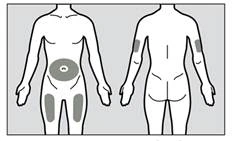
Fig. 1
- You should use a different injection site each time you self-administer the injection, ensuring a distance of at least 3 cm from the site used for the previous injection.
- Do not inject the drug into areas that may be irritated by a belt or waistband. Do not inject into moles, scars, bruises, or areas where the skin is tender, red, hardened, or damaged.
- Clean the selected injection site with an alcohol swab to reduce the risk of infection.
- Allow the skin to dry for approximately 10 seconds.
- Do not touch the cleaned area before administering the injection. Do not blow on or fan the cleaned area.
Step 5. Remove the needle cap
- Do not hold the syringe by the plunger while removing the needle cap.
- Firmly hold the needle cap of the syringe with one hand and remove it with the other hand (Fig. 2). If you are unable to remove the needle cap, seek assistance from your caregiver or physician.
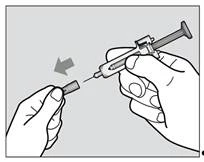
Fig. 2
- Do not touch the needle and ensure it does not contact any surface.
- You may see a drop of liquid at the tip of the needle. This is normal.
- Discard the needle cap into a puncture-resistant container or sharps container.
NOTE: After removing the needle cap, the syringe must be used immediately.
- If the syringe is not used within 5 minutes after removing the cap, it should be discarded into a puncture-resistant container or sharps container, and a new syringe should be used. If the needle cap has been removed for more than 5 minutes, the injection may be more difficult to administer, as the drug may dry out and block the needle.
- Never recap the needle after removal.
Step 6. Administering the injection
- Hold the syringe comfortably in your hand.
- To ensure the needle is properly inserted under the skin, use your free hand to pinch a fold of skin at the cleaned injection site (Fig. 3). Creating a skin fold is important to ensure that the drug is injected under the skin (into the fatty tissue) and not deeper (into the muscle). Intramuscular injection may cause discomfort.
- Do not hold the syringe by the plunger or press the plunger while inserting the needle into the skin.
- Insert the needle fully into the skin fold at an angle of 45° to 90° with a quick, decisive motion.
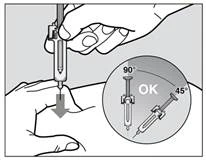
Fig. 3
It is important to choose the correct angle to ensure the drug is injected under the skin (into the fatty tissue); otherwise, the injection may be painful and the drug may not work properly.
- After insertion, while keeping the syringe in place, release the skin fold.
- Slowly inject the entire drug by gently pressing the plunger until it is fully depressed (Fig. 4). You must press the plunger fully down to ensure you receive the full dose and to ensure the release levers are fully retracted. If the plunger is not fully depressed, the safety shield will not completely cover the needle after withdrawal. If the needle is not fully covered, handle with care and place the syringe with the needle into a puncture-resistant container to avoid needlestick injury.
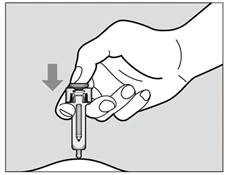
Fig. 4
- When the plunger is fully depressed, continue pressing down to ensure all the drug is delivered before withdrawing the needle from the skin.
- Continue pressing on the plunger while withdrawing the needle from the skin at the same angle used for insertion (Fig. 5).
- If, after inserting the needle, you are unable to depress the plunger, discard the prefilled syringe into a puncture-resistant container and use a new prefilled syringe (start again at Step 2). If you continue to experience difficulties, consult your physician.
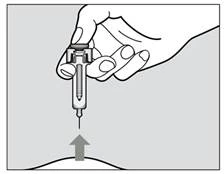
Fig. 5
- After fully withdrawing the needle from the skin, release the plunger, allowing the needle safety device to cover the needle (Fig. 6).
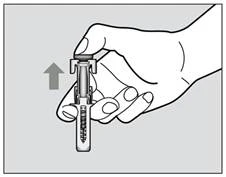
Fig. 6
- If you see blood droplets at the injection site, you may apply a sterile cotton ball or gauze to the injection site for approximately 10 seconds.
- Do not rub the injection site.
Step 7. Disposal of the syringe
- Do not attempt to recap the needle of the used syringe.
- Dispose of used syringes in a puncture-resistant container or sharps container. Ask your physician or pharmacist for information on where you can obtain a sharps container or what other types of puncture-resistant containers you can use for safe disposal of used syringes if you do not have one.
Consult your physician for instructions on the proper disposal of used syringes. Local or state regulations may apply to the disposal of used syringes.
Do not dispose of used syringes or puncture-resistant containers in household waste, and do not reuse them.
- Dispose of a filled container according to the recommendations of your physician or pharmacist.
- Always keep the puncture-resistant container out of the reach of children.
Children.
The efficacy and safety of the subcutaneous formulation of Actemra® in children from birth to 1 year of age have not been established. Data are lacking.
Overdose.
Data on overdose with Actemra® are limited. In one accidental overdose involving a single intravenous dose of 40 mg/kg in a patient with multiple myeloma, no adverse reactions were reported.
No serious adverse reactions were reported in healthy volunteers who received a single dose of Actemra® up to 28 mg/kg, although dose-limiting neutropenia was observed.
Adverse Reactions
Short description of the safety profile
The safety profile is based on data from 4,510 patients who received Actemra® in clinical trials; the majority of these patients participated in trials for rheumatoid arthritis (RA) in adults (n = 4,009), and the remainder in trials for giant cell arteritis (GCA) (n = 149), polyarticular juvenile idiopathic arthritis (pJIA) (n = 240), and systemic juvenile idiopathic arthritis (sJIA) (n = 112). The safety profile of Actemra® across these indications remains similar and undifferentiated.
The most frequently reported adverse reactions were: upper respiratory tract infections, nasopharyngitis, headache, hypertension, and elevated ALT levels.
The most serious adverse reactions were: serious infections, diverticulitis complications, and hypersensitivity reactions.
Summary of adverse reactions
Summary data on adverse reactions from clinical trials and/or post-marketing experience, spontaneous reports, scientific literature, and non-interventional studies are presented below using the Medical Dictionary for Regulatory Activities (MedDRA), by system organ class and frequency of occurrence: very common (≥1/10), common (≥1/100 and <1/10), uncommon (≥1/1,000 and <1/100), rare (≥1/10,000 and <1/1,000), or very rare (<1/10,000). Within each frequency group, adverse reactions are listed in order of decreasing severity.
Blood and lymphatic system disorders: common – leukopenia, neutropenia, hypofibrinogenemia.
Endocrine disorders: uncommon – hypothyroidism.
Eye disorders: common – conjunctivitis.
Gastrointestinal disorders: common – oral ulcers, gastritis, abdominal pain; uncommon – stomatitis, gastric ulcer.
General disorders and administration site conditions: very common – injection site reactions, common – peripheral edema, hypersensitivity reactions.
Hepatobiliary disorders: rare – drug-induced liver injury, hepatitis, jaundice; very rare – liver failure.
Immune system disorders: anaphylaxis (fatal)\1,2,3.
Infections and infestations: very common – upper respiratory tract infections; common – abscesses, pneumonia, infections caused by Herpes simplex and Herpes zoster; uncommon – diverticulitis.
Investigations: common – increased liver transaminases, increased body weight, increased total bilirubin*.
Metabolism and nutrition disorders: very common – hypercholesterolemia*; uncommon – hypertriglyceridemia.
Nervous system disorders: common – headache, dizziness.
Renal and urinary disorders: uncommon – nephrolithiasis.
Respiratory, thoracic and mediastinal disorders: common – cough, dyspnea.
Skin and subcutaneous tissue disorders: common – rash, pruritus, urticaria; rare – Stevens-Johnson syndrome\3.
Vascular disorders: common – hypertension.
* Includes laboratory monitoring findings (see below).
1 See section "Contraindications".
2 See section "Special precautions for use".
3 This adverse reaction was identified during post-marketing surveillance but was not observed in controlled clinical trials.
The frequency category was estimated as the upper limit of the 95% confidence interval calculated based on the total number of patients who received tocilizumab in clinical trials.
Treatment of RA
Intravenous administration
The safety of Actemra® was evaluated in five double-blind, placebo-controlled phase III trials and during their extension periods.
The controlled populations included all patients from the double-blind periods of each study from randomization until the first dose adjustment or until completion of a two-year study period. The controlled period was 6 months in four of these studies and up to 2 years in one study. In the double-blind, placebo-controlled trials, 774 patients received Actemra® at a dose of 4 mg/kg body weight in combination with methotrexate, 1,870 patients received tocilizumab at a dose of 8 mg/kg body weight in combination with methotrexate/other disease-modifying antirheumatic drugs (DMARDs), and 288 patients received tocilizumab at a dose of 8 mg/kg body weight as monotherapy.
The overall population included all patients who received at least one dose of Actemra® during the double-blind, placebo-controlled period or during the open-label extension period of the studies. 3,577 of 4,009 patients received treatment for at least 6 months, 3,296 patients for at least 1 year, 2,806 patients for at least 2 years, and 1,222 patients for 3 years.
Description of selected adverse reactions
Infections
Based on 6-month controlled trials, the incidence of infections with Actemra® administered at 8 mg/kg in combination with DMARDs was 127 events per 100 patient-years compared to 112 events per 100 patient-years in the placebo plus DMARD group. In the long-term exposure population, the overall infection rate with Actemra® was 108 per 100 patient-years of exposure.
Based on 6-month controlled clinical trials, the incidence of serious infections in the group receiving Actemra® at 8 mg/kg in combination with DMARDs was 5.3 events per 100 patient-years of exposure compared to 3.9 events per 100 patient-years in the placebo plus DMARD group. In the monotherapy trial, the incidence of serious infections was 3.6 events per 100 patient-years in the Actemra® group compared to 1.5 events per 100 patient-years in the methotrexate group.
In the overall exposure population, the overall incidence of serious infections was 4.7 per 100 patient-years. Serious infectious diseases, some with fatal outcomes, were reported, including pneumonia, abscesses, herpes zoster, gastroenteritis, diverticulitis, sepsis, and bacterial arthritis. Cases of opportunistic infections were reported.
Interstitial lung disease
Impaired lung function may increase the risk of developing infections. Post-marketing reports have described interstitial lung disease (including pneumonitis and pulmonary fibrosis), some of which were fatal.
Gastrointestinal perforation
During 6-month controlled trials, the overall incidence of gastrointestinal perforation in the group receiving Actemra® was 0.26 per 100 patient-years. In the long-term exposure population, the overall incidence of gastrointestinal perforation was 0.28 per 100 patient-years. Overall, cases of gastrointestinal perforation associated with Actemra® were complications of diverticulitis and included diffuse purulent peritonitis, lower gastrointestinal tract perforation, fistula, and abscess.
Infusion reactions
During 6-month controlled trials, adverse reactions related to administration (individual reactions occurring during or within 24 hours after infusion) were observed in 6.9% of patients receiving tocilizumab at 8 mg/kg in combination with DMARDs and in 5.1% of patients receiving placebo plus DMARDs. Adverse reactions occurring during infusion were predominantly episodes of elevated blood pressure. Adverse reactions observed within 24 hours after completion of infusion included headache and skin reactions (rash, urticaria). These reactions did not lead to treatment discontinuation.
The incidence of anaphylactic reactions (in 6 of 3,778 patients, 0.2%) was several times higher in patients receiving the drug at 4 mg/kg compared to those receiving it at 8 mg/kg. In controlled and open-label clinical trials, clinically significant hypersensitivity reactions due to Actemra® administration requiring discontinuation of treatment were observed in 13 of 3,778 patients (0.3%). These reactions typically occurred between the second and fifth infusion of tocilizumab (see section "Special precautions for use"). Fatal anaphylaxis was reported post-marketing during intravenous administration of Actemra® (see section "Special precautions for use").
Immunogenicity
Overall, 2,876 patients were tested for antibodies to Actemra® in 6-month controlled trials. In 6 (1.6%) of 46 patients with antibodies to Actemra®, this was associated with medically significant hypersensitivity reactions leading to permanent discontinuation of treatment in 5 patients. Neutralizing antibodies were detected in 30 patients (1.1%).
Laboratory parameter changes
Neutrophils
In 6-month controlled trials, a decrease in neutrophil count below 1 × 10⁹/L was observed in 3.4% of patients receiving Actemra® at 8 mg/kg in combination with a disease-modifying antirheumatic drug, compared to less than 0.1% of patients receiving placebo in combination with DMARDs. In approximately half of the cases, the decrease in ANC below 1 × 10⁹/L occurred within 8 weeks after initiation of treatment. A decrease in neutrophil count below 0.5 × 10⁹/L was observed in 0.3% of patients receiving Actemra® at 8 mg/kg in combination with DMARDs. Cases of infection with neutropenia were reported.
During the double-blind, controlled period of long-term exposure studies, the pattern and frequency of neutrophil count reduction corresponded to the results observed in 6-month controlled clinical trials.
Platelets
In 6-month controlled trials, a decrease in platelet count below 100 × 10³/μL was observed in 1.7% of patients receiving Actemra® at 8 mg/kg in combination with a disease-modifying antirheumatic drug, compared to less than 1% of patients receiving placebo in combination with a disease-modifying antirheumatic drug. These changes were not associated with episodes of bleeding.
During the double-blind, controlled period of long-term exposure studies, the pattern and frequency of platelet count reduction corresponded to the results observed in 6-month controlled clinical trials.
Very rare cases of pancytopenia were reported in the post-marketing period.
Elevated liver transaminase activity
During 6-month controlled clinical trials, transient elevation of ALT/AST activity (exceeding ULN more than 3 times) was observed in 2.1% of patients receiving Actemra® at 8 mg/kg and in 4.9% of patients receiving methotrexate. These changes occurred in 6.5% of patients receiving Actemra® at 8 mg/kg in combination with DMARDs and in 1.5% of patients receiving placebo in combination with DMARDs.
Adding potentially hepatotoxic drugs (e.g., methotrexate) to monotherapy with Actemra® led to an increased frequency of transaminase elevation. ALT/AST elevation exceeding ULN more than 5 times was observed in 0.7% of patients receiving monotherapy with tocilizumab and in 1.4% of patients receiving tocilizumab in combination with DMARDs. In most of these patients, tocilizumab therapy was permanently discontinued. During routine laboratory monitoring in the double-blind, controlled period, the frequency of indirect bilirubin levels above the upper limit of normal, defined as a routine laboratory parameter, was 6.2% in patients receiving Actemra® at 8 mg/kg in combination with DMARDs. Overall, elevated indirect bilirubin levels from 1 to 2 times above the upper limit of normal were observed in 5.8% of patients and more than 2 times above ULN in 0.4% of patients.
During the double-blind, controlled period of long-term exposure studies, the pattern and frequency of ALT/AST elevation corresponded to the results observed in 6-month controlled clinical trials.
Lipid metabolism parameter changes
During routine laboratory monitoring in 6-month controlled trials, elevated lipid metabolism parameters (total cholesterol, triglycerides, LDL-C and/or HDL-C) were commonly observed. During routine laboratory monitoring in clinical trials, sustained elevation of total cholesterol ≥ 6.2 mmol/L was observed in 24% of patients and sustained elevation of LDL-C ≥ 4.1 mmol/L in 15% of patients receiving Actemra®. Elevated lipid metabolism parameters were effectively managed with lipid-lowering agents.
During the double-blind, controlled period of long-term exposure studies, the pattern and frequency of lipid metabolism parameter elevation corresponded to the results observed in 6-month controlled clinical trials.
Malignant neoplasms
Clinical data are insufficient to assess the potential risk of developing malignant neoplasms after tocilizumab use. Long-term safety evaluation of the drug is ongoing.
Skin reactions
Cases of Stevens-Johnson syndrome were rarely reported in the post-marketing period.
Subcutaneous administration
Treatment of RA
The safety of subcutaneous administration of Actemra® in patients with rheumatoid arthritis was evaluated in a double-blind, placebo-controlled, multicenter trial, SC-I. SC-I is a study in which the efficacy and safety of Actemra® at a dose of 162 mg once weekly were compared to intravenous administration at a dose of 8 mg/kg in 1,262 patients with rheumatoid arthritis. All patients received background therapy with non-biological disease-modifying antirheumatic drugs. The safety and immunogenicity profile of Actemra® with subcutaneous administration was consistent with the known safety profile of tocilizumab with intravenous administration, and no new or unexpected adverse reactions were observed. A higher frequency of injection site reactions was observed in the subcutaneous administration group compared to the intravenous administration group receiving subcutaneous placebo.
Injection site reactions
During the 6-month controlled period of the SC-I study, the frequency of injection site reactions was 10.1% (64/631) and 2.4% (15/631) for weekly subcutaneous tocilizumab and subcutaneous placebo (intravenous group), respectively. These injection site reactions (including erythema, pruritus, pain, and hematoma) were mild to moderate in severity. Most were transient without any treatment and did not require discontinuation of the drug.
Immunogenicity
In the clinical trial SC-I, a total of 625 patients receiving Actemra® at a dose of 162 mg once weekly were tested for antibodies to Actemra® during the 6-month controlled period. Antibodies to Actemra® were detected in five patients (0.8%); neutralizing antibodies to Actemra® were produced in each of them. One patient tested positive for IgE isotype (0.2%).
In the clinical trial SC-II, a total of 434 patients receiving Actemra® at a dose of 162 mg every 2 weeks were tested for antibodies to Actemra® during the 6-month controlled period. Antibodies to Actemra® were detected in seven patients (1.6%), and neutralizing antibodies to Actemra® were produced in six of them (1.4%). Four patients tested positive for IgE isotype (0.9%).
No correlation was observed between antibody production and clinical response or adverse reactions.
Hematological disorders
Neutrophils
During routine laboratory monitoring in the 6-month controlled subcutaneous tocilizumab trial SC-I, a decrease in neutrophil count below 1 × 10⁹/L was observed in 2.9% of patients receiving weekly subcutaneous administration.
No clear association was observed between a decrease in neutrophils below 1 × 10⁹/L and the occurrence of serious infections.
Platelets
During routine laboratory monitoring in the 6-month controlled trial SC-I of Actemra®, no decrease in platelet count ≤ 50 × 10³/μL was observed in any patient receiving weekly subcutaneous administration.
Elevated liver transaminase activity
During routine laboratory monitoring in the 6-month controlled trial of Actemra® SC-I, elevation of ALT or AST ≥ 3 × ULN was observed in 6.5% and 1.4% of patients, respectively, with weekly subcutaneous administration.
Lipid metabolism parameter changes
During routine laboratory monitoring in the 6-month controlled trial of Actemra® SC-I, sustained elevation of total cholesterol > 6.2 mmol/L (240 mg/dL) was observed in 19% of patients, and sustained elevation of LDL-C to ≥ 4.1 mmol/L (160 mg/dL) in 9% of patients receiving weekly subcutaneous administration.
Subcutaneous administration
Treatment of sJIA
The safety profile of Actemra® for subcutaneous administration was evaluated in 51 children with sJIA (aged 1 to 17 years). Overall, adverse reactions in sJIA patients were similar in type to those observed in RA patients (see section "Adverse Reactions" above).
Infections
The frequency of infections in sJIA patients receiving subcutaneous Actemra® was comparable to that in sJIA patients receiving intravenous Actemra®.
Injection site reactions
In the subcutaneous administration study of Actemra® (WA28118), injection site reactions were observed in 41.2% (21/51) of sJIA patients. The most common injection site reactions were erythema, pruritus, pain, and swelling at the injection site. Most reported injection site reactions were Grade 1, all reported injection site reactions were mild, and none led to discontinuation or interruption of treatment.
Immunogenicity
In the subcutaneous administration study of Actemra® (WA28118), 46 of 51 (90.2%) patients were tested for antibodies to tocilizumab at baseline and at least once during the study. No patient developed antibodies to tocilizumab after baseline.
Laboratory parameter deviations
In the 52-week open-label subcutaneous administration study (WA28118), a decrease in neutrophil count to less than 1 × 10⁹/L was observed in 23.5% of patients receiving subcutaneous Actemra®. A decrease in platelet count to less than 100 × 10³/μL was observed in 2% of patients receiving subcutaneous Actemra®. Elevation of ALT or AST to ≥ 3 × ULN was observed in 9.8% and 4.0% of patients, respectively, receiving subcutaneous Actemra®.
Lipid metabolism parameter changes
In the 52-week open-label subcutaneous administration study (WA28118), elevated LDL-C levels to ≥ 130 mg/dL and total cholesterol levels to ≥ 200 mg/dL were observed at any time during the treatment period in 23.4% and 35.4% of patients, respectively, receiving subcutaneous Actemra®.
Subcutaneous administration
Patients with pJIA
The safety profile of subcutaneous administration of Actemra® was also evaluated in 52 children with pJIA. The total exposure to Actemra® in the overall pJIA exposure population was 184.4 patient-years for intravenous tocilizumab and 50.4 patient-years for subcutaneous tocilizumab. Overall, the safety profile observed in pJIA patients was consistent with the known safety profile of Actemra®, except for injection site reactions. Injection site reactions after subcutaneous injection of Actemra® occurred more frequently in pJIA patients than in adult RA patients.
Infections
In the subcutaneous administration study of Actemra®, the frequency of infections in pJIA patients receiving subcutaneous Actemra® was the same as in pJIA patients receiving intravenous Actemra®.
Injection site reactions
Injection site reactions occurred in 28.8% (15/52) of pJIA patients after subcutaneous administration of Actemra®. These reactions occurred in 44% of patients with body weight ≥ 30 kg compared to 14.8% of patients with body weight < 30 kg. The most common injection site reactions were skin redness, swelling, hematoma, pain, and pruritus. All reported reactions were mild – Grade 1. None of the reactions led to discontinuation or interruption of treatment.
Immunogenicity
In the subcutaneous administration study, neutralizing antibodies to tocilizumab were detected in 5.8% (3 out of 52) of patients without development of serious or clinically significant hypersensitivity reactions. One of these 3 patients subsequently discontinued participation in the study. No correlation was observed between antibody formation and clinical response or adverse events.
Laboratory parameter deviations
Based on standard laboratory monitoring in the overall population, a decrease in neutrophil count below 1 × 10⁹/L was observed in 15.4% of patients receiving subcutaneous Actemra®. Elevation of ALT or AST ≥ 3 × ULN was observed in 9.6% and 3.8% of patients, respectively, receiving subcutaneous Actemra®. Decrease in platelet count ≤ 50 × 10³/μL was not observed in patients receiving subcutaneous Actemra®.
Lipid metabolism parameters
In the subcutaneous administration study of Actemra®, elevated LDL-C levels to ≥ 130 mg/dL and total cholesterol levels to ≥ 200 mg/dL were observed at any time after initiation of treatment in 14.3% and 12.8% of patients, respectively.
Subcutaneous administration
Treatment of GCA
The safety of subcutaneous administration of Actemra® was evaluated in one phase III trial (WA28119) in 251 patients with GCA. The total duration of Actemra® administration to all patients was 138.5 patient-years during the 12-month double-blind, placebo-controlled phase of the study. The overall safety profile observed in GCA patients receiving Actemra® was consistent with the known safety profile of Actemra® (see "Summary of adverse reactions" above).
Infections
The frequency of infections/serious infections was similar in the weekly Actemra® group (200.2/9.7 events per 100 patient-years), the placebo group with 26-week prednisone taper (156.0/4.2 events per 100 patient-years), and the placebo group with 52-week prednisone taper (210.2/12.5 events per 100 patient-years).
Injection site reactions
In the weekly subcutaneous Actemra® group, 6% (6 out of 100) of patients reported an adverse reaction at the subcutaneous injection site. No serious adverse reactions at the injection site or those requiring discontinuation of treatment were reported.
Immunogenicity
In the weekly subcutaneous Actemra® group, one patient (1.1%, 1 out of 95) developed positive neutralizing antibodies to Actemra®, although not of IgE isotype. This patient did not develop a hypersensitivity reaction or injection site reaction.
Hematological deviations
Neutrophils
During routine laboratory monitoring in the 12-month controlled clinical trial of Actemra®, a decrease in neutrophil count below 1 × 10⁹/L was observed in 4% of patients in the weekly subcutaneous Actemra® group. This phenomenon was not observed in either placebo group with prednisone taper.
Platelets
During routine laboratory monitoring in the 12-month controlled clinical trial of Actemra®, one patient (1%, 1 out of 100) in the weekly subcutaneous Actemra® group had a single transient decrease in platelet count to < 100 × 10³/μL without associated bleeding episodes. Decrease in platelet count below 100 × 10³/μL was not observed in either placebo group with prednisone taper.
Elevated liver transaminase levels
During routine laboratory monitoring in the 12-month controlled clinical trial of Actemra®, elevation of ALT ≥ 3 × ULN was observed in 3% of patients in the weekly subcutaneous Actemra® group compared to 2% in the 52-week prednisone taper placebo group and 0% in the 26-week prednisone taper placebo group. Elevation of AST > 3 × ULN was observed in 1% of patients in the weekly subcutaneous Actemra® group compared to 0% in each of the placebo groups with prednisone taper.
Lipid metabolism parameter changes
During routine laboratory monitoring in the 12-month controlled clinical trial of Actemra®, sustained elevation of total cholesterol > 6.2 mmol/L (240 mg/dL) was observed in 34% of patients and sustained elevation of LDL-C to ≥ 4.1 mmol/L (160 mg/dL) in 15% of patients in the weekly subcutaneous Actemra® group.
Reporting of adverse reactions after drug registration is important. It enables monitoring of the benefit-risk balance of this medicinal product. Healthcare professionals, pharmacists, patients, and their legal representatives should report all suspected adverse reactions and lack of efficacy through the automated pharmacovigilance information system at: https://aisf.dec.gov.ua
Shelf life.
36 months.
Storage conditions.
Store at 2 to 8 °C in the original packaging to protect from light. Keep out of reach of children. Do not freeze.
Incompatibilities.
In the absence of compatibility studies, this medicinal product should not be mixed with other medicinal products.
Packaging.
Pre-filled syringe with a volume of 1 ml, the barrel made of colorless glass (type 1), lubricated with silicone oil, with a needle attached by adhesive (26G 1/2) made of stainless steel, covered with a polycap made of polyisoprene, and with a plunger stopper made of butyl rubber laminated with fluoropolymer, equipped with a needle safety device. 4 pre-filled syringes per cardboard box.
Prescription status.
Prescription only.
Manufacturer.
F. Hoffmann-La Roche Ltd
Manufacturer's address and location of business operations.
Wurmisweg, 4303 Kaiseraugst, Switzerland