Aevit
Ukraine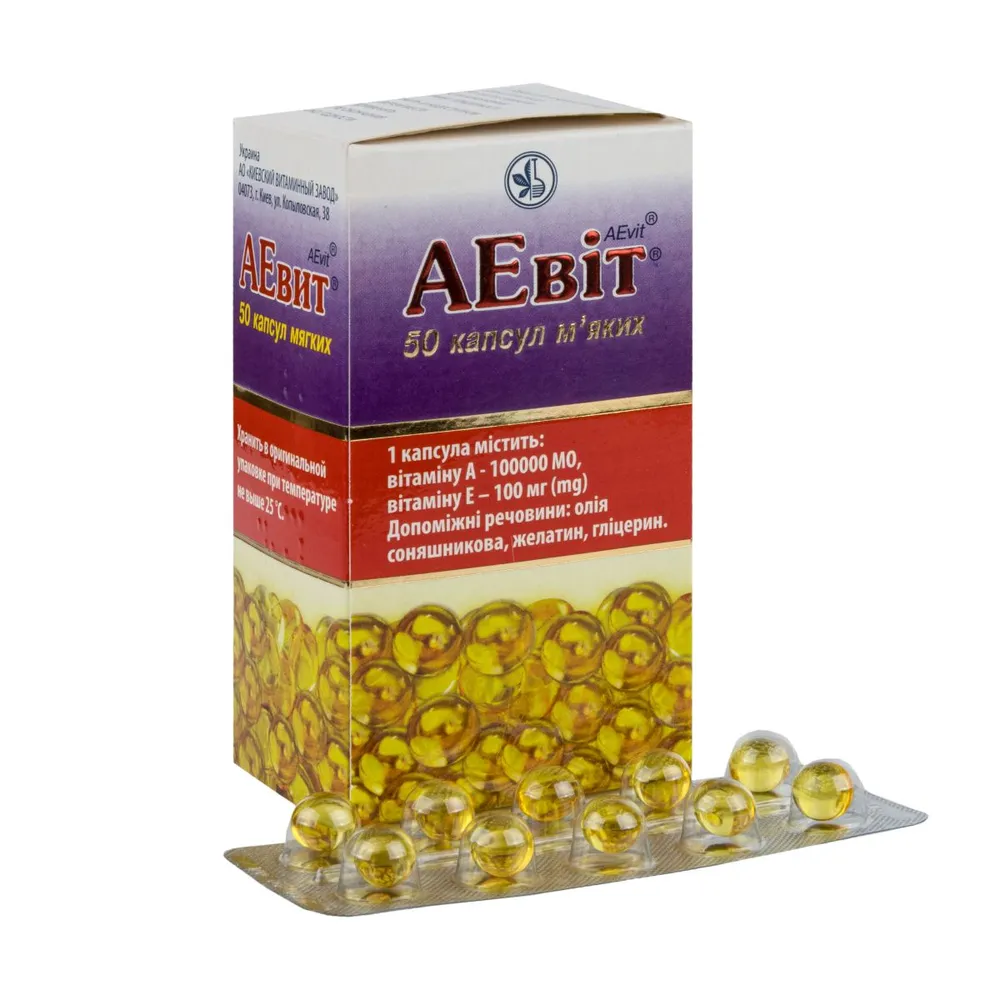
Table of Contents
INSTRUCTIONS for MEDICAL USE of the medicinal product AEvit® (AEvit®)
Composition:
Active substances: 1 capsule contains vitamin A 100,000 IU; vitamin E 100 mg;
Excipient: sunflower oil;
Capsule shell: gelatin, glycerin.
Pharmaceutical form. Soft capsules.
Main physicochemical properties: soft gelatin capsules of oval or spherical shape, with a seam, yellow to light brown in colour, filled with an oily liquid ranging from light yellow to dark yellow.
Pharmacotherapeutic group. Combined vitamin preparations. ATC Code: A11JA.
Pharmacological Properties.
Pharmacodynamics.
The properties of the medicinal product are determined by the pharmacological effects of the fat-soluble vitamins A and E contained in its composition. The medicinal product affects the nuclei of target organ cells and initiates the synthesis of enzyme proteins or structural tissue elements, stimulates regenerative processes, and enhances both specific and non-specific resistance of the body.
The medicinal product normalizes metabolism, exhibits pronounced antioxidant activity, restores capillary circulation, and improves tissue and vascular permeability, increasing tissue resistance to hypoxia.
Pharmacokinetics.
Aevit® is well absorbed from the gastrointestinal tract. Subsequently, vitamins A and E are transported via lymph into blood plasma, where they bind to specific proteins and are carried to organs and tissues. Excess vitamin A is stored in the liver, predominantly in the form of palmitic acid esters. Vitamin A is excreted into the intestine via bile and participates in enterohepatic circulation. In the liver, it undergoes biotransformation, first forming active metabolites and then inactive metabolic products, which are excreted by the kidneys, intestine, and lungs. Elimination of vitamin A occurs slowly—within 3 weeks, 34% of the administered dose is eliminated from the body. Excess vitamin E is deposited in tissues, forming storage depots (particularly in the liver), thereby maintaining normal plasma vitamin E levels. In the body, vitamin E undergoes biotransformation into several metabolites with quinone structure. Unchanged vitamin E is excreted via bile, while its metabolites are excreted in urine.
Clinical characteristics.
Indications.
AEvit® is indicated for therapeutic use in diseases and conditions requiring prolonged administration of high doses of vitamin A in combination with vitamin E: atherosclerotic vascular changes, impaired tissue trophism, obliterative endarteritis, psoriasis, systemic lupus erythematosus, optic nerve atrophy, pigmentary retinitis, as part of complex therapy for dermatitis and acne; in combined therapy of cardiovascular diseases (hypertensive disease with signs of left ventricular overload, stable angina pectoris of functional classes I and II).
Contraindications.
Hypersensitivity to the components of the drug, hypervitaminosis A and E, thyrotoxicosis, chronic glomerulonephritis, cholelithiasis, decompensated heart failure, history of sarcoidosis, chronic pancreatitis, marked cardiac sclerosis, myocardial infarction.
Interaction with other medicinal products and other types of interactions.
The drug must not be prescribed concurrently with estrogens, as they increase the risk of hypervitaminosis A; with nitrates and cholestyramine, which impair absorption of vitamin A.
Retinol palmitate reduces the anti-inflammatory effect of glucocorticoids.
The drug must not be used together with other vitamin A derivatives due to the risk of overdose and development of hypervitaminosis A.
Vitamin E enhances the effect of steroid and non-steroidal anti-inflammatory drugs (sodium diclofenac, ibuprofen, prednisolone); reduces the toxic effect of cardiac glycosides (digoxin, digitoxin), and vitamins A and D.
Special precautions for use.
The medicinal product should be used with caution in patients with an increased risk of thromboembolism, severe coronary atherosclerosis, chronic heart failure, acute or chronic nephritis, cholecystitis, and severe disorders of the hepatobiliary system.
The medicinal product should not be administered concurrently with other medicinal products containing vitamin A and its synthetic analogues due to the risk of developing hypervitaminosis A.
Vitamin A has the property of accumulating in the body and remaining there for a prolonged period. Women who have taken high doses of retinol should not plan pregnancy earlier than 6–12 months after discontinuation. This is due to the risk of fetal developmental abnormalities caused by high levels of vitamin A in the body during this period.
Use during pregnancy or breastfeeding.
The medicinal product is contraindicated during pregnancy and breastfeeding.
If administration of the medicinal product is required, breastfeeding should be discontinued.
Ability to influence reaction speed when driving or operating machinery.
There is no data available regarding the influence of the medicinal product on the ability to drive or operate complex machinery.
Method of Administration and Dosage
Take orally after meals, 1 capsule daily for 30–40 days. Repeat the course if necessary after 3–6 months.
Children. The medicinal product should not be used in children.
Overdose
A single intake of a large amount of the medicinal product is accompanied by a sudden increase in cerebrospinal fluid pressure (without pathological changes in the cerebrospinal fluid itself), severe headache, drowsiness, and visual disturbances (diplopia). In severe cases, convulsive seizures and cardiac failure may develop.
With prolonged use of the medicinal product, chronic hypervitaminosis A may develop, manifesting as nervous system involvement (headache, insomnia, irritability, apathy, paresthesias), general weakness, loss of appetite, fever, skin changes (dryness and cracking of the skin on palms and soles, appearance of pigmented spots, hair loss, seborrheic eruptions), jaundice, blood count abnormalities, bone and muscle pain, gait disturbances, and enlargement of the liver and spleen. With long-term use of high doses, creatinuria, increased cholesterol and triglyceride concentrations, elevated creatine kinase activity, decreased serum thyroxine and triiodothyronine concentrations, increased urinary estrogen and androgen levels, impaired blood coagulation, and gastrointestinal bleeding may occur. If signs of overdose occur, administration of the medicinal product must be discontinued.
Treatment: symptomatic.
Adverse reactions.
From the nervous system and sensory organs: increased fatigue, drowsiness, lethargy, irritability, headache, insomnia.
From the gastrointestinal tract: loss of appetite, nausea, dyspeptic disorders (epigastric pain, diarrhea); very rarely – vomiting.
Allergic reactions, including itching, rash; dry, peeling skin; fever; facial hyperemia.
Other: with prolonged use – hair loss, pain in the bones of the lower limbs.
With prolonged use, exacerbation of cholelithiasis and chronic pancreatitis is possible. Long-term intake of high doses of vitamin A may lead to the development of hypervitaminosis A.
Shelf life. 3 years.
Storage conditions.
Store in the original packaging at a temperature not exceeding 25 °C.
Keep out of reach of children.
Packaging.
10 capsules in blisters.
10 capsules per blister; 1 blister per carton.
10 capsules per blister; 3 blisters per carton.
10 capsules per blister; 5 blisters per carton.
20 capsules per blister; 1 blister per carton.
20 capsules per blister; 2 blisters per carton.
20 capsules per blister; 3 blisters per carton.
50 capsules per blister; 1 blister per carton.
Prescription status. Over-the-counter.
Manufacturer. JSC "KYIV VITAMIN PLANT".
Manufacturer's address and location of business activity.
38 Kopilivska Street, Kyiv, 04073, Ukraine.
Website: www.vitamin.com.ua.
INSTRUCTION
for medical use of medicinal product
AEVITÒ
(AEVITÒ)
Composition:
Active ingredients: 1 capsule contains vitamin A 100,000 IU; vitamin E 100 mg;
Excipient: sunflower oil;
Capsule shell: gelatin, glycerin.
Dosage form. Soft capsules.
Main physicochemical properties: soft gelatin capsules, spherical or nearly spherical in shape, with a seam, yellow to light brown in color, filled with oily liquid ranging from light yellow to dark yellow.
Pharmacotherapeutic group. Combined vitamin preparations.
ATC code A11JA.
Pharmacological properties.
Pharmacodynamics.
The properties of the medicinal product are determined by the pharmacological effects of fat-soluble vitamins A and E contained in its composition. The product acts on the nuclei of target organ cells and initiates the synthesis of enzyme proteins or structural tissue elements, stimulates regeneration processes, and enhances both specific and non-specific resistance of the body.
The medicinal product normalizes metabolism, exerts a potent antioxidant effect, restores capillary circulation, and improves tissue and vascular permeability, increasing tissue resistance to hypoxia.
Pharmacokinetics.
AEVITÒ is well absorbed from the gastrointestinal tract. Subsequently, vitamins A and E are transported into the lymph, then into blood plasma, where they bind to specific proteins and are carried to organs and tissues. Excess vitamin A is stored in the liver, primarily as esters of palmitic acid. Vitamin A is excreted via bile into the intestine and participates in enterohepatic circulation. In the liver, it undergoes biotransformation, first into active metabolites, then into inactive metabolic products excreted by the kidneys, intestine, and lungs. Elimination of vitamin A is slow – 34% of the administered dose is eliminated from the body within 3 weeks. Excess vitamin E is deposited in tissues, forming tissue reservoirs (especially in the liver), maintaining normal plasma levels of vitamin E. In the body, vitamin E undergoes biotransformation into several metabolites with quinone structure. Unchanged vitamin E is excreted in bile, while its metabolites are excreted in urine.
Clinical characteristics.
Indications.
AEVITÒ is indicated for therapeutic use in diseases and conditions requiring prolonged administration of high doses of vitamin A in combination with vitamin E: atherosclerotic vascular changes, impaired tissue trophism, obliterative endarteritis, psoriasis, systemic lupus erythematosus, optic nerve atrophy, pigmentary retinitis, as part of complex therapy for dermatitis and acne; in the complex treatment of cardiovascular diseases (hypertensive disease with signs of left ventricular overload, stable angina pectoris of functional classes I and II).
Contraindications.
Hypersensitivity to the components of the medicinal product, hypervitaminosis A and E, thyrotoxicosis, chronic glomerulonephritis, cholelithiasis, decompensated heart failure, history of sarcoidosis, chronic pancreatitis, severe cardiomyosclerosis, myocardial infarction.
Interaction with other medicinal products and other types of interactions. The medicinal product must not be administered concurrently with estrogens, which increase the risk of hypervitaminosis A; nitrites and cholestyramine, which impair absorption of vitamin A.
Retinol palmitate reduces the anti-inflammatory effect of glucocorticoids.
The medicinal product must not be used together with other vitamin A derivatives due to the risk of overdose and development of hypervitaminosis A.
Vitamin E enhances the effects of steroid and non-steroidal anti-inflammatory drugs (diclofenac sodium, ibuprofen, prednisolone); reduces the toxic effects of cardiac glycosides (digoxin, digitoxin), and vitamins A and D.
Special precautions.
Use the medicinal product with caution in patients at increased risk of thromboembolism, severe coronary atherosclerosis, chronic circulatory insufficiency, acute or chronic nephritis, cholecystitis, and severe hepatobiliary system disorders.
The medicinal product should not be prescribed concurrently with other medicinal products containing vitamin A or its synthetic analogs due to the risk of hypervitaminosis A.
Vitamin A tends to accumulate and persist in the body for prolonged periods. Women who have taken high doses of retinol should not plan pregnancy earlier than 6–12 months after discontinuation. This is due to the persistent risk of fetal developmental abnormalities caused by high vitamin A levels in the body.
Use during pregnancy or breastfeeding.
The medicinal product is contraindicated during pregnancy or breastfeeding.
If administration of the medicinal product is necessary, breastfeeding should be discontinued.
Ability to affect reaction rate when driving or operating machinery.
There is no data on the effect of the medicinal product on the ability to drive or operate machinery.
Administration and dosage.
Take orally after meals, 1 capsule daily for 30–40 days. If necessary, repeat the course after 3–6 months.
Children. Do not use in children.
Overdose.
Single intake of a large amount of the medicinal product may cause sudden increase in cerebrospinal fluid pressure (without pathological changes in the liquor itself), severe headache, drowsiness, visual disturbances (diplopia). In severe cases, seizures and heart failure may develop. With prolonged use, chronic hypervitaminosis A may develop, manifesting as nervous system involvement (headache, insomnia, irritability, apathy, paresthesia), general weakness, loss of appetite, fever, skin changes (dryness and cracking of the skin on palms and soles, appearance of pigmented spots, hair loss, seborrheic eruptions), jaundice, changes in blood parameters, bone and muscle pain, gait disturbances, enlargement of the liver and spleen. With long-term intake of high doses, creatinuria, increased cholesterol and triglyceride levels, increased creatine kinase activity, decreased serum thyroxine and triiodothyronine concentrations, increased urinary excretion of estrogens and androgens, reduced blood coagulation, and gastrointestinal bleeding may occur. If signs of overdose occur, administration of the medicinal product must be discontinued.
Treatment: symptomatic.
Adverse reactions.
From the nervous system and sensory organs: increased fatigue, drowsiness, lethargy, irritability, headache, insomnia.
From the gastrointestinal tract: loss of appetite, nausea, dyspeptic disorders (epigastric pain, diarrhea); very rarely – vomiting.
Allergic reactions, including itching, rash; dry, peeling skin; fever; facial hyperemia.
Other: with prolonged use – hair loss, bone pain in the lower limbs.
With prolonged use, exacerbation of cholelithiasis and chronic pancreatitis is possible. Long-term intake of high doses of vitamin A may lead to the development of hypervitaminosis A.
Shelf life. 3 years.
Storage conditions.
Store in the original packaging at a temperature not exceeding 25 °C.
Keep out of reach of children.
Packaging.
10 capsules in blisters.
10 capsules per blister; 1 blister per carton.
10 capsules per blister; 3 blisters per carton.
10 capsules per blister; 5 blisters per carton.
20 capsules per blister; 1 blister per carton.
20 capsules per blister; 2 blisters per carton.
20 capsules per blister; 3 blisters per carton.
50 capsules per blister; 1 blister per carton.
Prescription status. Over-the-counter.
Manufacturer. JSC "KYIV VITAMIN PLANT".
Manufacturer's address and location of business activity.
38 Kopilivska Street, Kyiv, 04073, Ukraine.
Website: www.vitamin.com.ua.