Abiraterone-vista
Ukraine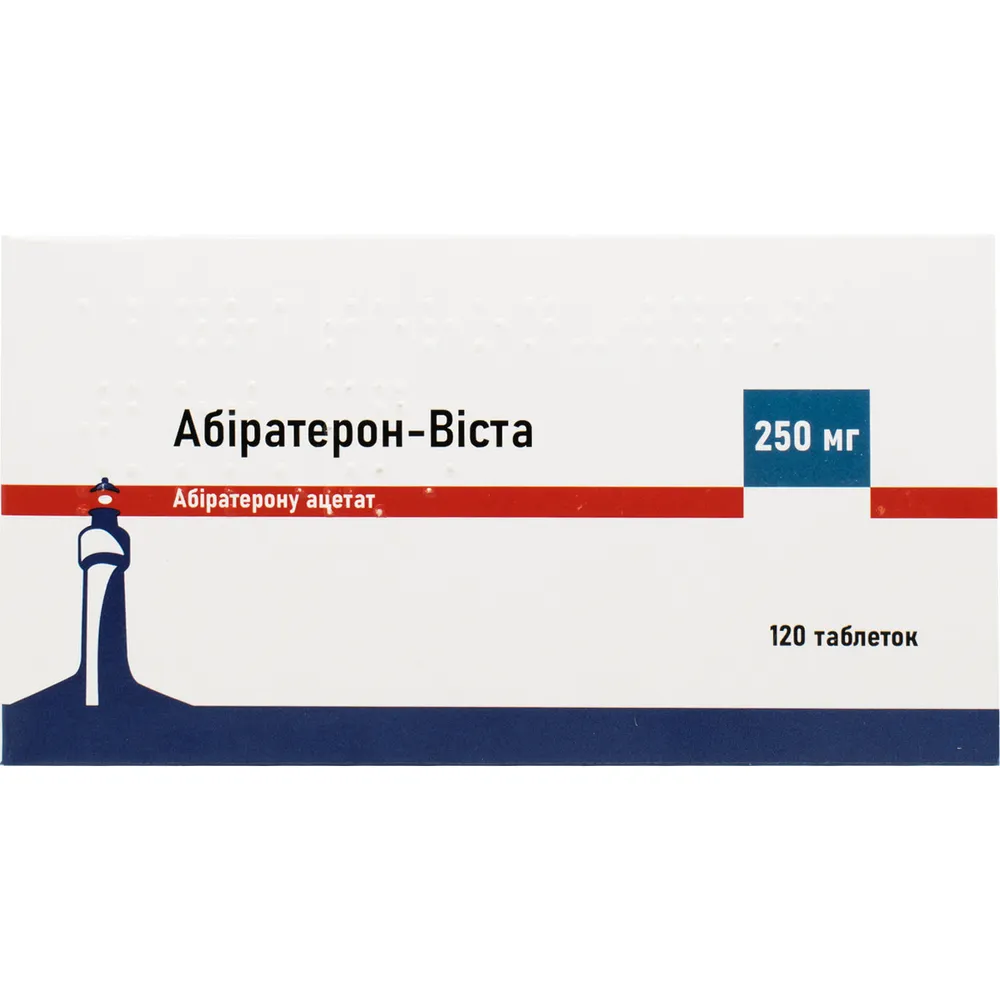
Table of Contents
INSTRUCTION FOR MEDICAL USE OF THE MEDICINAL PRODUCT ABIRATERONE-VISTA
Composition:
Active substance: abiraterone acetate;
One film-coated tablet contains abiraterone acetate 250 mg or 500 mg;
Excipients: lactose monohydrate; sodium croscarmellose, type A; povidone; sodium lauryl sulfate; microcrystalline cellulose; colloidal anhydrous silicon dioxide; magnesium stearate;
Coating composition: polyvinyl alcohol (E 1203), titanium dioxide (E 171), macrogol (E 1521), talc (E 553b), iron oxide red (E 172), iron oxide black (E 172).
Pharmaceutical form. Film-coated tablets.
Main physicochemical properties:
250 mg dosage strength – film-coated tablets of white or almost white color, oval-shaped, with engraving "250" on one side;
500 mg dosage strength – film-coated tablets of violet color, oval-shaped, with engraving "500" on one side.
Pharmacotherapeutic group. Antineoplastic and immunomodulating agents. Agents used in hormonal therapy. Hormone antagonists and related agents. Other hormone antagonists and related agents. Abiraterone. ATC code L02B X03.
Pharmacological Properties
Pharmacodynamics
Mechanism of action
Abiraterone acetate is metabolized in vivo to abiraterone, which is an inhibitor of androgen biosynthesis. Specifically, abiraterone selectively inhibits the enzyme 17α-hydroxylase/C17,20-lyase (CYP17). This enzyme is required for androgen biosynthesis in testicular, adrenal, and prostate tumor tissues. CYP17 catalyzes the conversion of pregnenolone and progesterone to their respective precursors of testosterone, DHEA, and androstenedione via 17α-hydroxylation and C17,20 bond cleavage. Inhibition of CYP17 also leads to increased mineralocorticoid production by the adrenal glands (see section "Special precautions for use").
Androgen-sensitive prostate cancer responds to treatments that reduce androgen levels. However, therapies aimed at reducing androgen levels, including luteinizing hormone-releasing hormone (LHRH) agonists or orchiectomy, reduce androgen production in the testes but do not affect androgen production in the adrenal glands or tumor tissues. Treatment with Abiraterone-Vista reduces serum testosterone levels to undetectable levels when used concomitantly with LHRH agonists (or after orchiectomy).
Pharmacodynamics
Abiraterone acetate reduces serum testosterone and other androgen levels more effectively than LHRH agonists or orchiectomy. This effect results from selective inhibition of CYP17, an enzyme essential for androgen biosynthesis. Prostate-specific antigen (PSA) is a biological marker in patients with prostate cancer. In a phase III clinical trial in patients with metastatic castration-resistant prostate cancer who had previously received taxane-based chemotherapy, a reduction in PSA levels by at least 50% from baseline was observed in 38% of patients receiving abiraterone acetate compared to 10% of patients receiving placebo.
Pharmacokinetics
The pharmacokinetics of abiraterone and abiraterone acetate have been studied in healthy volunteers, patients with metastatic prostate cancer, and patients without cancer but with hepatic or renal impairment. Abiraterone acetate is rapidly metabolized in vivo to abiraterone, the active inhibitor of androgen biosynthesis.
Absorption
Following oral administration of abiraterone acetate under fasting conditions, maximum plasma concentration is reached within 2 hours.
Administration of abiraterone acetate with food, compared to administration under fasting conditions, results in a 10-fold increase in AUC and nearly a 17-fold increase in Cmax of abiraterone, with the systemic exposure to abiraterone dependent on the fat content of the meal. Therefore, taking abiraterone acetate with food may potentially lead to variable systemic exposure to the drug. Hence, Abiraterone-Vista must not be taken with food.
The medication should be taken on an empty stomach (at least 2 hours after food intake, and food should be avoided for 1 hour after administration of the drug). Tablets should be swallowed whole with sufficient liquid (see section "Dosage and administration").
Distribution
The binding of 14C-abiraterone to human plasma proteins is 99.8%. The volume of distribution is 5630 L, indicating extensive distribution into peripheral tissues.
Metabolism
Following oral administration of 14C-abiraterone acetate in capsule form, abiraterone acetate is hydrolyzed to abiraterone, which is further metabolized by sulfonation, hydroxylation, and oxidation, primarily in the liver. The majority of circulating radioactivity (approximately 92%) is present as abiraterone metabolites. Of the 15 metabolites identified, two major metabolites—abiraterone sulfate and N-oxide abiraterone sulfate—account for approximately 43% of total radioactivity each.
Elimination
The mean elimination half-life of abiraterone in plasma is approximately 15 hours, based on data from healthy volunteers. After oral administration of 1000 mg of 14C-abiraterone acetate, approximately 88% of the radioactive dose was recovered in feces and about 5% in urine. The main components excreted in feces were unchanged abiraterone acetate and abiraterone (approximately 55% and 22% of the administered dose, respectively).
Patients with hepatic impairment
The pharmacokinetics of abiraterone acetate were evaluated in patients with pre-existing mild or moderate hepatic impairment (Child-Pugh class A and B, respectively) and in a control group of healthy volunteers. Systemic exposure to abiraterone after a single 1000 mg oral dose increased by approximately 11% and 260% in patients with mild or moderate hepatic impairment, respectively. The mean elimination half-life of abiraterone was prolonged to approximately 18 hours in patients with mild hepatic impairment and to approximately 19 hours in patients with moderate hepatic impairment.
In another study, the pharmacokinetics of abiraterone were evaluated in 8 patients with severe hepatic impairment (Child-Pugh class C) and 8 healthy volunteers with normal liver function. Compared to healthy volunteers, AUC of abiraterone increased by 600% and the fraction of unbound active substance increased by 80% in patients with severe hepatic impairment.
Dose adjustment is not required in patients with mild hepatic impairment.
Abiraterone-Vista should be used with caution in patients with moderate hepatic impairment and only if the potential benefit outweighs the potential risks (see sections "Special precautions for use" and "Dosage and administration").
The drug should not be used in patients with severe hepatic impairment (see sections "Contraindications", "Special precautions for use", and "Dosage and administration").
Patients who develop hepatotoxicity during treatment with abiraterone acetate may require treatment interruption and dose adjustment (see sections "Special precautions for use" and "Dosage and administration").
Patients with renal impairment
The pharmacokinetics of abiraterone acetate were compared in patients with end-stage renal disease on hemodialysis and in a control group of patients with normal renal function. Systemic exposure to abiraterone after a single 1000 mg oral dose was not increased in patients with end-stage renal disease on hemodialysis. No dose reduction is required when administering the drug to patients with renal impairment, including severe renal impairment. However, Abiraterone-Vista should be prescribed with caution to patients with metastatic prostate cancer and severe renal impairment, as clinical data on the use of abiraterone acetate in such patients are limited.
Clinical characteristics.
Indications.
The medicinal product Abiraterone-Vista is indicated for use in combination with prednisone or prednisolone for the treatment of:
- newly diagnosed metastatic hormone-sensitive prostate cancer at high risk in adult men, in combination with androgen deprivation therapy;
- metastatic castration-resistant prostate cancer with asymptomatic or mild disease in adult men following inadequate response to androgen blockade and for whom chemotherapy is not clinically indicated;
- metastatic castration-resistant prostate cancer in adult men whose disease progresses during or after prior chemotherapy with docetaxel.
Contraindications.
- Hypersensitivity to the active substance or to any of the excipients of the medicinal product.
- Abiraterone-Vista is contraindicated in pregnant women and women of childbearing potential.
- Severe hepatic impairment (Child-Pugh class C) (see sections "Pharmacokinetics", "Special precautions" and "Method of administration and dosage").
- Abiraterone-Vista with prednisone or prednisolone is contraindicated in combination with Ra-223.
Special safety precautions.
Due to its mechanism of action, Abiraterone-Vista may affect fetal development; therefore, pregnant women and women of reproductive potential should wear protective gloves when handling the medicinal product.
Any unused medicinal product or waste material should be disposed of in accordance with local requirements. This medicinal product may pose a hazard to the aquatic environment.
Interaction with other medicinal products and other types of interactions.
Effect of food on abiraterone acetate
Administration of Abiraterone-Vista with food significantly increases the absorption of abiraterone acetate. The efficacy and safety of administering the medicinal product with food have not been established; therefore, Abiraterone-Vista must not be taken with food (see sections "Pharmacokinetics" and "Method of administration and dosage").
Effect of other medicinal products on abiraterone
In a pharmacokinetic interaction study involving healthy volunteers who initially received rifampicin, a strong CYP3A4 inducer, at a dose of 600 mg daily for 6 days, followed by a single 1000 mg dose of abiraterone acetate, the mean AUC∞ of abiraterone in plasma decreased by 55%.
Concomitant use of strong CYP3A4 inducers (e.g., phenytoin, carbamazepine, rifampicin, rifabutin, rifapentine, phenobarbital, St John’s wort Hypericum perforatum) should be avoided unless there is no therapeutic alternative.
In a separate clinical study involving healthy volunteers, concomitant administration of ketoconazole, a strong CYP3A4 inhibitor, had no clinically significant effect on the pharmacokinetics of abiraterone.
Effect of abiraterone on other medicinal products
Abiraterone is an inhibitor of hepatic enzymes CYP2D6 and CYP2C8, which are involved in the metabolism of medicinal products. In a study assessing the effects of abiraterone acetate (with prednisone) on a single dose of the CYP2D6 substrate dextromethorphan, the AUC of dextromethorphan increased approximately 2.9-fold. The AUC24 of dextrorphan, the active metabolite of dextromethorphan, increased by 33%.
Abiraterone acetate should be used with caution in combination with medicinal products that are activated or metabolized by CYP2D6, particularly those with a narrow therapeutic index. Therefore, consideration should be given to reducing the dose of a medicinal product metabolized by CYP2D6 and having a narrow therapeutic index. Such medicinal products include, in particular, metoprolol, propranolol, desipramine, venlafaxine, haloperidol, risperidone, propafenone, flecainide, codeine, oxycodone, and tramadol (the last three require CYP2D6 for the formation of active analgesic metabolites).
In a CYP2C8 drug interaction study involving healthy volunteers, administration of pioglitazone with a single 1000 mg dose of abiraterone acetate resulted in a 46% increase in the AUC of pioglitazone, while the AUC of each of the active metabolites of pioglitazone, M-III and M-IV, decreased by 10%. Although these results suggest no clinically significant increase in systemic exposure of drugs primarily metabolized by CYP2C8, patients should be closely monitored for signs of toxicity when co-administering abiraterone acetate with CYP2C8 substrates that have a narrow therapeutic index. Examples of medicinal products metabolized by CYP2C8 include pioglitazone and repaglinide (see section "Special precautions").
The major metabolites of abiraterone – abiraterone sulfate and N-oxide abiraterone sulfate – demonstrated in vitro inhibition of the OATP1B1 transporter. As a result, this may lead to increased concentrations of medicinal products eliminated via OATP1B1. There are no clinical data to confirm transporter-dependent interactions.
Medicinal products that prolong the QT interval
Since androgen deprivation therapy may lead to QT interval prolongation, Abiraterone-Vista should be used with caution in combination with medicinal products that may prolong the QT interval or drugs that may cause torsades de pointes ventricular tachycardia, such as class IA antiarrhythmics (e.g., quinidine, disopyramide) or class III (e.g., amiodarone, sotalol, dofetilide, ibutilide), methadone, moxifloxacin, and antipsychotic agents (see section "Special precautions").
Use with spironolactone
Spironolactone binds to androgen receptors, which may lead to an increase in prostate-specific antigen (PSA) levels. Concomitant use with abiraterone is not recommended.
Special precautions.
Arterial hypertension, hypokalaemia, fluid retention and heart failure due to excess mineralocorticoids.
Abiraterone acetate may cause arterial hypertension, hypokalaemia and fluid retention (see section "Adverse reactions") as a result of increased mineralocorticoid levels due to CYP17 inhibition. Concomitant administration of corticosteroids suppresses adrenocorticotropic hormone (ACTH) activity, thereby reducing the frequency and severity of these adverse effects. Caution should be exercised when treating patients in whom disease exacerbation may manifest as elevated blood pressure, hypokalaemia (particularly in patients receiving cardiac glycosides) or fluid retention, such as those with heart failure, severe or unstable angina, recent myocardial infarction, or ventricular arrhythmias, as well as patients with severe renal impairment.
Abiraterone-Vista should be used with caution in patients with a history of cardiovascular disease. Phase III clinical trials with abiraterone acetate excluded patients with uncontrolled hypertension or clinically significant cardiac disease, including myocardial infarction or arterial thrombotic events within the previous 6 months, severe or unstable angina, NYHA Class III or IV heart failure (in trials involving patients previously treated with chemotherapy), or NYHA Class II to IV heart failure (in trials involving patients with newly diagnosed prostate cancer or for whom chemotherapy was not clinically indicated), and left ventricular ejection fraction <50%. In trials involving patients with newly diagnosed prostate cancer or for whom chemotherapy was not clinically indicated, patients with atrial fibrillation and other cardiac arrhythmias requiring medical intervention were excluded. The safety of the medicinal product has not been established in patients with left ventricular ejection fraction <50% or NYHA Class III or IV heart failure (in trials involving patients previously treated with chemotherapy) or NYHA Class II to IV heart failure (in trials involving patients with newly diagnosed prostate cancer or for whom chemotherapy was not clinically indicated) (see section "Adverse reactions").
Prior to initiating treatment in patients at significant risk of developing congestive heart failure (e.g., those with heart failure, uncontrolled hypertension, or a history of ischaemic heart disease), cardiac function should be assessed (e.g., by echocardiography).
Heart failure should be treated and cardiac function optimised prior to initiating therapy with Abiraterone-Vista. Arterial hypertension, hypokalaemia and fluid retention should be monitored and managed. During treatment, blood pressure, potassium levels, signs of fluid retention (weight gain, peripheral oedema), and other manifestations of congestive heart failure should be monitored every 2 weeks for the first 3 months and monthly thereafter. Any abnormalities should be corrected. In patients who developed hypokalaemia during treatment with Abiraterone-Vista, QT interval prolongation has been observed. Appropriate therapy should be initiated in cases of clinically significant cardiac dysfunction, and discontinuation of treatment with the medicinal product should be considered if necessary (see section "Dosage and administration").
Hepatotoxicity and hepatic failure.
Clinically significant elevations in liver enzymes have been reported during clinical trials, requiring discontinuation or dose adjustment of the medicinal product (see section "Adverse reactions"). Serum transaminase levels should be monitored prior to initiating Abiraterone-Vista, every 2 weeks during the first 3 months of treatment, and monthly thereafter. If clinical symptoms or signs suggestive of hepatotoxicity develop, serum transaminase levels should be measured immediately. If alanine aminotransferase (ALT) or aspartate aminotransferase (AST) levels exceed 5 times the upper limit of normal, treatment with Abiraterone-Vista should be discontinued immediately and liver function should be closely evaluated. Treatment may be resumed at a reduced dose of abiraterone acetate only after liver function has returned to baseline levels (see section "Dosage and administration").
In cases of severe hepatotoxicity (ALT or AST levels 20 times the upper limit of normal), the medicinal product should be discontinued and abiraterone should be avoided thereafter. Patients with active viral hepatitis were not included in clinical trials; therefore, there are no data on the use of Abiraterone-Vista in this patient population.
There are no data on the safety and efficacy of multiple doses of abiraterone acetate in patients with moderate or severe hepatic impairment (Child-Pugh class B or C). Abiraterone-Vista should be used with caution in patients with moderate hepatic impairment and only if the benefit of treatment clearly outweighs the potential risks (see sections "Pharmacokinetics" and "Dosage and administration"). Abiraterone-Vista is contraindicated in patients with severe hepatic impairment (see sections "Pharmacokinetics", "Contraindications" and "Dosage and administration").
In the post-marketing period, rare cases of acute liver failure and fulminant hepatitis, some of which were fatal, have been reported (see section "Adverse reactions").
Withdrawal of corticosteroids and stress situations.
When discontinuing prednisone or prednisolone, patients should be closely monitored for signs of adrenal insufficiency. If abiraterone treatment continues after corticosteroid withdrawal, patients should be monitored for signs of mineralocorticoid excess.
If a patient experiences a major stress event, increased doses of prednisone or prednisolone may be required during and after the stress event.
Bone density.
In men with metastatic prostate cancer (castration-resistant prostate cancer), decreased bone mineral density may occur. The use of abiraterone acetate in combination with glucocorticosteroids may exacerbate this effect.
Prior use of ketoconazole.
Reduced sensitivity to abiraterone may be expected in patients previously treated with ketoconazole.
Hyperglycaemia.
Glucocorticosteroid use may increase hyperglycaemia; therefore, patients with diabetes mellitus should monitor their blood glucose levels frequently.
Hypoglycaemia.
Cases of hypoglycaemia have been reported in patients at risk of developing diabetes mellitus who received abiraterone acetate with prednisone/prednisolone and were also treated with pioglitazone or repaglinide (see section "Interaction with other medicinal products and other forms of interaction"); therefore, blood glucose levels should be monitored in diabetic patients.
Use with chemotherapy.
The safety and efficacy of concomitant use of abiraterone acetate with cytotoxic chemotherapy have not been established.
Potential risks.
In men with metastatic castration-resistant prostate cancer, including those receiving treatment with Abiraterone-Vista, anaemia and sexual dysfunction may occur.
Effect on the musculoskeletal system.
Cases of myopathy and rhabdomyolysis have been reported in patients receiving abiraterone acetate. Rhabdomyolysis occurred in some patients, typically within the first 6 months of treatment, and resolved after discontinuation of the medicinal product. Caution should be exercised when co-administering Abiraterone-Vista with medicinal products associated with the development of myopathy/rhabdomyolysis.
Interaction with other medicinal products.
Concomitant use of Abiraterone-Vista with strong CYP3A4 inducers should be avoided, except when no therapeutic alternative exists, due to the risk of reduced systemic exposure to abiraterone (see section "Interaction with other medicinal products and other forms of interaction").
Combination of abiraterone and prednisone/prednisolone with Ra-223.
Due to an increased risk of fractures and a trend towards higher mortality observed in patients with asymptomatic or minimally symptomatic prostate cancer in clinical trials, treatment with abiraterone and prednisone/prednisolone in combination with Ra-223 is contraindicated. Initiation of subsequent Ra-223 treatment less than 5 days after the last dose of Abiraterone-Vista in combination with prednisone/prednisolone is not recommended.
Excipients.
Abiraterone-Vista contains lactose. Patients with sugar intolerances should consult their physician before taking this medicinal product.
One tablet of Abiraterone-Vista 250 mg contains 6.8 mg of sodium, and one tablet of Abiraterone-Vista 500 mg contains 13.6 mg of sodium. Therefore, patients on a sodium-restricted diet should use the medicinal product with caution.
Use during pregnancy or breastfeeding.
Women of reproductive potential.
There are no data on the use of Abiraterone-Vista in pregnant women. This medicinal product is contraindicated in women who are or may become pregnant.
Contraception in men and women.
There are no data on the presence of abiraterone or its metabolites in semen. A condom should be used during sexual intercourse with a pregnant woman. If the patient is sexually active with a woman of reproductive potential, a condom should be used in combination with another effective method of contraception. Animal studies have demonstrated reproductive toxicity.
Pregnancy. Abiraterone-Vista must not be used in women. Abiraterone acetate is contraindicated in pregnant women and in women who may become pregnant.
Lactation. Abiraterone-Vista must not be used in women.
Fertility. Abiraterone-Vista affected fertility in animals during studies, but this effect was reversible.
Ability to affect reaction speed when driving or operating machinery.
Abiraterone-Vista has no effect or has a negligible effect on the ability to drive or use machinery.
Method of Administration and Dosage.
The medicinal product Abiraterone-Vista must be prescribed by a physician.
The medicinal product should be taken on an empty stomach (at least 2 hours after food intake, and food should be avoided for 1 hour after administration of Abiraterone-Vista). The tablet should be swallowed whole, without chewing or crushing.
It is recommended to take with water.
The recommended dose of abiraterone is 1000 mg (4 tablets of 250 mg or 2 tablets of 500 mg) as a single daily dose, which must not be taken with food. Administration of the medicinal product with food increases systemic exposure to abiraterone.
Dosing of prednisone or prednisolone.
For the treatment of newly diagnosed prostate cancer, the recommended dose of prednisone or prednisolone is 5 mg daily.
The medicinal product should be used in combination with prednisone or prednisolone. For the treatment of metastatic castration-resistant prostate cancer, the recommended dose of prednisone or prednisolone is 10 mg daily.
Patients who have not undergone surgical castration should continue medical castration with a GnRH analogue throughout treatment with Abiraterone-Vista.
Prior to initiating treatment with abiraterone, serum transaminase levels should be assessed, and then monitored every 2 weeks during the first 3 months of treatment, followed by monthly monitoring. Blood pressure, serum potassium, and fluid retention should be monitored monthly. Patients at high risk of congestive heart failure should be monitored every 2 weeks during the first 3 months of treatment, and then monthly (see section "Special Warnings and Precautions for Use").
In patients with a history of hypokalemia or those who develop hypokalemia during treatment with Abiraterone-Vista, potassium levels should be maintained at ≥4.0 mM.
Treatment should be discontinued in patients who develop toxicity of grade ≥3, including arterial hypertension, hypokalemia, edema, and non-mineralocorticoid toxicity, and appropriate therapeutic measures should be taken. Treatment with Abiraterone-Vista may be resumed only after symptoms of toxicity have resolved to grade 1 or have disappeared.
If a daily dose of both abiraterone acetate and prednisone or prednisolone is missed, treatment should be resumed the next day with the usual daily dose.
Hepatotoxicity.
Treatment should be immediately suspended until liver function normalizes in patients who develop hepatotoxicity during treatment (ALT or AST levels exceeding 5 times the upper limit of normal) (see section "Special Warnings and Precautions for Use"). Treatment may be resumed after normalization of liver function tests at a reduced dose of the medicinal product – 500 mg (2 tablets) once daily. In such patients, serum transaminase levels should be monitored every 2 weeks for the first 3 months of treatment and monthly thereafter. If signs of hepatotoxicity reappear while taking the reduced dose of 500 mg daily, treatment should be discontinued.
If severe hepatotoxicity develops during treatment with the medicinal product (ALT or AST levels exceeding 20 times the upper limit of normal), abiraterone treatment should be discontinued and not restarted.
Hepatic impairment.
Dose adjustment is not required in patients with a history of Child-Pugh class A hepatic impairment.
Moderate hepatic impairment (Child-Pugh class B) has been shown to increase systemic exposure to orally administered abiraterone at a dose of 1000 mg once daily by 4 times. There are no data on the clinical safety and efficacy of multiple doses of abiraterone acetate in patients with moderate or severe hepatic impairment (Child-Pugh class B or C). Dose adjustment cannot be predicted.
The use of Abiraterone-Vista in patients with moderate hepatic impairment should be carefully considered: the benefit of treatment must clearly outweigh the potential risk. Abiraterone-Vista must not be used in patients with severe hepatic impairment.
Renal impairment.
Patients with renal impairment do not require dose adjustment of abiraterone. There is no clinical experience with the use of the medicinal product in patients with prostate cancer and severe renal impairment. Caution should be exercised when administering abiraterone to this patient population.
Children.
The medicinal product is not intended for use in children.
Overdose.
Experience with overdose of Abiraterone-Vista is limited. There is no specific antidote.
Treatment. In case of overdose, administration of Abiraterone-Vista should be discontinued, and symptomatic treatment and monitoring for arrhythmia, hypokalemia, and signs of fluid retention should be initiated. Liver function should also be assessed.
Adverse reactions
In a pooled analysis of adverse reactions observed during Phase III clinical trials with abiraterone at a frequency ≥10%, the following were reported: peripheral edema, hypokalemia, arterial hypertension, urinary tract infections, and increased levels of ALT and/or AST. Other important adverse reactions included cardiac disorders, hepatotoxicity, bone fractures, and allergic alveolitis.
Abiraterone may cause arterial hypertension, hypokalemia, and fluid retention as a pharmacodynamic consequence of its mechanism of action. During clinical trials, expected mineralocorticoid-related adverse reactions were more frequently observed in patients receiving abiraterone compared to those receiving placebo: hypokalemia (18% vs. 8%), arterial hypertension (22% vs. 16%), and fluid retention (peripheral edema) (23% vs. 17%), respectively. In patients receiving abiraterone treatment, Grade III and IV hypokalemia and arterial hypertension according to the CTCAE (Common Terminology Criteria for Adverse Events) toxicity scale were observed in 6% vs. 1% of patients, respectively, arterial hypertension in 7% vs. 5% of patients, respectively, and fluid retention (peripheral edema) in 1% vs. 1% of patients, respectively. Mineralocorticoid-related effects are usually manageable and can be successfully controlled with medical treatment. Concomitant administration of corticosteroids reduces the frequency and severity of these adverse reactions (see section "Special warnings and precautions for use").
In clinical trials involving patients with metastatic prostate cancer who were receiving a GnRH analogue or had undergone orchiectomy, abiraterone was administered at a dose of 1000 mg once daily in combination with prednisone or prednisolone (5 mg or 10 mg daily, depending on the indication).
Adverse reactions observed during clinical trials and in the post-marketing period with the use of abiraterone are listed in the table below by frequency categories: very common (≥1/10); common (≥1/100, <1/10); uncommon (≥1/1000, <1/100); rare (≥1/10,000, <1/1000); very rare (<1/10,000); and frequency not known (frequency cannot be estimated from available data).
Within each frequency group, adverse reactions are listed in order of decreasing severity.
| Organ systems |
Adverse reactions and frequency |
| Infections and infestations |
Very common: urinary tract infections |
| Common: sepsis |
|
| Endocrine system disorders |
Uncommon: adrenal gland dysfunction. |
| Metabolism and nutrition disorders |
Very common: hypokalaemia. |
| Common: hypertriglyceridaemia. |
|
| Cardiac disorders |
Common: heart failure*, angina pectoris, atrial fibrillation, tachycardia. |
| Uncommon: other types of arrhythmias. |
|
| Frequency not known: myocardial infarction, QT interval prolongation (see sections "Interaction with other medicinal products and other forms of interactions" and "Special precautions for use"). |
|
| Vascular disorders |
Very common: arterial hypertension. |
| Respiratory system disorders |
Rare: allergic alveolitis |
| Gastrointestinal disorders |
Very common: diarrhoea. |
| Common: dyspepsia. |
|
| Hepatobiliary disorders |
Very common: increased levels of alanine aminotransferase (ALT), increased levels of aspartate aminotransferase (AST)b. Rare: fulminant hepatitis, acute liver failure |
| Immune system disorders |
Not known: anaphylactic reactions. |
| Skin and subcutaneous tissue disorders |
Common: rash |
| Musculoskeletal and connective tissue disorders |
Uncommon: myopathy, rhabdomyolysis. |
| Renal and urinary disorders |
Common: haematuria. |
| General disorders and administration site conditions |
Very common: peripheral oedema. |
| Injury, poisoning and procedural complications |
Common: fractures**. |
*Heart failure also includes congestive heart failure, left ventricular dysfunction, and reduced ejection fraction.
** Fractures, including osteoporosis and all types of fractures, excluding pathological fractures.
a Spontaneous post-marketing reports.
b Increased levels of ALT and/or AST, including increased ALT, increased AST, and hepatic function abnormalities.
Grade 3 adverse reactions according to CTCAE scale observed in patients receiving abiraterone: hypokalaemia (5%); urinary tract infections (2%), increased levels of ALT and/or AST (4%), arterial hypertension (6%), fractures (2%); peripheral oedema, heart failure, atrial fibrillation (1%).
Grade 3 adverse reactions according to CTCAE scale such as hypertriglyceridaemia and angina pectoris were observed in <1% of patients. Grade 4 adverse reactions according to CTCAE scale such as urinary tract infections, increased levels of ALT and/or AST, hypokalaemia, heart failure, atrial fibrillation, and fractures were observed in <1% of patients.
The majority of cases of arterial hypertension and hypokalaemia were observed in the hormone-sensitive population (Study 3011). Hypertension was reported in 36.7% of patients in the hormone-sensitive population (Study 3011) compared to 11.8% and 20.2% in Studies 301 and 302, respectively. Hypokalaemia was observed in 20.4% of patients in the hormone-sensitive population (Study 3011) compared to 19.2% and 14.9% in Studies 301 and 302, respectively.
The frequency and severity of adverse reactions were higher in the subgroup of patients with baseline ECOG status of 2, as well as in elderly patients (≥75 years).
Description of selected adverse reactions.
Cardiovascular adverse reactions.
Phase III studies excluded patients with uncontrolled arterial hypertension, clinically significant cardiac diseases such as myocardial infarction, arterial thrombotic events within the last 6 months, severe or unstable angina, NYHA Class III or IV heart failure (in the study involving chemotherapy-pretreated patients) or Class II to IV heart failure (in the study involving chemotherapy-naïve patients), and left ventricular ejection fraction <50%. All patients enrolled in the studies (those receiving abiraterone and those receiving placebo) received concomitant androgen-lowering therapy with GnRH agonists, which has been associated with the development of diabetes, myocardial infarction, cerebrovascular events, and sudden cardiac death. The incidence of cardiovascular adverse reactions during Phase III studies among patients receiving abiraterone versus those receiving placebo was as follows: atrial fibrillation – 2.6% vs. 2.0%, tachycardia – 1.9% vs. 1.0%, angina pectoris – 1.7% vs. 0.8%, heart failure – 0.7% vs. 0.2%, arrhythmia – 0.7% vs. 0.5%.
Hepatotoxicity.
Cases of hepatotoxicity with increased levels of ALT, AST, and total bilirubin have been reported in patients receiving abiraterone acetate. Phase III clinical studies showed that Grade 3 and Grade 4 hepatotoxicity (elevations in AST and ALT >5 times the upper limit of normal [ULN] and bilirubin >1.5 times ULN) occurred in approximately 6% of patients treated with abiraterone, usually within the first three months of treatment.
In Study 3011, Grade 3 or Grade 4 hepatotoxicity was observed in 8.4% of patients receiving abiraterone acetate. Abiraterone acetate was discontinued in 10 patients due to hepatotoxicity; of these, 2 patients had Grade 2 hepatotoxicity, 6 had Grade 3 hepatotoxicity, and 2 had Grade 4 hepatotoxicity without fatal outcomes. In Phase III clinical studies, hepatic function abnormalities occurred more frequently in patients with elevated baseline ALT or AST levels than in patients with normal baseline ALT and AST values. Treatment with abiraterone was interrupted or discontinued in cases of ALT or AST elevations >5 times ULN or total bilirubin elevations >3 times ULN. Two cases of marked increases in liver function tests were reported. In these patients, who had normal liver function prior to treatment, ALT or AST increased 15–40 times above ULN and bilirubin increased 2–6 times above ULN during treatment. In both patients, liver function tests normalized after discontinuation of treatment; one patient was rechallenged with abiraterone without recurrence of elevated liver enzymes. In Study 302, Grade 3–Grade 4 toxicity with increased ALT or AST levels occurred in 35 (6.5%) patients receiving abiraterone acetate. Elevations in aminotransferases resolved in all but 3 patients (2 with new multiple liver metastases and 1 with elevated AST approximately 3 weeks after the last dose of abiraterone acetate). In Phase III clinical studies, treatment discontinuation due to elevated ALT and AST or hepatic dysfunction was reported in 1.1% of patients receiving abiraterone acetate and in 0.6% of patients receiving placebo. No fatal outcomes were reported.
In clinical trials, the risk of hepatotoxicity was minimized by excluding patients with hepatitis or significant abnormalities in liver function tests prior to treatment initiation. Study 3011 excluded patients with baseline ALT and AST levels exceeding 2.5 times ULN, bilirubin >1.5 times ULN, patients with active or symptomatic viral hepatitis or chronic liver disease, and those with ascites or gastrointestinal bleeding due to hepatic dysfunction. Study 301 excluded patients with baseline ALT and AST levels exceeding 2.5 times ULN in the absence of liver metastases and >5 times ULN in the presence of liver metastases. Study 302 excluded patients with liver metastases and those with baseline ALT and AST levels exceeding 2.5 times ULN. Elevations in liver function tests among patients enrolled in clinical trials were monitored and managed by treatment interruption and reinitiation only after liver tests returned to baseline levels. Reinitiation of treatment was not recommended in patients with ALT or AST elevations >20 times ULN. The safety of re-treatment in such patients is unknown. The mechanism of hepatotoxicity has not been established.
Reporting of suspected adverse reactions.
Reporting suspected adverse reactions after medicine authorization is important. It allows continued monitoring of the benefit/risk balance of the medicinal product. Healthcare professionals are required to report any suspected adverse reactions via the national reporting system.
Shelf life. 3 years.
Storage conditions.
No special storage conditions are required for this medicinal product. Keep out of the reach and sight of children.
Packaging.
For 250 mg dosage: 10 film-coated tablets in a blister; 12 blisters in a cardboard box.
For 500 mg dosage: 10 film-coated tablets in a blister; 6 blisters in a cardboard box.
Prescription status. Prescription only.
Manufacturer.
Remedica Limited
Manufacturer's address and location of its business operations.
Acharnon Street, Limassol Industrial Estate, Limassol, 3056, Cyprus