Zolpidem genoptim
Poland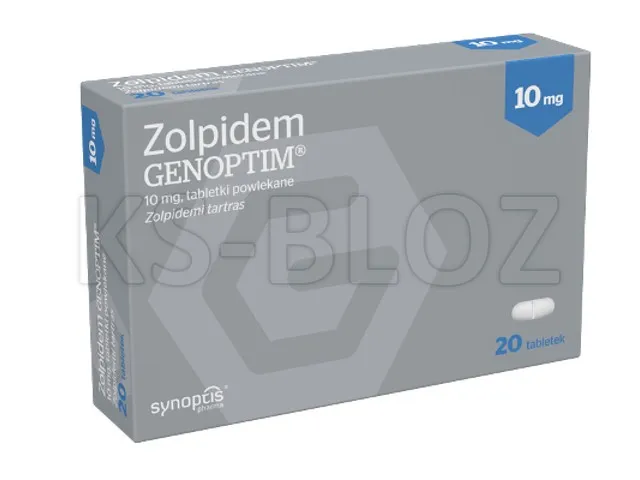
Table of Contents
Package leaflet: Information for the user
Zolpidem Genoptim, 10 mg, film-coated tablets
Zolpidemi tartras
Please read all of this leaflet carefully before taking this medicine because it contains important information for you.
- Keep this leaflet. You may need to read it again.
- If you have any further questions, ask your doctor or pharmacist.
- This medicine has been prescribed for you personally. Do not pass it on to others. It may harm them even if their symptoms are the same as yours.
- If you experience any side effects, including any not listed in this leaflet, tell your doctor or pharmacist. See section 4.
Contents of the leaflet:
- What Zolpidem Genoptim is and what it is used for
- What you need to know before you take Zolpidem Genoptim
- How to take Zolpidem Genoptim
- Possible side effects
- How to store Zolpidem Genoptim
- Contents of the pack and other information
1. What Zolpidem Genoptim is and what it is used for
Zolpidem Genoptim belongs to a group of medicines known as anxiolytics, sedatives, and hypnotics (pharmacotherapeutic group: 2.9.1). Each film-coated tablet of Zolpidem Genoptim 10 mg contains 10 mg of zolpidem tartrate (Zolpidemi tartras).
Zolpidem Genoptim is indicated for the short-term treatment of insomnia in adults when insomnia is debilitating or causing marked distress.
2. Important information before using Zolpidem Genoptim
When not to use Zolpidem Genoptim
- If the patient is allergic (hypersensitive) to the active substance zolpidem or to any of the other ingredients of this medicine (listed in section 6).
- If the patient has severe hepatic insufficiency.
- If the patient has acute and severe respiratory disorders.
- If the patient is under 18 years of age.
Warnings and precautions
Before starting treatment with Zolpidem Genoptim, discuss this with your doctor or pharmacist.
Zolpidem should be used with caution in patients with sleep apnoea syndrome and myasthenia gravis.
Respiratory disorders: particular caution should be exercised when using zolpidem in patients with impaired respiratory function, as hypnotic drugs may depress respiration.
Hepatic function impairment: see recommendations in the section on dosage and method of administration.
The cause of insomnia should be identified, if possible, and contributing factors eliminated before the patient starts treatment with a hypnotic. Persistence of insomnia after 7–14 days of treatment may indicate the presence of underlying psychiatric or physical disorders requiring diagnosis and periodic evaluation.
Duration of treatment
Treatment duration should be as short as possible (see Dosage) depending on the indication, but should not exceed four weeks for insomnia, including the tapering-off period. If extension of treatment is necessary, the patient's condition should always be re-evaluated.
Psychotic disorders
Hypnotic medicines such as zolpidem are not recommended for the primary treatment of psychotic disorders.
Depression
Although no significant pharmacokinetic or pharmacodynamic interactions with SSRIs (selective serotonin reuptake inhibitors) have been demonstrated, like other sedative/hypnotic agents, zolpidem should be used with caution in patients with symptoms of depression. Suicidal thoughts may occur; therefore, the physician should prescribe the smallest possible dose of zolpidem to prevent intentional overdose by the patient. Hidden depression (previously existing depression) may emerge during treatment with zolpidem. Since insomnia may be a symptom of depression, the patient should be re-examined by a physician if insomnia persists.
General information on effects observed after administration of hypnotic medicines, which the physician should consider, is described below.
Next-day psychomotor impairment (see also Driving and operating machinery)
The risk of next-day psychomotor impairment, including impaired ability to drive, may be increased the day after taking Zolpidem Genoptim if:
- The patient took the medicine less than 8 hours before activities requiring full mental alertness.
- The patient took a dose higher than the recommended dose.
- The patient took zolpidem during concomitant treatment with other central nervous system depressants or other medicines that increase blood levels of zolpidem, during alcohol consumption, or when using illicit substances.
A single dose should be taken immediately before bedtime.
Do not take another dose during the same night.
Memory impairment
To reduce the risk of subsequent memory impairment (amnesia), which usually occurs several hours after taking the medicine, the patient should ensure the possibility of uninterrupted sleep of 7–8 hours before taking the medicine.
Psychiatric reactions and "paradoxical" reactions
When using benzodiazepines or benzodiazepine-like medicines, reactions such as psychomotor agitation, irritability, aggression, hallucinations, rage attacks, nightmares, illusions, psychoses, inappropriate behaviour, and other adverse behavioural effects may occur. If such reactions occur, the medicine should be discontinued. These reactions are more likely in elderly patients.
Sleepwalking (somnambulism) and similar behaviours
In patients who have taken zolpidem and have not fully awakened, activities such as sleepwalking and other similar behaviours may occur, including driving while asleep, preparing and eating food, making phone calls, or engaging in sexual activity during sleep, which the patient will not remember upon waking.
The risk of these adverse effects is increased by alcohol and certain medicines used to treat depression or anxiety disorders, as well as by using zolpidem at doses exceeding the recommended maximum dose. In patients reporting such behaviours (e.g., driving while asleep), discontinuation of zolpidem should be considered due to the risk of danger to themselves and others (see section 2 "Zolpidem Genoptim with other medicines" and section 4 "Possible side effects").
Tolerance
When using benzodiazepines or short-acting benzodiazepine-like medicines for several weeks, a reduction in their hypnotic effectiveness may occur.
Dependence
Use of benzodiazepines or benzodiazepine-like medicines may lead to physical and psychological dependence. The risk of dependence increases with dose and duration of treatment; dependence is greater in patients with a history of psychiatric disorders and/or alcohol or drug dependence. Such patients should be closely monitored during treatment with hypnotic agents.
In cases where physical dependence has developed, abrupt discontinuation of treatment may be accompanied by withdrawal symptoms such as headache or muscle pain, increased anxiety and tension, psychomotor agitation, confusion, and irritability.
In severe cases, symptoms such as loss of reality, depersonalization, hyperacusis, numbness and tingling of extremities, hypersensitivity to light, noise, and touch, illusions, and seizures may occur.
Rebound insomnia
After discontinuation of hypnotic treatment, a transient syndrome may occur in which symptoms treated by benzodiazepines or benzodiazepine-like medicines recur with greater intensity than originally. Other symptoms such as mood changes, anxiety, and psychomotor agitation may also appear. It is important to inform the patient about rebound effects to minimize anxiety and other symptoms if they occur after stopping the medicine.
With short-acting sedatives and hypnotics, withdrawal symptoms may occur between doses.
Special patient groups
The safety and efficacy of zolpidem in patients under 18 years of age have not been established.
In an 8-week study involving children and adolescents (aged 6 to 17 years) with insomnia associated with attention deficit hyperactivity disorder (ADHD), psychiatric and nervous system disorders were the most common adverse reactions observed during zolpidem treatment compared to placebo, including dizziness (23.5% vs 1.5%), headache (12.5% vs 9.2%), and hallucinations (7.4% vs 0%) (see section 3 "How to use Zolpidem Genoptim").
Elderly patients (see Dosage recommendations)
Caution should be exercised when prescribing zolpidem to patients with severe respiratory insufficiency.
Benzodiazepines and benzodiazepine-like medicines are not indicated in the treatment of patients with severe hepatic dysfunction, as they may precipitate encephalopathy.
Benzodiazepines or benzodiazepine-like medicines are not recommended for the primary treatment of psychotic disorders.
Benzodiazepines or benzodiazepine-like medicines should not be used as monotherapy for the treatment of depression or anxiety associated with depression (risk of suicidal ideation).
Concomitant use of benzodiazepines or benzodiazepine-like medicines is not recommended in patients with a history of alcohol or drug abuse.
Zolpidem Genoptim with other medicines
Tell your doctor or pharmacist about all medicines you are currently taking, have recently taken, or plan to take.
Medicines with central nervous system depressant effects:
When zolpidem is used with the following medicines, drowsiness and next-day psychomotor disturbances, including impaired driving ability, may be intensified.
- Medicines used to treat certain mental health disorders (antipsychotics)
- Medicines used to treat sleep problems
- Sedatives or anxiolytics
- Medicines used to treat depression
- Medicines used to treat moderate to severe pain (narcotic analgesics)
- Medicines used to treat epilepsy
- Medicines used in anaesthesia
- Medicines used to treat hay fever, rashes, or other allergies, which may cause drowsiness (sedating antihistamines)
When taking zolpidem with antidepressants such as bupropion, desipramine, fluoxetine, sertraline, or venlafaxine, the patient may see things that are not really there (hallucinations).
Cytochrome P450 inhibitors and inducers
Substances inhibiting certain liver enzymes (especially cytochrome P450) may enhance the activity of benzodiazepines or benzodiazepine-like medicines. Zolpidem is metabolized by several liver cytochrome P450 enzymes, primarily CYP3A4 with involvement of CYP1A2. The pharmacodynamic effect of zolpidem is reduced when administered with rifampicin (a CYP3A4 inducer). However, co-administration of zolpidem with itraconazole (a CYP3A4 inhibitor) had no significant effect on its pharmacokinetics or pharmacodynamics. The clinical significance of these results is unknown.
Concomitant administration of zolpidem with ketoconazole (200 mg twice daily), a strong CYP3A4 inhibitor, prolonged the elimination half-life of zolpidem, increased total AUC, and decreased apparent oral clearance compared to zolpidem and placebo. When co-administered with ketoconazole, the total AUC of zolpidem was increased by 1.83 times compared to zolpidem alone. Routine dose adjustment is not considered necessary, but patients should be informed that concomitant use of zolpidem with ketoconazole may enhance the sedative effect.
Other medicines
No significant pharmacokinetic interactions were observed when zolpidem was administered with warfarin, digoxin, or ranitidine.
Concomitant use of zolpidem with fluvoxamine or ciprofloxacin is not recommended.
Zolpidem Genoptim with food and alcohol
Do not consume alcohol while taking Zolpidem Genoptim, as it may enhance the sedative effect of the medicine, affecting the ability to drive and operate machinery.
Pregnancy, breastfeeding, and fertility
Pregnancy
If the patient is pregnant or breastfeeding, suspects she may be pregnant, or plans to become pregnant, she should consult her doctor or pharmacist before using this medicine.
Zolpidem Genoptim should not be used prophylactically during pregnancy.
There are insufficient data on the safety of zolpidem use during pregnancy and lactation. Animal studies have not shown direct or indirect harmful effects on reproductive toxicity.
Women of childbearing potential taking Zolpidem Genoptim should contact their doctor to discontinue treatment if they plan to become pregnant or suspect they may be pregnant.
If the patient uses Zolpidem Genoptim in high doses for medical reasons during late pregnancy or during delivery, the newborn may experience symptoms such as hypothermia, muscle weakness, and moderate respiratory depression. Cases of severe respiratory depression in newborns have been reported when zolpidem was used together with other central nervous system depressants during late pregnancy. Additionally, newborns of mothers who took benzodiazepines or benzodiazepine-like medicines during late pregnancy may develop physical dependence and risk withdrawal symptoms in the postnatal period.
Breastfeeding
Zolpidem Genoptim should not be used during breastfeeding, as a small amount of the medicine passes into breast milk.
Driving and operating machinery
Zolpidem Genoptim has a major influence on the ability to drive and operate machinery and may cause events such as "falling asleep at the wheel."
The day after taking Zolpidem Genoptim (as with other hypnotics), it may happen that:
- the patient feels drowsy, sleepy, dizzy, or disoriented,
- the patient needs more time to make quick decisions,
- the patient may have blurred or double vision,
- the patient may be less alert.
To minimize the risk of these events, it is recommended to allow at least an 8-hour interval between taking zolpidem and driving, operating machinery, or working at heights.
Do not consume alcohol or psychoactive substances while taking Zolpidem Genoptim, as this may intensify the effects mentioned above.
Zolpidem Genoptim contains lactose
If the doctor has previously diagnosed the patient with intolerance to certain sugars, such as lactose, the patient should contact the doctor before taking this medicine.
3. How to use Zolpidem Genoptim
This medicine should always be taken exactly as directed by your doctor or pharmacist. If you are unsure, you should consult your doctor or pharmacist.
The recommended dose of Zolpidem Genoptim is 10 mg once daily. Your doctor may prescribe a lower dose for some patients.
Zolpidem Genoptim should be taken as a single dose, immediately before bedtime. The patient must ensure a period of at least 8 hours between taking the medicine and engaging in any activities requiring increased concentration.
The dose of 10 mg within 24 hours must not be exceeded.
Treatment should be as short as possible. The maximum duration of treatment, including the tapering-off period, is four weeks.
In certain cases, it may be necessary for the doctor to extend treatment beyond the maximum recommended duration; however, this must not occur without a reassessment of the patient's clinical condition.
Special patient groups:
Children and adolescents
The safety and efficacy of zolpidem in children and adolescents under 18 years of age have not been established. Therefore, Zolpidem Genoptim is not intended for use in this patient group.
Elderly patients
In elderly or debilitated patients who may be particularly sensitive to the effects of the medicine, the recommended dose is 5 mg. This dose may be increased only in exceptional circumstances. In this patient group, the daily dose must not exceed 10 mg.
Patients with hepatic impairment
In patients with impaired liver function, due to reduced clearance and metabolism of zolpidem, the initial dose should be 5 mg, with particular caution, especially in elderly patients. In adult patients (under 65 years of age), the dose may be increased by the doctor to 10 mg, but only if there is an insufficient clinical response and the medicine is well tolerated.
Zolpidem Genoptim is an oral medicine.
In all cases, whenever possible, the underlying cause of insomnia should be identified and contributing factors eliminated before the patient starts taking a sleep medicine. If insomnia does not improve within 7–14 days of treatment, this may indicate the presence of an underlying psychiatric or physical disorder; therefore, the patient should be regularly and thoroughly evaluated. This medicine should be taken immediately before going to sleep or while lying down.
Duration of treatment
Treatment should be as short as possible. Usually, treatment lasts from a few days to two weeks. The maximum duration of treatment, including the tapering-off period, is four weeks. The tapering schedule will be determined by the doctor based on the individual needs of the patient.
At the beginning of treatment, the doctor should inform the patient that treatment is of limited duration and clearly explain how the dose will be gradually reduced. In certain situations, it may be necessary to extend the use of the medicine beyond the maximum treatment duration. In such cases, a reassessment of the patient's clinical condition is required.
Use of a higher than recommended dose of Zolpidem Genoptim
Subjective and objective symptoms:
There have been reports of zolpidem overdose, resulting in disturbances of consciousness of varying severity – from drowsiness to coma. Cases of overdose with zolpidem and other centrally acting depressant drugs (including alcohol consumption) have led to severe symptoms, including death.
Treatment:
After zolpidem overdose, symptomatic and supportive treatment is recommended. Gastric lavage is not beneficial; therefore, activated charcoal should be administered to reduce drug absorption from the gastrointestinal tract.
Sedative medicines should be discontinued, even if agitation occurs.
In the event of severe symptoms, the doctor may consider administering flumazenil. However, the use of flumazenil may provoke neurological symptoms (seizures).
Zolpidem is not eliminated from the body by hemodialysis.
Missed dose of Zolpidem Genoptim
Do not take a double dose to make up for a missed dose. Stopping treatment may lead to withdrawal symptoms or rebound insomnia; therefore, you should follow your doctor's instructions.
Discontinuation of Zolpidem Genoptim
Discontinuation of Zolpidem Genoptim should be done gradually, and the dose reduction process should be individually tailored for each patient and in accordance with the doctor's recommendations.
If you have any further doubts regarding the use of this medicine, consult your doctor or pharmacist.
4. Possible adverse effects
Like all medicines, Zolpidem Genoptim may cause adverse effects, although not everyone will experience them.
For adverse effects, the following MedDRA frequency classification is used:
Very common (≥1/10); Common (≥1/100, <1/10); Uncommon (≥1/1,000, <1/100); Rare (≥1/10,000, <1/1,000); Very rare (<1/10,000); Frequency not known (cannot be estimated from available data).
There is evidence of a relationship between the severity of adverse effects of zolpidem and the dose administered, particularly for certain adverse effects affecting the central nervous system. Adverse effects are less pronounced when the medicine is taken immediately before going to bed or after lying down. They occur most frequently in elderly patients.
Infections and infestations
Common: upper respiratory tract infection, lower respiratory tract infection.
Immune system disorders
Frequency not known: angioedema.
Psychiatric disorders
Common: hallucinations, psychomotor agitation, nightmares.
Uncommon: confusion, irritability.
Frequency not known: restlessness, aggression, delusions, anger, psychosis, unusual behaviour, sleepwalking, dependence (after discontinuation, withdrawal symptoms or rebound symptoms may occur), libido disorders, depression.
Most of the above-mentioned psychiatric adverse effects are related to paradoxical reactions.
Nervous system disorders
Common: somnolence, headache, systemic dizziness, worsening of insomnia, anterograde amnesia (may be associated with inappropriate behaviour).
Frequency not known: reduced level of consciousness.
Eye disorders
Uncommon: diplopia.
Respiratory, thoracic and mediastinal disorders
Frequency not known: respiratory depression.
Gastrointestinal disorders
Common: diarrhoea, nausea, vomiting, abdominal pain.
Hepatobiliary disorders
Frequency not known: increased liver enzyme activity.
Skin and subcutaneous tissue disorders
Frequency not known: rash, angioedema, pruritus, urticaria, excessive sweating.
Musculoskeletal and connective tissue disorders
Frequency not known: muscle weakness.
General disorders and administration site conditions
Common: fatigue.
Frequency not known: gait disturbances, drug tolerance, falls (especially in elderly patients and when zolpidem is not taken according to the prescriber's instructions).
Reporting of adverse effects
If any adverse effects occur, including any adverse effects not listed in this leaflet, inform your doctor, pharmacist or nurse. Adverse effects can be reported directly to the Department of Monitoring Adverse Drug Reactions of the Office for Registration of Medicinal Products, Medical Devices and Biocidal Products:
Al. Jerozolimskie 181 C,
02-222 Warsaw.
Tel: +48 22 49 21 301 Fax: +48 22 49 21 309
Website: https://smz.ezdrowie.gov.pl
Reporting adverse effects helps to provide more information on the safety of the medicine.
5. How to store Zolpidem Genoptim
No special storage instructions apply.
Keep the medicine out of the sight and reach of children.
Do not use this medicine after the expiry date (EXP) stated on the container and cardboard box. The expiry date refers to the last day of the stated month. Lot is the batch number.
Medicines should not be disposed of via wastewater or household waste. Ask your pharmacist how to dispose of medicines no longer required. Such measures will help protect the environment.
6. Contents of the pack and other information
What Zolpidem Genoptim contains
The active substance is zolpidem tartrate.
The other ingredients are:
Tablet core: monohydrate lactose, microcrystalline cellulose, pregelatinized maize starch,
sodium carboxymethyl starch (type A), colloidal anhydrous silica, magnesium stearate.
Tablet coating: hypromellose, titanium dioxide (E 171), polyethylene glycol 6000, and talc.
If the patient has previously been diagnosed by a physician with intolerance to certain sugars, the patient should consult their doctor before taking this medicine.
What Zolpidem Genoptim looks like and contents of the pack
White or almost white, capsule-shaped, biconvex coated tablets with a break line on one side and the engraved number "10" on the other side.
PVC/Aluminium blisters, packed in cardboard boxes containing 7, 14, 20, 28, 30, 56 or 84 coated tablets.
HDPE containers with HDPE screw cap, containing 100 coated tablets.
Not all pack sizes may be marketed.
Marketing Authorisation Holder and Manufacturer
Marketing Authorisation Holder:
Synoptis Pharma Sp. z o.o.
ul. Krakowiaków 65
02-255 Warsaw
tel. +48 607 696 231
e-mail: [email protected]
Manufacturer/Importer:
Synoptis Industrial Sp. z o.o.
ul. Rabowicka 15
62-020 Swarzędz
Poland
Sofarimex indústria Química e Farmacêutica
SA Av. Das Indústrias - Alto do Colaride - Agualva- 2735-213
Cacém, Portugal