Zofenil 7.5
Poland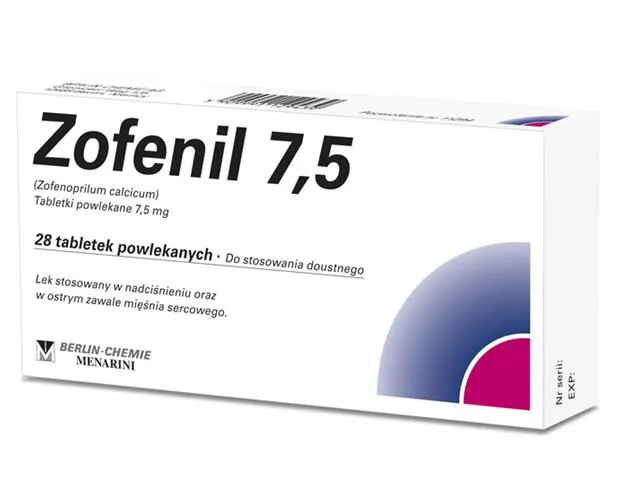
Table of Contents
Package leaflet: Information for the patient
Zofenil 7.5
7.5 mg, film-coated tablets
(Zofenoprilum calcicum)
Please read all of this leaflet carefully before taking this medicine because it contains important information for you.
- Keep this leaflet, as you may need to read it again.
- If you have any questions, ask your doctor or pharmacist.
- This medicine has been prescribed for you personally. Do not pass it on to others. It may harm them, even if their symptoms are the same as yours.
- If you experience any adverse reactions, including any not listed in this leaflet, tell your doctor or pharmacist. See section 4.
Contents of the leaflet:
- What Zofenil 7.5 is and what it is used for
- What you need to know before taking Zofenil 7.5
- How to take Zofenil 7.5
- Possible side effects
- How to store Zofenil 7.5
- Contents of the pack and other information
1. What Zofenil 7.5 is and what it is used for
Zofenil 7.5 contains 7.5 mg of zofenopril calcium, which belongs to a group of medicines that lower blood pressure called angiotensin-converting enzyme (ACE) inhibitors.
Zofenil 7.5 is used to treat the following conditions:
- High blood pressure (hypertension)
- Heart attack (acute myocardial infarction) in patients with or without symptoms of heart failure, who have not received thrombolytic therapy (treatment to dissolve blood clots).
2. Important information before using Zofenil 7.5
When not to use Zofenil 7.5:
- If the patient is allergic to the calcium salt of zofenopril or any of the other ingredients of this medicine (listed in section 6)
- if the patient has previously experienced an allergic reaction to any other medicine from the group of ACE inhibitors, such as captopril or enalapril
- if the patient has previously experienced swelling and itching around the face, nose and throat (angioedema) related to treatment with ACE inhibitors, or in case of hereditary/idiopathic angioedema (sudden swelling of the skin, tissues, gastrointestinal tract and other organs)
- if the patient has taken or is currently using sacubitril with valsartan, a medicine used to treat certain types of chronic (long-term) heart failure in adults, because the risk of angioedema (rapid swelling of tissues beneath the skin, such as in the throat) increases
- in case of severe liver function impairment
- in case of renal artery stenosis
- after the third month of pregnancy (Zofenil 7.5 should also be avoided during early pregnancy - see section "Pregnancy and breastfeeding")
- in women of childbearing age who are not using effective contraception
- if the patient has diabetes or kidney function impairment and is being treated with a blood pressure-lowering medicine containing aliskiren.
Warnings and precautions
Before starting treatment with Zofenil 7.5, discuss this with your doctor.
Inform your doctor:
- if the patient has hypertension and liver or kidney disease
- if hypertension is caused by kidney disease or narrowing of the artery supplying blood to the kidney (renovascular hypertension)
- if the patient has recently received a kidney transplant
- if the patient is undergoing dialysis therapy
- if LDL apheresis is being performed (a procedure similar to dialysis that removes harmful cholesterol from the blood)
- if the patient has abnormal, excessively high levels of the hormone aldosterone in the blood (primary hyperaldosteronism) or reduced levels of the hormone aldosterone in the blood (hypoaldosteronism)
- if the patient has valvular stenosis (aortic valve stenosis) or thickening of the heart walls (hypertrophic cardiomyopathy)
- if the patient has or has previously had psoriasis (a skin condition characterized by red, scaly patches)
- if the patient is undergoing allergen immunotherapy for insect venom (injections that reduce allergy symptoms)
- if the patient is taking any of the following medicines used to treat high blood pressure:
- an angiotensin II receptor antagonist (AIIRA), also known as a sartan – for example, valsartan, telmisartan, irbesartan, especially if the patient has kidney impairment related to diabetes
- aliskiren
- if the patient is taking any of the following medicines, the risk of developing angioedema (rapid swelling of the skin in areas such as the throat) may increase:
- racecadotril, a medicine used to treat diarrhoea
- medicines used to prevent organ transplant rejection and in cancer treatment (e.g. temsirolimus, sirolimus, everolimus)
- vildagliptin, a medicine used to treat diabetes
Your doctor may recommend regular monitoring of kidney function, blood pressure and blood electrolyte levels (e.g. potassium).
See also the section "When not to use Zofenil 7.5".
Zofenil 7.5 may cause excessive, sudden lowering of blood pressure, especially after the first dose (this risk increases when taken together with diuretics, in case of dehydration or on a low-salt diet). If this occurs, lie down on your back and contact your doctor immediately.
In case of surgery, before receiving anaesthesia, inform the anaesthetist that you are taking Zofenil 7.5. This will allow appropriate monitoring of blood pressure and heart rate during the procedure.
Additionally, in patients with myocardial infarction (acute heart attack) and:
- low blood pressure (< 100 mmHg) or circulatory shock (due to heart disorders) – use of Zofenil 7.5 is not recommended
- aged over 75 years – Zofenil 7.5 should be used with particular caution.
Inform your doctor if you suspect (or are planning) pregnancy. Use of Zofenil 7.5 is not recommended during early pregnancy and must not be used after the third month of pregnancy, as it may seriously harm the unborn child (see section "Pregnancy and breastfeeding").
Children and adolescents
This medicine should not be given to children and adolescents under 18 years of age, as its safety has not been established.
Zofenil 7.5 and other medicines
Tell your doctor about all medicines the patient is currently taking or has recently taken, as well as any medicines the patient plans to take.
In particular, inform your doctor if the patient is taking:
- potassium supplements (including salt substitutes), potassium-sparing diuretics and other medicines that increase blood potassium levels (e.g. trimethoprim and co-trimoxazole, used for bacterial infections; cyclosporine, an immunosuppressive medicine used to prevent organ transplant rejection; and heparin, a medicine used to thin the blood to prevent clots)
- lithium (used to treat mood disorders)
- anaesthetics
- opioids (e.g. morphine)
- antipsychotics (used to treat schizophrenia and similar disorders)
- tricyclic antidepressants, e.g. amitriptyline and clomipramine
- barbiturates (used to treat anxiety disorders, insomnia and epileptic seizures)
- other medicines used to treat hypertension and blood vessel dilators (including beta-blockers, alpha-blockers and diuretics such as hydrochlorothiazide, furosemide, torasemide)
- angiotensin II receptor antagonists (AIIRAs) or aliskiren – your doctor may recommend adjusting the dose and/or taking additional precautions (see also sections "When not to use Zofenil 7.5" and "Warnings and precautions")
- glyceryl trinitrate and other nitrates, used for chest pain (angina pectoris)
- acid-neutralizing medicines, including cimetidine (used to treat heartburn and peptic ulcer disease)
- cyclosporine (used after organ transplantation) and other immunosuppressive medicines (medicines that suppress the body's immune system)
- allopurinol (used to treat gout)
- insulin or oral antidiabetic medicines
- cytostatic medicines (used to treat cancer or diseases affecting the immune system)
- corticosteroids (potent anti-inflammatory medicines)
- procainamide (used for heart rhythm disorders)
- non-steroidal anti-inflammatory drugs (NSAIDs), such as aspirin or ibuprofen
- sympathomimetic medicines (medicines acting on the nervous system, including those used to treat asthma and hay fever, and amines that increase blood pressure, e.g. adrenaline)
- racecadotril (used to treat diarrhoea), medicines used to prevent rejection of transplanted organs and in cancer treatment (e.g. temsirolimus, sirolimus, everolimus) and vildagliptin (used to treat diabetes). The risk of angioedema may increase.
Zofenil 7.5, food, drink and alcohol
Zofenil 7.5 may be taken during or before meals, preferably with a glass of water.
Alcohol enhances the hypotensive (blood pressure-lowering) effect of Zofenil 7.5. For detailed advice on alcohol consumption during treatment, consult your doctor.
Pregnancy and breastfeeding
Pregnancy
If the patient is pregnant, suspects she may be pregnant or is planning a pregnancy, she should consult her doctor before using this medicine. The doctor will usually recommend discontinuing Zofenil 7.5 before planned pregnancy or immediately after pregnancy is confirmed, and will recommend an alternative medicine.
Use of Zofenil 7.5 is not recommended during early pregnancy and must not be used after the third month of pregnancy, as it may seriously harm the unborn child.
Breastfeeding
If the patient is breastfeeding or planning to breastfeed, she should consult her doctor before using this medicine. Use of Zofenil 7.5 is not recommended in breastfeeding mothers. The doctor may recommend an alternative medicine during breastfeeding, especially if breastfeeding a newborn or premature infant.
Driving and operating machinery
This medicine may cause dizziness and fatigue. If these symptoms occur, do not drive or operate machinery.
Zofenil 7.5 contains lactose
This medicine contains lactose. If the patient has been previously diagnosed with intolerance to certain sugars, the patient should consult their doctor before taking this medicine.
This medicine contains less than 1 mmol (23 mg) of sodium per coated tablet, meaning it is considered "sodium-free".
3. How to use Zofenil 7.5
This medicine should always be taken exactly as directed by your doctor. If in doubt, consult your doctor.
Zofenil 7.5 may be taken during or before a meal, preferably with a glass of water.
Treatment of high blood pressure (hypertension)
The usual starting dose of Zofenil 7.5 is 15 mg once daily. Your doctor will gradually adjust the dose (usually at four-week intervals) to determine the optimal dose for you. Long-term antihypertensive effect is usually achieved with a dose of 30 mg of Zofenil 7.5 once daily. The maximum dose is 60 mg per day, given as a single dose or in two divided doses.
In cases of dehydration, salt depletion, or when taking diuretics (water tablets), treatment may need to be started at a dose of 7.5 mg of Zofenil 7.5.
Liver or kidney disease
In patients with mild to moderate liver dysfunction or moderate to severe kidney dysfunction, your doctor will start treatment at half the usual recommended dose (15 mg). If the patient is undergoing dialysis, treatment will be started at one-quarter of the usual recommended dose (7.5 mg).
Treatment of heart attack (acute myocardial infarction)
Your doctor will initiate treatment with Zofenil 7.5 within the first 24 hours after the onset of symptoms. The medicine is administered twice daily, in the morning and evening, as follows:
- 7.5 mg twice daily – on days 1 and 2 of treatment,
- 15 mg twice daily – on days 3 and 4 of treatment,
- from day 5 onwards, your doctor will increase the dose to 30 mg twice daily.
Your doctor may adjust the dose or maximum dose depending on your blood pressure readings.
Treatment is continued for at least six weeks or longer if symptoms of heart failure persist.
Taking more Zofenil 7.5 than prescribed
If you accidentally take too many tablets, contact your doctor immediately or go to the nearest hospital emergency department (take the remaining tablets, packaging, or leaflet with you, if possible).
The most common symptoms of subjective and objective overdose include abnormally low blood pressure associated with fainting (hypotension), very slow heart rate (bradycardia), biochemical blood changes (electrolyte disturbances), and impaired kidney function.
If you miss a dose of Zofenil 7.5
If you miss a dose, take the next dose as soon as you remember. However, if the delay is long (e.g. several hours) and it is almost time for your next dose, wait and take the next recommended dose at the usual time. Do not take a double dose to make up for a missed dose.
Stopping Zofenil 7.5
You must consult your doctor before stopping this medicine, whether Zofenil 7.5 is being taken for high blood pressure or after a heart attack.
If you have any further questions about the use of this medicine, consult your doctor or pharmacist.
4. Possible adverse reactions
Like all medicines, Zofenil 7.5 can cause adverse reactions, although not everybody experiences them.
Adverse reactions associated with ACE inhibitors are mostly transient and
subside after discontinuation of treatment.
Common adverse reactions (may occur in less than 1 in 10 patients):
- fatigue
- nausea and/or vomiting
- dizziness
- headache
- cough
Uncommon adverse reactions (may occur in less than 1 in 100 patients):
- general weakness
- muscle cramps
- skin rash
Rare adverse reactions (may occur in less than 1 in 1000 patients):
- sudden swelling and itching, especially around the face, mouth, and throat, which may be accompanied by difficulty breathing.
- fainting (short-term loss of consciousness)
- rapid heartbeat, which may be fast or irregular (palpitations)
- low blood pressure
- urticaria (small rash)
- itching
- increased potassium levels in the blood
In addition to adverse reactions of Zofenil 7.5, the following adverse reactions have been observed,
typical of ACE inhibitors:
- Significant drop in arterial blood pressure at the beginning of treatment or after dose increase, accompanied by dizziness and visual disturbances.
- Rapid or irregular heartbeat and chest pain (heart attack or angina pectoris).
- Impaired consciousness, sudden dizziness, sudden visual disturbances or feeling of weakness and/or loss of touch sensation on one side of the body (transient ischemic attack or stroke).
- Peripheral edema (fluid accumulation in limbs), chest pain, muscle pain and/or cramps.
- Impaired kidney function, changes in daily urine volume, presence of protein in urine (proteinuria), impotence.
- Abdominal pain, diarrhea, constipation, dryness of the oral mucosa.
- Allergic reactions, e.g. skin rash, skin peeling, redness, skin layer separation and blister formation (toxic epidermal necrolysis), exacerbation of psoriasis (a skin disease characterized by red, scaly patches), hair loss (alopecia).
- Excessive sweating and sudden flushing (especially of the face).
- Mood changes, depression, sleep disturbances, unusual skin sensations such as burning, pricking or tingling (paresthesia), balance disturbances, disorientation, ringing in the ears (tinnitus), taste disturbances, blurred vision.
- Breathing difficulties, narrowing of airways in the lungs (bronchospasm), sinusitis, nasal discharge or nasal obstruction (rhinitis), inflammation of the tongue, bronchitis.
- Yellowing of the skin (jaundice), inflammation of the liver or pancreas, intestinal obstruction.
- Changes in blood test results, e.g. in the number of red blood cells, white blood cells or platelets, or decreased number of all types of blood cells (pancytopenia). If you experience a tendency to develop bruises or sore throat or fever without known cause, you should contact your doctor.
- Increased liver enzyme activity (aminotransferases) and bilirubin levels in blood, increased blood urea and creatinine levels
- Anemia due to red blood cell breakdown (hemolytic anemia), which may occur in patients with G6PD deficiency (glucose-6-phosphate dehydrogenase deficiency).
Reporting of adverse reactions
If any adverse symptoms occur, including any adverse reactions not listed in
this leaflet, inform your doctor, pharmacist, or nurse.
Adverse reactions can be reported directly to the Department of Monitoring of Adverse Drug Reactions of the Office for Registration of Medicinal Products, Medical Devices and Biocidal Products
Al. Jerozolimskie 181C, 02-222 Warsaw
Tel.: +48 22 49 21 301
Fax: +48 22 49 21 309
Website: https://smz.ezdrowie.gov.pl
Adverse reactions can also be reported to the marketing authorization holder.
Reporting adverse reactions helps to collect more information on the safety of medicine use.
5. How to store Zofenil 7,5
Keep out of the sight and reach of children.
No special storage conditions required.
Do not use this medicinal product after the expiry date stated on the packaging and blister after the word
'EXP'. The expiry date refers to the last day of the stated month.
Medicines should not be disposed of via wastewater or household waste. Ask your pharmacist how to
dispose of medicines no longer required. Such measures help protect the environment.
6. Contents of the pack and other information
What Zofenil 7.5 contains
The active substance is calcium salt of zofenopril 7.5 mg.
The other ingredients are: microcrystalline cellulose, lactose monohydrate, sodium croscarmellose,
magnesium stearate, colloidal anhydrous silica. Coating: hypromellose, titanium dioxide (E171), macrogol
400 and macrogol 6000 (see section 2. "Zofenil 7.5 contains lactose").
What Zofenil 7.5 looks like and contents of the pack
Zofenil 7.5 is in the form of white, round, biconvex coated tablets, available in packs containing 7, 14 or 28 coated tablets.
Not all pack sizes may be marketed.
Marketing Authorisation Holder and Manufacturer
Marketing Authorisation Holder
BERLIN – CHEMIE AG
Glienicker Weg 125
12489 Berlin, Germany
Manufacturer
A. Menarini Manufacturing Logistics and Services S.r.l.
Campo di Pile
67100 L’Aquila
Italy
Menarini - Von Heyden GmbH
Leipziger Strasse 7-13
01097 – Dresden
Germany
For further information, please contact the representative of the Marketing Authorisation Holder:
Berlin-Chemie/Menarini Polska Sp. z o.o.
Tel: (22) 566 21 00
Fax: (22) 566 21 01