Zivafert
Poland
Table of Contents
Package leaflet: Information for the patient
Zivafert, 5000 IU
Powder and solvent for solution for injection
Gonadotropinum chorionicum
This medicinal product will be subject to additional monitoring. This will allow rapid
identification of new safety information. Patients can also help by reporting any suspected
adverse reactions that occur after using the medicine. For information on how to report adverse
reactions, see section 4.
Please read all of this leaflet carefully before using this medicine because it contains
important information for you.
- Keep this leaflet. You may need to read it again.
- If you have any further questions, ask your doctor or pharmacist.
- This medicine has been prescribed for a specific individual. Do not pass it on to others. It may harm other people, even if their symptoms are the same.
- If you experience any adverse reactions, including any not listed in this leaflet, inform your doctor or pharmacist. See section 4.
- In this leaflet, the medicine Zivafert 5000 IU powder and solvent for solution for injection will be referred to as Zivafert.
Contents of the leaflet
- What Zivafert is and what it is used for
- What you need to know before using Zivafert
- How to use Zivafert
- Possible side effects
- How to store Zivafert
- Contents of the pack and other information
1. What Zivafert is and what it is used for
What Zivafert is:
Zivafert contains highly purified human chorionic gonadotropin, a hormone obtained from human urine, belonging to the family of "gonadotropins", which are natural hormones responsible for reproduction and fertility.
When to use Zivafert:
Zivafert is used:
- to support the development and maturation of multiple follicles (each containing an egg cell) in women undergoing assisted reproductive techniques (a procedure that may help achieve pregnancy), such as in vitro fertilization;
- to support the release of an egg from the ovary (induction of ovulation) in women who are unable to produce eggs ("anovulation") or who produce too few eggs ("oligoovulation").
This medicine should be used under the supervision of a doctor, unless otherwise directed by the doctor.
2. Important information before using Zivafert
When not to use Zivafert:
- if the patient is allergic to human chorionic gonadotropin or any of the other ingredients of this medicine (listed in section 6);
- if the patient has untreated diseases of the thyroid gland, pituitary gland, or adrenal glands;
- if the patient has cancer of the ovary, uterus, or breast;
- if the patient has a condition that prevents normal pregnancy, such as ovarian failure, absence of the uterus, premature menopause, blocked fallopian tubes, uterine fibroids, or other abnormalities of the reproductive organs;
- if the patient has recently experienced unexplained vaginal bleeding.
You should inform your doctor or pharmacist if any of the above conditions apply, as this medicine may not be suitable for the patient.
Warnings and precautions
Before starting treatment, the doctor should check that the patient's reproductive organs are normal.
Before starting to use Zivafert, discuss with your doctor if the patient currently has or has previously had any of the following conditions:
- abnormalities of the reproductive organs;
- chronic diseases (such as diabetes, cardiovascular disorders, etc.);
- vascular complications (i.e. increased risk of blood clots, history of blood clots in the patient or in the patient's family, overweight).
Medical tests
For up to 10 days after administration of Zivafert, a pregnancy test may give a false positive result.
During treatment with Zivafert, the following may occur:
Ovarian hyperstimulation syndrome (OHSS)
Treatment with gonadotropin hormones, such as Zivafert, may cause ovarian hyperstimulation syndrome. This is a serious condition in which the ovaries become overstimulated and developing ovarian follicles grow too large. In rare cases, severe OHSS can be life-threatening. Therefore, it is very important that the patient remains under close medical supervision. The doctor will perform an ultrasound (US) examination of the ovaries to monitor the treatment effect. Blood hormone levels may also be checked (see also section 4).
In ovarian hyperstimulation syndrome, fluid may rapidly accumulate in the abdominal cavity and chest cavity. Blood clots may also form. Seek immediate medical attention if any of the following occur:
- significant abdominal swelling and abdominal pain;
- nausea;
- vomiting;
- rapid weight gain due to fluid accumulation;
- diarrhea;
- reduced urine output;
- breathing difficulties.
Ovarian torsion
Ovarian torsion is a condition in which the ovary twists, potentially cutting off its blood supply.
Before starting treatment with this medicine, inform your doctor if:
- the patient has ever been diagnosed with ovarian hyperstimulation syndrome;
- the patient is pregnant or suspects she may be pregnant;
- the patient has ever undergone abdominal surgery;
- the patient has ever been diagnosed with ovarian torsion;
- the patient currently or previously had ovarian cysts or polycystic ovaries.
Blood clots (thrombosis)
Pregnancy increases the risk of blood clots. If the patient has risk factors for blood clots (e.g. overweight or family history of blood clots), the risk of developing a blood clot during in vitro fertilization (IVF) treatment may increase.
Blood clots can lead to serious conditions such as:
- pulmonary embolism (blood clots in the lungs);
- stroke;
- myocardial infarction (heart attack);
- reduced blood flow to vital organs, which may result in organ damage;
- reduced blood flow (deep vein thrombosis) to arms or legs, which may lead to amputation of the arm or leg.
Multiple births, congenital abnormalities, miscarriage, or pregnancy complications
Pregnancies following treatment with Zivafert are more likely to be twin or multiple pregnancies. Multiple pregnancies are associated with increased risks for both mother and child during the perinatal period. Women undergoing infertility treatment have a slightly increased risk of miscarriage or ectopic pregnancy (pregnancy outside the uterus). Therefore, the doctor should perform an early ultrasound examination to rule out ectopic pregnancy. The likelihood of multiple births is higher if the patient is using other ovulation-inducing medicines (e.g. hMG).
It is not known whether in vitro fertilization treatment causes congenital malformations or certain genital tract tumors.
Children and adolescents
Zivafert is not indicated for use in children and adolescents.
Zivafert with other medicines
Tell your doctor or pharmacist about all medicines the patient is currently taking or has recently taken, including medicines obtained without a prescription, as well as any medicines the patient plans to take. This is particularly important if the patient is taking medicines that:
- stimulate ovulation (e.g. hMG);
- contain cortisone, especially in high doses.
Pregnancy and breastfeeding
Do not use Zivafert if the patient is pregnant or breastfeeding. If the patient suspects she may be pregnant, she should consult her doctor before using this medicine.
Driving and operating machinery
Zivafert has no effect on the ability to drive or operate machinery.
Zivafert contains sodium
This medicine contains less than 1 mmol of sodium (23 mg) per injection, meaning the medicine is considered "sodium-free".
3. How to use Zivafert
Zivafert is a powder that must be dissolved in a liquid (diluent) before use; it is administered by subcutaneous or intramuscular injection. The solution is prepared by mixing the diluent with the powder and must be used immediately after preparation.
This medicine should always be used exactly as prescribed by the doctor. If in doubt, consult the doctor or pharmacist.
How to administer Zivafert:
Zivafert is administered by subcutaneous or intramuscular injection.
Each vial must be used only once, and the injection should be performed immediately after preparing the solution.
The recommended dose of Zivafert is 5,000 IU or 10,000 IU. The medicine should be administered within 24–48 hours after optimal follicular stimulation has been achieved.
After appropriate instruction and training, the doctor may recommend that the patient self-administer Zivafert injections.
Before the patient's first self-injection, the doctor should:
- explain how to prepare the correct dose of the medicine;
- demonstrate how to prepare the injection solution;
- indicate possible injection sites;
- allow practice of subcutaneous self-injection.
Before self-administering Zivafert, carefully read the instructions below.
How to prepare the Zivafert solution from 1 vial of powder:
The solution must be prepared immediately before injection. Each vial is for single use only.
Zivafert must only be prepared using the diluent supplied in the package, following the instructions below:
Step 1
Wash hands before preparing the solution. Use a clean working surface. It is important that hands and materials used are as clean as possible.
Step 2
Lay out all the following items on a clean surface:
- two alcohol swabs (not included in the pack);
- one vial containing Zivafert powder;
- one pre-filled syringe with diluent;
- one long needle for reconstitution and intramuscular injection;
- one short needle for subcutaneous injection.
Step 3

Remove only the cap from the pre-filled syringe.
- Attach the reconstitution needle (long needle) with its protective cap to the syringe and check that the needle is securely attached to prevent leakage. If leakage occurs, try to improve the connection by gently rotating the needle.
- Carefully place the syringe on a clean surface.
- Avoid touching the needle.
Step 4

Gently press and remove the colored plastic cap from the Zivafert vial.
- Wipe the rubber stopper with an alcohol swab and allow it to dry.
Step 5
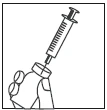
Lift the syringe, remove the protective cap from the needle, and insert the needle through the rubber stopper at the top of the Zivafert vial.
- Firmly press the plunger to slowly inject the diluent into the vial containing the powder, ensuring the entire content of the diluent is injected into the vial.
- DO NOT SHAKE. Gently rotate the vial in your hands until the powder is completely dissolved, taking care not to create foam.
Step 6
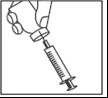
After the powder has dissolved (which usually occurs immediately), slowly draw the solution into the syringe as described below:
- With the needle still inserted, turn the vial upside down.
- Ensure the tip of the needle is below the liquid level.
- Gently pull back the plunger to draw the entire Zivafert solution into the syringe.
- Check that the reconstituted solution is clear and colourless.
Preparing higher doses using more than 1 vial of powder:
If the doctor prescribes a higher dose of 10,000 IU, this can be achieved by using two vials of powder and one pre-filled syringe with diluent.
When preparing two vials of Zivafert, at the end of Step 3 above, draw the reconstituted contents of the first vial into the syringe and slowly inject it into the second vial.
Repeat Steps 4 to 6 for the second vial.
The solution must be clear and colourless.
Intramuscular injection:
For intramuscular injection, the doctor or nurse will prepare and administer Zivafert into the thigh or buttock.
Subcutaneous injection:
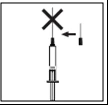
Once the syringe contains the correct dose,
replace the protective cap on the long needle. Remove the long needle from the syringe and replace it with the short subcutaneous injection needle, which has its protective cap attached. Check that the needle is securely attached, firmly press the short needle onto the syringe barrel, and gently twist it to ensure it is fully secured to prevent leakage.
- Remove the protective cap from the needle. Hold the syringe with the needle
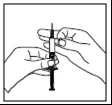
pointing upwards and gently tap the side of the syringe to move any air bubbles to the top.
- Push the plunger until a drop of liquid appears at the tip of the needle.
- DO NOT USE the solution if it contains any particles or is cloudy.
Injection site:
-
The doctor or nurse will advise on the appropriate injection site on the body. Typical sites are the thigh or abdomen (abdominal area), below the navel.
-
Clean the injection site with an alcohol swab.
-
Firmly pinch the skin. With the other hand, insert the needle with a firm motion at a 45° or 90° angle.
Injecting the solution:
- Inject the solution subcutaneously as directed by the doctor.
- Do not inject the solution directly into a vein.
- Slowly and evenly push the plunger to ensure proper injection and to avoid tissue damage.
Take as much time as needed to inject the prescribed volume of solution.
Removing the needle:
- Quickly withdraw the syringe and press firmly on the injection site.
- Gently massage the injection site while maintaining pressure—this helps disperse the Zivafert solution and reduce discomfort.
Disposal of used materials:
After completing the injection, all used needles and empty syringes must be disposed of in an appropriate container. Any unused solution or waste must be discarded in accordance with local regulations.
Use of a higher than recommended dose of Zivafert
The effects of Zivafert overdose are not known; however, ovarian hyperstimulation syndrome may be expected (see “Possible side effects”). If a higher than recommended dose of Zivafert has been administered, contact the doctor or pharmacist immediately.
Missed dose of Zivafert
If a dose of Zivafert is missed, contact the doctor immediately.
Stopping treatment with Zivafert
If you do not intend to continue using this medicine, consult your doctor.
If you have any further questions about the use of this medicine, consult your doctor or pharmacist.
4. Possible adverse effects
Like all medicines, this medicine can cause adverse effects, although not everyone will experience them.
If you notice any of the following serious adverse effects,
you should stop using Zivafert immediately and contact your doctor without delay – urgent medical
assistance may be required:
- Mild or moderate ovarian hyperstimulation (ovarian hyperstimulation syndrome), characterized by enlarged ovaries, ovarian cysts, abdominal pain with nausea and vomiting (see also section 2. "Ovarian hyperstimulation syndrome"). This is a common adverse effect (may occur in up to 1 in 10 people).
- Severe ovarian hyperstimulation (ovarian hyperstimulation syndrome), characterized by lower abdominal (pelvic) pain, nausea, vomiting, weight gain, fluid accumulation in the abdominal cavity (ascites) or in the chest cavity (pleural effusion). This is an uncommon adverse effect (may occur in up to 1 in 100 people).
- Rupture of an ovarian cyst (as a rare complication of severe ovarian hyperstimulation syndrome, may occur in up to 1 in 1,000 people).
- Formation of blood clots in blood vessels (thromboembolic events), as a complication of ovarian hyperstimulation syndrome. This is a rare adverse effect (may occur in up to 1 in 1,000 people).
- Severe generalized allergic reactions, which may include: swelling of the face, eyes, lips, throat or tongue, difficulty breathing, wheezing, or skin rash. This is a rare adverse effect (may occur in up to 1 in 1,000 people).
Other adverse effects:
Common adverse effects (may occur in up to 1 in 10 people):
- Reaction at the injection site, which may include redness, bruising, swelling, itching, or pain at the injection site;
- Swelling;
- Mood changes;
- Headache;
- Breast tenderness.
Uncommon adverse effects (may occur in up to 1 in 100 people):
- Anxiety (restlessness);
- Fatigue.
Rare adverse effects (may occur in up to 1 in 1,000 people):
- Swelling in deep layers of the skin, often accompanied by urticaria;
- Generalized skin rashes.
If any of the rare adverse effects listed above occur, you should
contact your doctor immediately, who will assess whether treatment with Zivafert should be discontinued,
or go immediately to the nearest hospital emergency department.
Reporting of adverse effects
If any adverse effects occur, including any not listed
in this leaflet, inform your doctor or pharmacist. Adverse effects can
be reported directly to the Department of Monitoring of Adverse Drug Reactions of the Office for Registration of Medicinal Products, Medical Devices and Biocidal Products:
Al. Jerozolimskie 181C, 02-222 Warsaw,
Tel.: + 48 22 49 21 301,
Fax: + 48 22 49 21 309,
Website: https://smz.ezdrowie.gov.pl .
Adverse effects can also be reported to the marketing authorization holder.
Reporting adverse effects helps to provide more information on the safety of the medicine.
5. How to store Zivafert
Keep the medicine out of the sight and reach of children.
Do not store above 25°C. Store the vial and the solvent pre-filled syringe in the outer packaging to protect from light.
Use the solution immediately after preparation.
Do not use this medicine after the expiry date stated on the carton, vial, or solvent pre-filled syringe after: EXP. If the expiry date is stated as month/year, the expiry date refers to the last day of the specified month.
Do not use this medicine if the solution appears not to be clear (cloudy or contains visible particles). After preparation, the solution must be clear and colourless.
Medicines should not be disposed of via wastewater. Ask your pharmacist how to dispose of medicines no longer required. This will help protect the environment.
6. Contents of the pack and other information
What Zivafert contains
- The active substance is human chorionic gonadotropin.
- The other ingredients are:
- vial with powder: monohydrate lactose;
- solvent pre-filled syringe (0.9% sodium chloride solution): water for injections, sodium chloride.
Each vial contains: human chorionic gonadotropin 5000 IU, obtained from human urine.
What Zivafert looks like and contents of the pack
Zivafert is available as:
Powder in vial: a lyophilized powder, white to almost white in colour.
Solvent in pre-filled syringe (0.9% sodium chloride solution): a clear, colourless solution.
Each single pack contains:
A plastic tray containing a powder in a clear type I glass vial, closed with a bromobutyl rubber stopper and an aluminium flip-off cap.
1 ml of solvent in a pre-filled syringe made of colourless type I glass, with a chlorobutyl rubber plunger (also functioning as a piston), a tip cap made of isoprene and bromobutyl, 1 injection needle for reconstitution and intramuscular administration, and 1 injection needle for subcutaneous administration.
The collective pack (10+10) contains 10 plastic trays as described above.
Not all pack sizes may be marketed.
Marketing Authorisation Holder and Manufacturer
Marketing Authorisation Holder:
IBSA Farmaceutici Italia s.r.l.
Via Martiri di Cefalonia 2
26900 Lodi
Italy
[email protected]
Importer:
IBSA Farmaceutici Italia srl
Via Martiri di Cefalonia 2
26900 Lodi
Italy
This medicinal product is authorised in the European Economic Area member states under the following names:
AT: Zivafert
DK: Gonasi Set
CZ: Zivafert
EL: Zivafert
ES: Gonasi Kit
FI: Gonasi Set
FR: GONADOTROPHINE CHORIONIQUE IBSA
HU: Zivafert Kit
NL: Gonasi
NO: Gonasi Set
PL: Zivafert
SE: Gonasi Set
SK: Gonasi Kit