Zinnat
Poland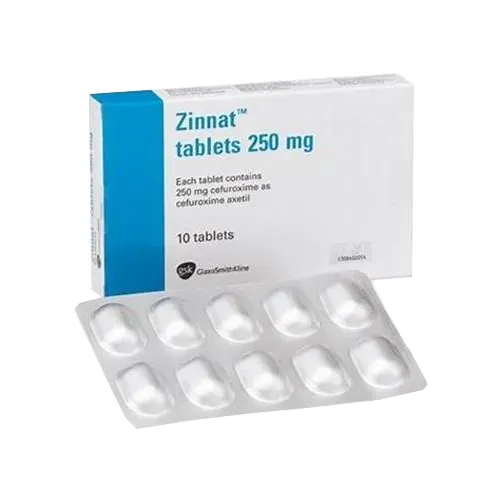
Table of Contents
Patient Information Leaflet
Warning! Keep this leaflet! The information on the immediate packaging is in a foreign language.
Zinnat (Zinadol)
500 mg, film-coated tablets
Cefuroximum
Zinnat and Zinadol are different brand names of the same medicine.
Please read this leaflet carefully before taking the medicine, as it contains important information for the patient.
- Keep this leaflet, so that you can read it again if necessary.
- If you have any questions, please consult your doctor, pharmacist, or nurse.
- This medicine has been prescribed for a specific individual. Do not pass it on to others. This medicine may harm someone else, even if their symptoms are the same.
- If the patient experiences any adverse reactions, including any not listed in this leaflet, inform your doctor or pharmacist. See section 4.
Table of contents
- What Zinnat is and what it is used for
- What you need to know before taking Zinnat
- How to take Zinnat
- Possible side effects
- How to store Zinnat
- Contents of the pack and other information
1. What Zinnat is and what it is used for
Zinnat is an antibiotic used in adults and children. It works by killing the bacteria that cause infections. It belongs to a group of medicines called cephalosporins.
Zinnat is used to treat infections of:
- throat
- sinuses
- middle ear
- lungs or chest
- urinary tract
- skin and soft tissues.
Zinnat may also be used:
- in the treatment of early-stage Lyme disease (borreliosis – an infection transmitted by ticks).
Your doctor may investigate which type of bacteria caused the infection and may check during treatment whether the bacteria are sensitive to Zinnat.
2. Important information before using Zinnat
When not to use Zinnat:
- if the patient is allergic to cefuroxime axetil, to any of the cephalosporin antibiotics, or to any of the other ingredients of Zinnat (listed in section 6);
- if the patient has ever experienced a severe allergic reaction (hypersensitivity) to any other type of beta-lactam antibiotics (penicillins, monobactams or carbapenems);
- if the patient has ever developed severe skin rash or skin peeling, blisters and/or oral ulcers after treatment with cefuroxime or other cephalosporin antibiotics.
If any of the above situations apply, the patient must not take Zinnat without consulting a doctor.
Warnings and precautions
Severe skin adverse reactions, including Stevens-Johnson syndrome, toxic epidermal necrolysis, and drug reaction with eosinophilia and systemic symptoms (DRESS), have been reported during treatment with cefuroxime. If any symptoms related to severe skin reactions described in section 4 occur, medical advice must be sought immediately.
Before starting treatment with Zinnat, discuss this with your doctor or pharmacist.
Children
Zinnat is not recommended for use in children under 3 months of age, as the safety and efficacy of the medicine have not been established in this age group.
During treatment with Zinnat, be alert for possible adverse effects such as allergic reactions, fungal infections (e.g. candidiasis), and severe diarrhoea (pseudomembranous colitis). This will help reduce the risk of complications. See “Symptoms which require attention” in section 4.
Blood tests
Zinnat may affect the results of blood glucose tests and the Coombs test (a blood test). If the patient is to undergo blood testing, they should:
- inform the person taking the sample that they are taking Zinnat.
Zinnat and other medicines
Tell your doctor or pharmacist about all medicines the patient is currently taking or has recently taken, as well as any medicines they plan to take.
- Medicines that reduce stomach acid (e.g. antacids used to treat heartburn) may affect the action of Zinnat.
- Probenecid.
- Oral anticoagulants.
If the patient is taking any of the above (or similar) medicines, they should inform their doctor or pharmacist.
Pregnancy, breastfeeding and fertility
If the patient is pregnant or breastfeeding, suspects she may be pregnant, or is planning to have a baby, she should consult her doctor or pharmacist before using this medicine.
Driving and operating machinery
Zinnat may cause dizziness and other adverse effects that could impair the patient's alertness.
- The patient should not drive or operate machinery if they do not feel well.
Important information about certain ingredients of Zinnat
- Zinnat film-coated tablets contain parabens, which may cause allergic reactions (delayed-type reactions possible).
- Zinnat 500 mg film-coated tablets contain 0.00506 mg of sodium benzoate per tablet.
- The medicine contains less than 1 mmol (23 mg) of sodium per tablet, i.e. the medicine is considered "sodium-free".
per tablet
- The patient should contact their doctor to confirm whether Zinnat is an appropriate medicine for them.
3. How to use Zinnat
This medicine should always be taken exactly as recommended by your doctor or pharmacist. If you
have any doubts, you should contact your doctor or pharmacist again.
Zinnat is available in the following strengths: 125 mg, 250 mg, 500 mg.
Zinnat should be taken after a meal. This will help increase the effectiveness of treatment.
Zinnat tablets should be swallowed whole with water.
The tablets must not be chewed, crushed, or divided – doing so may reduce the effectiveness of treatment.
Recommended dose
Adults and children with body weight equal to or greater than 40 kg
The recommended dose of Zinnat is 250 mg to 500 mg twice daily, depending on the
severity and type of infection.
Children weighing less than 40 kg
Children with body weight below 40 kg should preferably be treated with Zinnat oral suspension.
The recommended dose of Zinnat is 10 mg/kg body weight (not exceeding 250 mg) to 15 mg/kg body weight (not exceeding 250 mg) twice daily, depending on:
- the severity and type of infection.
Zinnat is not recommended for use in children under 3 months of age, as the safety and efficacy of the medicine have not been established in this age group.
Depending on the disease and the patient's response to treatment, the initial dose may be adjusted or more than one treatment course may be required.
Patients with kidney problems
If the patient has impaired kidney function, the doctor may adjust the dosage of the medicine.
- If this applies to the patient, they should inform their doctor.
Taking more than the recommended dose of Zinnat
If a patient takes more than the recommended dose of Zinnat, neurological disturbances may occur, particularly an increased risk of seizures (epileptic fits).
- Seek immediate medical advice or call emergency services. If possible, show the Zinnat packaging to the healthcare provider.
Missing a dose of Zinnat
Do not take a double dose to make up for a missed dose. Take the next dose at the usual time.
Stopping Zinnat treatment
Do not stop taking Zinnat unless advised by your doctor.
It is important not to shorten the prescribed duration of Zinnat treatment. Do not stop treatment without consulting your doctor, even if you feel better. Shortening the recommended treatment period may lead to recurrence of the infection.
If you have any further questions about the use of this medicine, consult your doctor or pharmacist.
4. Possible adverse effects
Like all medicines, this medicine can cause adverse effects, although not everyone will experience them.
Symptoms to be aware of
In a small number of people taking Zinnat, an allergic reaction or potentially severe skin reaction has been reported. Symptoms may include:
- Severe allergic reaction. Symptoms include: raised, itchy rash, swelling, sometimes of the face or lips, which may make breathing difficult.
- Widespread rash, high fever, and swollen lymph nodes (DRESS syndrome or drug hypersensitivity syndrome),
- Chest pain associated with an allergic reaction, which may be a sign of heart attack caused by allergy (Kounis syndrome).
- Skin rash, which may develop into blisters and appear as target-like lesions (dark spot in the center surrounded by a lighter ring and a dark rim at the edge).
Widespread skin lesions with blisters and peeling skin. This may be a sign of Stevens-Johnson syndrome or toxic epidermal necrolysis – Lyell's disease.
Other symptoms to be aware of during treatment with Zinnat
- Fungal infections. Medicines such as Zinnat may cause overgrowth of yeast ( Candida ) in the body, leading to fungal infection (e.g. thrush). The risk of this adverse effect is higher if Zinnat is used for a prolonged period.
- Severe diarrhoea (pseudomembranous colitis). Medicines like Zinnat may cause inflammation of the colon (large intestine), resulting in severe diarrhoea, usually with blood and mucus, abdominal pain, and fever.
- Jarisch-Herxheimer reaction. During treatment with Zinnat for Lyme disease (borreliosis), some patients may experience high fever, chills, muscle and headache, and skin rash. This is known as the Jarisch-Herxheimer reaction. These symptoms usually last from several hours to one day.
- If any of these symptoms occur in a patient, contact a doctor or nurse immediately.
Common adverse effects
May occur in up to 1 in 10 patients:
- fungal infections (e.g. candidiasis)
- headache
- dizziness
- diarrhoea
- nausea
- stomach pain
Common adverse effects that may be revealed in blood tests:
- increased number of white blood cells (eosinophilia)
- increased liver enzyme activity
Uncommon adverse effects
May occur in up to 1 in 100 patients:
- vomiting
- skin rashes
Uncommon adverse effects that may be revealed in blood tests:
- decreased number of platelets (cells involved in blood clotting)
- decreased number of white blood cells (leukopenia)
- positive Coombs test
Other adverse effects
Other adverse effects occur in a very small number of patients, but the exact frequency is unknown:
- severe diarrhoea (pseudomembranous colitis)
- allergic reactions
- skin reactions (including severe)
- high fever
- yellowing of the whites of the eyes or skin
- hepatitis
Adverse effects that may be revealed in blood tests:
- excessive breakdown of red blood cells (hemolytic anaemia).
Reporting of adverse effects
If any adverse effects occur, including any not listed in this leaflet, inform your doctor, pharmacist, or nurse. Adverse effects can also be reported directly to the Department of Monitoring Adverse Drug Reactions of the Office for Registration of Medicinal Products, Medical Devices and Biocidal Products, Al. Jerozolimskie 181C, 02-222 Warsaw, phone: +48 22 49 21 301, fax: +48 22 49 21 309, website: https://smz.ezdrowie.gov.pl.
Reporting adverse effects helps to provide more information on the safety of the medicine.
5. How to store Zinnat
Keep the medicine out of sight and reach of children.
Do not store above 30°C.
Do not use if the tablets are broken or otherwise damaged.
Do not use this medicine after the expiry date stated on the packaging. The expiry date refers to the last day of the stated month.
Medicines must not be disposed of via wastewater or household waste. Ask your pharmacist how to dispose of medicines no longer required. Such measures help protect the environment.
6. Contents of the pack and other information
What Zinnat contains
The active substance is cefuroxime: each film-coated tablet contains 500 mg of cefuroxime (as
cefuroxime axetil).
The other components are:
tablet core: microcrystalline cellulose, sodium croscarmellose (type A), sodium lauryl sulphate,
hydrogenated vegetable oil, colloidal anhydrous silica;
coating components: hypromellose, propylene glycol, methyl parahydroxybenzoate (E 218),
propyl parahydroxybenzoate (E 216), Opaspray White M-1-7120J (containing, among others,
titanium dioxide (E 171) and sodium benzoate).
What Zinnat looks like and contents of the pack
Zinnat 500 mg film-coated tablets are white, capsule-shaped, smooth on one side and marked
with "GX EG2" on the other.
The tablets are packed in aluminium blisters in a cardboard box.
The pack contains 14 film-coated tablets.
For more detailed information, please contact the marketing authorisation holder or the parallel
importer.
Marketing authorisation holder in Greece, the country of export:
Sandoz Pharmaceuticals d.d.
Verovškova ulica 57
SI-1000 Ljubljana
Slovenia
Manufacturer:
GlaxoSmithKline Trading Services Limited
12 Riverwalk, Citywest Business Campus, Dublin 24, D24 YK11, Ireland
Lek Farmacevtska družba d.d. (Lek Pharmaceuticals d.d.)
Verovškova 57, Sl-1526 Ljubljana, Slovenia
Parallel importer:
InPharm Sp. z o.o.
ul. Strumykowa 28/11
03-138 Warsaw, Poland
Repackaged by:
InPharm Sp. z o.o. Services sp. k.
ul. Chełmżyńska 249
04-458 Warsaw, Poland
Marketing authorisation number in Greece, the country of export: 41698/5-11-2009
Parallel import authorisation number: 63/20
This medicinal product is authorised in the European Economic Area and in the United Kingdom (Northern Ireland)
under the following names:
Austria, Belgium, Bulgaria, Cyprus, Czech Republic, Denmark, Estonia, France, Hungary, Ireland, Italy, Latvia,
Lithuania, Luxembourg, Malta, Netherlands, Poland, Romania, Slovakia, Slovenia, Spain, United Kingdom (Northern Ireland) – Zinnat
Germany – Elobact
Greece – Zinadol
Italy – Oraxim
Portugal – Zipos
Portugal – Zoref