Zinnat
Poland
Table of Contents
Patient Information Leaflet
Zinnat, 250 mg/5 ml, granules for oral suspension
Cefuroximum
Please read all of this leaflet carefully before taking this medicine, because it contains
important information for you.
- Keep this leaflet, as you may need to read it again.
- If you have any further questions, please ask your doctor, pharmacist, or nurse.
- This medicine has been prescribed for you personally. Do not give it to others. It may harm other people, even if their symptoms are the same as yours.
- If you experience any side effects, including any not listed in this leaflet, please inform your doctor, pharmacist, or nurse. See section 4.
Leaflet Contents
- What Zinnat is and what it is used for
- What you need to know before taking Zinnat
- How to take Zinnat
- Possible side effects
- How to store Zinnat
- Contents of the pack and other information
1. What Zinnat is and what it is used for
Zinnat is an antibiotic used in adults and children. It works by killing the bacteria that cause infections. It belongs to a group of medicines called cephalosporins.
Zinnat is used to treat infections of:
- the throat
- the sinuses
- the middle ear
- the lungs or chest
- the urinary tract
- the skin and soft tissues.
Zinnat may also be used:
- in the treatment of early-stage Lyme disease (borreliosis – an infection transmitted by ticks).
Your doctor may test which type of bacteria is causing your infection and may also check during treatment whether the bacteria are sensitive to Zinnat.
2. Important information before using Zinnat
When not to use Zinnat:
- if the patient is allergic to cefuroxime axetil, to any of the cephalosporin antibiotics, or to any of the other ingredients of Zinnat (listed in section 6);
- if the patient has ever experienced a severe allergic reaction (hypersensitivity) to any other type of beta-lactam antibiotics (penicillins, monobactams or carbapenems).
- if the patient has ever developed severe skin rash or skin peeling, blisters and (or) mouth ulcers after treatment with cefuroxime or other cephalosporin antibiotics. If any of the above circumstances apply to the patient, the patient should not take Zinnat without consulting a doctor.
Warnings and precautions
Severe skin adverse reactions, such as Stevens-Johnson syndrome, toxic epidermal necrolysis, and drug reaction with eosinophilia and systemic symptoms (DRESS), have occurred during treatment with cefuroxime.
If any of the symptoms associated with severe skin reactions described in section 4 occur, medical advice should be sought immediately.
Before starting treatment with Zinnat, discuss this with your doctor or pharmacist.
Children
Zinnat is not recommended for use in children under 3 months of age, as the safety and efficacy of the medicine in this age group have not been established.
During treatment with Zinnat, monitor for symptoms such as allergic reactions, fungal infections (e.g. candidiasis), and severe diarrhoea (pseudomembranous colitis). This will help reduce the risk of complications. See “Symptoms to watch for” in section 4.
Blood tests
Zinnat may affect the results of blood glucose tests and a blood test known as the Coombs test. If the patient is due to have blood tests, they should:
inform the person taking the sample that they are taking Zinnat.
Zinnat with other medicines
Tell your doctor or pharmacist about all medicines the patient is currently taking, has recently taken, or plans to take.
- Medicines reducing stomach acid (e.g. antacids used to treat heartburn) may affect the action of Zinnat.
- Probenecid.
- Oral anticoagulants (blood thinners). If the patient is taking any of the above (or similar) medicines, they should inform their doctor or pharmacist.
Pregnancy, breastfeeding and fertility
If the patient is pregnant or breastfeeding, suspects she may be pregnant, or is planning to have a child, she should consult her doctor or pharmacist before using this medicine.
Driving and operating machinery
Zinnat may cause dizziness and other adverse effects that could impair alertness.
The patient should not drive or operate machinery if they do not feel well.
Important information about some of the ingredients of Zinnat
Zinnat oral suspension contains sugar (sucrose). This should be taken into account in patients with diabetes. If a doctor has diagnosed the patient with intolerance to certain sugars, the patient should contact their doctor before taking this medicine.
Zinnat oral suspension also contains aspartame, which is a source of phenylalanine. It may be harmful to patients with phenylketonuria. This is a rare genetic disorder in which phenylalanine accumulates in the body due to impaired excretion.
Zinnat oral suspension also contains benzyl alcohol (E1519), which may cause allergic reactions. Consult a doctor or pharmacist if the patient has liver or kidney disease, or if the patient is pregnant or breastfeeding (see also section above – Pregnancy, breastfeeding and fertility), because benzyl alcohol may accumulate in the body, potentially causing adverse effects (so-called metabolic acidosis). It should not be used for longer than one week in young children (under 3 years of age) unless otherwise directed by a doctor or pharmacist.
5 ml of ready-to-use suspension contains 0.045 g of aspartame (E 951).
5 ml of ready-to-use suspension contains 2.3 g of sucrose.
5 ml of ready-to-use suspension contains 4.6 mg of benzyl alcohol (E 1519).
You should ask your doctor whether Zinnat is suitable for the patient.
3. How to use Zinnat
This medicine should always be used exactly as directed by your doctor or pharmacist. If you
are unsure, you should contact your doctor or pharmacist again.
Zinnat should be taken after a meal. This will help increase the effectiveness of treatment.
Shake the bottle before use.
The measured dose of Zinnat suspension may be diluted with cold fruit juice or a milk-based drink; it should be taken immediately after preparation.
Zinnat should not be mixed with hot liquids.
Detailed instructions for preparing the Zinnat suspension are provided at the end of this leaflet (see Instructions for preparing the suspension).
Recommended dose
Adults and children with body weight equal to or greater than 40 kg
The recommended dose of Zinnat is 250 mg to 500 mg twice daily, depending on the severity and type of infection.
Children with body weight below 40 kg
Children weighing less than 40 kg should preferably be treated with Zinnat oral suspension.
The recommended dose of Zinnat is 10 mg/kg body weight (not exceeding 250 mg) to 15 mg/kg body weight (not exceeding 250 mg) twice daily, depending on:
- severity and type of infection
- child's body weight and age, with a maximum daily dose not exceeding 500 mg.
Zinnat is not recommended for use in children under 3 months of age, as safety and efficacy of the medicine have not been established in this age group.
Depending on the disease and the patient's response to treatment, the initial dose may be adjusted or more than one course of treatment may be required.
Patients with kidney problems
If the patient has impaired kidney function, the doctor may adjust the dosage of the medicine.
If this applies to the patient, they should inform the doctor.
Taking more Zinnat than recommended
If a patient takes more Zinnat than prescribed, neurological disturbances may occur, particularly an increased risk of seizures (epileptic fits).
Seek immediate medical advice or call emergency services. If possible, show the Zinnat packaging to the healthcare provider.
Missing a dose of Zinnat
Do not take a double dose to make up for a missed dose. Take the next dose at the usual time.
Stopping Zinnat treatment
Do not stop taking Zinnat unless instructed by your doctor.
It is important not to shorten the prescribed duration of treatment with Zinnat. Do not discontinue treatment without medical advice, even if the patient feels better. Shortening the recommended treatment period may lead to recurrence of the illness.
If you have any further questions about the use of this medicine, consult your doctor or pharmacist.
4. Possible adverse reactions
Like all medicines, this medicine can cause adverse reactions, although not everyone experiences them.
Symptoms to be aware of
In a small number of people taking Zinnat, an allergic reaction or potentially
severe skin reaction has been reported. Symptoms may include:
- Severe allergic reaction. Symptoms include: raised, itchy rash, swelling, sometimes of the face or mouth, which may make breathing difficult.
- Widespread rash, high fever and swollen lymph nodes (DRESS syndrome or drug-induced hypersensitivity syndrome),
- Chest pain associated with an allergic reaction, which may be a symptom of heart attack triggered by allergy (Kounis syndrome).
- Skin rash, which may develop into blisters and appear as target-like lesions (a dark spot in the centre surrounded by a lighter ring with a dark ring around the edge).
- Widespread skin lesions with blisters and peeling of the outer layer of skin. (This may be a sign of Stevens-Johnson syndrome or toxic epidermal necrolysis - Lyell's disease).
Other symptoms to be aware of during treatment with Zinnat
- Fungal infections. Medicines such as Zinnat may cause overgrowth of yeast (Candida) in the body, which may lead to fungal infection (e.g. thrush). The risk of this adverse reaction is higher if Zinnat is used for a prolonged period.
- Severe diarrhoea (pseudomembranous colitis). Medicines such as Zinnat may cause inflammation of the colon (large intestine), resulting in severe diarrhoea, usually with blood and mucus, abdominal pain and fever.
- Jarisch-Herxheimer reaction. During treatment with Zinnat for Lyme disease (borreliosis), some patients may experience high fever, chills, muscle and joint pain, and skin rash. This is known as the Jarisch-Herxheimer reaction. These symptoms usually last from several hours to one day.
If any of these symptoms occur, contact a doctor or nurse immediately.
Common adverse reactions
May occur in no more than 1 in 10 patients:
- fungal infections (e.g. candidiasis)
- headache
- dizziness
- diarrhoea
- nausea
- stomach pain
Common adverse reactions that may be revealed in blood tests:
- increased white blood cell count (eosinophilia)
- increased liver enzyme activity
Uncommon adverse reactions
May occur in no more than 1 in 100 patients:
- vomiting
- skin rashes
Uncommon adverse reactions that may be revealed in blood tests:
- reduced platelet count (cells involved in blood clotting)
- reduced white blood cell count (leukopenia)
- positive Coombs test
Other adverse reactions
Other adverse reactions occur in a very small number of patients, but the exact frequency is unknown:
- severe diarrhoea (pseudomembranous colitis)
- allergic reactions
- skin reactions (including severe)
- high fever
- yellowing of the whites of the eyes or skin
- hepatitis
Adverse reactions that may be revealed in blood tests:
- excessive breakdown of red blood cells (haemolytic anaemia)
Reporting of adverse reactions
If any adverse reactions occur, including any adverse reactions not listed
in this leaflet, inform your doctor or pharmacist. Adverse reactions can
be reported directly to the Department of Monitoring Adverse Drug Reactions of the Office for Registration of Medicinal Products, Medical Devices and Biocidal Products, Al. Jerozolimskie 181C, 02-222 Warsaw, phone: +48 22 49 21 301, fax: +48 22 49 21 309, website: https://smz.ezdrowie.gov.pl
Adverse reactions can also be reported to the marketing authorisation holder.
Reporting adverse reactions helps to provide more information on the safety of the medicine.
5. How to store Zinnat
Keep the medicine out of sight and reach of children.
Store the granules (medicine before adding water) in the original packaging at a temperature not exceeding 30°C.
WARNING! The reconstituted suspension in the bottle (medicine after adding water) must be stored
in the refrigerator (at a temperature between 2°C and 8°C) for the entire duration of use and for no longer than 10 days.
Do not freeze.
Do not use Zinnat if signs of spoilage are visible.
Do not use this medicine after the expiry date (EXP) stated on the packaging. The expiry date refers to the last day of the stated month.
The abbreviation 'Lot' on the packaging stands for batch number.
Medicines should not be disposed of via wastewater or household waste. Ask your pharmacist how to dispose of medicines no longer in use. This practice helps protect the environment.
6. Contents of the pack and other information
What Zinnat contains
- The active substance is cefuroxime: 5 ml of prepared suspension contains 250 mg cefuroxime in the form of cefuroxime axetil.
- The other ingredients are: aspartame (E 951), xanthan gum, acesulfame potassium (E 950), povidone K30, stearic acid, sucrose, fruit Tutti Frutti flavour (containing, among others, benzyl alcohol (E 1519)).
For further important information on some of the ingredients of Zinnat, see section 2.
What Zinnat looks like and contents of the pack
Zinnat is a granulate for oral suspension, supplied in amber glass bottles within a cardboard box. Each pack includes a measuring scoop for water and a plastic measuring spoon or dosing syringe for measuring and administering the medicine. To prepare the suspension, water and the original granules supplied in the bottle must be used. After adding water, the bottle contains 50 ml, 60 ml, 70 ml or 100 ml of suspension, respectively.
The table below shows the volume of water to be added to prepare the suspension.
The pack contains an excess of medicine, allowing for withdrawal of the required number of doses.
| Volume of suspension (with excess)* | Volume of water added |
| 50 ml (60 ml) | 19 ml |
| 60 ml (70 ml) | 22 ml |
| 70 ml (80 ml) | 25 ml |
| 100 ml (110 ml) | 35 ml |
* Final volume of the suspension, including overage.
Not all pack sizes may be marketed.
Marketing Authorisation Holder and Manufacturer
Marketing Authorisation Holder:
Sandoz GmbH
Biochemiestrasse 10
6250 Kundl
Austria
Manufacturer:
GlaxoSmithKline Trading Services Limited
12 Riverwalk
Citywest Business Campus
Dublin 24
D24 YK11
Ireland
Lek farmacevtska družba d. d. (Lek Pharmaceuticals d. d.)
Verovškova ulica 57
Ljubljana, 1526
Slovenia
For further information about this medicinal product, please contact:
Sandoz Polska Sp. z o.o.
ul. Domaniewska 50 C
02-672 Warszawa
tel. +48 22 209 70 00
This medicinal product is authorised for marketing in the European Economic Area countries and in the United Kingdom (Northern Ireland) under the following trade names:
Belgium, Bulgaria, Cyprus, Ireland, Italy, Luxembourg, Malta, Poland, Slovakia, Slovenia, Spain, United Kingdom (Northern Ireland) – Zinnat
Greece – Zinadol
Italy – Oraxim
Portugal – Zipos
Portugal – Zoref
Instructions for preparing the suspension
Please note that preparation of the Zinnat suspension will take more than one hour before the first dose is administered. This includes the time required for the suspension to settle in the refrigerator.
When preparing and storing the Zinnat oral suspension for children, the instructions below must be followed exactly.
Shake the bottle to loosen the contents.
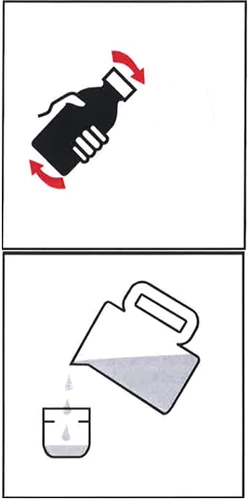
All granules in the bottle should be free-flowing.
Remove the cap and the protective foil. If the foil is damaged or missing, return the product to the pharmacist.
Using the measuring spoon provided in the package, fill it to the mark with cool water. Previously boiled water must be cooled to room temperature before adding to the granules. Do not mix Zinnat granules for oral suspension with hot or warm liquids. Use cool water to prevent excessive thickening of the suspension.
Pour the entire measured volume of cool water from the spoon
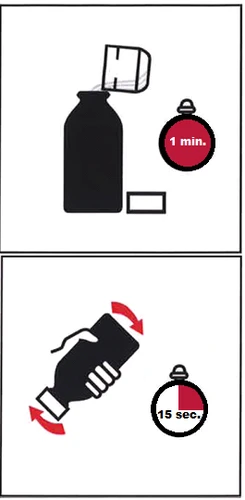
into the bottle with granules. Close the bottle with the cap. Leave the bottle in an upright position to allow all granules to absorb the water; this should take about 1 minute.
Invert the bottle and shake vigorously (for at least 15 seconds) until all granules are mixed with water.
Return the bottle to an upright position, cap up, and
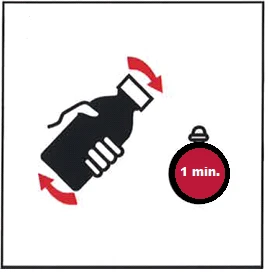
shake vigorously again for at least 1 minute until all granules are completely dispersed.
Immediately place the prepared suspension in the refrigerator at a temperature of 2°C to 8°C (do not freeze) and leave it there for at least 1 hour before administering the first dose.
The prepared suspension must be stored in the refrigerator at all times. The reconstituted suspension may be stored for up to 10 days in the refrigerator at 2°C to 8°C.
Always shake the bottle well before administering the dose.
The Zinnat package may be supplied with an oral dosing syringe intended for administration to children who cannot use the measuring spoon. The dosing syringe is designed for accurate measurement and oral administration of the medication.
- Remove the cap. Keep it in a safe place.
- Firmly holding the bottle, press the adapter into the neck of the bottle.
- Firmly place the tip of the syringe into the depression of the adapter.
- Invert the bottle (turn it upside down).
- Pull the syringe plunger down until the prescribed first dose is drawn into the syringe.
- Turn the bottle back (neck up) and remove the syringe from the adapter.
- Carefully insert the syringe into the child’s mouth, placing the tip against the inside of the cheek. Then, slowly press the plunger to administer the suspension, allowing the child time to swallow. Do not press the plunger too hard or administer the suspension at the back of the throat to avoid choking.
- Repeat steps 3 to 7 as needed until the full prescribed dose has been administered.
- After use, remove the syringe from the bottle and rinse it thoroughly with clean water. Allow it to dry completely before next use.
- Close the bottle tightly with the cap. Leave the adapter in the neck of the bottle; do not remove it.