Zentel
Poland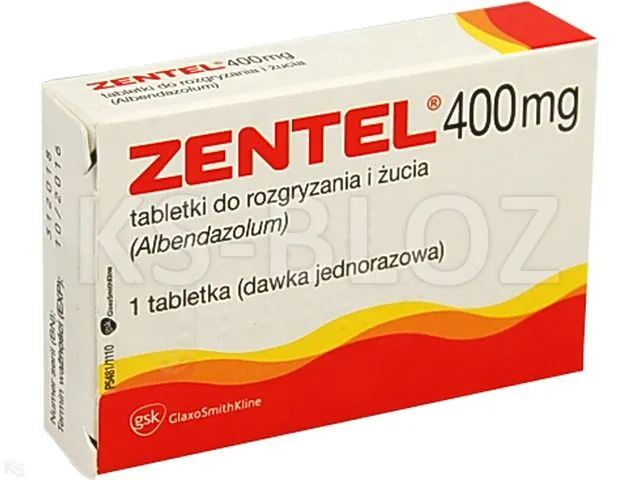
Table of Contents
Warning! Keep the package leaflet, information on the immediate packaging in a foreign language!
Zentel (ESKAZOLE)
400 mg, chewable tablets
Albendazole
Zentel and ESKAZOLE are different trade names of the same medicine.
Please read the leaflet carefully before using this medicine, as it contains important information for the patient.
- Keep this leaflet to be able to read it again if necessary.
- If you have any doubts, please consult your doctor or pharmacist.
- This medicine has been prescribed for a specific individual. Do not pass it on to others. This medicine may harm another person, even if their symptoms are the same.
- If the patient experiences any adverse reactions, including any adverse reactions not listed in this leaflet, inform your doctor, pharmacist, or nurse. See section 4.
Table of contents of the leaflet
- What Zentel is and what it is used for
- Important information before taking Zentel
- How to take Zentel
- Possible side effects
- How to store Zentel
- Contents of the pack and other information
- Additional information about parasitic diseases
1. What Zentel is and what it is used for
Zentel contains albendazole – an active substance with anthelmintic (anti-parasitic) properties. Albendazole acts against parasites (worms) and their larvae by preventing them from absorbing sugars (glucose), causing them to lose energy and die. It is also effective against parasite eggs.
Zentel is a medicine used to treat diseases caused by parasitic worms (helminths), such as:
- infection with pinworm (enterobiasis);
- infection with duodenal hookworm (ankylostomiasis);
- infection with American hookworm (necatoriasis);
- infection with intestinal threadworm (strongyloidiasis);
- infection with roundworm (ascariasis);
- infection with whipworm (trichuriasis);
- infection with tapeworm (taeniasis).
Additional information about parasitic diseases, see section 7 of the leaflet.
2. Important information before using Zentel
When not to use Zentel
- If the patient has a known allergy to albendazole or any of the other ingredients of the medicine (listed in section 6).
- If the patient is pregnant or suspects she may be pregnant (see Pregnancy and breast-feeding).
- The patient should inform their doctor if any of the above apply.
Warnings and precautions
Before starting treatment with Zentel, discuss with your doctor:
- if the patient is breast-feeding (see Pregnancy and breast-feeding),
- if the patient has impaired kidney or liver function,
- if the patient is elderly.
- The patient should inform their doctor if any of the above apply.
If at least two of the following symptoms occur during treatment with Zentel:
- headache (which may be severe),
- seizures,
- nausea,
- vomiting,
- visual disturbances,
- seek immediate medical advice. These symptoms may result from dying parasites in the brain. Some individuals being treated for parasitic infections may also have a rare but serious infection of the central nervous system caused by tapeworms, known as neurocysticercosis. The patient may be unaware of this infection, and treatment with Zentel may unmask it.
Zentel and other medicines
Tell your doctor or pharmacist about all medicines the patient is currently taking, has recently taken, or plans to take.
Some medicines may affect the action of Zentel or increase the risk of adverse effects. These include:
- cimetidine (used to treat stomach ulcers);
- praziquantel (used to treat worm infections);
- dexamethasone (used to treat inflammatory and allergic conditions);
- ritonavir (used to treat HIV infection);
- phenytoin (used to treat epilepsy);
- carbamazepine (used to treat epilepsy and bipolar disorder);
- phenobarbital (used as an anticonvulsant, sedative, and hypnotic).
- If the patient is taking or has recently taken any of these medicines, they should inform their doctor.
Taking Zentel with food and drink
Zentel may be taken with or without food, swallowed with water.
Pregnancy and breast-feeding
- If the patient is pregnant or breast-feeding, suspects she may be pregnant, or is planning to become pregnant, she should consult a doctor or pharmacist before using this medicine.
Zentel must not be used if the patient is pregnant or suspects she may be pregnant. Zentel may harm the unborn baby.
In women of childbearing age, it is recommended to take Zentel within the first 7 days of the menstrual cycle or after a negative pregnancy test result. This is to avoid using Zentel during early pregnancy.
Breast-feeding women should not use Zentel unless the potential benefits outweigh the risks associated with treatment.
Breast-feeding women should consult their doctor before using Zentel, as a large amount of benzyl alcohol may accumulate in their body and cause adverse effects (so-called metabolic acidosis).
Driving and operating machinery
Zentel may cause dizziness. If dizziness occurs, the patient should not drive or operate machinery.
Zentel contains:
Benzyl alcohol
Zentel contains benzyl alcohol (a component of the vanilla flavouring) in each tablet. Benzyl alcohol may cause allergic reactions.
Administration of benzyl alcohol to young children is associated with a risk of serious adverse effects, including breathing disorders (so-called "gasping syndrome").
Patients with liver or kidney disease should consult their doctor before using this medicine, as a large amount of benzyl alcohol may accumulate in their body and cause adverse effects (so-called metabolic acidosis).
Lactose monohydrate
Zentel contains a sugar called lactose. If the patient has previously been diagnosed with an intolerance to certain sugars, they should consult their doctor before taking this medicine.
Orange Yellow (Colour FD&C Yellow #6 Aluminum Lake 20-24% FDA)
Zentel contains Orange Yellow – a colouring agent, which may cause allergic reactions.
Maltodextrin (contains glucose)
If the patient has previously been diagnosed with an intolerance to certain sugars, they should consult their doctor before taking this medicine.
Sodium
Zentel contains less than 1 mmol (23 mg) of sodium per tablet, meaning the medicine is considered "sodium-free".
3. How to take Zentel
Zentel should always be taken exactly as directed by your doctor.
- If you have any doubts, contact your doctor or pharmacist.
If more than one dose is required, it should be taken at the same time each day.
Dosage
Infection with pinworms, hookworms, roundworms, or whipworms
One 400 mg tablet as a single dose.
Infection with tapeworm or intestinal threadworm
One 400 mg tablet once daily for three consecutive days.
If the patient has not been cured, the doctor may decide to repeat treatment after three weeks.
If you feel that the effect of Zentel is too strong or too weak, consult your doctor.
Method of administration
Zentel may be taken with or without food.
Zentel tablets may be swallowed whole with water. If you have difficulty swallowing the tablets whole, they may be crushed, chewed, or chewed thoroughly, and taken with a small amount of water.
For children and patients who have difficulty swallowing tablets, the medicine may be given in another form (Zentel is also available as an oral suspension).
It is not necessary to take the medicine on an empty stomach or following bowel cleansing.
Taking more Zentel than recommended
If you take more than the recommended dose, contact your doctor immediately. If possible, show the medicine’s packaging.
Missing a dose of Zentel
Do not take extra tablets or double the dose to make up for a missed dose. Take the next dose at the usual time.
Stopping Zentel treatment
Do not stop taking Zentel without consulting your doctor.
- If you have any further questions about the use of this medicine, consult your doctor or pharmacist.
4. Possible adverse reactions
Like any medicine, this medicine can cause adverse reactions, although not everyone will experience them.
Uncommon adverse reactions (may occur in 1 to 10 out of 1,000 patients):
- headache, dizziness
- nausea, vomiting, abdominal pain, diarrhoea.
Rare adverse reactions (may occur in 1 to 10 out of 10,000 patients):
- hypersensitivity reactions (e.g. rash, urticaria, itching).
Rare adverse reactions which may be observed in blood tests:
- increased liver enzyme activity.
Very rare adverse reactions (may occur in fewer than 1 out of 10,000 patients):
severe skin reactions
- erythema multiforme, presenting as a rash which may be blistering and resemble target lesions (dark spots in the center, surrounded by a paler area with a dark ring around it)
- Stevens-Johnson syndrome – a severe, widespread rash with blisters and skin peeling, particularly affecting the area around the mouth, nose, eyes, and genital organs.
- If any of the above symptoms occur in a patient, contact a doctor immediately.
Other symptoms which may occur during treatment with Zentel
See section 2 of the leaflet (subsection: If at least two of the following symptoms occur during treatment with Zentel).
Reporting of adverse reactions
If any adverse reactions occur, including any adverse reactions not listed in this leaflet, inform a doctor, pharmacist, or nurse. Adverse reactions can also be reported directly to the Department of Monitoring Adverse Drug Reactions of the Office for Registration of Medicinal Products, Medical Devices and Biocidal Products: Al. Jerozolimskie 181C, 02-222 Warsaw, Tel.: +48 22 49-21-301, Fax: +48 22 49-21-309, Website: https://smz.ezdrowie.gov.pl
Reporting adverse reactions helps to provide more information on the safe use of the medicine.
5. How to store Zentel
Keep this medicine out of the sight and reach of children.
Do not use this medicine after the expiry date stated on the packaging after "EXP".
The expiry date refers to the last day of the stated month.
No special storage conditions are required.
Medicines must not be disposed of via the sewage system or household waste. Ask your pharmacist how to dispose of medicines no longer required. Such measures will help protect the environment.
6. Contents of the pack and other information
What Zentel contains
- The active substance is albendazole. Each tablet contains 400 mg of albendazole.
- The other ingredients are: lactose, microcrystalline cellulose, corn starch, sodium croscarmellose, povidone K 29/30, sodium lauryl sulfate, orange yellow dye in the form of a lake (Colour FD&C Yellow #6 Aluminum Lake 20-24% FDA) (E110), sodium saccharin, magnesium stearate, vanilla flavour and aroma composition (containing, among others, maltodextrin, benzyl alcohol, anise alcohol and Peru balsam), passionflower flavour and aroma composition, orange flavour and aroma composition.
What Zentel looks like and contents of the pack
Zentel tablets are pale orange, elongated, rounded, biconvex, with a dividing line on one side and the imprint “ALB 400” on the other side. They have a characteristic fruity odour.
Cardboard boxes containing 1, 60 or 100 tablets in blisters.
For more detailed information, please contact the responsible party or the parallel importer.
Responsible entity in Romania, the country of export:
GLAXOSMITHKLINE (IRELAND) LIMITED
12 Riverwalk, Citywest Business Campus
Dublin 24
Ireland
Manufacturer:
GLAXOSMITHKLINE TRADING SERVICES LIMITED
12 Riverwalk, Citywest Business Campus
Dublin 24
Ireland
Parallel importer:
Medezin Sp. z o.o.
Zbąszyńska 3
91-342 Łódź
Repackaged in:
Medezin Sp. z o.o.
Zbąszyńska 3
91-342 Łódź
SHIRAZ PRODUCTIONS Sp. z o.o.
Tymiankowa 24/28
95-054 Ksawerów
CANPOLAND SPÓŁKA AKCYJNA
Beskidzka 190
91-610 Łódź
Marketing Authorization numbers in Romania, the country of export: 9938/2017/01
9938/2017/02
Parallel import authorization number: 173/23
7. Additional information about parasitic diseases
Infection with parasites occurs through ingestion of water or food containing parasite eggs or larvae, which then develop in the intestines. Since in the early stages the disease may not cause any symptoms, an infected person may be unaware of the infection.
Symptoms depend on the type of worm. Abdominal pain, nausea, diarrhea, anemia, and fatigue may occur. Some parasitic infections can cause symptoms affecting other parts of the body, such as the liver, lungs, or brain.
Treatment of intestinal infections is usually straightforward. However, since certain worms can migrate to other parts of the body, it is important to begin treatment as soon as possible. This helps prevent disease progression and permanent damage. Some untreated parasitic infections can be life-threatening.
You should protect yourself against worm infections.
It is very important to take preventive measures to avoid re-infection, spreading the infection to others, and self-reinfection during treatment with Zentel.
- Wash hands thoroughly with soap and water after using the toilet, after contact with animals, and before every meal.
- Make sure that meat intended for consumption has been cooked to an adequately high temperature, and wash fruits and vegetables in clean water before eating.