Zaldiar effervescent
Poland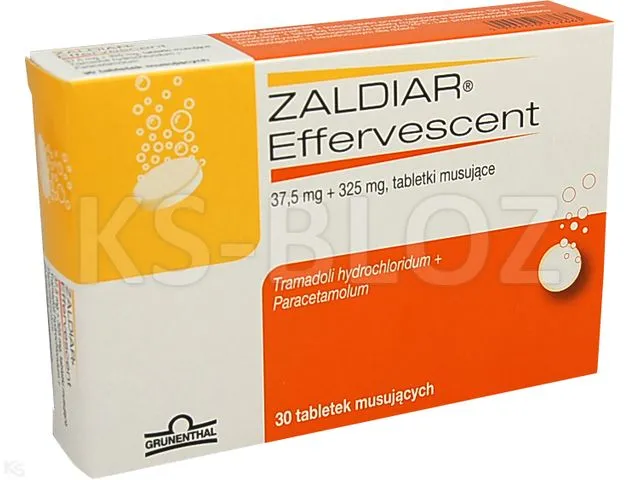
Table of Contents
- Package leaflet: Information for the patient
- 1. What Zaldiar Effervescent is and what it is used for
- 2. Important information before using Zaldiar Effervescent
- 3. How to use Zaldiar Effervescent
- 4. Possible adverse effects
- 5. How to store Zaldiar Effervescent
- 6. Contents of the pack and other information
Package leaflet: Information for the patient
Warning! Keep this leaflet! Information on the immediate packaging is in a foreign language.
Zaldiar Effervescent (Zaldiar), 37.5 mg + 325 mg, effervescent tablets
Tramadoli hydrochloridum + Paracetamolum
Zaldiar Effervescent and Zaldiar are different brand names of the same medicine.
Please read this leaflet carefully before using the medicine, as it contains important information for the patient.
- Keep this leaflet so that you can read it again if necessary.
- If you have any doubts, please consult your doctor or pharmacist.
- This medicine has been prescribed for a specific person. Do not pass it on to others. The medicine may harm another person, even if their symptoms are the same.
- If the patient experiences any adverse reactions, including any not listed in this leaflet, inform your doctor, pharmacist, or nurse. See section 4.
Table of contents of the leaflet
- What Zaldiar Effervescent is and what it is used for
- Important information before taking Zaldiar Effervescent
- How to take Zaldiar Effervescent
- Possible side effects
- How to store Zaldiar Effervescent
- Contents of the pack and other information
1. What Zaldiar Effervescent is and what it is used for
Zaldiar Effervescent is a combination medicine containing two active substances with analgesic properties: tramadol hydrochloride and paracetamol.
Zaldiar Effervescent is indicated for the symptomatic treatment of moderate to severe pain in patients for whom simultaneous administration of tramadol and paracetamol is appropriate.
The medicine is intended for use in adults and adolescents aged 12 years and older.
2. Important information before using Zaldiar Effervescent
When not to use Zaldiar Effervescent:
- if the patient is allergic to tramadol hydrochloride, paracetamol, or any of the other ingredients of this medicine (listed in section 6),
- in case of acute intoxication with alcohol, sedatives, painkillers, or other psychotropic medicines (used to treat mental disorders),
- during concomitant use of MAO inhibitors (certain medicines used to treat depression or Parkinson's disease) and within 14 days after discontinuation of such treatment,
- in severe liver failure,
- in patients with treatment-resistant epilepsy,
- in women who are pregnant or breastfeeding.
Warnings and precautions
Before starting treatment with Zaldiar Effervescent, discuss this with your doctor or
pharmacist.
- when taking other medicines containing tramadol or paracetamol. Paracetamol overdose may cause life-threatening liver damage in some patients.
- in case of liver damage or liver disease, alcoholic liver disease without cirrhosis, yellowing of the eyes and skin. This may be due to jaundice or biliary tract disease.
- in case of kidney disease.
- in case of respiratory disorders, e.g., during asthma or other lung diseases.
- in case of epilepsy or history of seizures, or when taking other medicines that lower the seizure threshold, particularly: selective serotonin reuptake inhibitors, tricyclic antidepressants, neuroleptics, centrally and locally acting analgesics.
- after recent head injury, concussion, or severe headaches accompanied by vomiting.
- in case of dependence on any drugs, including analgesics such as morphine.
- when taking other analgesics containing buprenorphine, nalbuphine, or pentazocine.
- if the patient suffers from depression and is taking antidepressant medicines, because some of them may interact with tramadol (see "Zaldiar Effervescent and other medicines"). After taking tramadol in combination with certain antidepressants or tramadol alone, there is a small risk of developing serotonin syndrome. If any symptoms of this serious condition occur, the patient should seek immediate medical advice (see section 4 "Possible side effects").
If undergoing anesthesia, inform the doctor or dentist about the use of
Zaldiar Effervescent.
Zaldiar Effervescent must not be used in the treatment of opioid dependence, as it does not alleviate withdrawal symptoms.
Tolerance, psychological and physical dependence on the medicine may develop, especially after prolonged use.
Withdrawal symptoms similar to those seen after opioid discontinuation may occur even after therapeutic doses and short-term treatment.
Sleep-related breathing disorders
Zaldiar Effervescent may cause breathing disorders during sleep, such as sleep apnoea (pauses in breathing during sleep) and hypoxemia (low blood oxygen levels). Symptoms may include pauses in breathing during sleep, nocturnal awakenings due to breathlessness, difficulty maintaining sleep, or excessive daytime sleepiness. If the patient or someone else observes these symptoms, contact a doctor. The doctor may consider reducing the dose.
If any of the following symptoms occur during treatment with Zaldiar Effervescent, inform your doctor:
Excessive fatigue, loss of appetite, severe abdominal pain, nausea, vomiting, or low blood pressure.
This may indicate adrenal insufficiency (low cortisol levels). If such symptoms occur, contact your doctor, who will decide whether hormone replacement is necessary.
Tramadol is metabolized in the liver by an enzyme. Some individuals have a genetic variation of this enzyme, which may lead to different effects. In some people, pain relief may be insufficient, while in others, severe adverse reactions are more likely.
Discontinue the medicine and contact your doctor immediately if any of the following adverse effects occur: slow or shallow breathing, confusion, drowsiness, pinpoint pupils, nausea or vomiting, constipation, loss of appetite.
If any of these conditions have occurred in the past or during treatment with Zaldiar Effervescent, inform your doctor. The doctor will decide whether to continue treatment.
Zaldiar Effervescent and other medicines
Tell your doctor or pharmacist about all medicines currently or recently taken, as well as any medicines planned for future use.
Important: this medicine contains paracetamol and tramadol. Inform your doctor about any other medicines containing paracetamol or tramadol to avoid overdose.
Concomitant use of Zaldiar Effervescent with MAO inhibitors is contraindicated, as well as within 14 days after discontinuation of such treatment—see section "When not to use Zaldiar Effervescent".
Concomitant use of Zaldiar Effervescent is not recommended with:
- carbamazepine (commonly used as an antiepileptic and also for certain types of pain, such as severe facial pain known as trigeminal neuralgia),
- other opioid analgesics such as buprenorphine, nalbuphine, pentazocine, as analgesic effect may be reduced,
- alcohol, including alcohol-containing medicines.
Inform your doctor or pharmacist if the patient is taking:
- flucloxacillin (an antibiotic), due to a serious risk of a disorder affecting blood and body fluids (metabolic acidosis with high anion gap), which requires urgent treatment and may occur particularly in patients with severe renal impairment, sepsis (a condition where bacteria and their toxins circulate in the blood, leading to organ damage), malnutrition, chronic alcoholism, or in patients taking maximum daily doses of paracetamol.
The risk of adverse effects increases if the patient uses the following during treatment with Zaldiar Effervescent:
-
certain antidepressants, selective serotonin reuptake inhibitors (SSRIs), tricyclic antidepressants, and mirtazapine. Zaldiar Effervescent may interact with these and cause serotonin syndrome (see section 4 "Possible side effects").
-
other analgesics such as morphine and codeine (used as cough suppressant), baclofen (muscle relaxant), antihypertensives, and antihistamines, as they may increase the risk of central nervous system depression. If drowsiness or reduced concentration occurs, inform the doctor. Concomitant use of Zaldiar Effervescent with sedatives such as benzodiazepines or related drugs increases the risk of drowsiness, breathing difficulties (respiratory depression), coma, and may be life-threatening. Therefore, concomitant use should only be considered when no other treatment options are available. If your doctor has prescribed Zaldiar Effervescent together with sedatives, the treating physician should limit the dose and duration of combined treatment. Inform your doctor about all sedative medicines being taken and strictly follow dosing instructions. It may be helpful to inform family or friends so they are aware of the possibility of the above-mentioned subjective and objective symptoms. In case such symptoms occur, contact your doctor.
-
medicines that may provoke seizures, such as antidepressants or antipsychotics. The risk of seizures may increase if the patient takes Zaldiar Effervescent together with these medicines. The doctor should inform the patient whether Zaldiar Effervescent is suitable for them.
-
warfarin or phenprocoumon (used to "thin" the blood). The effect of these medicines may change, leading to bleeding. Any prolonged or unexpected bleeding requires immediate medical consultation. Prothrombin time should be monitored periodically.
The effectiveness of Zaldiar Effervescent may be altered when taken concomitantly with:
- metoclopramide, domperidone, or ondansetron (anti-nausea and anti-vomiting medicines),
- cholestyramine (a medicine used to reduce blood cholesterol levels),
- ketoconazole or erythromycin (anti-infective medicines).
Your doctor will decide which medicines can be safely used together with Zaldiar Effervescent.
Zaldiar Effervescent with food, drink, and alcohol
Zaldiar Effervescent may cause drowsiness. Alcohol (including alcoholic beverages and certain medicines containing alcohol) intensifies drowsiness. Do not drink alcohol while taking Zaldiar Effervescent.
Children and adolescents
Use in children with breathing disorders
Tramadol is not recommended in children with breathing disorders, as tramadol toxicity symptoms may be intensified in these patients.
Pregnancy, breastfeeding, and fertility
If the patient is pregnant, breastfeeding, suspects she may be pregnant, or plans to become pregnant, she should consult a doctor or pharmacist before using this medicine.
Tramadol is excreted in breast milk. Therefore, during breastfeeding, Zaldiar Effervescent should not be taken more than once, or if more than one dose has been taken, breastfeeding should be discontinued.
Do not use Zaldiar Effervescent during pregnancy or breastfeeding.
No studies have been conducted on the effect of the combination of tramadol and paracetamol on fertility.
Driving and operating machinery
Zaldiar Effervescent may cause drowsiness, which may affect the ability to drive or operate machinery. Do not drive or operate machinery while taking this medicine.
This medicine contains a colouring agent - sunset yellow (E 110), which may cause allergic reactions.
This medicine contains 7.8 mmol (or 179.3 mg) of sodium per dose.
Talk to your doctor or pharmacist if the patient needs to take 2 or more effervescent tablets daily for a prolonged period. This is particularly important if on a low-sodium diet.
One tablet contains 2.9 mg of potassium.
3. How to use Zaldiar Effervescent
This medicine should always be used as directed by the physician. In case of doubt, consult
your doctor or pharmacist.
Zaldiar Effervescent should be used for the shortest duration possible.
Do not use this medicine in children under 12 years of age.
The dose should be adjusted according to the intensity of pain and the individual patient's response to treatment.
Use the lowest effective dose that adequately relieves pain.
Unless otherwise directed by the physician, the recommended dose of Zaldiar Effervescent is 2 effervescent tablets for
adults and children aged 12 years and older.
If needed, the physician may recommend taking additional doses. Do not take subsequent doses
more frequently than every 6 hours.
Do not exceed 8 effervescent tablets per day.
Do not take Zaldiar Effervescent more often than prescribed by your doctor.
Elderly patients
In patients over 75 years of age, elimination of tramadol from the body may be delayed. In these
patients, the physician may recommend extending the interval between doses.
Patients with renal impairment, on dialysis, or with hepatic impairment
Do not take Zaldiar Effervescent in cases of severe hepatic and/or renal impairment.
In cases of mild or moderate impairment, the physician may recommend extending the intervals
between doses.
Method of administration
The tablets should be taken orally.
An effervescent tablet should be dissolved in a glass of water.
If you feel that the effect of Zaldiar Effervescent is too strong (e.g., drowsiness or
breathing difficulties) or too weak (pain not significantly relieved), consult your doctor.
Taking more than the recommended dose of Zaldiar Effervescent
If you take more than the recommended dose, even if you feel well, seek immediate advice from your doctor or pharmacist. There is a risk of liver damage, the symptoms of which may appear later.
Missing a dose of Zaldiar Effervescent
If you miss a dose, pain may return. Do not take a double dose to make up for the missed dose; instead, continue taking the medicine according to the prescribed schedule.
Stopping Zaldiar Effervescent
Do not abruptly stop taking this medicine without medical advice. If the patient wishes to discontinue the medicine, this should be discussed with the doctor, especially if the medicine has been taken long-term.
The doctor will advise when and how to stop the medicine; this may involve gradually reducing the dose to minimize the likelihood of adverse effects (withdrawal symptoms).
If you have any further questions about the use of this medicine, consult your doctor or pharmacist.
4. Possible adverse effects
Like all medicines, this medicine can cause adverse effects, although not everyone will experience them.
Very common: occurs in more than 1 in 10 patients
- nausea,
- dizziness, drowsiness.
Common: may occur in up to 1 in 10 patients
- vomiting, gastrointestinal disturbances (constipation, bloating, diarrhoea), stomach pain, dry mouth,
- itching, excessive sweating,
- headache, tremor,
- confusion, sleep disturbances, mood changes (anxiety, nervousness, abnormal sense of well-being).
Uncommon: may occur in up to 1 in 100 patients
- increased heart rate or blood pressure, disturbances in heart rate or rhythm,
- difficulty in passing urine or pain,
- skin reactions (e.g. rash, urticaria),
- tingling, numbness or pins and needles sensation in limbs, tinnitus, involuntary muscle twitching,
- depression, nightmares, hallucinations (hearing, seeing or feeling things that are not there), memory lapses,
- difficulty in swallowing, blood in stool (black, tarry stools),
- chills, hot flushes, chest pain,
- difficulty in breathing,
- increased liver enzyme levels.
Rare: may occur in up to 1 in 1000 patients
- seizures, difficulty in maintaining coordinated movements,
- dependence, delirium,
- blurred vision, pinpoint pupils,
- speech disturbances,
- excessive dilation of pupils,
- brief loss of consciousness (fainting).
Unknown frequency: cannot be estimated from available data
- hypoglycaemia (low blood sugar levels),
- hiccups,
- central sleep apnoea syndrome (cases of SIADH (syndrome of inappropriate antidiuretic hormone secretion) and hyponatraemia (low sodium levels in blood) have been reported in literature, although a causal relationship with tramadol has not been established).
- serotonin syndrome, which may present with mental status changes (e.g. agitation, hallucinations, coma), as well as other symptoms such as fever, tachycardia, unstable blood pressure, involuntary muscle contractions, muscle rigidity, lack of coordination and/or gastrointestinal symptoms (e.g. nausea, vomiting, diarrhoea) (see section 2 Important information before taking Zaldiar Effervescent).
The following adverse effects have been observed in patients taking tramadol or paracetamol alone. However, if any of these occur after taking Zaldiar Effervescent, you should inform your doctor:
- Fainting upon standing from lying or sitting position, bradycardia (slow heart rate), collapse (fainting), changes in appetite, muscle weakness, slower or shallower breathing, mood changes, changes in activity, changes in cognitive abilities, worsening of asthma.
- In rare cases: skin rash indicating an allergic reaction, which may present as sudden swelling of the face and neck, difficulty breathing, low blood pressure and fainting. If any of these symptoms occur, treatment must be discontinued immediately and medical advice must be sought without delay. Do not restart treatment.
- During paracetamol use, very rare cases of severe skin reactions have been reported (rash with blisters all over the body, erosions in the mouth, eyes, genital organs and on the skin, red spots on the trunk, often with blisters in the centre, large blistering, peeling of large sheets of skin, weakness, fever and joint pain). Treatment must be stopped immediately and medical advice must be sought without delay. Do not restart treatment.
In rare cases, use of tramadol may lead to dependence and difficulty discontinuing the medicine.
In rare cases, patients who have taken tramadol for some time may experience withdrawal symptoms after abrupt discontinuation. These may include: restlessness, anxiety, nervousness or tremor. Patients may be hyperactive, have sleep problems and gastrointestinal disturbances.
A very small number of patients may experience panic attacks, hallucinations, or unusual sensations such as itching, tingling, numbness, or tinnitus. If any of the above symptoms occur after stopping Zaldiar Effervescent, contact your doctor.
In exceptional cases, blood test results may show abnormalities: e.g. low platelet count, which may result in nosebleeds or bleeding gums.
Use of Zaldiar Effervescent together with anticoagulant medicines (e.g. phenprocoumon, warfarin) may increase the risk of bleeding. In case of any prolonged or unexpected bleeding, seek immediate medical advice.
Reporting of adverse effects
If any adverse effects occur, including any not listed in this leaflet, inform your doctor, pharmacist or nurse. Adverse effects can also be reported directly to the Department of Monitoring Adverse Drug Reactions, Office for Registration of Medicinal Products, Medical Devices and Biocidal Products, Al. Jerozolimskie 181C, 02-222 Warsaw, tel.: +48 22 4921301, fax: +48 22 4921309, website: https://smz.ezdrowie.gov.pl.
Reporting adverse effects helps to provide more information on the safety of the medicine.
5. How to store Zaldiar Effervescent
Keep this medicine out of the sight and reach of children.
Do not use this medicine after the expiry date stated on the packaging. The expiry date refers to the last day of the stated month.
Do not store above 25°C.
Medicines must not be disposed of via wastewater or household waste. Ask your pharmacist how to dispose of medicines no longer required. This will help protect the environment.
6. Contents of the pack and other information
What Zaldiar Effervescent contains
- The active substances are tramadol hydrochloride and paracetamol. One effervescent tablet contains 37.5 mg of tramadol hydrochloride and 325 mg of paracetamol.
- Other components are: sodium citrate, citric acid, povidone K 30, sodium hydrogen carbonate, macrogol 6000, colloidal anhydrous silica, magnesium stearate, orange flavour (maltodextrin (corn), modified starch (E 1450), natural and artificial flavours), potassium acesulfame, sodium saccharin, sunset yellow (E 110).
What Zaldiar Effervescent looks like and contents of the pack
Round, flat tablet with bevelled edges, marbled, white to light pink in colour.
The tablets are packed in soft blisters made of aluminium foil with an outer layer of PET and an inner layer of PE, in a cardboard carton.
The unit pack contains: 20 effervescent tablets (5x4), 28 effervescent tablets (7x4), 32 effervescent tablets (8x4), or 48 effervescent tablets (12x4).
For more detailed information, please contact the marketing authorisation holder or the parallel importer.
Marketing authorisation holder in Spain, country of export:
Grünenthal Pharma, S.A., Doctor Zamenhof, 36, 28027 Madrid, Spain
Manufacturer:
Grünenthal GmbH, Zieglerstrasse 6, D-52078 Aachen, Germany
Parallel importer:
InPharm Sp. z o.o., Strumykowa 28/11, 03-138 Warsaw, Poland
Repackaged in:
InPharm Sp. z o.o. Services sp. k., Chełmżyńska 249, 04-458 Warsaw, Poland
Marketing authorisation number in Spain, country of export: 662457.9
Parallel import authorisation number: 321/24