Juvit d3
Poland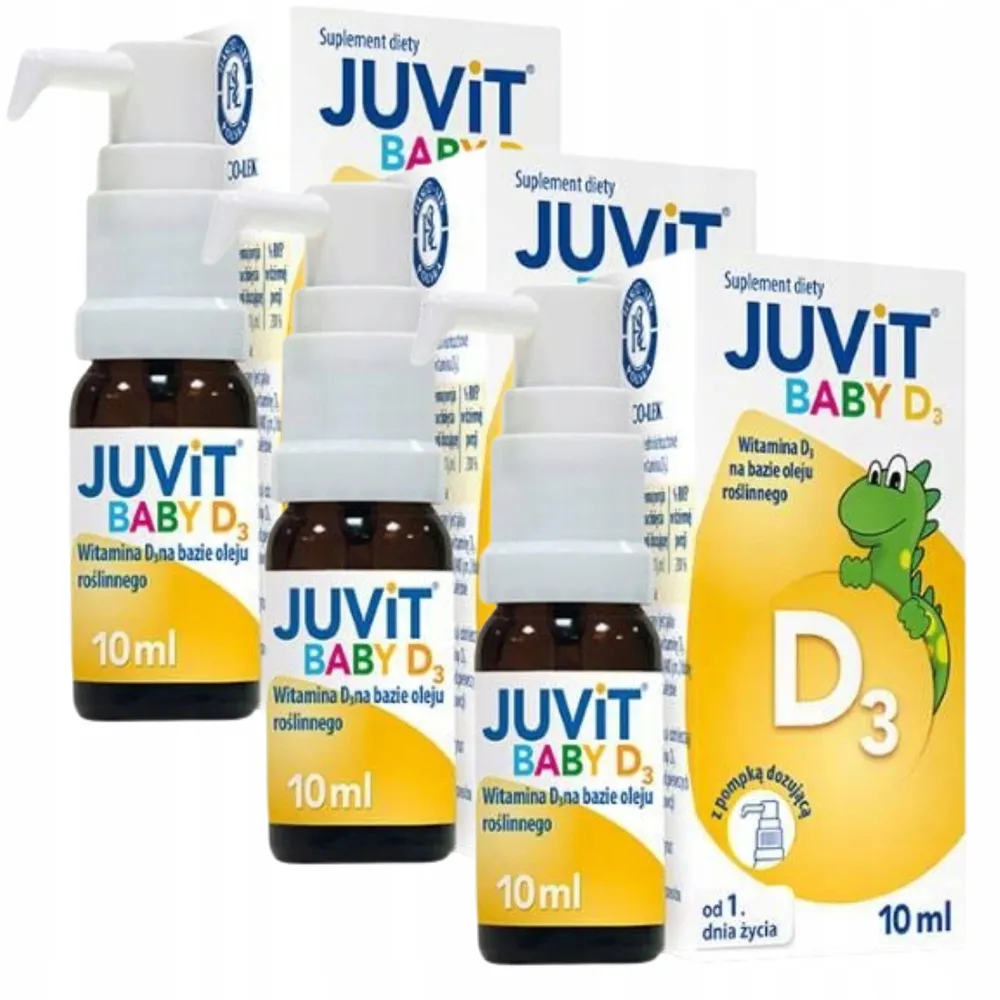
Table of Contents
Package leaflet: Information for the patient
JUVIT D
20,000 IU/ml, oral drops, solution
Colecalciferolum
Please read the entire leaflet carefully before using this medicine, as it contains
important information for the patient.
- Keep this leaflet for future reference.
- If you have any doubts, consult your doctor or pharmacist.
- This medicine has been prescribed for a specific individual. Do not share it with others. This medicine may harm other people, even if their symptoms are similar.
- If the patient experiences any adverse reactions, including those not listed in this leaflet, inform your doctor or pharmacist. See section 4.
Table of contents
- What is Juvit D and what is it used for
- Important information before taking Juvit D
- How to use Juvit D
- Possible side effects
- How to store Juvit D
- Contents of the pack and other information
1. What is Juvit D and what is it used for
Vitamin D (cholecalciferol) belongs to the group D vitamins. In the human body, it is transformed into active forms, which function as hormones.
Cholecalciferol is produced in the human skin under the influence of ultraviolet light. Skin synthesis covers only a small part of the daily requirement. The main source of vitamin D is food (meat, milk, egg yolks).
The primary property of vitamin D metabolites is the enhancement of calcium and phosphate absorption. Vitamin D promotes the formation of a specific intestinal protein, facilitating calcium binding and its subsequent transport into the bloodstream. Cholecalciferol also increases calcium and phosphate reabsorption in the kidneys. In bones, it enhances osteoclast activity (cells that remove old bone tissue) and promotes osteoclastic bone resorption (the process of bone dissolution under osteoclast action). All these actions lead to increased blood calcium levels and support proper bone formation and mineralization.
Orally administered vitamin D is well absorbed in the small intestine. Bile acids play an essential role in the absorption process. Cholecalciferol and its metabolites are stored in the liver, adipose tissue, and muscles, from where they are gradually released. They are excreted mainly via bile in conjugation with glucuronic acid, glycine, and taurine, and to a small extent in urine. Small amounts of cholecalciferol pass into breast milk and across the placenta.
Indications for use:
- Prevention of rickets in children,
- Prevention of conditions associated with vitamin D deficiency risk,
- Treatment of rickets and osteomalacia caused by vitamin D deficiency.
2. Important information before using Juvit D
When not to use Juvit D:
- if the patient is allergic to the active substance or to any of the other components of this medicine (listed in section 6);
1/4
- if the patient has: hypercalcaemia (elevated calcium levels in serum), kidney stones, sarcoidosis, or lack of cholecalciferol hydroxylase activity in the liver and kidneys.
Warnings and precautions
Before starting treatment with Juvit D, discuss it with your doctor or pharmacist.
If Juvit D is taken simultaneously with other medicines or food supplements containing vitamin D (e.g. multivitamin-mineral preparations), it may lead to overdose.
During long-term use of vitamin D or at doses exceeding 1000 IU daily, serum calcium levels should be monitored.
Juvit D and other medicines
Inform your doctor about all medicines currently used, recently taken, or planned for use.
Concomitant use with certain diuretics, e.g. chlorothiazide, increases the risk of hypercalcaemia. When calcium supplements are used concurrently, serum calcium levels should be monitored. Some antiepileptic drugs (e.g. carbamazepine, phenobarbital, phenytoin, and primidone) may increase the demand for vitamin D. Cholestyramine, colestipol, or neomycin may reduce vitamin D absorption. Concomitant administration of vitamin D with cardiac glycosides may enhance their toxic effects (increased risk of cardiac arrhythmias). Glucocorticoids may reduce the effectiveness of vitamin D.
Juvit D with food and drink
Juvit D may be taken with food and drink.
Pregnancy and breastfeeding
If the patient is pregnant or breastfeeding, suspects she might be pregnant, or is planning to have a child, she should consult a doctor before using this medicine.
This medicine may be used during pregnancy only if clearly necessary.
Vitamin D and its metabolites pass into breast milk. No cases of overdose have been observed in breastfed infants.
Driving and operating machinery
Cholecalciferol is considered safe and does not impair psycho-physical performance, ability to drive or operate machinery.
3. How to use Juvit D
This medicine should always be used according to the doctor's instructions. If in doubt, consult your
doctor.
The medicine is intended for oral use.
Prophylactically:
- infants from the second week of life until the end of the first year of life:
- those who go outdoors: 1 drop (500 IU) per day;
- premature infants, twins, and infants in poor living conditions: 1 to 2 drops (500 IU - 1000 IU) per day;
- children in their second year of life (especially during autumn and winter months): 1 to 2 drops (500 IU - 1000 IU) per day;
- adults: 1 to 2 drops (500 IU - 1000 IU) per day. Therapeutically:
- rickets and osteomalacia caused by vitamin D deficiency: 2 to 8 drops (1000 IU - 4000 IU) per day, for the entire year. The medicine may be administered to infants and young children in a spoonful of beverage or food.
Due to the risk of overdose, the medicine should not be administered directly from the bottle into the patient's mouth.
2/4
Use of a higher than recommended dose of Juvit D
If a higher than recommended dose of the medicine is taken, seek immediate advice from a doctor or
pharmacist.
Poisoning symptoms are rare and occur after administration of 10,000 IU of vitamin D (0.25 mg) per
day. Such doses may cause weakness, hypercalcemia, apathy, loss of appetite, headache, muscle and joint pain, muscle flaccidity, nausea and vomiting, ectopic tissue calcifications, proteinuria,
hypertension, and arrhythmia. Chronic hypercalcemia leads to calcification of blood vessels and kidneys, and rapid deterioration of kidney function. In such cases, the medicine should be discontinued. Hospitalization may be necessary, with symptomatic treatment and calcium-lowering therapy. There is no specific antidote.
Missed dose of Juvit D
Do not use a double dose to make up for a missed dose.
Discontinuation of Juvit D
If you have any further doubts regarding the use of this medicine, consult your doctor or pharmacist.
4. Possible adverse reactions
Like all medicines, this medicine can cause adverse reactions, although not everybody gets them.
Adverse reactions do not occur when the medicine is administered at recommended doses.
Taking vitamin D in higher doses may lead to hypervitaminosis D and hypercalcaemia, and associated symptoms:
Cardiac disorders:
damage to the heart muscle.
Nervous system disorders:
headache.
Gastrointestinal disorders:
loss of appetite, nausea, vomiting, diarrhoea.
Renal and urinary disorders:
hypercalciuria, kidney damage, polyuria.
Musculoskeletal and connective tissue disorders:
muscle and joint pain.
General disorders and administration site conditions:
ectopic calcifications, sensation of dryness in the mouth.
Reporting of adverse reactions
If any adverse reactions occur, including any adverse reactions not listed in this leaflet, inform a doctor or pharmacist. Adverse reactions can be reported directly to the Department of Monitoring Adverse Drug Reactions at the Office for Registration of Medicinal Products, Medical Devices and Biocidal Products:
Aleje Jerozolimskie 181C, 02-222 Warsaw,
tel.: +48 22 4921301, fax: +48 22 4921309,
Website: https://smz.ezdrowie.gov.pl
Adverse reactions can also be reported to the marketing authorization holder.
Reporting adverse reactions helps provide more information on the safety of the medicine.
3/4
5. How to store Juvit D
Keep this medicine out of sight and reach of children.
Store below 25°C. Keep in the original, tightly closed container.
Do not use this medicine after the expiry date stated on the packaging. The expiry date refers to the last day of the stated month.
An opened bottle should be used within 12 months.
Medicines must not be disposed of via wastewater or household waste. Ask your pharmacist how to dispose of medicines no longer required. Such measures help protect the environment.
6. Contents of the pack and other information
What Juvit D contains
- The active substance is cholecalciferol in an amount of 0.5 mg (20,000 IU) in 1 ml of solution (1 ml contains 40 drops).
- The other ingredients (excipients) are: medium-chain triglycerides.
What Juvit D looks like and contents of the pack
The medicine is a colourless or slightly yellowish, transparent solution (opalescence is acceptable), odourless.
The pack consists of a 10 ml amber glass bottle of type III, closed with a HDPE cap with an LDPE dropper, placed in a cardboard box.
One pack contains 10 ml of solution.
Marketing Authorisation Holder and Manufacturer
"PRZEDSIĘBIORSTWO PRODUKCJI FARMACEUTYCZNEJ HASCO-LEK" S.A.
51-131 Wrocław, ul. Żmigrodzka 242 E
Medicine Information
tel. +48 22 742 00 22
e-mail: [email protected]
4/4