Xyzal
Poland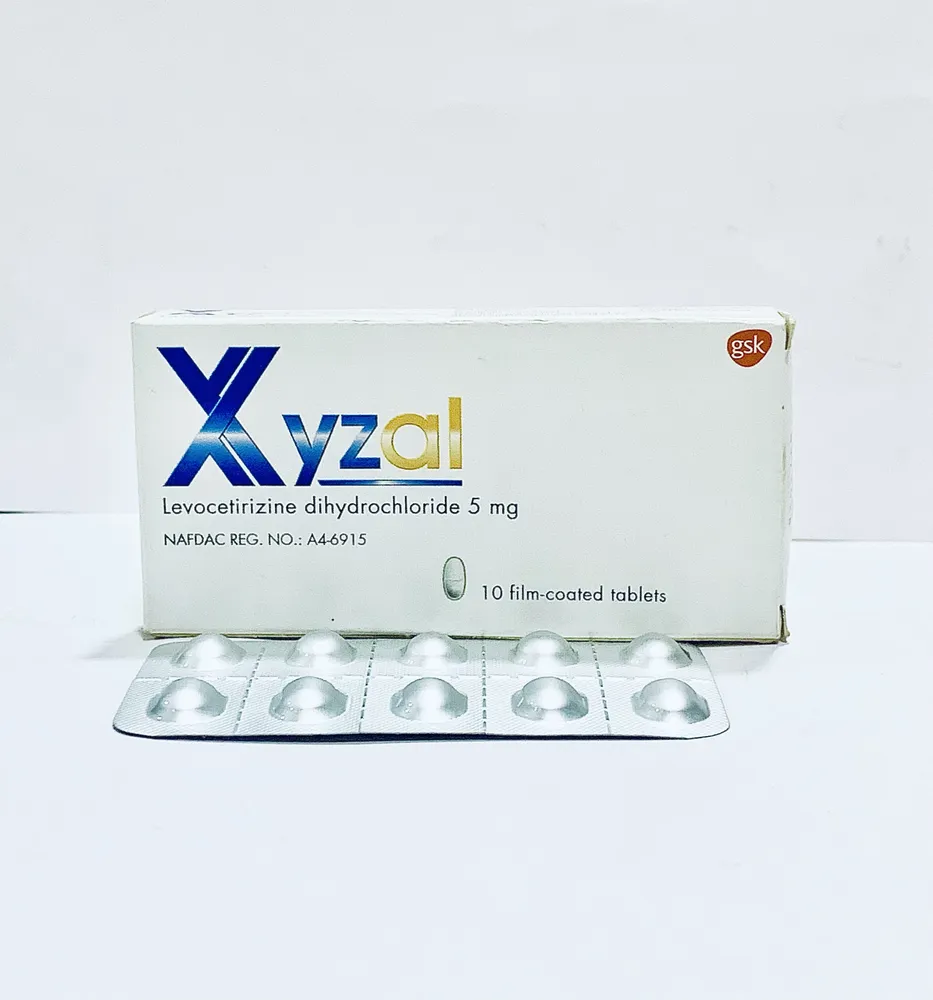
Table of Contents
Patient Information Leaflet
Warning! Please keep this leaflet. The information on the immediate packaging is in a foreign language.
Xyzal (Xozal), 5 mg, coated tablets
Levocetirizini dihydrochloridum
For adults and children aged 6 years and older
Xyzal and Xozal are different brand names for the same medicine.
Please read this leaflet carefully before using the medicine, as it contains
important information for the patient.
- Please keep this leaflet so that you can read it again if necessary.
- If you have any doubts, please consult your doctor or pharmacist.
- This medicine has been prescribed for a specific individual. Do not pass it on to others. This medicine may harm someone else, even if their symptoms are identical.
- If you experience any adverse reactions, including any adverse reactions not listed in this leaflet, please inform your doctor, pharmacist, or nurse. See section 4.
Table of contents:
- What Xyzal is and what it is used for
- Important information before taking Xyzal
- How to take Xyzal
- Possible side effects
- How to store Xyzal
- Contents of the pack and other information
1. What Xyzal is and what it is used for
The active substance in Xyzal is levocetirizine dihydrochloride.
Xyzal is an antiallergic medicine.
Xyzal is used to treat symptoms associated with:
- allergic rhinitis (including perennial allergic rhinitis);
- urticaria.
2. Important information before using Xyzal
When not to use Xyzal
- if the patient is allergic to levocetirizine dihydrochloride, cetirizine, hydroxyzine, or any of the other ingredients of this medicine (listed in section 6);
- if the patient has severe kidney function impairment (severe renal insufficiency with creatinine clearance less than 10 ml/min).
Warnings and precautions
Before starting to use Xyzal, discuss this with your doctor or pharmacist.
If the patient may have difficulty emptying the bladder (in conditions such as spinal cord injury or prostate enlargement), consult a doctor.
Xyzal may increase the frequency of epileptic seizures; therefore, consult a doctor if the patient has epilepsy or is at risk of seizures.
If the patient has planned allergy testing, ask the doctor whether the patient should stop taking Xyzal several days before the test. Xyzal may affect the results of allergy tests.
Children
Xyzal coated tablets are not recommended for children under 6 years of age, as appropriate dose adjustment is not possible with this formulation.
Xyzal and other medicines
Tell your doctor or pharmacist about all medicines the patient is currently taking or has recently taken, as well as any medicines the patient plans to take.
Taking Xyzal with food, drink and alcohol
Exercise caution when taking Xyzal together with alcohol or other substances affecting brain function.
In sensitive patients, concomitant use of Xyzal with alcohol or other substances affecting brain function may additionally reduce alertness and reaction abilities.
Xyzal may be taken during or between meals.
Pregnancy, breastfeeding and fertility
If the patient is pregnant or breastfeeding, suspects she may be pregnant, or is planning to have a child, she should consult a doctor or pharmacist before using this medicine.
Driving and operating machinery
In some patients treated with Xyzal, drowsiness, fatigue, tiredness and exhaustion may occur. Caution should be exercised when driving or operating machinery until the patient's response to the medicine is known. However, specific tests conducted in healthy volunteers taking levocetirizine at the recommended dose did not show any effect of the medicine on attention, reaction ability or driving skills.
Xyzal contains monohydrate lactose
If the patient has previously been diagnosed with intolerance to certain sugars, the patient should consult a doctor before taking this medicine.
3. How to use Xyzal
This medicine should always be used as directed by a doctor or pharmacist. If in doubt,
consult a doctor or pharmacist.
The recommended dose of Xyzal for adults and children aged 6 years and older is 1 tablet per day.
Dosage in special patient groups:
Renal and hepatic impairment
In patients with renal impairment, dose reduction may be necessary depending on the severity of kidney disease; in children, the dose should also be adjusted according to body weight; the dose will be determined by the doctor.
Xyzal must not be used in patients with severe renal impairment.
Patients with hepatic impairment alone should usually receive the standard recommended dose.
In patients with both hepatic and renal impairment, a lower dose may be necessary depending on the severity of renal disease; in children, the dose should also be adjusted according to body weight; the dose will be determined by the doctor.
Elderly patients (65 years and older)
Dosage adjustment is not required in elderly patients if renal function is normal.
Use in children
Xyzal tablets are not recommended for children under 6 years of age.
How and when to take Xyzal
For oral use only.
Xyzal tablets should be swallowed whole with water. The medicine may be taken during or between meals.
How long to take Xyzal
The duration of treatment depends on the type, duration and severity of disease symptoms and is determined by the doctor.
Taking more Xyzal than recommended
In adults, taking more than the recommended dose of Xyzal may cause drowsiness. In children, initial excitation and restlessness, especially motor restlessness, may occur, followed by drowsiness.
If an overdose of Xyzal is suspected, consult a doctor, who will decide what actions should be taken.
Missing a dose of Xyzal
If a dose of Xyzal is missed or a lower than recommended dose is taken, do not take a double dose to make up for the missed dose. In this case, take the next dose at the usual time.
Stopping Xyzal
Stopping treatment with Xyzal should not cause harmful effects. However, in rare cases, itching (intense pruritus) may occur after discontinuation of Xyzal, even if these symptoms were not present before starting treatment. These symptoms may resolve spontaneously. In some cases, symptoms may be severe and treatment may need to be resumed. These symptoms should resolve upon resumption of treatment.
If you have any further questions about the use of this medicine, consult your doctor or pharmacist.
4. Possible adverse reactions
Like all medicines, this medicine can cause adverse reactions, although not everyone will experience them.
Common: may occur in less than 1 in 10 patients
Dry mouth, headache, fatigue, and drowsiness/sleepiness.
Uncommon: may occur in less than 1 in 100 patients
Feeling of exhaustion and abdominal pain.
Frequency unknown: cannot be estimated from available data
Other adverse reactions reported include: palpitations, increased heart rate, convulsions, tingling, dizziness, fainting, tremor, taste disturbances (altered sense of taste), sensation of spinning or swaying, visual disturbances, blurred vision, rotatory eye movements (uncontrolled circular eye movements), painful or difficult urination, inability to completely empty the bladder, swelling, itching, rash, urticaria (swelling, redness, and itching of the skin), skin eruptions, shortness of breath, weight gain, muscle pain, joint pain, restlessness and aggressive behavior, hallucinations, depression, insomnia, recurring suicidal thoughts or interest in suicide, nightmares, hepatitis, liver function abnormalities, vomiting, increased appetite, nausea, and diarrhea.
Itching (intense pruritus) after discontinuation of the medicine.
If the first symptoms of hypersensitivity reactions occur, stop taking Xyzal and inform your doctor. Symptoms of hypersensitivity reactions may include: swelling of the lips, tongue, face, and (or) throat, difficulty breathing or swallowing (chest tightness or wheezing), urticaria, sudden drop in blood pressure leading to circulatory collapse or shock, which may lead to death.
Reporting of adverse reactions
If any adverse reactions occur, including any not listed in this leaflet, inform your doctor, pharmacist, or nurse. Adverse reactions can be reported directly to the Department of Monitoring of Adverse Drug Reactions of the Office for Registration of Medicinal Products, Medical Devices and Biocidal Products:
Al. Jerozolimskie 181C, 02-222 Warsaw
Phone: +48 22 49 21 301, Fax: +48 22 49 21 309
Website: https://smz.ezdrowie.gov.pl
By reporting adverse reactions, additional information on the safety of the medicine can be collected.
5. How to store the medicine Xyzal
Keep the medicine out of the sight and reach of children.
Do not use this medicine after the expiry date stated on the packaging. The expiry date refers to the last day of the stated month.
No special storage conditions are required.
Medicines must not be disposed of via wastewater or household waste. Ask your pharmacist how to dispose of medicines no longer in use. This will help protect the environment.
6. Contents of the pack and other information
What Xyzal contains
- The active substance is levocetirizine dihydrochloride. Each coated tablet contains 5 mg of levocetirizine dihydrochloride.
- The other ingredients are: microcrystalline cellulose, lactose monohydrate, colloidal anhydrous silica, magnesium stearate, hypromellose (E 464), titanium dioxide (E 171), and polyethylene glycol 400.
What Xyzal looks like and contents of the pack
Xyzal is white or almost white, oval, film-coated tablets with the letter Y on one side.
The pack contains 30 film-coated tablets.
For further information, please contact the Marketing Authorisation Holder or the parallel importer.
Marketing Authorisation Holder in Greece, the country of export:
UCB A.E.
Ag. Dimitriou 63
174 56 Alimos, Greece
Manufacturer:
Aesica Pharmaceuticals S.r.l.
Via Praglia 15
I-10044 Pianezza (TO), Italy
Parallel importer:
Delfarma Sp. z o.o.
ul. Św. Teresy od Dzieciątka Jezus 111, 91-222 Łódź
Repackaged in:
Delfarma Sp. z o.o.
ul. Św. Teresy od Dzieciątka Jezus 111, 91-222 Łódź
Marketing Authorisation number in Greece, the country of export: 855/7-01-2014
Parallel import licence number: 7/23
This medicinal product is authorised in the European Economic Area countries under the following names:
Austria Xyzall
Belgium Xyzall
Czech Republic Xyzal
Cyprus Xyzal
Denmark Xyzal
Estonia Xyzal
Finland Xyzal
France Xyzall
Hungary Xyzal 5 mg filmtabletta
Germany Xusal
Greece Xozal
Ireland Xyzal
Italy Xyzal
Latvia Xyzal
Lithuania Xyzal
Luxembourg Xyzall
Malta Xyzal
Netherlands Xyzal
Norway Xyzal
Poland Xyzal
Portugal Xyzal
Slovakia Xyzal
Slovenia Xyzal
Spain Xazal