Xefo rapid
Poland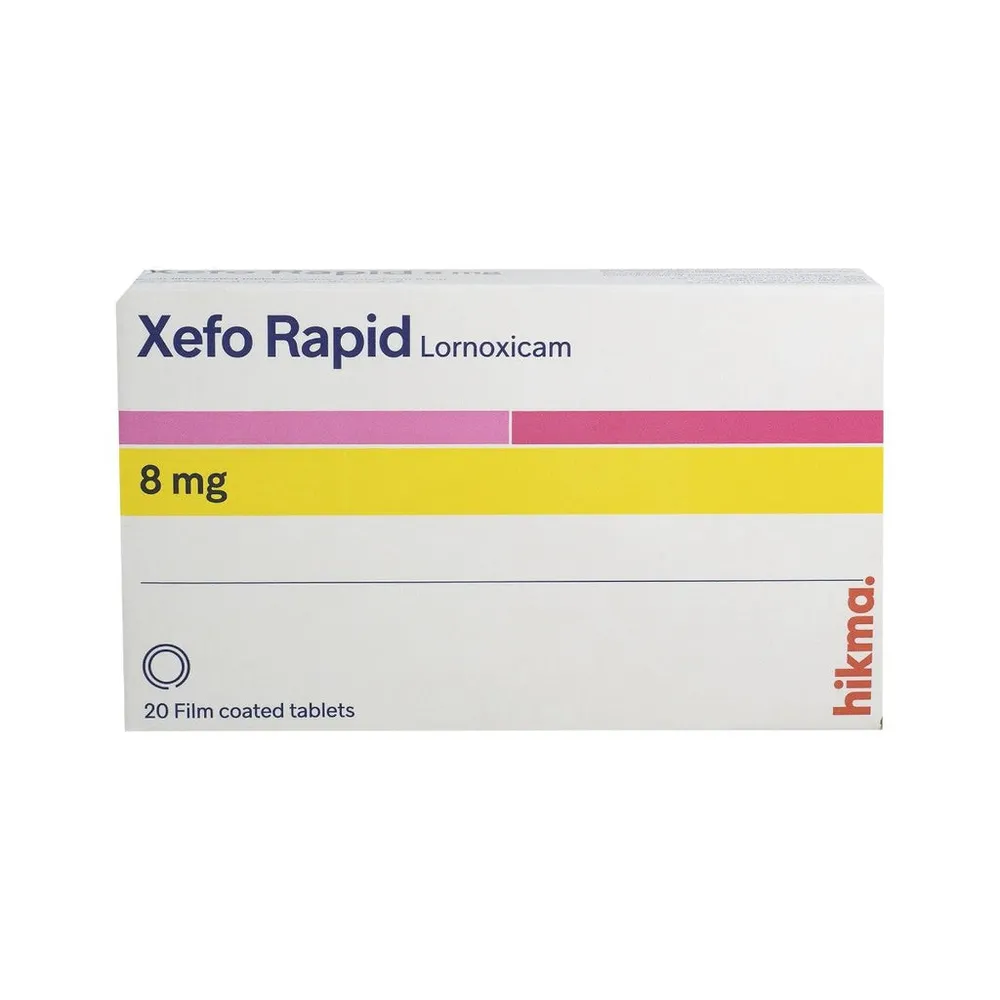
Table of Contents
Patient Information Leaflet
Xefo Rapid 8 mg coated tablets
Lornoxicam
Please read all of this leaflet carefully before taking this medicine, as it contains
important information for you.
- Keep this leaflet. You may need to read it again.
- If you have any further questions, ask your doctor or pharmacist.
- This medicine has been prescribed for you personally. Do not pass it on to others. It may harm them, even if their symptoms are the same as yours.
- If you experience any side effects, including any not listed in this leaflet, tell your doctor or pharmacist. See section 4.
Contents of the leaflet
- What Xefo Rapid is and what it is used for
- What you need to know before you take Xefo Rapid
- How to take Xefo Rapid
- Possible side effects
- How to store Xefo Rapid
- Contents of the pack and other information
1. What Xefo Rapid is and what it is used for
Xefo Rapid is a non-steroidal anti-inflammatory drug (NSAID) and anti-rheumatic agent belonging to the oxicam class. The medicine is intended for adults for:
- short-term, symptomatic treatment of mild to moderate acute pain.
2. Important Information Before Taking Xefo Rapid
When not to take Xefo Rapid:
- if the patient is allergic to lornoxicam or any of the other ingredients of this medicine (listed in section 6);
- if the patient has hypersensitivity to other NSAIDs, including acetylsalicylic acid (e.g. aspirin);
- if the patient has been diagnosed with thrombocytopenia (low platelet count, which increases the risk of bleeding or bruising);
- if the patient has severe heart failure;
- if the patient has gastrointestinal bleeding, cerebral vessel rupture and bleeding, or other hemorrhagic complications;
- if the patient has previously experienced gastrointestinal perforation or bleeding associated with NSAID treatment;
- if the patient has active or recurrent gastric or duodenal ulceration;
- if the patient has severe liver function impairment;
- if the patient has severe kidney function impairment;
- if the patient is in the last three months of pregnancy.
Warnings and precautions
Before starting treatment with Xefo Rapid, discuss this with your doctor or pharmacist. This is
particularly important:
- in patients with impaired kidney function;
- in patients who have previously had high blood pressure and/or heart failure;
- in patients diagnosed with ulcerative colitis or Crohn's disease;
- in patients with a history of bleeding tendencies;
- in patients with a history of asthma;
- in patients with systemic lupus erythematosus (SLE, lupus erythematosus, a rare autoimmune disease).
The doctor may recommend regular laboratory tests to monitor the patient’s condition if:
- the patient has blood clotting disorders,
- the patient has liver function disorders,
- the patient is elderly,
- or the patient will be taking Xefo Rapid for more than 3 months.
Inform your doctor if treatment with heparin or tacrolimus is planned during therapy with
Xefo Rapid.
The patient should stop taking Xefo Rapid and contact a doctor immediately if unusual
gastrointestinal symptoms occur, such as gastrointestinal bleeding, skin reactions like rash,
mucosal damage inside the nose, mouth, eyelids, ears, genital organs or anus, or other signs of
hypersensitivity.
Medicines such as Xefo Rapid may slightly increase the risk of heart attack (myocardial infarction)
or stroke. The risk increases with long-term use of high doses. Do not exceed the recommended
dose or duration of treatment.
The patient should consult a doctor or pharmacist if:
- heart disease has been diagnosed,
- the patient previously had a stroke,
- or the patient believes they are at risk of developing these conditions (e.g. has hypertension, diabetes, elevated cholesterol levels, or smokes).
Avoid using Xefo Rapid during chickenpox.
Xefo Rapid and other medicines
Tell your doctor or pharmacist about all medicines currently or recently taken, as well as any
medicines the patient plans to take.
Avoid using Xefo Rapid if the patient is taking other NSAIDs such as acetylsalicylic acid (e.g.
aspirin), ibuprofen, or COX-2 inhibitors.
Xefo Rapid may affect the action of other medicines. Exercise particular caution if the patient is
taking any of the following medicines:
- cimetidine – used to treat indigestion and peptic ulcer disease;
- anticoagulants such as warfarin, heparin, or phenprocoumon – used to prevent blood clots;
- corticosteroids;
- methotrexate – used in the treatment of cancer and autoimmune diseases;
- lithium;
- immunosuppressive agents such as cyclosporine or tacrolimus;
- cardiac medications such as digoxin, angiotensin-converting enzyme (ACE) inhibitors, beta-blockers;
- diuretics;
- quinolone antibiotics (e.g. levofloxacin, ofloxacin);
- antiplatelet agents (e.g. clopidogrel) – used to prevent heart attacks and strokes;
- selective serotonin reuptake inhibitors (SSRIs) – used to treat depression;
- sulfonylurea derivatives, e.g. glibenclamide – used in the treatment of diabetes;
- drugs that induce or inhibit the CYP2C9 enzyme system (such as the antibiotic rifampicin or the antifungal drug fluconazole), as they may affect how the body metabolizes Xefo Rapid;
- angiotensin II receptor blockers – used to treat high blood pressure, diabetic kidney damage, or congestive heart failure;
- pemetrexed – used in the treatment of certain types of lung cancer.
Xefo Rapid with food and drink
Xefo Rapid coated tablets are intended for oral administration. The medicine should be taken
before meals, with sufficient water.
Taking the medicine with food is not recommended, as it may reduce its effectiveness.
Pregnancy, breastfeeding and fertility
If the patient is pregnant or breastfeeding, suspects she may be pregnant, or is planning to have a
child, she should consult her doctor or pharmacist before using this medicine.
Fertility
Xefo Rapid may adversely affect fertility; therefore, use of this medicine is not recommended in
women planning pregnancy. Consult your doctor and consider discontinuing Xefo Rapid if there
are difficulties in conceiving or if undergoing infertility investigations.
Pregnancy
Do not use Xefo Rapid during the last three months of pregnancy, as it may harm the unborn
child or cause delivery complications. The medicine may cause kidney and heart problems in the
unborn child. It may affect bleeding tendency in both the mother and the child and may delay or
prolong labour. Xefo Rapid should not be used during the first 6 months of pregnancy unless
absolutely necessary and prescribed by a doctor. If treatment is needed during this period or when
trying to conceive, the lowest effective dose should be used for the shortest possible duration.
Xefo Rapid used for longer than a few days from week 20 of pregnancy may cause kidney problems
in the unborn child, which may lead to low levels of amniotic fluid surrounding the baby
(oligohydramnios) or narrowing of a blood vessel (ductus arteriosus) in the baby’s heart. If treatment
is needed for longer than a few days, the doctor may recommend additional monitoring.
Breastfeeding
Use of Xefo Rapid is not recommended in breastfeeding women unless clearly indicated by a
doctor.
Driving and operating machinery
Xefo Rapid has no or negligible effect on the ability to drive and operate machinery.
3. How to take Xefo Rapid
This medicine should always be taken according to the doctor's instructions. If in doubt, consult
your doctor or pharmacist.
The usual dose of Xefo Rapid for adults is 8–16 mg in divided doses of 8 mg:
8 mg taken twice daily or 16 mg taken once daily.
On the first day of treatment with Xefo Rapid, a dose of 16 mg may be taken, followed by an
additional 8 mg after 12 hours.
After the first day, no more than 16 mg should be taken per day.
Xefo Rapid tablets should be swallowed with an adequate amount of water. Xefo Rapid should not
be taken during meals, as food may reduce its effectiveness.
Due to insufficient data, the use of Xefo Rapid is not recommended in children and adolescents
under 18 years of age.
Taking more Xefo Rapid than recommended
If a patient takes more Xefo Rapid than prescribed, they should contact their doctor or pharmacist.
In case of overdose, the following symptoms may occur: nausea, vomiting, central nervous system
effects (such as dizziness or visual disturbances). Severe symptoms may also occur, such as
ataxia (progressing to coma and muscle spasms), liver and kidney damage, and possibly
blood coagulation disorders.
Missing a dose of Xefo Rapid
Do not take a double dose to make up for a missed dose.
If you have any further doubts regarding the use of this medicine, consult your doctor or pharmacist.
4. Possible adverse reactions
Like any medicine, this medicine can cause adverse reactions, although not everyone will experience them.
Medicines such as Xefo Rapid may slightly increase the risk of heart attack or stroke.
If gastrointestinal symptoms occur, such as gastrointestinal bleeding,
skin reactions such as rash, damage to the internal mucous membranes of the nose, mouth, eyelids, ears,
genital organs or anus, or other symptoms of hypersensitivity, treatment with
Xefo Rapid must be discontinued and medical advice must be sought immediately.
If any of the adverse effects listed below occur, stop taking the
medicine and contact your doctor immediately or seek help at the nearest hospital emergency department:
- occurrence or worsening of: shortness of breath, chest pain or ankle swelling;
- severe or persistent abdominal pain or black stools;
- yellowing of the skin and eyes (jaundice) – signs of liver dysfunction;
- allergic reactions – which may include skin problems such as ulceration or blistering, or swelling of the face, lips, tongue or throat causing difficulty in breathing;
- fever, blistering or inflammation of the skin, particularly of the hands and feet or oral cavity (Stevens-Johnson syndrome);
- very rarely, severe skin infections during chickenpox.
Adverse reactions associated with the use of Xefo Rapid are listed below.
Common adverse reactions (may occur in less than 1 in 10 patients)
- mild and transient headache and dizziness;
- nausea, abdominal pain, indigestion, diarrhoea and vomiting.
Uncommon adverse reactions (may occur in less than 1 in 100 patients)
- weight loss (anorexia), inability to sleep (insomnia), depression;
- eye discharge (conjunctivitis);
- dizziness, ringing in the ears (tinnitus);
- heart failure, irregular heartbeat, rapid heartbeat, sudden flushing of the skin;
- constipation, bloating (flatulence), belching, dry mouth, inflammation of the gastric mucosa, gastric ulcer, epigastric pain, duodenal ulcer, oral ulcers;
- increased liver function test values (detected in blood tests) and malaise;
- rash, itching, excessive sweating, redness of the skin (erythema), angioedema (sudden swelling of deeper skin layers, mainly of the face), urticaria, oedema, nasal congestion due to allergy (allergic rhinitis);
- hair loss (alopecia);
- joint pain (arthralgia).
Rare adverse reactions (may occur in less than 1 in 1,000 patients)
- sore throat;
- anaemia, decreased blood cell count (thrombocytopenia and leukopenia), weakness;
- hypersensitivity, including pseudoallergic reactions and anaphylaxis (a reaction typically characterised by facial swelling, sudden redness, difficulty breathing and dizziness);
- disorientation, nervousness, restlessness, drowsiness (somnolence), numbness (paresthesia), taste disturbances, tremor, migraine-type headaches, visual disturbances;
- elevated blood pressure, hot flushes;
- bleeding, haematoma (bruising), prolonged bleeding time;
- difficulty breathing (dyspnoea), cough, bronchospasm;
- perforation of ulcers, vomiting blood, gastrointestinal bleeding, black stools;
- inflammation of the mouth, oesophagitis, gastro-oesophageal reflux, difficulty swallowing, mouth ulcers (aphthae), glossitis;
- liver function disturbances;
- skin problems such as rash, skin eruption;
- bone pain, severe muscle cramps, muscle pain;
- urinary system disorders such as nocturia (need to urinate at night) or increased blood urea and creatinine levels.
Very rare adverse reactions (may occur in less than 1 in 10,000
patients)
- liver damage, hepatitis, jaundice, cholestasis (impaired bile flow from the liver);
- cyanosis, oedema, severe skin reactions (Stevens-Johnson syndrome, toxic epidermal necrolysis);
- aseptic meningitis;
- adverse reactions typical of NSAIDs: neutropenia, agranulocytosis, aplastic anaemia, haemolytic anaemia, nephrotoxicity.
Reporting of adverse reactions
If any adverse effects occur, including any adverse effects not listed
in this leaflet, inform your doctor or pharmacist. Adverse reactions can be reported
directly to the Department of Monitoring Adverse Drug Reactions
of the Office for Registration of Medicinal Products, Medical Devices and Biocidal Products
Al. Jerozolimskie 181 C, 02-222 Warsaw
Tel.: + 48 22 49 21 301
Fax: + 48 22 49 21 309
e-mail: [email protected]
Adverse reactions can also be reported to the marketing authorisation holder. By reporting
adverse reactions, additional information on the safety of the medicine can be collected.
5. How to store Xefo Rapid
Keep the medicine out of the sight and reach of children.
Do not store above 30°C.
Do not use this medicine after the expiry date stated on the carton or blister after EXP. The expiry date refers to the last day of the stated month.
Medicines should not be disposed of via wastewater or household waste. Ask your pharmacist how to dispose of medicines you no longer use. This will help protect the environment.
6. Contents of the pack and other information
What Xefo Rapid contains
- The active substance is lornoxicam.
- One coated tablet contains 8 mg of lornoxicam.
- The other ingredients are: microcrystalline cellulose, sodium hydrogen carbonate, anhydrous calcium hydrogen phosphate, low-substituted hydroxypropylcellulose, hydroxypropylcellulose, calcium stearate (tablet core); titanium dioxide (E171), talc, propylene glycol, hypromellose (coating).
What Xefo Rapid looks like and contents of the pack
Xefo Rapid 8 mg is a white to slightly yellowish-white, round, biconvex coated tablet.
Xefo Rapid is available in packs containing 6, 10, 20, 30, 50 or 100 coated tablets. Not all pack sizes may be marketed.
Marketing Authorisation Holder
Takeda Pharma sp. z o.o.
ul. Prosta 68
00-838 Warsaw
Poland
Manufacturer
Takeda GmbH
Manufacturing site Oranienburg
Lehnitzstrasse 70-98
16515 Oranienburg
Germany
Delpharm Novara S.r.l
Via Crosa 86
28065 Cerano (NO)
Italy
This medicinal product is authorised in the European Economic Area under the following names:
DK/H/123/006
Austria Xefo Rapid 8 mg - Filmtabletten
Bulgaria Ксефо Рапид
Czech Republic Xefo Rapid 8 mg
Denmark Xefo Rapid
Greece Xefo Rapid
Hungary Xefo Rapid 8 mg filmtabletta
Lithuania Xefo Rapid 8 mg pėvele dengtos tabletės
Latvia Xefo Rapid 8 mg apvalkotā tablete
Poland Xefo Rapid
Romania Xefo Rapid 8 mg
Slovakia Xefo Rapid filmom obalené tablety 8 mg