Xedine ipra max
Poland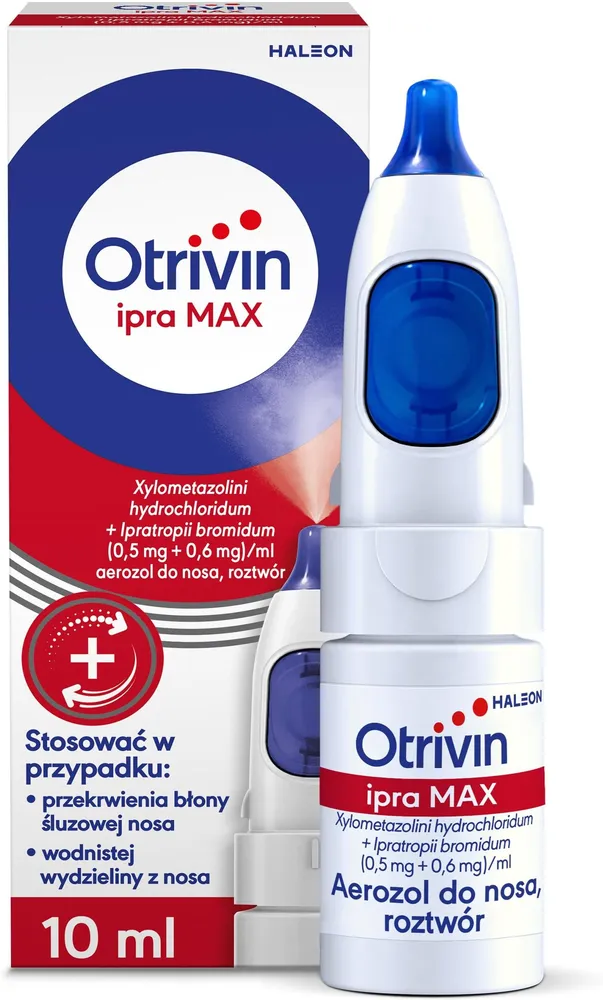
Table of Contents
Package leaflet: Information for the user
Xedine Ipra MAX, (0.5 mg + 0.6 mg)/mL, nasal spray, solution
Xylometazolini hydrochloridum + Ipratropii bromidum
Please read all of this leaflet carefully before using the medicine, because it contains
important information for the patient.
This medicine should always be used exactly as described in this patient leaflet or
as directed by the doctor or pharmacist.
- Keep this leaflet, as you may need to read it again.
- If you need advice or further information, please consult your pharmacist.
- If you experience any adverse reactions, including any not listed in this leaflet, inform your doctor or pharmacist. See section 4.
- If there is no improvement after 3 days of treatment or if symptoms worsen, consult your doctor.
Contents of the leaflet
- What Xedine Ipra MAX is and what it is used for
- Important information before using Xedine Ipra MAX
- How to use Xedine Ipra MAX
- Possible side effects
- How to store Xedine Ipra MAX
- Contents of the pack and other information
1. What Xedine Ipra MAX is and what it is used for
Xedine Ipra MAX is a combination medicine containing two active substances:
xylometazoline hydrochloride and ipratropium bromide.
Xylometazoline hydrochloride reduces nasal mucosal congestion, while ipratropium bromide
reduces rhinorrhea (runny nose).
Xedine Ipra MAX is used in adults for the treatment of nasal mucosal congestion
associated with runny nose (rhinorrhea) due to the common cold.
2. Important information before using Xedine Ipra MAX
When not to use Xedine Ipra MAX
- In children under 18 years of age, due to lack of sufficient data on safety and efficacy.
- If the patient is allergic to xylometazoline hydrochloride or ipratropium bromide, or any of the other ingredients of this medicine (listed in section 6).
- If the patient is allergic to atropine or substances similar to atropine, such as hyoscine and scopolamine.
- If the patient has had the pituitary gland surgically removed via a nasal approach.
- If the patient has undergone brain surgery performed through the nose or oral cavity.
- If the patient has glaucoma (increased pressure in the eye).
- If the patient has very dry nasal mucosa (drying rhinitis or atrophic rhinitis).
Do not use Xedine Ipra MAX if any of the above apply to the patient. If in doubt, consult a doctor or pharmacist before using this medicine.
Warnings and precautions
In very sensitive patients, Xedine Ipra MAX may cause sleep disturbances, dizziness, tremor, irregular heartbeat, or elevated blood pressure. If these symptoms occur and are bothersome, contact a doctor.
Before starting treatment with Xedine Ipra MAX, discuss with a doctor or pharmacist if the patient has:
- Heart disease (e.g. long QT syndrome)
- High blood pressure
- Diabetes
- Hyperthyroidism
- Difficulty in passing urine and/or benign prostatic hyperplasia
- Narrow-angle glaucoma (sudden increase in eye pressure)
- Tendency to nosebleeds
- Intestinal obstruction (small intestine)
- Cystic fibrosis
- Benign adrenal gland tumour producing large amounts of adrenaline and noradrenaline (pheochromocytoma) or particular sensitivity to adrenaline or noradrenaline.
Immediate hypersensitivity reactions (allergic reactions) may occur. Symptoms may include: itchy, red skin rash with inflammation (urticaria), difficulty breathing or speaking, difficulty swallowing due to swelling of the lips, face or throat. These symptoms may occur individually or together as a severe allergic reaction. If this occurs, STOP using Xedine Ipra MAX immediately (see section 4).
Do not use Xedine Ipra MAX for longer than 7 consecutive days. If symptoms persist, consult a doctor. Prolonged or excessive use of the medicine may cause recurrence or worsening of nasal congestion and swelling of the nasal mucosa.
Avoid spraying Xedine Ipra MAX into or near the eyes. If the medicine gets into the eyes, rinse thoroughly with cold water. Transient blurred vision, irritation, pain and redness of the eyes may occur. In such cases, consult a doctor. Narrow-angle glaucoma may also be exacerbated.
Children and adolescents
Xedine Ipra MAX is not recommended for use in children and adolescents under 18 years of age due to lack of adequate data on safety and efficacy.
Elderly
Xedine Ipra MAX is not recommended for use in elderly patients over 70 years of age due to lack of adequate data on safety and efficacy.
Xedine Ipra MAX and other medicines
Inform your doctor or pharmacist about all medicines the patient is currently taking or has recently taken, as well as any medicines planned for use. Particular attention should be paid to:
- Monoamine oxidase inhibitors (used in the treatment of depression). If the patient is taking such medicines or has taken them within the last two weeks, a dangerous increase in blood pressure may occur.
- Tricyclic and tetracyclic antidepressants. If the patient is taking such medicines or has taken them within the last two weeks, a dangerous increase in blood pressure may occur.
- Medicines used for motion sickness (medicines containing anticholinergic substances).
- Medicines used for gastrointestinal disorders (especially motility disorders) (medicines containing anticholinergic substances).
- Medicines used in respiratory disorders (beta-2-adrenergic receptor agonists), such as asthma or chronic obstructive pulmonary disease (COPD), as they may exacerbate glaucoma in patients with a history of closed-angle glaucoma.
If the patient is taking any of the above medicines, they should consult a doctor before using Xedine Ipra MAX.
Pregnancy and breastfeeding
If the patient is pregnant or breastfeeding, suspects she may be pregnant, or is planning to have a child, she should consult a doctor or pharmacist before using this medicine.
Xedine Ipra MAX should not be used during pregnancy unless advised by a doctor.
During breastfeeding, Xedine Ipra MAX should not be used unless a doctor decides that the benefits of treatment outweigh the potential risks to the child.
Driving and operating machinery
During treatment with Xedine Ipra MAX, visual disturbances (including blurred vision and dilated pupils), dizziness and fatigue may occur. If such symptoms occur, avoid driving, operating machinery or performing tasks in which these symptoms could pose a risk to the patient or others.
3. How to use Xedine Ipra MAX
This medicine should always be used exactly as described in this patient leaflet or as directed by
your doctor or pharmacist. If in doubt, consult your doctor or pharmacist.
Recommended dose:
Adults: One dose into each nostril as needed, up to 3 times daily,
for a maximum of 7 days. At least a 6-hour interval should be maintained between two
consecutive doses. Do not exceed 3 doses per day into each nostril.
Do not exceed the recommended dose. The medicine should be used at the lowest possible frequency
required to relieve symptoms and for the shortest duration necessary to achieve the desired effect.
Duration of treatment:
Do not use this medicine for longer than 7 days.
As soon as symptoms improve, it is recommended to discontinue treatment with Xedine Ipra MAX, even
if treatment has lasted less than 7 days, in order to minimize the risk of adverse effects.
If symptoms worsen or do not improve after 7 days, consult your doctor.
If you feel that the effect of Xedine Ipra MAX is too strong or too weak, consult your doctor or pharmacist.
Instructions for use:
Before first use, prime the pump by pressing it 4 times. After priming, the pump is ready for regular,
daily use throughout the treatment period. If the medicine has not been used for more than 6 days,
re-prime the pump by pressing it at least 2 times. If a full dose of aerosol is not delivered, do not repeat the dose.
- Clear the nose.
- Hold the bottle upright, supporting the bottom with your thumb, and hold the nozzle between two fingers.
- Lean slightly forward and insert the nozzle into one nostril.
- Press the pump while simultaneously inhaling gently through the nose.
- Repeat steps 1 to 4 in the other nostril.
- Immediately after use, clean and dry the nozzle before replacing the protective cap. For hygienic reasons and to avoid spreading infections, each medicine package should be used by only one person. The effect of the medicine occurs within 5–15 minutes. Avoid spraying Xedine Ipra MAX into or near the eyes. If the medicine gets into the eyes, rinse them thoroughly with cold water. Transient blurred vision, as well as eye irritation, pain, and redness may occur. In such a case, consult a doctor. Acute angle-closure glaucoma may also be triggered.
Overdose of Xedine Ipra MAX
If more than the recommended dose of Xedine Ipra MAX is used, contact your doctor, go to a hospital,
or to an emergency department for risk assessment. It is advisable to bring the leaflet, bottle, or medicine packaging with you. This is particularly important in the case of children, who are more likely to experience adverse effects than adults.
Symptoms of overdose include severe dizziness, excessive sweating, significantly lowered body temperature, headache, slow heart rate, rapid heart rate, breathing difficulties, coma, seizures, high blood pressure (hypertension), which may be followed by low blood pressure (hypotension).
Other symptoms may include dry mouth, visual disturbances, and hallucinations.
If you have any further doubts regarding the use of this medicine, consult your doctor or pharmacist.
Missed dose of Xedine Ipra MAX
Do not use a double dose to make up for a missed dose.
4. Possible adverse reactions
Like all medicines, this medicine can cause adverse reactions, although not everyone will experience them.
You should STOP using Xedine Ipra MAX and immediately contact your doctor if any of the following symptoms occur:
- Palpitations, increased heart rate (occurs in less than 1 in 100 people);
- Signs of an allergic reaction such as difficulty breathing, speaking or swallowing; swelling of the face, lips, tongue or throat; severe itching of the skin with red rash or raised bumps (frequency unknown, cannot be estimated from available data);
- Vision disturbances (including blurred vision, worsening of glaucoma or increased eye pressure), seeing rainbow-colored halos around bright light and (or) eye pain (frequency unknown, cannot be estimated from available data).
The most commonly reported adverse reactions are nosebleeds and dryness of the nasal mucosa. Many of the reported adverse reactions are also symptoms of the common cold.
Very common adverse reactions (may occur in more than 1 in 10 people):
- Nosebleeds
Common adverse reactions (may occur in less than 1 in 10 people):
- Nasal discomfort, nasal mucosal congestion, dryness of the nasal mucosa, nasal pain
- Dryness of the oral mucosa, dryness or irritation of the throat
- Taste disturbances, headache, dizziness, local burning sensation
- Nausea
Uncommon (may occur in less than 1 in 100 people):
- Nasal ulceration, sneezing, sore throat, cough, hoarseness
- Stomach discomfort
- Altered sense of smell, tremor
- Discomfort, fatigue
- Insomnia
- Eye irritation, dry eyes, eye swelling, eye redness
- Palpitations, increased heart rate
Rare (may occur in less than 1 in 1,000 people):
- Runny nose
Very rare (may occur in less than 1 in 10,000 people):
- Hypersensitivity reaction such as: swelling, rash, itching
- Visual disturbances
Frequency not known (cannot be estimated from available data):
- Urticaria
- Nasal area discomfort
- Swallowing difficulties, sudden throat muscle spasm, throat swelling
- Chest discomfort, excessive thirst
- Irregular heartbeat
- Visual disturbances including blurred vision, pupil dilation, seeing flashes of light, increased intraocular pressure, glaucoma, blurred vision, seeing rainbow-colored halos around light sources, and eye pain
- Difficulty emptying the urinary bladder
To minimize the risk of adverse reactions, it is recommended to discontinue use of Xedine Ipra MAX as soon as symptoms improve.
Reporting of adverse reactions
If any adverse reactions occur, including any not listed in this leaflet, inform your doctor or pharmacist. Adverse reactions can be reported directly to the Department of Monitoring of Adverse Drug Reactions, Office for Registration of Medicinal Products, Medical Devices and Biocidal Products, Al. Jerozolimskie 181 C, 02-222 Warsaw, tel.: 22 49 21 301, fax: 22 49 21 309, website: https://smz.ezdrowie.gov.pl
Adverse reactions can also be reported to the marketing authorization holder.
Reporting adverse reactions helps provide more information on the safety of this medicine.
5. How to store Xedine Ipra MAX
Keep this medicine out of sight and reach of children.
This medicine does not require any special storage conditions.
The shelf life after first opening the bottle is 6 months.
Do not use this medicine after the expiry date stated on the carton and bottle after:
EXP. The expiry date refers to the last day of the stated month.
Medicines must not be disposed of via wastewater or household waste. Ask your pharmacist how to dispose of medicines no longer required. These measures will help protect the environment.
6. Contents of the pack and other information
What Xedine Ipra MAX contains
The active substances in this medicinal product are xylometazoline hydrochloride and ipratropium bromide
(in the form of ipratropium bromide monohydrate). 1 mL of solution contains 0.5 mg
of xylometazoline hydrochloride and 0.6 mg of ipratropium bromide.
1 dose (140 microlitres) contains 70 micrograms of xylometazoline hydrochloride
and 84 micrograms of ipratropium bromide.
The other ingredients (excipients) are: disodium edetate, glycerol (85%), purified water,
purified seawater, hydrochloric acid (dilute), and sodium hydroxide (for pH adjustment).
What Xedine Ipra MAX looks like and contents of the pack
Xedine Ipra MAX is a clear, colourless solution (pH 3.7–4.1; osmolality 0.340–0.420 osmol/kg).
A white plastic bottle containing 10 mL of solution, closed with a 3K spray pump dispenser with nozzle
and protective cap, packed in a cardboard carton.
Marketing Authorisation Holder:
Ranbaxy (Poland) Sp. z o.o.
ul. Idzikowskiego 16
00-710 Warsaw
tel. 22 642 07 75
Manufacturer:
Jadran - Galenski laboratorij d.d.
Svilno 20
51000 Rijeka
Croatia
Terapia S.A.
124 Fabricii Street
400 632 Cluj Napoca
Romania
This medicinal product is authorised in the Member States of the European Economic Area under the following names:
Latvia: Xylometazoline/Ipratropium bromide Ranbaxy 0.5 mg/0.6 mg/ml nasal aerosol, solution
Poland: Xedine Ipra MAX
Romania: RHINXYL PLUS 0.5 mg/ml / 0.6 mg/ml nasal spray, solution