Xaloptic combi
Poland
Table of Contents
Package leaflet: Information for the patient
Xaloptic Combi, 50 micrograms/ml + 5 mg/ml, eye drops, solution
Lataprost + Timolol
Please read the entire leaflet carefully before using the medicine, as it contains
important information for the patient.
- Keep this leaflet, as you may need to read it again.
- If you have any further questions, please consult your doctor or pharmacist.
- This medicine has been prescribed for a specific individual. Do not pass it on to others. It may harm other people, even if their symptoms are the same.
- If you experience any adverse reactions, including any not listed in this leaflet, inform your doctor or pharmacist. See section 4.
Table of contents
- What Xaloptic Combi is and what it is used for
- Important information before using Xaloptic Combi
- How to use Xaloptic Combi
- Possible side effects
- How to store Xaloptic Combi
- Contents of the pack and other information
1. What Xaloptic Combi is and what it is used for
Xaloptic Combi eye drops contain two different active substances that reduce intraocular pressure through two different mechanisms of action. Timolol belongs to a group of medicines called beta-blockers and reduces intraocular pressure by decreasing the production of aqueous humour. Latanoprost reduces intraocular pressure by increasing the natural outflow of fluid from inside the eye.
Xaloptic Combi is indicated for the treatment of elevated intraocular pressure (intraocular hypertension) and glaucoma.
2. Important information before using Xaloptic Combi
When not to use Xaloptic Combi
- in patients with a current or past history of respiratory diseases, including bronchial asthma, severe chronic obstructive pulmonary disease (a serious lung condition that may cause wheezing, difficulty breathing, and/or prolonged cough)
- in patients with heart disease, such as heart failure or cardiac arrhythmias
- if the patient is allergic to latanoprost, timolol, beta-blockers, or any of the other ingredients of this medicine (listed in section 6)
- if the patient is under 18 years of age.
If any of the above apply to the patient, Xaloptic Combi must not be used
without consulting a doctor.
Warnings and precautions
Before starting treatment, discuss with the doctor if the patient has or has had in the past:
- ischemic heart disease (symptoms may include chest pain or tightness, shortness of breath, or angina)
- heart failure, low blood pressure
- cardiac arrhythmias, such as bradycardia (slow heart rate)
- breathing difficulties, asthma, or chronic obstructive pulmonary disease
- circulatory disorders (e.g. Raynaud's disease or Raynaud's syndrome)
- diabetes, as timolol may mask symptoms of hypoglycemia
- hyperthyroidism, as timolol may mask its symptoms
- viral keratitis (caused by herpes simplex virus, HSV)
- planned eye surgery (including cataract surgery) or any previous eye surgery
- eye disorders (such as eye pain, eye irritation, eye inflammation, or blurred vision)
- dry eye syndrome
- use of contact lenses. Xaloptic Combi may still be used, but follow instructions for contact lens wearers
- angina pectoris (especially Prinzmetal's angina)
- severe allergic reactions that usually require hospital treatment.
Before using Xaloptic Combi eye drops in patients with heart disease, the doctor should ensure that the heart condition is well controlled. During treatment with Xaloptic Combi eye drops, the doctor may recommend additional heart and circulation monitoring.
In patients with mixed-colour irises, e.g. blue-brown, grey-brown, green-brown, or yellow-brown, the iris colour may slowly and gradually change due to an increased amount of brown pigment in the iris. Colour changes in patients with uniformly blue, grey, green, or brown irises have been rarely observed. Iris pigmentation changes towards brown are usually slow and may go unnoticed clinically for several months or years. If Xaloptic Combi eye drops are used in only one eye, a noticeable difference in iris colour between the two eyes may develop. Iris colour change is harmless but is likely to be permanent.
If the patient has mixed-colour irises or notices a change in iris pigmentation towards brown, consult the doctor.
Before undergoing any surgical procedures, inform the doctor about using Xaloptic Combi eye drops, as latanoprost and timolol may affect the action of certain anaesthetic drugs.
Xaloptic Combi and other medicines
Xaloptic Combi may affect the action of other medicines, and other medicines, including other eye drops used to treat glaucoma, may affect Xaloptic Combi. Inform the doctor if the patient is using or plans to use antihypertensive medicines, cardiac medicines, or antidiabetic medicines.
Tell the doctor or pharmacist about all medicines currently used or recently used, as well as any medicines the patient plans to use.
Inform the doctor if the patient is using one or more of the following medicines:
- calcium channel blockers (e.g. nifedipine, verapamil, or diltiazem), used to treat high blood pressure, angina pectoris, cardiac arrhythmias, or Raynaud's disease
- digoxin, a medicine used to treat heart failure or cardiac arrhythmias
- quinidine, a medicine used to treat heart conditions and certain types of malaria
- clonidine, a medicine used to treat high blood pressure
- other beta-blockers (e.g. those containing timolol, administered orally and/or as eye drops), which belong to the same class as timolol and may enhance its effects
- medicines used to treat diabetes
- diuretics or medicines that normalize intestinal function
- medicines that reduce mucosal swelling (e.g. in the nose)
- asthma medications containing adrenaline
- antidepressants such as fluoxetine and paroxetine
- prostaglandins, analogues, and prostaglandin derivatives.
Pregnancy and breastfeeding
If the patient is pregnant, breastfeeding, suspects she may be pregnant, or plans to become pregnant, she should consult a doctor or pharmacist before using this medicine.
Xaloptic Combi should not be used in pregnant women unless the doctor considers it necessary.
Xaloptic Combi should not be used in breastfeeding women. Latanoprost and timolol may pass into breast milk.
Driving and operating machinery
Certain adverse effects, such as blurred vision, may impair the ability to drive and/or operate machinery. If such an effect occurs, consult the doctor.
Xaloptic Combi contains benzalkonium chloride and phosphates
The medicine contains 0.2 mg of benzalkonium chloride per millilitre.
Benzalkonium chloride may be absorbed by soft contact lenses and may change their colour. Soft contact lenses should be removed before instilling the drops and not reinserted for at least 15 minutes.
Benzalkonium chloride may also cause eye irritation, especially in patients with dry eye syndrome or corneal disorders (the transparent layer at the front of the eye). If abnormal eye sensations, stinging, or eye pain occur after using the medicine, contact the doctor.
The medicine contains 6.39 mg of monosodium dihydrogen phosphate monohydrate and 2.89 mg of disodium phosphate anhydrous per millilitre (total phosphate content: 6.345 mg/ml). In patients with severe damage to the transparent front part of the eye (cornea), phosphates may, very rarely, lead to corneal calcification and clouding during treatment due to calcium accumulation.
3. How to use Xaloptic Combi
This medicine should always be used exactly as prescribed by the doctor. If in doubt, consult
your doctor or pharmacist.
Dosage
The recommended dose is: 1 drop into the affected eye(s) once daily.
If Xaloptic Combi is used together with other eye drops, wait at least 5 minutes before applying
the next drop.
If a dose is missed at the usual time, wait until the next scheduled dose. Do not use a double
dose to make up for a missed dose.
Instructions for using the eye drops
Follow the instructions below to ensure proper use of Xaloptic Combi.
- Wash your hands before applying the drops.
- Unscrew the protective cap with “wings”.
- Remove the cap.
- Gently pull down the lower eyelid of the affected eye using the index finger.
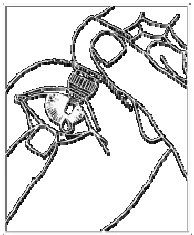
Figure 1
- Bring the tip of the dropper as close to the eye as possible without touching it. Squeeze the bottle gently so that only one drop enters the eye.
- Replace the cap.
- After applying Xaloptic Combi eye drops, press with a finger on the inner corner of the eye (near the nose) for 2 minutes. This helps prevent latanoprost and timolol from being absorbed into the body.
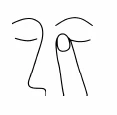
Figure 2
If the patient accidentally uses more drops than recommended, contact a doctor or hospital immediately.
Children
There is limited data on the use of eye drops containing timolol and latanoprost in children and adolescents.
Overdose of Xaloptic Combi
If the patient uses more drops than recommended or accidentally swallows the drops, contact a doctor immediately.
If too many drops are instilled into the eye, the patient may experience mild eye irritation. Tearing and redness of the eye may occur.
Missed dose of Xaloptic Combi
If a dose is missed at the usual time, wait until the next scheduled dose. Do not use a double
dose to make up for a missed dose.
If you have any further questions about the use of this medicine, consult your doctor or pharmacist.
4. Possible adverse effects
Like any medicine, this medicine can cause adverse effects, although not everyone will experience them.
Eye drops can usually be used until adverse effects become serious.
If in doubt, consult a doctor or pharmacist. Do not stop treatment with Xaloptic Combi without consulting a doctor.
Listed below are known adverse effects occurring after use of Xaloptic Combi.
The most important adverse effect is the possibility of a gradual, permanent change in eye colour. Xaloptic Combi may possibly cause serious heart function problems. Inform the doctor if the patient notices any changes related to normal heart action or heart function and inform them about using this medicine.
Known adverse effects occurring after use of this medicine:
Very common (may occur in more than 1 in 10 patients):
- gradual change in eye colour associated with an increase in brown pigment in the coloured part of the eye called the iris. In patients whose iris colour is a mixture of colours (such as blue-brown, grey-brown, yellow-brown or green-brown), these changes are observed significantly more frequently than in individuals with uniformly coloured eyes (blue, grey, green or brown). Changes in eye colour may develop over several years. The change in eye colour may be permanent and significantly more noticeable if only one eye is treated with Xaloptic Combi. The eye colour change appears to be harmless. After discontinuation of this medicine, the eye colour change does not progress.
Common (may occur in up to 1 in 10 patients):
- eye irritation (including burning sensation, grittiness, itching, stinging or sensation of a foreign body in the eye) and eye pain.
Uncommon (may occur in up to 1 in 100 patients):
- headache
- eye redness, eye infection (conjunctivitis), blurred vision, excessive tearing, blepharitis, eye surface irritation or disruption
- skin rash and (or) itching.
Other adverse effects
Like other eye medicines, Xaloptic Combi (latanoprost with timolol) is absorbed into the bloodstream. The frequency of adverse effects after administration of eye drops is lower than with orally or intravenously administered medicines.
Listed below are adverse effects which, although not reported after use of Xaloptic Combi, have occurred after use of individual components of this medicine (latanoprost and timolol), and therefore may also occur after use of Xaloptic Combi. Among the listed adverse effects are also those observed during use of beta-adrenergic blocking agents (e.g. timolol) in the treatment of eye diseases:
- viral herpes infection of the eye (HSV)
- general allergic reactions including swelling under the skin surface, which may occur in the face, limbs, and may impair airflow through the respiratory tract, causing difficulty in swallowing and breathing, urticaria or itchy rash, localised and generalised rash, itching, severe cases of sudden life-threatening allergic reactions
- low blood sugar levels
- dizziness
- sleep difficulties (insomnia), depression, nightmares, memory loss, hallucinations
- fainting, stroke, reduced blood flow to the brain, worsening of myasthenia symptoms (muscle disease), sensory disturbances (such as tingling, burning) and headache
- swelling of the back of the eye (macular oedema), formation of fluid-filled areas in the iris (iris cysts), light sensitivity (photophobia), changes in the eye socket and eyelids leading to deepening of the eyelid fold
- eye irritation symptoms (burning, stinging, itching, tearing, redness), blepharitis, keratitis, blurred vision and choroidal detachment following filtration surgery which may cause visual disturbances, reduced corneal sensitivity, dry eyes, corneal erosion (defects in the outer surface of the eyeball), eyelid drooping (causing eyes to be half-closed), double vision
- darkening of the skin around the eyes, changes in eyelashes and primary hair (increased amount, length, thickness and darkening), changes in the direction of eyelash growth, swelling around the eyes, iris swelling -
coloured part of the eye (iritis and (or) uveitis),
scarring conjunctivitis
- ringing and (or) buzzing in the ears (tinnitus)
- angina pectoris, worsening of existing angina pectoris in individuals with pre-existing heart disease
- slowed heart rate, chest pain, palpitations, oedema (fluid accumulation), changes in heart rhythm or accelerated heart rate, congestive heart failure (heart disease characterised by breathlessness and swelling of feet and legs due to fluid accumulation), certain types of heart rhythm disorders, myocardial infarction, heart failure
- reduced blood pressure, decreased arterial pressure, poor blood circulation manifesting as numbness and paleness of fingers and toes, sensation of cold hands and feet
- shallow breathing, bronchospasm (mainly in patients with pre-existing respiratory diseases), breathing difficulties, cough, asthma, worsening of asthma
- nausea (uncommon), vomiting (uncommon), taste disturbances, digestive disorders, diarrhoea, dryness of the oral mucosa, upper abdominal pain
- hair loss, skin rash with silvery-white appearance (psoriasiform rash) or exacerbation of psoriasis, skin rash
- joint and muscle pain not caused by physical exertion, muscle weakness, fatigue
- sexual dysfunction, decreased libido.
In patients with severe damage to the transparent front part of the eye (cornea), phosphates may very rarely cause corneal clouding due to calcium accumulation during treatment.
Reporting of adverse effects
If any adverse effects occur, including those not listed in this leaflet, inform a doctor or pharmacist. Adverse effects can be reported directly to the Department of Monitoring Adverse Drug Reactions, Office for Registration of Medicinal Products, Medical Devices and Biocidal Products
Al. Jerozolimskie 181C
02-222 Warsaw
Phone: +48 22 49 21 301
Fax: +48 22 49 21 309
Website: https://smz.ezdrowie.gov.pl
Adverse effects can also be reported to the marketing authorisation holder.
By reporting adverse effects, additional information on the safety of the medicine can be collected.
5. How to store Xaloptic Combi
Keep out of the sight and reach of children.
Before first opening, Xaloptic Combi must be stored and transported in a refrigerator
(at 2°C to 8°C).
After first opening, the bottle may be stored for 28 days at room temperature
(below 25°C).
Store in the original packaging to protect from light.
Do not use this medicine after the expiry date stated on the carton and dropper bottle.
The expiry date refers to the last day of the stated month.
The label on the packaging shows EXP followed by the expiry date, and Lot followed by the batch number.
Medicines must not be disposed of via the sewage system or household waste. Ask your pharmacist
how to dispose of medicines no longer required. Such measures help protect
the environment.
6. Contents of the pack and other information
What Xaloptic Combi contains
- The active substances are: latanoprost and timolol. Each millilitre (1 ml) of Xaloptic Combi eye drop solution contains 50 micrograms of latanoprost and timolol maleate equivalent to 5 mg of timolol.
- Other ingredients are: monosodium dihydrogen phosphate monohydrate, sodium chloride, anhydrous disodium phosphate, benzalkonium chloride (preservative), water for injections.
Each bottle contains 2.5 ml of solution.
What Xaloptic Combi looks like and contents of the pack
Xaloptic Combi eye drops are a clear, colourless solution. The eye drops are supplied in a bottle with a dropper containing 2.5 ml of solution.
Pack sizes:
1, 3 or 6 bottles of 2.5 ml
Not all pack sizes may be marketed.
Marketing Authorisation Holder and Manufacturer
Marketing Authorisation Holder
Zakłady Farmaceutyczne POLPHARMA S.A.
ul. Pelplińska 19, 83-200 Starogard Gdański
tel. + 48 22 364 61 01
Manufacturer
Zakłady Farmaceutyczne POLPHARMA S.A.
ul. Pelplińska 19, 83-200 Starogard Gdański
Jadran - Galenski Laboratorij d.d.
Svilno 20, 51000 Rijeka
Croatia