Vizibim
Poland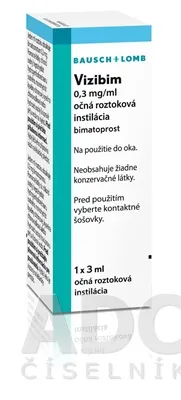
Table of Contents
Package leaflet: Information for the user
Vizibim, 0.3 mg/ml, eye drops, solution
bimatoprost
Please read the entire leaflet carefully before using the medicine, as it contains
important information for the patient.
- Keep this leaflet, so that you can read it again if necessary.
- If you have any doubts, please consult your doctor or pharmacist.
- This medicine has been prescribed for a specific individual. Do not pass it on to others. The medicine may harm another person, even if their symptoms are the same.
- If any adverse reactions occur, including any not listed in this leaflet, inform your doctor or pharmacist. This applies also to any adverse reactions not mentioned in this leaflet. See section 4.
Table of contents
- What Vizibim is and what it is used for
- What you need to know before using Vizibim
- How to use Vizibim
- Possible side effects
- How to store Vizibim
- Contents of the pack and other information
1. What Vizibim is and what it is used for
Vizibim is a medicine used in glaucoma. It belongs to a group of medicines called prostamides.
Vizibim eye drops are used to reduce elevated intraocular pressure. This medicine may be used alone or in combination with other eye drops known as beta-adrenergic blocking agents, which also reduce intraocular pressure.
The eye contains a clear, watery fluid that nourishes the inside of the eye. This fluid is continuously drained from the eye and replaced by newly produced fluid. If the fluid is not drained sufficiently quickly, pressure within the eye increases. This medicine works by increasing the outflow of fluid, thereby reducing intraocular pressure. Untreated elevated pressure may lead to a disease called glaucoma and ultimately to damage of vision.
Vizibim eye drops, solution, is a sterile solution that does not contain preservatives.
2. Important information before using Vizibim
When not to use Vizibim
- if the patient is allergic to bimatoprost or any of the other ingredients of this medicine (listed in section 6).
Warnings and precautions
Before starting treatment with Vizibim, consult a doctor or pharmacist.
Inform the doctor if:
- the patient has breathing difficulties;
- the patient has kidney or liver problems;
- the patient has undergone cataract surgery;
- the patient has dry eye syndrome;
- the patient has or has had problems with the cornea (the transparent layer at the front of the eye);
- the patient has or has had slow heart rate or low blood pressure;
- the patient has had or currently has a viral infection or inflammation in the eye.
During treatment, Vizibim may cause loss of orbital fat tissue around the eye, which may lead to deepening of the eyelid groove, sunken eyes, drooping of the upper eyelids (ptosis), skin tightness around the eye (dermatochalasis-induced involution), and increased visibility of the lower white part of the eye (exposure of the lower sclera). These changes are usually mild, but if pronounced, they may affect the visual field. These changes may resolve after discontinuation of treatment with Vizibim. Vizibim may also cause darkening and excessive growth of eyelashes, and may darken the skin around the eyelid. It may also darken the color of the iris. These changes may be permanent. Changes may be more noticeable when only one eye is treated.
Children and adolescents
Vizibim must not be used in children under 18 years of age due to lack of data in this age group.
Vizibim and other medicines
Tell the doctor or pharmacist about all medicines the patient is currently taking or has recently taken, as well as any medicines the patient plans to take.
If using Vizibim together with another eye medicine, wait at least 5 minutes between applying Vizibim and the second medicine.
Pregnancy and breastfeeding
If the patient is pregnant or breastfeeding, suspects she may be pregnant, or is planning to have a baby, she should consult a doctor or pharmacist before using this medicine.
Vizibim may pass into breast milk; therefore, breastfeeding must not be performed during treatment with Vizibim.
Driving and operating machinery
Vision may become temporarily blurred immediately after instillation of the medicine. Do not drive or operate machinery until vision has cleared.
Vizibim contains disodium phosphate heptahydrate
The medicine contains 0.042 mg of phosphates per drop, equivalent to 1.056 mg/ml.
In patients with severe corneal damage (the transparent front part of the eye), phosphates may very rarely cause corneal clouding during treatment due to calcium accumulation.
3. How to use Vizibim
This medicine should always be used as directed by the doctor or pharmacist. If in doubt,
consult the doctor or pharmacist.
Vizibim should be used for the eyes only. The recommended dose is one drop of Vizibim in the
evening, once daily, in each eye requiring treatment.
If using Vizibim together with another eye medicine, wait at least 5 minutes between applying
Vizibim and the second medicine.
Do not use this medicine more than once a day, as this may reduce the effectiveness of treatment.
Do not touch the eye or the surrounding skin with the multi-dose container tip. This could cause
an eye injury. The solution may become contaminated with bacteria that can lead to eye infections,
potentially causing serious eye damage or even loss of vision.
To avoid contamination of the multi-dose container, do not let the tip of the container touch any
surface.
Instructions for use
Before instilling eye drops:
- Do not use this medicine if the tamper-evident seal on the neck of the bottle is damaged before first use.
- Wash hands before opening the bottle.
- When using the medicine for the first time, test the bottle by gently squeezing it to release one drop into the air, away from the eye, to ensure proper function.
- Once confident in releasing a single drop, choose the most comfortable position for instillation (sitting, lying on the back, or standing in front of a mirror).
Instilling eye drops:
- Hold the bottle with the cap facing upwards and unscrew the cap. Do not let the tip of the bottle touch any surface to prevent contamination of the solution.
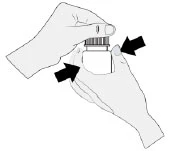
- Tilt the head backwards and hold the bottle over the eye.
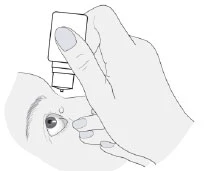
- Gently pull down the lower eyelid and look upwards. Squeeze the middle part of the bottle gently to release one drop into the eye. Note that it may take a few seconds for the drop to be dispensed after squeezing the bottle. Do not squeeze the bottle too hard.
If in doubt about how to use the medicine, consult the doctor, pharmacist, or nurse.
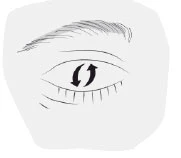
- To spread the medicine over the eye surface, blink several times.
- Repeat steps 2–4 to administer the medicine to the second eye, if directed by the doctor. Sometimes only one eye requires treatment; the doctor will inform the patient which eye to treat.
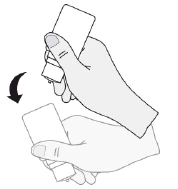
- After use and before replacing the cap, shake the bottle once downwards, without touching the tip, to remove any residual medicine that may remain on it. This is necessary to ensure correct dosing of subsequent drops.
- After all doses have been used, a small amount of solution may remain in the Vizibim bottle. This is normal, as the package contains an overfill of Vizibim, ensuring the patient receives the full prescribed amount. After completing the treatment course, do not use any medicine remaining in the bottle. The eye drops are suitable for use within 28 days of first opening the bottle.
Overdose of Vizibim
Using more than the recommended dose of Vizibim is unlikely to cause any serious harm. Take the next dose at the usual time. If concerned, consult the doctor or pharmacist.
Missed dose of Vizibim
If a dose of Vizibim is missed, instill one drop as soon as remembered, then return to the regular dosing schedule. Do not use a double dose to make up for a missed dose.
Stopping Vizibim treatment
To ensure Vizibim remains effective, it must be used daily. Stopping treatment with Vizibim may lead to increased intraocular pressure. Therefore, discuss any planned interruption of treatment with the doctor.
If further doubts arise regarding the use of this medicine, consult the doctor or pharmacist.
4. Possible adverse reactions
Like all medicines, this medicine can cause adverse reactions, although not everyone will experience them.
Very common: may affect more than 1 in 10 people
Eye-related symptoms:
- Eyelash elongation (in up to 45% of people)
- Mild redness (in up to 44% of people)
- Itching (in up to 14% of people)
- Loss of fatty tissue around the eye, which may lead to deepening of the eyelid groove, sunken eyes, drooping eyelids (ptosis), tightness of the skin around the eye (dermatochalasis-induced involution), and increased visibility of the lower white part of the eye (exposure of the lower sclera)
Common: may affect less than 1 in 10 people
Eye-related symptoms:
- Allergic reaction in the eye
- Eye fatigue
- Light sensitivity
- Darker pigmentation of the skin around the eye
- Darker pigmentation of eyelashes
- Pain
- Foreign body sensation in the eye
- Sticky eyelids
- Darker pigmentation of the iris
- Blurred vision
- Irritation
- Burning sensation
- Inflammation, redness, and itching of the eyelids
- Tearing
- Dryness
- Worsening of vision
- Blurred vision
- Swelling of the transparent membrane covering the eye
- Minor surface damage to the eye, with or without inflammation
Whole-body symptoms:
- Headache
- Increased liver function test results
- Elevated blood pressure
Uncommon: may affect less than 1 in 100 people
Eye-related symptoms:
- Cystoid macular edema (swelling of the retina in the back of the eye, which may lead to worsening of vision)
- Inflammatory condition of the eye
- Retinal hemorrhage
- Eyelid swelling
- Eyelid twitching
- Eyelid contraction and retraction from the eye surface
- Redness of the skin around the eye
Whole-body symptoms:
- Nausea
- Dizziness
- Weakness
- Increased hair growth around the eye
Frequency not known: cannot be estimated from available data
Eye-related symptoms:
- Eye discomfort
Whole-body symptoms:
- Asthma
- Worsening of asthma
- Exacerbation of a lung disease called chronic obstructive pulmonary disease (COPD)
- Shortness of breath
- Symptoms of allergic reaction (swelling, eye redness, and skin rash)
- Skin discoloration (around the eye)
Other adverse reactions reported with the use of eye drops containing phosphates
In very rare cases, in some patients with severe damage to the outer transparent layer of the eyeball (cornea), hazy spots due to calcium deposits have appeared on the cornea during treatment.
Reporting of adverse reactions
If any adverse reactions occur, including any not listed in this leaflet, inform your doctor or pharmacist. Adverse reactions can be reported directly to the Department of Monitoring Adverse Drug Reactions of the Office for Registration of Medicinal Products, Medical Devices and Biocidal Products at Al. Jerozolimskie 181C, 02-222 Warsaw, Tel: +48 22 49 21 301, Fax: +48 22 49 21 309, Website: https://smz.ezdrowie.gov.pl
Adverse reactions can also be reported to the marketing authorization holder.
By reporting adverse reactions, more information on the safety of this medicine can be collected.
5. How to store Vizibim
Keep this medicine out of sight and reach of children.
Do not use this medicine after the expiry date stated on the bottle label and on the
carton after EXP. The expiry date refers to the last day of the specified month.
This medicine does not require any special storage conditions.
The bottle should be discarded no later than four weeks after first opening, even if
some drops remain. This precaution prevents contamination. To help remember the date of opening,
write it down on the packaging.
Do not use the bottle if the tamper-evident seal on the neck of the bottle is damaged before
first use.
Medicines must not be disposed of via wastewater or household waste. Ask your pharmacist
how to dispose of medicines no longer required. These measures help protect the
environment.
6. Contents of the pack and other information
What Vizibim contains
- The active substance is bimatoprost. One ml of solution contains 0.3 mg of bimatoprost.
- The other ingredients are: sodium chloride, disodium phosphate heptahydrate, citric acid monohydrate, and water for injections. Small amounts of hydrochloric acid or sodium hydroxide may be added to maintain the appropriate acidity (pH value).
What Vizibim looks like and contents of the pack
Vizibim is a colourless, clear solution supplied in a white, opaque bottle made of LDPE with the Novelia system consisting of a dropper (made of HDPE and silicone) and a cap made of HDPE.
Outer packaging: cardboard box.
The following pack sizes are available: cardboard boxes containing 1 or 3 bottles of 3 ml solution.
Not all pack sizes may be marketed.
Marketing Authorisation Holder
BAUSCH + LOMB IRELAND LIMITED
3013 Lake Drive
Citywest Business Campus
Dublin 24, D24PPT3
Ireland
Manufacturer
EXCELVISION
27 st. La Lombardière
Zl La Lombardière
07100 ANNONAY
France
Pharmathen S.A.
Dervenakion 6
Pallini Attikis 15351
Greece