Vitamin a + e hasco
Poland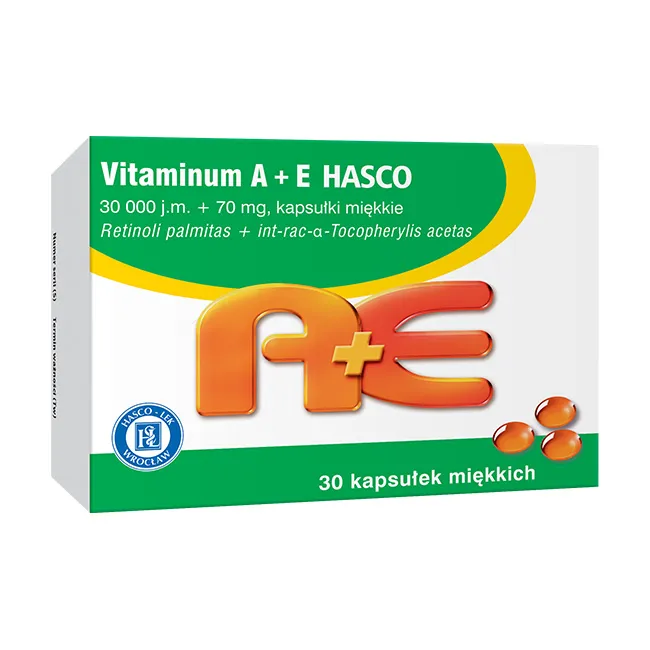
Table of Contents
Package leaflet: Information for the patient
VITAMINUM A + E HASCO
30,000 IU + 70 mg, soft capsules
Retinoli palmitas + int-rac-α-Tocopherylis acetas
Please read carefully the entire leaflet before taking this medicine, as it contains
important information for the patient.
- Keep this leaflet, as you may need to read it again.
- If you have any doubts, please consult your doctor, pharmacist, or nurse.
- This medicine has been prescribed for a specific individual. Do not give it to others. The medicine may harm another person, even if their symptoms are identical.
- If you experience any adverse reactions, including those not listed in this leaflet, inform your doctor, pharmacist, or nurse. See section 4.
Table of contents of the leaflet
- What VITAMINUM A + E HASCO is and what it is used for
- Important information before taking VITAMINUM A + E HASCO
- How to take VITAMINUM A + E HASCO
- Possible side effects
- How to store VITAMINUM A + E HASCO
- Contents of the pack and other information
1. What VITAMINUM A + E HASCO is and what it is used for
Vitamin A plays an essential role in the visual process (ensuring proper function of the retina) and is necessary for growth, regeneration, cell differentiation, and for the proper function of the epidermis, epithelia, and mucous membranes. It enhances resistance to infections and participates in bone formation, bone structure development, reproduction, fertilization, and embryonic development. Vitamin E is involved in many important metabolic processes of carbohydrates (e.g., glucose oxidation and glycogen breakdown) and fats (by preventing oxidation of polyunsaturated fatty acids, it influences the formation of prostaglandins, which regulate, among others, blood flow through blood vessels). Vitamin E stabilizes cell membranes and intracellular structures, thus preventing damage to red blood cells (so-called hemolysis).
VITAMINUM A + E HASCO is used as supportive treatment in geriatrics, ophthalmology (e.g., in cases of corneal softening—so-called xerophthalmia—and night blindness), atherosclerosis, disorders of male reproductive gland function, disorders related to puberty, and in excessive keratinization of the epidermis.
2. Important information before using the medicine VITAMINUM A + E HASCO
When not to use VITAMINUM A + E HASCO:
- if the patient is allergic to the active substances (vitamin A or vitamin E), peanut oil, or any of the other ingredients of this medicine (listed in section 6),
- in pregnant women,
- if the patient has so-called malabsorption syndrome,
- in cases of hypervitaminosis (excess of vitamin A or E, e.g. due to overdose),
- if the patient has severe hypertension, glaucoma, myasthenia gravis, or vitamin K deficiency.
Warnings and precautions
Before starting to use VITAMINUM A + E HASCO, you should discuss it with your doctor,
pharmacist, or nurse.
Special caution is required when using this medicine:
- in patients with liver diseases (e.g. cirrhosis, viral hepatitis), in whom the doctor may recommend lower doses of this medicine,
- in patients concurrently taking oral anticoagulants or estrogens, e.g. oral contraceptives,
- when other medicines containing vitamin A are administered simultaneously, due to the risk of overdose. Female patients who may become pregnant should use effective contraception during treatment with this medicine. Absorption of vitamin A is reduced in fat malabsorption disorders and when dietary protein intake is low.
VITAMINUM A + E HASCO and other medicines
You must inform your doctor or pharmacist about all medicines currently used, recently used, or planned for use.
Administration of neomycin, cholestyramine (colestipol), or liquid paraffin reduces the absorption of vitamin A. Concurrent use of products containing vitamin A, synthetic vitamin A analogs (e.g. acitretin, etretinate, tretinoin), or bexarotene may lead to symptoms of hypervitaminosis (vitamin A overdose). High-dose vitamin A intensifies the effect of anticoagulant drugs (hydroxycoumarin derivatives). Oral contraceptives may enhance the effects of vitamin A.
Vitamin E may inhibit the action of vitamin K, especially in patients taking anticoagulants or estrogens. The use of other antioxidants (vitamin C, selenium, ubiquinone, sulfur-containing amino acids) may alleviate some symptoms of vitamin E deficiency. Concurrent use of iron preparations reduces the effectiveness of vitamin E; therefore, a several-hour interval should be maintained between taking these medicines. Vitamin E enhances the absorption, utilization, and storage of vitamin A and may reduce the need for insulin and certain cardiac drugs (so-called cardiac glycosides).
Pregnancy and breastfeeding
If the patient is pregnant or breastfeeding, suspects she may be pregnant, or is planning to have a child, she should consult a doctor or pharmacist before using this medicine.
VITAMINUM A + E HASCO must not be used in pregnant women.
Vitamin A passes into breast milk, which may lead to overdose in the infant.
Increased intake of vitamin A may be dangerous for the fetus and child.
Administration of high doses of vitamin E during pregnancy and breastfeeding is not recommended due to lack of safety data.
Driving and operating machinery
Taking VITAMINUM A + E HASCO has no effect on the ability to drive or operate machinery.
VITAMINUM A + E HASCO contains peanut oil
If the patient is allergic to peanuts or soy, this medicine should not be used.
3. How to use VITAMINUM A + E HASCO
This medicine should always be used according to the doctor's instructions. If in doubt, consult
your doctor or pharmacist.
The medicine is taken orally.
Unless otherwise advised by a doctor, the usual dose is 1 capsule per day.
Use of a higher than recommended dose of VITAMINUM A + E HASCO
If a significantly higher than recommended dose of the medicine has been taken, consult a doctor or
pharmacist immediately.
Long-term use of VITAMINUM A + E HASCO may lead to overdose of the vitamins it contains (vitamin A or E).
A daily dose of 30 mg of retinol (approx. 100,000 IU vitamin A) is considered toxic for adults; however, even prolonged intake of 10 mg doses may lead to symptoms of overdose. In children, daily doses of 7.5–15 mg retinol administered for 30 days may result in overdose (so-called hypervitaminosis). Characteristic symptoms of hypervitaminosis A include headache, nausea, vomiting, optic nerve disc swelling, auditory hallucinations, visual disturbances (mainly in children, due to increased intracranial pressure), subcutaneous tissue swelling and swelling of tissues around long bones, musculoskeletal and joint pain, and symptoms affecting the skin and mucous membranes (dry, itchy skin, erythematous dermatitis, cracking of the lip epidermis; generalized desquamation of the epidermis may occur within 24 hours after ingestion of a toxic dose). Additionally, hypercalcemia (elevated calcium concentration in blood plasma), petechiae, bleeding, nervousness, fatigue, irritability, and drowsiness have been observed. Very significant and prolonged vitamin A overdose may be accompanied by other adverse effects involving the circulatory system (hematological changes, anemia, thrombocytopenia, neutropenia), central nervous system (neurological and psychiatric symptoms, anorexia, pseudotumor cerebri), gingivitis, liver damage symptoms (cirrhosis, fibrosis, disturbances in portal circulation pressure and blood flow), visual disturbances (double vision), respiratory dysfunction, dermatological changes (alopecia, dermatitis, rash, erythema, pruritus), skin pigmentation changes, osteoporosis, bone hardening (osteosclerosis), and other changes considered less specific.
High doses of vitamin E (400–800 IU, i.e., 400–800 mg of all-rac-α-tocopheryl acetate per day) used over a prolonged period may cause diarrhea, abdominal pain, and other gastrointestinal disturbances, as well as fatigue, blurred vision, headache, rash, disturbances in gonadal gland function, and decreased concentration of thyroid hormones in blood plasma.
If any of the above-mentioned symptoms of overdose occur, discontinue use of the medicine and contact your doctor or pharmacist.
Missed dose of VITAMINUM A + E HASCO
Do not take a double dose to make up for a missed dose.
4. Possible adverse effects
Like all medicines, this medicine can cause adverse effects, although not everyone will experience them.
Vitamins A and E are generally well tolerated.
Reporting adverse effects
If any adverse effects occur, including any not listed in this leaflet, inform a doctor, pharmacist, or nurse.
Adverse effects can be reported directly to the Department of Monitoring Adverse Drug Reactions at the Office for Registration of Medicinal Products, Medical Devices and Biocidal Products:
Al. Jerozolimskie 181C, 02-222 Warsaw, tel.: +48 22 49 21 301, fax: +48 22 49 21 309
Website: https://smz.ezdrowie.gov.pl
Adverse effects can also be reported to the Marketing Authorisation Holder.
Reporting adverse effects helps to provide more information on the safety of the medicine.
5. How to store VITAMINUM A + E HASCO
Store below 25°C.
Keep in the original packaging to protect from light.
Keep out of the sight and reach of children.
Do not use this medicine after the expiry date stated on the packaging.
The expiry date refers to the last day of the stated month.
Medicines should not be disposed of via wastewater or household waste. Ask a pharmacist how to dispose of medicines no longer required. Such measures help protect the environment.
6. Contents of the packaging and other information
What VITAMINUM A + E HASCO contains
- The active substances are vitamin A and vitamin E. One soft capsule contains: retinol palmitate (vitamin A) 30,000 IU all-rac-α-tocopheryl acetate (vitamin E) 70 mg
- Other components (excipients): all-rac-α-tocopherol, purified peanut oil, gelatin, glycerol.
What VITAMINUM A + E HASCO looks like and contents of the pack
The medicine is in the form of oval, tightly filled soft capsules with a smooth and glossy surface. One pack contains 30 soft capsules.
Marketing Authorisation Holder and Manufacturer
"PRZEDSIĘBIORSTWO PRODUKCJI FARMACEUTYCZNEJ HASCO-LEK" S.A.
51-131 Wrocław, ul. Żmigrodzka 242 E
Medicine Information
tel.: (22) 742 00 22
e-mail: [email protected]