Vitamin d3 krka
Poland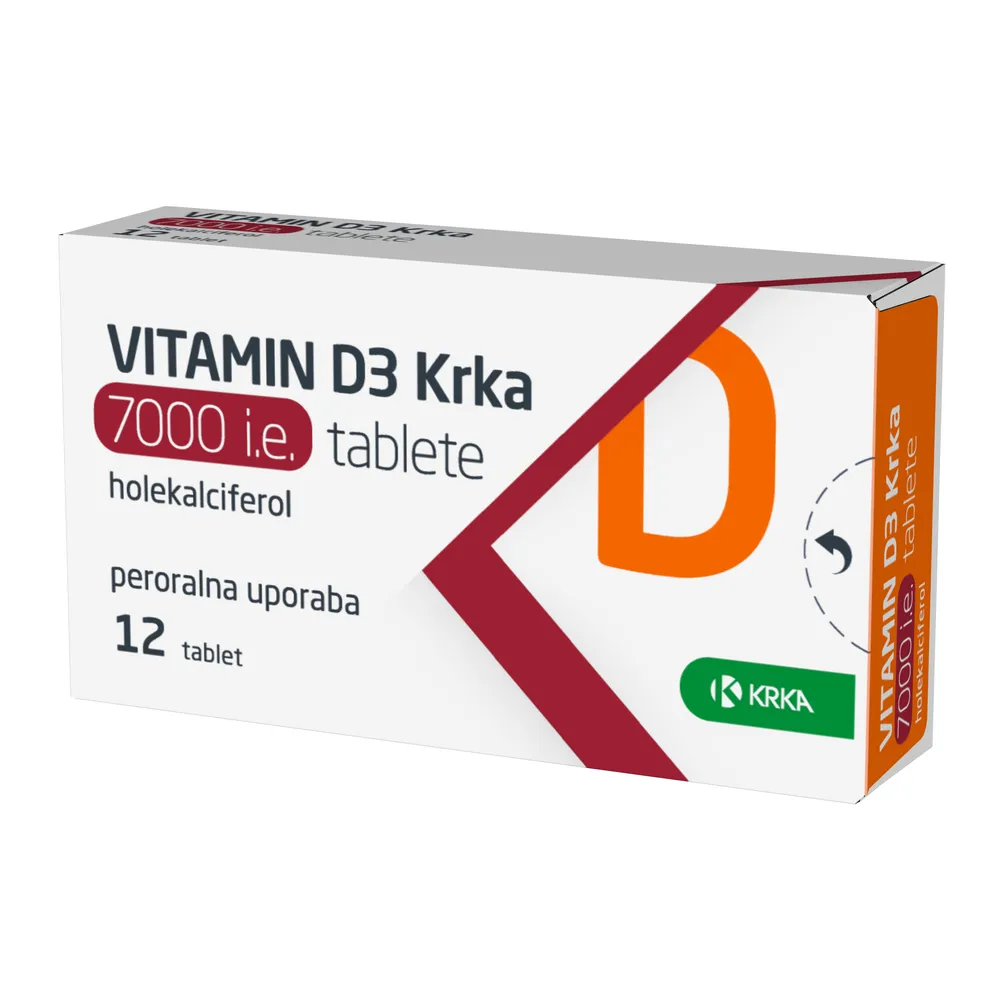
Table of Contents
- Package leaflet: Information for the patient
- 1. What Vitamin D3 Krka, 7000 IU, tablets are and what they are used for
- 2. Important information before taking Vitamin D3 Krka, 7000 IU, tablets
- 3. How to take Vitamin D3 Krka 7000 IU tablets
- 4. Possible adverse reactions
- 5. How to store Vitamin D3 Krka 7000 IU tablets
- 6. Contents of the package and other information
Package leaflet: Information for the patient
Vitamin D3 Krka, 7000 IU, tablets
Cholecalciferolum
Please read the entire leaflet carefully before taking this medicine, as it contains
important information for the patient.
- Keep this leaflet, as you may need to read it again.
- If you have any questions, please consult your doctor or pharmacist.
- This medicine has been prescribed for a specific individual. Do not share it with others. This medicine may harm another person, even if their symptoms are similar.
- If you experience any adverse reactions, including any not listed in this leaflet, inform your doctor or pharmacist. See section 4.
Table of contents of the leaflet
- What Vitamin D3 Krka, 7000 IU, tablets are and what they are used for
- Important information before taking Vitamin D3 Krka, 7000 IU, tablets
- How to take Vitamin D3 Krka, 7000 IU, tablets
- Possible side effects
- How to store Vitamin D3 Krka, 7000 IU, tablets
- Contents of the pack and other information
1. What Vitamin D3 Krka, 7000 IU, tablets are and what they are used for
Vitamin D3 Krka, 7000 IU, tablets contain the active substance cholecalciferol, which is
a form of vitamin D that plays an essential role in the absorption and utilization of calcium in the body,
as well as in its incorporation into bone tissue.
Vitamin D3 Krka, 7000 IU, tablets are used for:
- Prevention of vitamin D deficiency (low or suboptimal levels of vitamin D in the body) in adults identified as being at high risk of deficiency.
- Treatment of vitamin D deficiency in adults.
- As an adjunct to specific treatment of osteoporosis (a condition in which bone density is reduced, leading to an increased risk of fractures) in adults with vitamin D deficiency or identified high risk of vitamin D deficiency.
The active substance in this medicine is identical to the cholecalciferol naturally produced in humans.
Vitamin D is synthesized in the skin upon exposure to sunlight and can also be obtained
through diet.
Vitamin D deficiency may occur when dietary intake and lifestyle do not provide sufficient amounts, or when the requirement for vitamin D is increased.
2. Important information before taking Vitamin D3 Krka, 7000 IU, tablets
When not to take Vitamin D3 Krka, 7000 IU, tablets
- if the patient is allergic to vitamin D or any of the other ingredients of this medicine (listed in section 6),
- if the patient has high levels of vitamin D in the blood (hypervitaminosis D),
- if the patient has high levels of calcium in the blood (hypercalcaemia) or in the urine (hypercalciuria),
- if the patient has kidney stones or calcium deposits in the kidneys,
- if the patient has severe kidney function impairment (because the body is unable to utilise vitamin D).
Warnings and precautions
Before starting treatment with Vitamin D3 Krka, 7000 IU, tablets, discuss this with your
doctor or pharmacist.
The risk of increased calcium levels in the blood or urine (hypercalcaemia and hypercalciuria) may
occur in patients:
- with mild to moderate kidney function impairment,
- with a tendency to form calcium kidney stones,
- taking thiazide diuretics (medicines that promote urine production),
- who are immobilised,
- suffering from sarcoidosis (an immune system disorder that may affect the liver, lungs, skin or lymph nodes), as the effect of Vitamin D3 Krka, 7000 IU, tablets may be too strong for them.
During treatment, your doctor may recommend monitoring calcium levels in blood and urine to ensure
these values are not too high.
Patients with pseudohypoparathyroidism (disorders of parathyroid hormone secretion) should not take
Vitamin D3 Krka, as their vitamin D requirements vary over time and they may be at risk of long-term
overdose. Your doctor may recommend another medicine with a similar mode of action.
Do not take any other medicines or dietary supplements containing vitamin D or calcium unless your doctor
advises otherwise. In such cases, your doctor may decide to monitor calcium levels in blood and urine.
Long-term use of doses exceeding 1000 IU daily or 7000 IU weekly
requires monitoring of calcium levels in blood and urine, as well as kidney function. This is particularly
important in patients who:
- are taking cardiac glycosides (medicines used to treat certain heart conditions),
- have an increased tendency to form kidney stones,
- are elderly.
If elevated calcium levels in blood or urine, or symptoms of impaired kidney function occur, your doctor may decide to reduce the dose of Vitamin D3 Krka or discontinue treatment.
Do not exceed the recommended daily dose of this medicine, as this may lead to overdose.
Children and adolescents
Vitamin D3 Krka, 7000 IU, tablets is not intended for use in children and adolescents under 18 years of age.
Vitamin D3 Krka and other medicines
Tell your doctor or pharmacist about all medicines you are currently taking, have recently taken, or plan to take.
The effect of vitamin D may be reduced by the following medicines:
- phenytoin (used to treat epilepsy),
- barbiturates (medicines used to aid sleep),
- glucocorticosteroids (medicines with antiallergic, anti-inflammatory and immunosuppressive effects, e.g. prednisolone),
- rifampicin or isoniazid (medicines used to treat tuberculosis),
- cholestyramine or orlistat (used to lower blood lipid levels),
- laxatives (used to treat constipation), such as liquid paraffin.
Particular caution is required when taking Vitamin D3 Krka, 7000 IU, tablets together with the following medicines:
- thiazide diuretics (medicines that promote urine production), e.g. hydrochlorothiazide: may reduce calcium excretion in urine and consequently increase its blood concentration. Calcium levels in blood and urine should be monitored during long-term treatment.
- cardiac glycosides (medicines used to treat heart conditions), e.g. digoxin: may increase the risk of heart rhythm disorders (arrhythmia). Your doctor will monitor calcium levels in blood and urine, as well as heart function via ECG. If necessary, blood levels of cardiac glycosides may also be monitored.
- medicines similar to vitamin D (e.g. calcitriol), as they should only be used together in exceptional cases, with monitoring of blood calcium levels.
- medicines containing aluminium (used to treat heartburn): prolonged use of these medicines should be avoided, as blood aluminium levels may increase.
- products containing high doses of calcium may increase the risk of high calcium levels in blood. Monitoring of blood calcium levels may be required.
- products containing high doses of phosphorus may increase the risk of low calcium levels or high phosphate levels in blood. Monitoring of these levels in blood may be required.
Pregnancy and breastfeeding
If the patient is pregnant, breastfeeding, suspects she may be pregnant, or is planning to have a
baby, she should consult her doctor or pharmacist before using this medicine.
Pregnancy
Vitamin D3 Krka, 7000 IU, tablets is not recommended for pregnant women due to the high
vitamin D content.
Breastfeeding
Vitamin D3 Krka, 7000 IU, tablets may be used by breastfeeding mothers if clearly necessary and under medical supervision. The doctor will prescribe the dose according to individual needs and response to treatment.
Vitamin D passes into breast milk. This should be taken into account if the infant is also receiving vitamin D supplements.
Driving and operating machinery
Vitamin D3 Krka has no effect or has a negligible effect on the ability to drive and operate machinery.
Vitamin D3 Krka, 7000 IU, tablets contains sucrose and sodium
If the patient has previously been diagnosed with intolerance to certain sugars, they should
consult their doctor before taking this medicine.
This medicine contains less than 1 mmol (23 mg) of sodium per tablet, meaning it is considered "sodium-free".
3. How to take Vitamin D3 Krka 7000 IU tablets
This medicine should always be taken as directed by your doctor or pharmacist. If in
doubt, consult your doctor or pharmacist.
If your doctor has not advised otherwise, follow the dosing regimen below:
- Prevention of vitamin D deficiency in adults with confirmed high risk of deficiency:
The recommended dose is 1 to 2 tablets (7000 IU to 14000 IU vitamin D or
175–350 micrograms cholecalciferol) taken once weekly.
Dosing should be individually determined by the treating physician depending on
the required range of vitamin D supplementation.
- Treatment of vitamin D deficiency in adults:
The recommended initial dose (for 6 to 12 weeks) is 1 tablet (7000 IU vitamin D or
175 micrograms cholecalciferol) once daily. Taking into account patient preferences and needs, the doctor may decide to administer the medicine once weekly. In such a case, the patient may take 7 tablets (49000 IU vitamin D or 1225 micrograms cholecalciferol) once weekly.
The recommended maintenance treatment dose is 2 tablets (14000 IU vitamin D or
350 micrograms cholecalciferol) once weekly.
- As an adjunct to specific osteoporosis treatment (a disease in which bone density is reduced, leading to an increased risk of fractures) in adults with vitamin D deficiency or confirmed high risk of vitamin D deficiency:
1 tablet (7000 IU or 175 micrograms cholecalciferol) once weekly. Adequate calcium intake should be ensured, preferably through diet.
Depending on individual needs, your doctor may prescribe a dose different from that
described above. In such cases, follow your doctor's instructions.
Patients with liver function disorders and elderly patients
Dose adjustment is not required in patients with liver disease or in elderly patients with
normal kidney function.
Patients with renal impairment
If the patient has mild or moderate kidney disease, consult your doctor before taking
Vitamin D3 Krka 7000 IU tablets. Patients with severe kidney disease should not take this medicine.
Method of administration
Swallow the tablet whole with a small amount of water.
Vitamin D3 Krka 7000 IU tablets may be taken with or without food.
Accidental overdose of Vitamin D3 Krka 7000 IU tablets
If a patient accidentally takes one extra tablet, symptoms are unlikely to occur. In case of accidental ingestion of too many tablets, contact your doctor immediately.
Symptoms of vitamin D overdose are uncommon and may include: nausea, vomiting, diarrhoea, constipation, loss of appetite, weight loss, muscle weakness, fatigue, headache, excessive thirst, drowsiness, dizziness, increased urine volume, or sweating. Blood and urine calcium levels may rise, and soft tissue calcification may occur, potentially leading to damage to the kidneys, blood vessels, and heart. In severe cases, cardiac rhythm disturbances may occur, and very high calcium levels in the blood may lead to coma or even death. Infants and children are more susceptible to the toxic effects of vitamin D.
Missed dose of Vitamin D3 Krka 7000 IU tablets
If a dose is missed, take it as soon as possible, then take the next dose at the usual time according to your doctor's instructions. If the next dose is due soon, do not take the missed dose. Wait and take the next dose at the regular time.
Do not take a double dose to make up for a missed dose.
If you have any further doubts about the use of this medicine, consult your doctor or pharmacist.
4. Possible adverse reactions
Like all medicines, this medicine can cause adverse reactions, although not everyone will experience them.
Adverse reactions associated with the use of Vitamin D3 Krka, 7000 IU, tablets may include:
Frequency not known (frequency cannot be estimated from the available data)
- high levels of calcium in the blood (hypercalcaemia) or in the urine (hypercalciuria)
- nausea
- abdominal pain, constipation, gas (bloating), diarrhoea
- allergic reactions such as rash, itching or hives
Reporting of adverse reactions
If any adverse effects occur, including any adverse effects not listed in this leaflet, please inform your doctor or pharmacist. Adverse reactions can be reported directly to the Department of Monitoring Adverse Drug Reactions of the Office for Registration of Medicinal Products, Medical Devices and Biocidal Products:
Al. Jerozolimskie 181C, 02-222 Warsaw
Tel.: + 48 22 49 21 301
Fax: + 48 22 49 21 309
Website: https://smz.ezdrowie.gov.pl
Adverse reactions can also be reported to the marketing authorisation holder.
Reporting adverse reactions helps to provide more information on the safety of the medicine.
5. How to store Vitamin D3 Krka 7000 IU tablets
Keep this medicine out of sight and reach of children.
Do not use this medicine after the expiry date stated on the packaging after: EXP.
The expiry date refers to the last day of the stated month.
Store in the original blister pack to protect from light.
Medicines must not be disposed of via wastewater or household waste. Ask your
pharmacist how to dispose of medicines no longer required. These measures will help
protect the environment.
6. Contents of the package and other information
What Vitamin D3 Krka 7000 IU tablets contain
- The active substance is cholecalciferol (vitamin D). Each tablet contains 7000 IU (equivalent to 175 micrograms) of cholecalciferol (vitamin D).
- The other ingredients (excipients) are: mannitol, sodium croscarmellose, microcrystalline cellulose (type 112), talc, colloidal anhydrous silica, magnesium stearate (E470b), sodium ascorbate, all-rac-α-tocopherol, modified maize starch, sucrose, medium-chain triglycerides. See section 2 "Vitamin D3 Krka 7000 IU tablets contain sucrose and sodium".
What Vitamin D3 Krka 7000 IU tablets look like and contents of the pack
White or almost white, oval, biconvex tablets with the imprint "3" on one side of the tablet.
Tablet dimensions: approximately 11 mm x 6 mm.
Vitamin D3 Krka 7000 IU tablets are available in packs containing 4, 6, 8, 12, 16, 18, 20, 24, 28, 30, 32, 36, 40 or 42 tablets in a blister pack, packed in a cardboard box.
Not all pack sizes may be marketed.
Marketing Authorisation Holder and Manufacturer
KRKA, d.d., Novo mesto, Šmarješka cesta 6, 8501 Novo mesto, Slovenia
This medicinal product is authorised in the European Economic Area countries under the
following names:
| Slovenia | Holecalciferol Krka 7000 IU tablets |
| Bulgaria | Vitamin D3 Krka 7000 IU tablets |
| Croatia | Vitamin D3 Krka 7000 IU tablets |
| Latvia | Colecalciferol KRKA 7000 SV tablets |
| Poland | Vitamin D3 Krka |
| Romania | Vitamin D3 Krka 7000 IU tablets |
For more detailed information, please contact the local representative of the marketing authorization holder:
Krka - Polska Sp. z o.o.
Równoległa 5 Street
02-235 Warsaw
telephone: +48 22 573 75 00