Vigantoletten 1000
Poland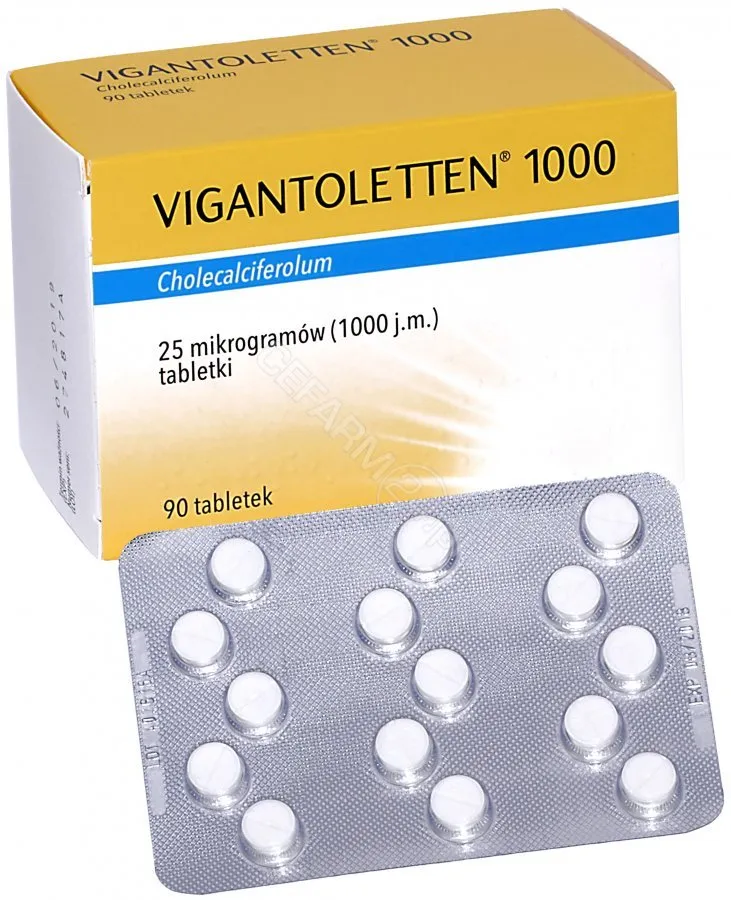
Table of Contents
Package leaflet: Information for the user
Warning! Keep this leaflet. Information on the immediate packaging is in a foreign language.
Vigantoletten 1000 (Vigantol 1000 I.E. Vitamin D3 Tabletten)
25 micrograms (1000 I.U.), tablets
Cholecalciferolum
Vigantoletten 1000 and Vigantol 1000 I.E. Vitamin D3 Tabletten are different brand names for the
same medicinal product.
Please read the leaflet carefully before using the medicine, as it contains
important information for the patient.
This medicine should always be taken exactly as described in the patient leaflet or as directed by
the physician or pharmacist.
- Keep this leaflet, so that you may read it again if necessary.
- If you need advice or further information, please consult your pharmacist.
- If you experience any adverse reactions, including any possible adverse reactions not listed in this leaflet, inform your doctor or pharmacist. See section 4.
- If your condition does not improve or worsens, consult your doctor.
Leaflet contents:
- What Vigantoletten 1000 is and what it is used for
- What you need to know before taking Vigantoletten 1000
- How to take Vigantoletten 1000
- Possible side effects
- How to store Vigantoletten 1000
- Contents of the pack and other information
1. What Vigantoletten 1000 is and what it is used for
Vigantoletten 1000 contains the active substance vitamin D (cholecalciferol), which is important for bone formation.
Vitamin D (cholecalciferol) is physiologically produced in the skin upon exposure to UV radiation, and can also be supplied to the body through diet.
Deficiency of vitamin D leads to disturbances in bone mineralization (rickets) or loss of calcium from bones (osteomalacia).
Vigantoletten 1000 is used for:
- prevention of rickets and osteomalacia in children and adults,
- prevention of disorders in cases of risk of vitamin D deficiency in children and adults,
- prevention of vitamin D deficiency in children and adults,
- adjunctive treatment in osteoporosis in adults.
2. Important information before using Vigantoletten 1000
When not to use Vigantoletten 1000
- if the patient is allergic to the active substance or to any of the other ingredients of this medicine (listed in section 6),
- in case of hypercalcaemia (excessively high calcium levels in the blood) or hypercalciuria (excessive excretion of calcium in urine),
- if the patient has kidney stones or severe renal insufficiency,
- in case of pseudohypoparathyroidism.
Warnings and precautions
Before starting treatment with Vigantoletten 1000, consult a doctor or pharmacist,
as Vigantoletten 1000 should be used under medical supervision:
- if the patient is also taking other medicines containing vitamin D, because additional doses of vitamin D should only be taken under medical supervision,
- if the patient has sarcoidosis (an immune system disorder that may increase vitamin D levels in the body),
- if the patient has impaired kidney function,
- if the patient is being treated with cardiac glycosides or diuretics,
- in newborns, infants and young children,
- if vitamin D treatment is long-term, as in such cases the doctor should monitor serum and urinary calcium levels and assess kidney function by measuring blood creatinine levels.
Other medicines and Vigantoletten 1000
Tell your doctor or pharmacist about all medicines the patient is currently taking,
has recently taken, or plans to take.
Antacids containing aluminium, used in the treatment of acidity, when taken together with
Vigantoletten 1000, may increase aluminium levels in the blood, increasing the risk of aluminium's toxic effects on bones.
Antacids containing magnesium, when used simultaneously with Vigantoletten 1000,
may increase magnesium levels in the blood.
Some antiepileptic, sedative or hypnotic drugs (containing phenytoin or barbiturates), when used together with Vigantoletten 1000, may reduce its effectiveness.
Some diuretics may lead to hypercalcaemia (increased calcium levels) due to reduced calcium excretion by the kidneys. During prolonged treatment, serum and urinary calcium levels should be monitored.
Concomitant use of glucocorticosteroids (synthetic corticosteroid hormones) may counteract the effect of Vigantoletten 1000.
Vigantoletten 1000 may enhance the action and toxicity of cardiac glycosides, increasing the risk of cardiac arrhythmias. In such cases, the doctor should monitor serum and urinary calcium levels and perform periodic ECG examinations.
Concurrent use of vitamin D metabolites or analogues (e.g. calcitriol) and Vigantoletten 1000 is possible only under a doctor's prescription and only in exceptional cases, provided serum calcium levels are monitored.
Rifampicin and isoniazid may reduce the effectiveness of Vigantoletten 1000.
Pregnancy and breastfeeding
During pregnancy, breastfeeding, if pregnancy is suspected, or when planning pregnancy, consult a doctor before using this medicine.
Pregnancy
Vigantoletten 1000 may be taken during pregnancy only on a doctor's advice.
Vitamin D overdose should be avoided during pregnancy, as it may lead to delayed physical and mental development, heart defects, and retinal disorders (retinopathy) in the child.
Breastfeeding
Consult a doctor before using this medicine.
Driving and operating machinery
Vigantoletten 1000 has no influence on the ability to drive motor vehicles or operate machinery.
Vigantoletten 1000 contains sucrose
If the patient has been previously diagnosed with intolerance to certain sugars, the patient should consult a doctor before taking this medicine.
3. How to use Vigantoletten 1000
This medicine should always be taken exactly as described in the patient leaflet or as directed by a doctor or pharmacist. If in doubt, consult your doctor.
Dosage
The tablet may be divided into halves.
Children
Half a tablet per day (corresponding to 0.0125 mg or 500 IU of vitamin D).
Adults
One tablet per day (corresponding to 0.025 mg or 1000 IU of vitamin D).
This medicinal product should not be used long-term or in doses higher than recommended without medical supervision.
Adjunctive treatment in osteoporosis in adults
Two tablets per day (corresponding to 0.050 mg or 2000 IU of vitamin D).
This medicinal product should not be used long-term, or at a dose of 2000 IU per day or higher, without medical supervision.
Without medical supervision, do not use other medicines, dietary supplements, or foodstuffs containing vitamin D (cholecalciferol), calcitriol, or other metabolites and analogues of vitamin D, concurrently.
Newborns, infants, and young children
Vigantoletten 1000 should be used in newborns, infants, and young children only under medical supervision. The recommended dose must not be exceeded.
Inform the doctor if the child is receiving vitamin D-fortified formula or food.
Method of administration
Newborns, infants, and young children
Dissolve half a tablet of Vigantoletten 1000 in a teaspoon of water and administer the aqueous suspension directly into the child's mouth, preferably during a meal. Before administration, ensure that the tablet has completely dissolved.
It is not recommended to add the prepared aqueous suspension to the contents of an infant's (newborn's) bottle or other food, as this does not guarantee that the full dose of medicine will be ingested.
However, if Vigantoletten tablets must be administered with food (liquid), the food (milk) must be boiled beforehand.
Adults
Take the tablet with a sufficient amount of liquid.
Overdose of Vigantoletten 1000
In case of an overdose of Vigantoletten 1000, contact a doctor. The doctor will decide on appropriate treatment.
Symptoms of overdose: nausea, vomiting, diarrhoea followed by constipation, loss of appetite, fatigue, headache, muscle pain, joint pain, muscle weakness, drowsiness, azotemia (increased concentration of nitrogen compounds in blood), excessive thirst, polyuria, and dehydration. With high calcium levels in blood, disturbances in heart function, renal failure, psychoses, and even coma may occur.
Laboratory findings include hypercalcemia (elevated calcium levels in blood), hypercalciuria (excessive excretion of calcium in urine), and increased serum 25-hydroxycholecalciferol levels. Overdose requires measures to control hypercalcemia, which may be prolonged and sometimes life-threatening.
Missed dose of Vigantoletten 1000
Do not take a double dose to make up for a missed dose.
4. Possible adverse effects
Like all medicines, this medicine can cause adverse effects, although not everyone will experience them.
Gastrointestinal disorders such as constipation, bloating, nausea, abdominal pain or diarrhoea.
Allergic reactions such as itching, skin rash or urticaria.
In case of long-term use of high doses, hypercalcaemia (excessively high calcium levels in the blood) and hypercalciuria (excessive excretion of calcium in urine) may occur. In isolated cases, fatal outcomes have been reported.
If any adverse effects occur, including any possible adverse effects not listed in this leaflet, consult a doctor.
Reporting of adverse effects
If any adverse effects occur, including any adverse effects not mentioned in this leaf游戏副本, inform a doctor or pharmacist. Adverse effects can be reported directly to the Department of Monitoring Adverse Drug Reactions at the Office for Registration of Medicinal Products, Medical Devices and Biocidal Products
Al. Jerozolimskie 181C,
02-222 Warsaw
Phone: +48 22 49 21 301
Fax: +48 22 49 21 309
Website: https://smz.ezdrowie.gov.pl
Reporting adverse effects helps to provide more information on the safety of the medicine.
5. How to store Vigantoletten 1000
Keep the medicine out of the sight and reach of children.
Do not store above 25°C.
Keep the blisters in the outer packaging to protect from light.
Do not use the medicine after the expiry date stated on the packaging. The expiry date refers to the last day of the stated month.
Translation of some inscriptions appearing on the blisters:
Verwendbar bis / Ch.-B. siehe Randprägung – Expiry date / Batch number see embossing on edge
Medicines must not be disposed of via wastewater or household waste. Ask your pharmacist how to dispose of medicines no longer required. This will help protect the environment.
6. Contents of the packaging and other information
What Vigantoletten 1000 contains
- The active substance is cholecalciferol (cholecalciferol, powder containing: cholecalciferol, D,L-α-tocopherol, medium-chain triglycerides, modified starch, sodium ascorbate, sucrose, anhydrous colloidal silicon dioxide).
- Other ingredients are: mannitol, microcrystalline cellulose, anhydrous colloidal silicon dioxide, maize starch, sodium carboxymethyl starch (type C), talc, magnesium stearate.
What Vigantoletten 1000 looks like and contents of the pack
25, 50 or 100 tablets
Al/PVC blisters in a cardboard box.
For further information, please contact the marketing authorisation holder or the parallel importer.
Marketing authorisation holder in Germany, the country of export:
P&G Health Germany GmbH
Sulzbacher Strasse 40
65824 Schwalbach am Taunus
Germany
Manufacturer:
P&G Health Austria GmbH & Co. OG
Hösslgasse 20
9800 Spittal an der Drau
Austria
Parallel importer:
Delfarma Sp. z o.o.
ul. Św. Teresy od Dzieciątka Jezus 111
91-222 Łódź
Repackaged in:
Delfarma Sp. z o.o.
ul. Św. Teresy od Dzieciątka Jezus 111
91-222 Łódź
Number of marketing authorisation in Germany, the country of export: 6154298.01.00
Parallel import authorisation number: 478/16