Vigamox
Poland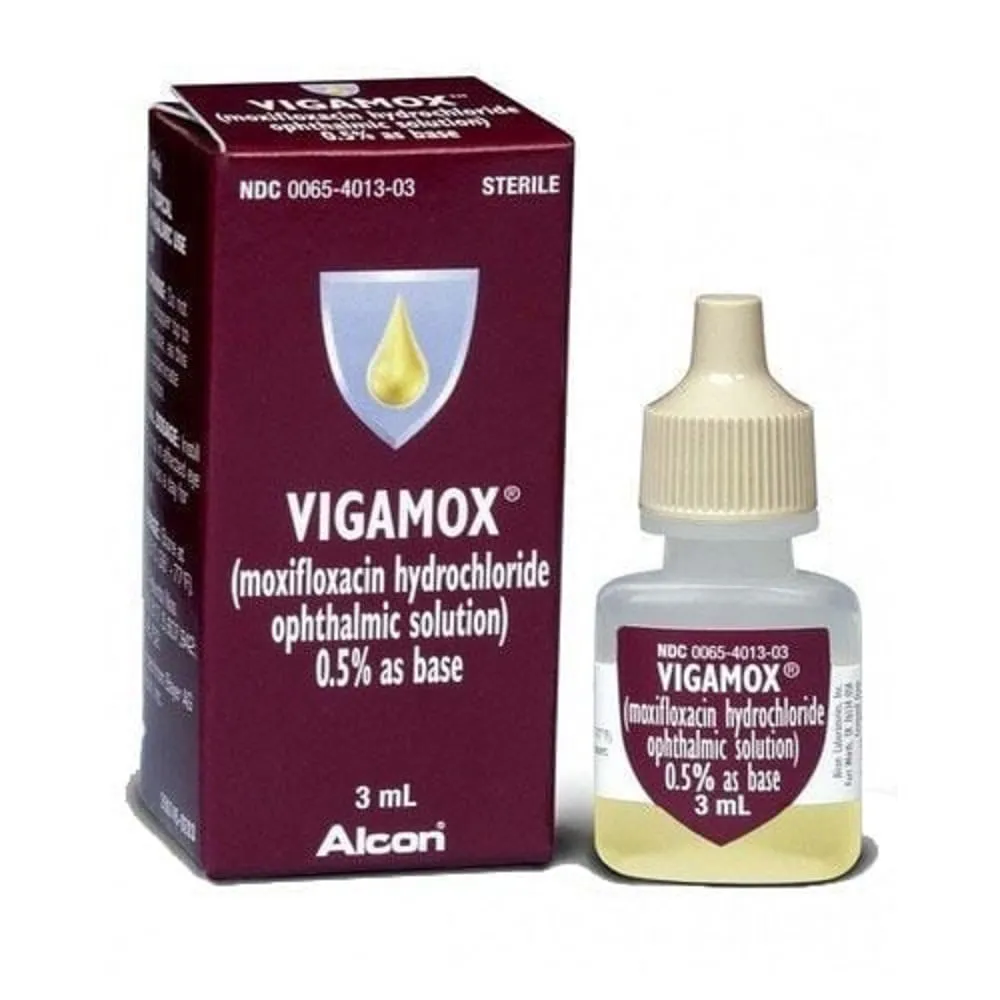
Table of Contents
Package leaflet: Information for the user
Warning! Keep this leaflet! Information on the immediate packaging in a foreign language.
Vigamox, 5 mg/ml, eye drops, solution
Moxifloxacin
Please read carefully all the information in this leaflet before using this medicine, as it contains
important information for the patient.
- Keep this leaflet, so that you can read it again if necessary.
- If you have any questions, consult your doctor or pharmacist.
- This medicine has been prescribed for a specific individual. Do not pass it on to others. It may harm other people, even if their symptoms are the same.
- If the patient experiences any adverse reactions, including any not listed in this leaflet, inform the doctor or pharmacist. See section 4.
Table of contents of the leaflet:
- What is Vigamox and what is it used for
- Important information before using Vigamox
- How to use Vigamox
- Possible side effects
- How to store Vigamox
- Contents of the pack and other information
1. What is Vigamox and what is it used for
Vigamox contains the active substance moxifloxacin. Moxifloxacin belongs to a class of
antibiotics called fluoroquinolones, used in the treatment of bacterial eye infections.
Vigamox eye drops are used to treat bacterial eye infections (conjunctivitis).
2. Important information before using Vigamox
When not to use Vigamox
- if the patient is allergic to moxifloxacin, other quinolones, or any of the other ingredients of this medicine (listed in section 6).
Warnings and precautions
Consult a doctor or pharmacist:
- If the patient has experienced allergic reactions to Vigamox. Allergic reactions occur not very frequently, and serious allergic reactions are rare. In case of any allergic reactions (hypersensitivity reactions) or any other adverse effects, follow the recommendations given in section 4.
- If the patient wears contact lenses, they should discontinue their use when objective and subjective symptoms of eye infection occur. Glasses should be used instead. Contact lenses should not be worn until objective and subjective symptoms of eye infection have resolved and treatment with the medicine has been completed.
- In patients receiving oral or intravenous fluorochinolones, cases of tendon swelling and tendon rupture have occurred, particularly in elderly patients and those concurrently treated with corticosteroids. Vigamox treatment should be discontinued if the patient experiences tendon pain or swelling.
As with any other antibiotic, prolonged use of Vigamox may lead to the development of other infections.
Vigamox with other medicines
Inform the doctor or pharmacist about all medicines currently used or recently used by the patient, including those obtained without a prescription.
Pregnancy, breastfeeding and fertility
If the patient is pregnant or breastfeeding, suspects she may be pregnant, or is planning to have a child, she should consult a doctor before using Vigamox eye drops.
Driving and operating machinery
Vision may be blurred for a short time after instilling Vigamox eye drops. Until vision clears, driving and operating machinery should not be undertaken.
3. How to use Vigamox
This medicine should always be used exactly as your doctor or pharmacist has advised.
If in doubt, consult your doctor or pharmacist.
Recommended dose:
Adults, including elderly patients, and children: 1 drop into the affected eye or eyes, three times
daily (morning, afternoon, and evening).
Vigamox may be used in children, in patients over 65 years of age, and in patients with kidney or liver disease. Use of this medicine is not recommended in newborn infants, as there is very limited information available on its use in these patients.
This medicine should be used in both eyes only if specifically instructed by a doctor.
Vigamox is intended exclusively for instillation into the eyes.
The infection usually resolves within 5 days. If the patient does not observe any improvement, they should contact their doctor. Treatment with the drops should be continued for a further 2–3 days, or as long as directed by the doctor.
1 2 3
- Prepare the Vigamox bottle and a mirror.
- Wash your hands.
- Unscrew the cap.
- If the safety collar is loose after removing the cap, remove it before using the medicine.
- Hold the inverted bottle between your thumb and middle finger.
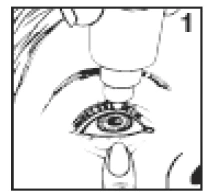
- Tilt your head backward. Gently pull the lower eyelid downward with a clean finger to create a "pocket" between the eyeball and the eyelid; the drop should be instilled into this pocket ( Figure 1 ).
- Bring the tip of the bottle close to the eye. Using a mirror may help.
- Do not touch the dropper tip to the eye, eyelid, surrounding area, or any other surface. This may contaminate the drops.
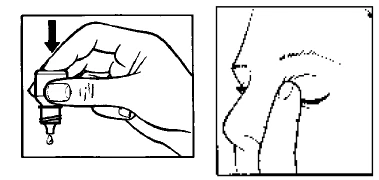
- Gently press the bottom of the bottle to release a single drop at the appropriate moment ( Figure 2 ).
- After instilling Vigamox, press with a finger on the inner corner of the eye near the nose for 2–3 minutes ( Figure 3 ). This helps prevent the medicine from draining into the rest of the body and is particularly important in small children.
- If treating both eyes, wash your hands before repeating the procedure described above for the second eye. This helps prevent spreading infection from one eye to the other.
- Immediately after use, replace the cap on the bottle.
If the drop misses the eye, repeat the instillation attempt.
If more than the recommended dose of Vigamox is used: rinse the eyes with lukewarm water. Do not instill any more drops until the next scheduled dose.
If Vigamox is accidentally swallowed: consult your doctor or pharmacist for advice.
If a dose of Vigamox is missed: continue treatment as scheduled with the next dose. Do not use a double dose to make up for the missed dose.
If the patient is using other eye drops: wait at least 5 minutes between instilling Vigamox and any other eye drops.
If you have any further questions about the use of this medicine, consult your doctor or pharmacist.
4. Possible side effects
Like all medicines, this medicine can cause side effects, although not everybody gets them.
You can usually continue using the drops unless the side effects are serious or
the patient experiences a severe allergic reaction.
If the patient experiences a severe allergic reaction or any of the symptoms listed below,
stop using Vigamox immediately and contact a doctor without delay: swelling of the hands, feet,
ankles, face, lips, mouth or throat which may cause difficulty in swallowing or breathing, rash or hives,
large fluid-filled blisters, sores or ulcers.
Common side effects
(may occur in less than 1 out of 10 people)
Eye-related effects: eye pain, eye irritation
Uncommon side effects
(may occur in less than 1 out of 100 people)
Eye-related effects: dry eye, itchy eye, eye redness, surface eye inflammation or scarring,
broken blood vessel in the eye, abnormal sensation in the eye, eyelid disorders, itching, redness or swelling
General effects: headache, unpleasant taste in the mouth
Rare side effects
(may occur in less than 1 out of 1,000 people)
Eye-related effects: corneal disorder, blurred or limited vision, conjunctivitis or conjunctival infection,
eye strain, eye swelling
General effects: vomiting, nasal discomfort, sensation of lumps in the throat, decreased iron levels in the blood,
abnormal liver test results, skin sensation disorders, throat pain, throat irritation
Unknown frequency
(frequency cannot be estimated from available data)
Eye-related effects: eye infection, eye surface cloudiness, corneal swelling, deposits on the eye surface,
increased eye pressure, eye surface scratch, eye allergy, eye discharge, increased tear production,
light sensitivity
General effects: shortness of breath, irregular heartbeat, dizziness, worsening of allergic symptoms,
itching, rash, skin redness, nausea, and hives
Reporting of side effects
If any side effects occur, including any not listed in this leaflet, inform your doctor or pharmacist.
Side effects can be reported directly to the Department of Monitoring Adverse Drug Reactions of the Office for Registration of Medicinal Products, Medical Devices and Biocidal Products, Al. Jerozolimskie 181C, 02-222 Warsaw, phone: +48 22 49 21 301, fax: +48 22 49 21 309, website: https://smz.ezdrowie.gov.pl.
Reporting side effects helps provide more information on the safe use of the medicine.
5. How to store Vigamox
Keep this medicine out of sight and reach of children.
Do not use this medicine after the expiry date stated on the container. The expiry date refers to the last day of the stated month.
No special storage conditions are required.
To prevent infections, the bottle should be discarded 4 weeks after first opening.
Medicines must not be disposed of via wastewater or household waste. Ask your pharmacist what to do with medicines no longer required. This will help protect the environment.
6. Contents of the pack and other information
What Vigamox contains
The active substance is moxifloxacin.
Each ml of eye drops contains 5 mg of moxifloxacin (as 5.45 mg of moxifloxacin hydrochloride).
One drop of eye drops contains 190 micrograms of moxifloxacin.
Other components are: sodium chloride, boric acid, purified water.
Small amounts of hydrochloric acid and/or sodium hydroxide may also be added to maintain the pH within normal limits.
What Vigamox looks like and contents of the pack
Vigamox is a liquid (a clear, yellowish-green solution) supplied in an LDPE bottle with a dropper made of plastic material, a white polypropylene cap and a tamper-evident ring, packed in a cardboard box.
For further detailed information, please contact the marketing authorisation holder or the parallel importer.
Marketing authorisation holder in Portugal, country of export:
Novartis Farma – Produtos Farmacêuticos, S.A.
Avenida Professor Doutor Cavaco Silva, n 10E
Taguspark, 2740-255 Porto Salvo
Portugal
Manufacturer:
Novartis Farmacéutica, S.A.
Gran Via de les Corts Catalanes, 764
08013 Barcelona, Spain
Alcon-Couvreur NV
Rijksweg 14
2870 Puurs, Belgium
Novartis Pharma GmbH
Roonstrasse 25
90429 Nürnberg, Germany
Siegfried El Masnou, S.A.
Camil Fabra 58
El Masnou
08320 Barcelona, Spain
Parallel importer:
InPharm Sp. z o.o.
ul. Strumykowa 28/11
03-138 Warsaw, Poland
Repackaged in:
InPharm Sp. z o.o. Services sp. k.
ul. Chełmżyńska 249
04-458 Warsaw, Poland
Marketing authorisation number in Portugal, country of export: 5218961
Parallel import authorisation number: 1/24
This medicinal product is authorised in the European Economic Area and the United Kingdom (Northern Ireland) under the following names:
MOXIFLOXACIN ALCON:
Germany
KANAVIG:
Belgium, Luxembourg
VIGAMOX:
Bulgaria, Cyprus, Czech Republic, Denmark, Estonia, Finland, Greece, Iceland, Latvia, Lithuania, Malta, Netherlands, Poland, Portugal, Romania, Spain, Slovakia, Slovenia, Sweden, Hungary, Italy
MOXIVIG:
United Kingdom (Northern Ireland)