Vidisic
Poland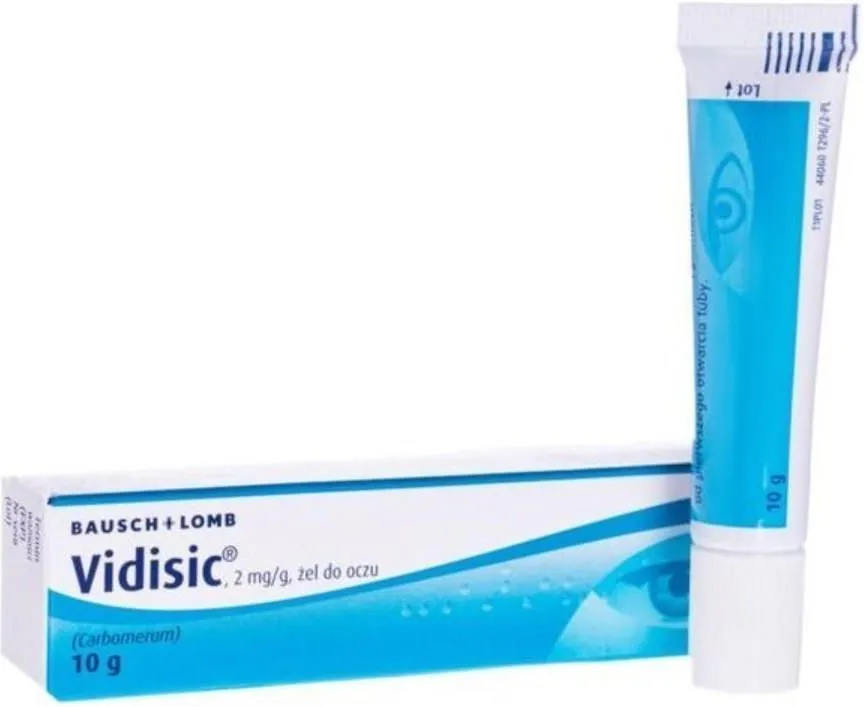
Table of Contents
PACKAGE LEAFLET: INFORMATION FOR THE USER
Warning! Keep the leaflet, information on the immediate packaging in a foreign language!
Vidisic
2 mg/g, eye gel
Carbomerum
Please read the entire leaflet carefully before using the medicine, as it contains
important information for the patient.
This medicine should always be used exactly as described in the patient leaflet or as directed by
your doctor or pharmacist.
- Keep this leaflet, so you can read it again if necessary.
- If you need advice or further information, please consult your pharmacist.
- If you experience any adverse reactions, including any possible side effects not listed in this leaflet, inform your doctor or pharmacist. See section 4.
- If your symptoms do not improve or if you feel worse, consult your doctor.
Contents of the leaflet
- What Vidisic is and what it is used for
- Important information before using Vidisic
- How to use Vidisic
- Possible side effects
- How to store Vidisic
- Contents of the pack and other information
1. What Vidisic is and what it is used for
The active substance in Vidisic is carbomer (carbomer 980), a high-molecular-weight compound that binds water. Vidisic has high viscosity and a physiological pH close to that of natural tears. It replaces natural tears in cases of impaired tear secretion. Vidisic is used for symptomatic treatment of dry eye syndrome (also known as keratoconjunctivitis sicca).
Properties of Vidisic
Vidisic is a liquid gel that binds water, forming a transparent protective layer on the eye surface, providing adequate hydration of the cornea and conjunctiva. It is easy to use when applied according to the administration instructions.
What is dry eye syndrome?
Dry eye syndrome is an eye condition characterized by improper hydration of the eye surface. It may result from reduced production of natural tears, abnormal tear composition, or excessive evaporation. When the quantity or composition of the tear film is disturbed, drying of the cornea and conjunctiva occurs, causing symptoms such as burning, dryness, a sensation of sand in the eye, pressure, and light sensitivity.
Dry eye syndrome is a very common eye disorder. It may be caused by various factors, including working in air-conditioned rooms, prolonged computer use, environmental pollution, taking certain medications, hormonal changes during menopause, or decreased tear production associated with aging.
2. Information before using Vidisic
When not to use Vidisic
- if the patient is allergic to the active substance or to any of the excipients (listed in section 6).
Warnings and precautions
Before starting to use Vidisic, consult your doctor or pharmacist.
If symptoms of dry eye syndrome persist or worsen, discontinue use of the medicine and consult your doctor.
If the patient wears contact lenses, they should be removed before applying Vidisic.
Contact lenses may be reinserted at least 15 minutes after administration of Vidisic.
Vidisic is a sterile product until first opened. It is very important to keep the tube clean and prevent contamination of its contents. During use, special care should be taken to avoid touching the eyes, eyelids, or other surfaces with the tip of the tube (see also section 3: subsection "Instructions for use").
Children and adolescents
No available data. Clinical studies on the use of Vidisic in children and adolescents have not been conducted.
Important information about certain ingredients of the medicine
Vidisic contains cetrimide as a preservative, which, when used frequently or over a prolonged period, may cause eye irritation (burning sensation, redness, feeling of a foreign body) and may damage the corneal epithelium. If any of these adverse effects occur, discontinue use of Vidisic and contact your doctor or pharmacist, who will recommend alternative treatments not containing preservatives.
Vidisic with other medicines
Inform your doctor or pharmacist about all medicines currently used, recently used, or planned to be used.
No studies have been conducted to determine whether Vidisic affects the action of other medicines or whether other medicines may affect the action of Vidisic.
Note:
Vidisic may prolong the contact time of other ophthalmic medicines with the ocular surface. If during treatment with Vidisic it becomes necessary to administer another eye medicine or multiple eye medicines (e.g. eye drops), at least a 5-minute interval should be maintained between administrations of each medicine. In case Vidisic is used together with an eye ointment, the interval between administration of both medicines should be 15 minutes. Vidisic should always be administered last.
Pregnancy, breastfeeding and fertility
If the patient is pregnant or breastfeeding, suspects she may be pregnant, or plans to become pregnant, she should consult her doctor or pharmacist before using this medicine.
Pregnancy
Due to lack of data on the use of carbomer (carbomer 980) in pregnant women, use of Vidisic during pregnancy is not recommended.
Breastfeeding
It is not known whether carbomer (carbomer 980) or its metabolites pass into human milk. Therefore, use of Vidisic during breastfeeding is not recommended unless otherwise decided by a physician.
Fertility
No data available on the effect on fertility.
Driving and using machines
Vidisic has a moderate effect on the ability to drive and operate machinery.
Immediately after application, the medicine may cause blurred vision for a short period of time. Do not drive, operate machinery, or perform potentially hazardous tasks until vision is clear again.
3. How to use Vidisic
This medicine should always be used exactly as described in this patient leaflet or as directed by your doctor or pharmacist. If in doubt, consult your doctor or pharmacist.
Recommended dose
The dosage for the treatment of dry eye syndrome depends on the individual condition of the patient.
The drops should be administered into the conjunctival sac 3 to 5 times daily, or more frequently if needed, and approximately 30 minutes before sleep (otherwise there is a risk of eyelid adhesion).
Patients should consult an ophthalmologist during treatment with Vidisic for dry eye syndrome, which usually requires long-term or continuous therapy.
If you feel that the effect of Vidisic is too strong or too weak, consult your doctor or pharmacist.
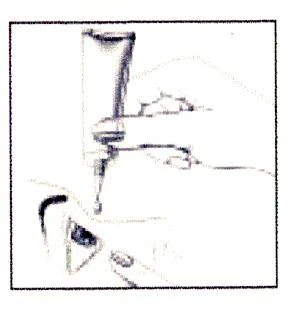
Instructions for administration:
Caution!
Do not touch the tip of the tube with your fingers, and do not touch the eye surface, eyelid, or any other surface with the tip of the tube, as this may contaminate the tube contents. Using contaminated eye medication may lead to serious eye damage, including loss of vision.
- Wash your hands thoroughly.
- Unscrew the protective cap.
- Tilt your head backward.
- Hold the tube in an upright position above the eye, grasping it between your thumb and index finger.
- With the index finger of the other hand, gently pull down the lower eyelid to create a "pocket" between the eyeball and the eyelid, into which the gel will be administered.
- Bring the tube tip close to the eye, without touching the eye, eyelid, surrounding area, or any other surface with the tip of the tube.
- Gently squeeze the tube to release one drop.
- Look upward and instill one drop of gel into the "pocket." If the drop misses the eye, repeat the procedure.
- Gently close and open the eye several times to ensure the gel spreads evenly over the entire eye surface.
- If the gel is to be administered to both eyes, repeat the above steps for the second eye.
- Immediately after use, tightly replace the cap.
Having assistance from another person or using a mirror may make administration easier.
Vidisic is supplied in a tube with a flat cap, allowing the tube to be stored in an upright position.
Overdose of Vidisic
If a larger than recommended dose of Vidisic is accidentally used, it may cause transient visual disturbances, which resolve quickly.
Missed dose of Vidisic
If a dose is missed, take the next dose at the usual time according to the recommended dosing schedule. Do not use a double dose to make up for the missed dose.
If you have any further questions about the use of this medicine, consult your doctor or pharmacist.
4. Possible adverse reactions
Like all medicines, Vidisic can cause adverse reactions, although they do not occur in everyone.
Very rare adverse reactions (may affect up to 1 in 10,000 people):
- burning sensation in the eyes
- redness of the eyes
- eyelid rash
- sensation of a foreign body in the eye
- giant papillary conjunctivitis
- eye itching
- sticky feeling in the eye
- superficial punctate keratitis
- tearing
- blurred vision
The above reactions, including allergic-type reactions, may be caused by the preservative contained in the medicine (cetrimide) or may be related to intolerance to one of the other ingredients of the medicine. Cetrimide may also cause corneal epithelial damage.
Blurred vision after administration of Vidisic may be related to the high viscosity of the product.
Children and adolescents
No data available.
Reporting of adverse reactions
If any adverse reactions occur, including any not listed in this leaflet, inform your doctor or pharmacist. Adverse reactions can also be reported directly to the Department of Monitoring Adverse Reactions of Medicinal Products at the Office for Registration of Medicinal Products, Medical Devices and Biocidal Products:
Al. Jerozolimskie 181 C
02-222 Warsaw
Phone: +48 22 49 21 301
Fax: +48 22 49 21 309
Website: https://smz.ezdrowie.gov.pl
Reporting adverse reactions helps provide more information on the safety of the medicine.
5. How to store Vidisic
Keep the medicine out of sight and reach of children.
Store below 25 °C.
Do not use this medicine after the expiry date stated on the outer packaging or directly after "EXP".
Discard unused medicine after 6 weeks from first opening.
6. Contents of the packaging and other information
What Vidisic contains
The active substance is carbomer (carbomer 980). 1 g of gel contains 2 mg of carbomer (carbomer 980).
The other components are: cetylpyridinium chloride, sodium hydroxide, sorbitol, water for injections.
What Vidisic looks like and contents of the pack
Vidisic is an eye gel.
The medicine is available in a tube (HDPE, Al, LDPE) with a cap made of HDPE, packed in a cardboard carton containing 10 g of gel.
For further information, please contact the responsible party or the parallel importer.
Responsible entity in the Czech Republic, country of export:
Dr. Gerhard Mann, Chem-pharm. Fabrik GmbH
Brunsbütteler Damm 165-173
13581 Berlin
Germany
Manufacturer:
Dr. Gerhard Mann, Chem-pharm. Fabrik GmbH
Brunsbütteler Damm 165-173
13581 Berlin
Germany
Parallel importer:
Medezin Sp. z o.o.
ul. Zbąszyńska 3
91-342 Łódź
Repackaged in:
Medezin Sp. z o.o.
ul. Zbąszyńska 3
91-342 Łódź
CEFEA Sp. z o.o. Sp. komandytowa
ul. Działkowa 56
02-234 Warszawa
SHIRAZ PRODUCTIONS Sp. z o.o.
ul. Tymiankowa 24/28
95-054 Ksawerów
CANPOLAND SPÓŁKA AKCYJNA
ul. Beskidzka 190
91-610 Łódź
Czech Republic marketing authorisation number (country of export): 64/366/00-C
Parallel import authorisation number: 29/23