Vemonis intense
Poland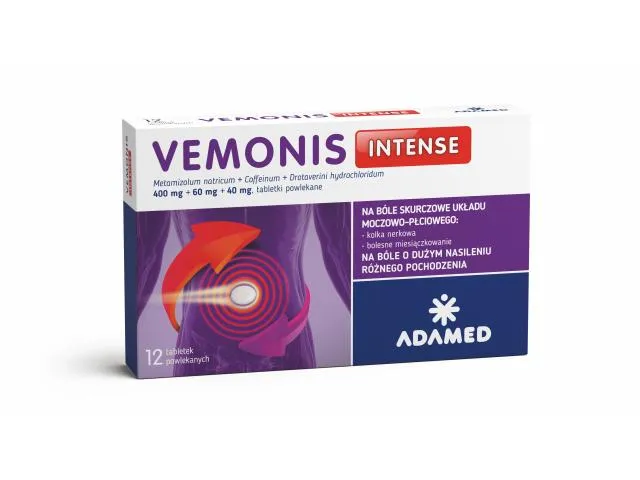
Table of Contents
Package leaflet: Information for the patient
Vemonis Intense, 400 mg + 60 mg + 40 mg, coated tablets
Metamizolum natricum + Coffeinum + Drotaverini hydrochloridum
Vemonis Intense may cause a severely low white blood cell count (agranulocytosis), which can lead to severe and life-threatening infections (see section 4).
Discontinue use and contact your doctor immediately if any of the following symptoms occur: fever, chills, sore throat, painful ulcers in the nose, mouth and throat, or in the genital or anal area.
If the patient has ever experienced agranulocytosis while taking metamizole or similar medicines, this medicine must never be taken again in the future (see section 2).
Please read this leaflet carefully before taking the medicine, as it contains important information for the patient.
This medicine should always be taken exactly as described in this patient leaflet or as directed by the doctor or pharmacist.
- Keep this leaflet, as you may need to read it again.
- If you need advice or further information, please consult your doctor or pharmacist.
- If you experience any adverse reactions, including any possible adverse reactions not listed in this leaflet, inform your doctor or pharmacist. See section 4.
- If there is no improvement or if the patient feels worse, contact your doctor.
Contents of the leaflet
- What Vemonis Intense is and what it is used for
- Important information before taking Vemonis Intense
- How to take Vemonis Intense
- Possible side effects
- How to store Vemonis Intense
- Contents of the pack and other information
1. What Vemonis Intense is and what it is used for
Vemonis Intense is intended for use in adults for symptomatic treatment of:
- severe pain of various origins
- pain associated with smooth muscle spasms in:
- the urogenital system (renal colic, painful menstruation),
- the gastrointestinal tract (intestinal colic, irritable bowel syndrome),
- the biliary tract (cholecystitis, cholangitis), when the use of other medicines is contraindicated or ineffective.
Vemonis Intense contains three active substances. Metamizole sodium has analgesic properties, and drotaverine hydrochloride exerts a spasmolytic effect on smooth muscles. Caffeine is an additive commonly included in many analgesic medicines.
2. Important information before taking Vemonis Intense
When not to take Vemonis Intense:
- if the patient has previously experienced a significant decrease in the number of white blood cells called granulocytes, caused by metamizole or other similar medicines known as
- pyrazolones or pyrazolidines);
- if the patient has bone marrow dysfunction or a disease affecting the production or function of blood cells; if the patient is allergic to metamizole, caffeine, drotaverine, pyrazolone derivatives (e.g. phenazone, propyphenazone) or pyrazolidines (e.g. phenylbutazone, oxyphenbutazone), or any of the other ingredients of this medicine (listed in section 6);
- if the patient has asthma or intolerance associated with taking certain painkillers, such as salicylates, paracetamol, diclofenac, ibuprofen, indometacin or naproxen, manifesting as, for example, bronchospasm, urticaria, rhinitis, or angioedema;
- if the patient has severe renal or hepatic impairment;
- if the patient has severe heart failure;
- if the patient has second- or third-degree atrioventricular block;
- if the patient has certain metabolic disorders (porphyria, glucose-6-phosphate dehydrogenase deficiency);
- if the patient has anaemia;
- if the patient is under 18 years of age;
- if the patient is pregnant or breastfeeding;
- if the patient has hypersensitivity to soy or peanuts (the medicine contains soy lecithin).
Warnings and precautions
Before starting treatment with Vemonis Intense, discuss this with your doctor or
pharmacist:
- if the patient has asthma or intolerance associated with taking certain painkillers (see section When not to take Vemonis Intense) manifesting as urticaria, angioedema, especially if associated with nasal polyposis and sinusitis;
- if the patient has bronchial asthma, particularly when associated with sinusitis and nasal polyps;
- if the patient has allergies or atopy, as anaphylactic shock may occur. Therefore, particular caution should be exercised when using metamizole in patients with asthma or atopy (see also section When not to take Vemonis Intense);
- if the patient has chronic urticaria;
- if the patient has intolerance to certain dyes (e.g. tartrazine) or preservatives (e.g. benzoates);
- if the patient has alcohol intolerance, manifesting as sneezing, lacrimation and severe facial flushing even after small amounts of alcohol; this may indicate previously undiagnosed asthma associated with taking certain painkillers (see section When not to take Vemonis Intense);
- if the patient has low blood pressure, circulatory problems, or has experienced fluid loss or dehydration;
- if the patient has hypertension;
- if the patient has high fever;
- if the patient has kidney or liver problems;
- if the patient is over 65 years of age, in poor general health, or has renal impairment;
- if the patient has hypersensitivity to other substances. If in doubt whether the above conditions apply, consult your doctor before starting treatment with Vemonis Intense.
Low white blood cell count (agranulocytosis)
Vemonis Intense may cause agranulocytosis, i.e. a very low number of a type of white blood cells called granulocytes, which play an important role in fighting infections (see
section 4). Treatment with metamizole should be discontinued and medical advice sought immediately if the following symptoms occur, as they may indicate possible agranulocytosis: chills,
fever, sore throat and painful mucosal ulcers, especially in the oral cavity, nose and throat,
or in the genital or anal area.
The doctor will order laboratory tests to check the patient's blood cell count.
If metamizole is taken for fever, some symptoms of developing agranulocytosis may remain unnoticed. Similarly, symptoms may also be masked if the patient is receiving
antibiotics.
Agranulocytosis may develop at any time during treatment with Vemonis
Intense, and even shortly after discontinuation of metamizole.
Agranulocytosis may occur even if metamizole was previously administered without complications.
Abnormal platelet and other blood cell counts
Metamizole may cause thrombocytopenia, manifesting as increased tendency to bleeding, petechiae or purpura on the skin and mucous membranes. If symptoms of thrombocytopenia occur, the patient should immediately discontinue the medicine and contact a doctor.
During treatment, a serious reduction in the number of red and white blood cells, as well as platelets, known as pancytopenia, may also occur. Patients should seek immediate medical attention if, during treatment with Vemonis Intense, symptoms such as malaise, infection, persistent fever, bruising, bleeding, or pallor occur. If blood tests reveal abnormalities in blood cell or platelet counts, treatment must be immediately discontinued and blood cell and platelet counts monitored until they return to normal.
Liver-related disorders
Cases of hepatitis have been reported in patients taking metamizole, with symptoms appearing from several days to several months after starting treatment.
Treatment with Vemonis Intense should be discontinued and medical advice sought if the patient experiences liver-related symptoms such as: malaise (nausea or vomiting), fever, fatigue, loss of appetite, dark urine, pale stools, jaundice (yellowing of the skin or eyes), itching, rash, or upper abdominal pain. The doctor will check the patient's liver function.
The patient should not take Vemonis Intense if they have previously taken any medicinal products containing metamizole and experienced liver-related adverse effects.
Severe skin reactions
There is a risk of severe skin reactions characterized by blistering of the skin and mucous membranes – such as erythema multiforme (including Stevens-Johnson syndrome (SJS)), toxic epidermal necrolysis (TEN), or drug reaction with eosinophilia and systemic symptoms (DRESS syndrome). If any of these symptoms related to severe skin reactions listed in section 4 occur, treatment with Vemonis Intense must be immediately discontinued and not resumed. Patients should seek immediate medical attention. Vemonis Intense should not be used by patients with hypersensitivity to its ingredients (a detailed description of contraindications is provided above in When not to take Vemonis Intense).
Severe allergic reaction
A severe allergic reaction, known as anaphylactic reaction, may occur suddenly, manifesting as facial and throat swelling, generalized urticaria, bronchospasm, and may be life-threatening. Therefore, Vemonis Intense should not be used by patients with hypersensitivity to its ingredients or by patients with a history of allergic reactions after using other painkillers (a detailed description of contraindications is provided above in When not to take Vemonis Intense). Patients who have experienced an anaphylactic or other immunological reaction to metamizole are also at risk of a similar reaction to other pyrazolones and pyrazolidines.
Reduction in blood pressure
Vemonis Intense may cause a reduction in blood pressure (hypotension), which is likely dose-dependent. The risk of severe hypotension is increased in patients with pre-existing low blood pressure, circulatory problems, or those who have experienced fluid loss or dehydration (see above). In such patients, Vemonis Intense should be used with caution and only after consultation with a doctor.
Elderly patients
See section 3.
Patients with kidney or liver problems
See section 3.
Due to the caffeine content of the medicine, excessive intake of caffeine (e.g. coffee, tea and certain other beverages) should be avoided during treatment.
The medicine should not be taken immediately before going to sleep.
Children and adolescents
Vemonis Intense should not be used in individuals under 18 years of age (see When not to take Vemonis Intense in section 2).
Vemonis Intense and other medicines
Inform your doctor or pharmacist about all medicines currently or recently taken, as well as any medicines planned for use.
When using Vemonis Intense with other medicines, consider the following interactions:
- Cyclosporine (used in transplant patients) – serum cyclosporine levels should be monitored, as they may be reduced due to interaction with metamizole;
- Methotrexate (used in the treatment of certain types of cancer) – metamizole may increase methotrexate toxicity to the bone marrow (the site of new blood cell production), especially in elderly patients. Therefore, concomitant use of methotrexate and Vemonis Intense should be avoided.
- Acetylsalicylic acid – metamizole may reduce the antiplatelet effect of low-dose acetylsalicylic acid. Patients taking low-dose acetylsalicylic acid for cardiovascular prevention should use Vemonis Intense with caution.
- Bupropion (an antidepressant and smoking cessation aid) – metamizole may reduce bupropion plasma concentrations. Therefore, caution should be exercised when using Vemonis Intense and bupropion concomitantly;
- Efavirenz (used in the treatment of HIV infection (AIDS)) – metamizole may reduce plasma concentrations of this medicine and reduce its clinical efficacy;
- Methadone (used in the treatment of addiction to illicit opioids) – metamizole may reduce plasma concentrations of this medicine and reduce its clinical efficacy;
- Valproate (used in the treatment of epilepsy or bipolar affective disorder) – metamizole may reduce plasma concentrations of this medicine and reduce its clinical efficacy;
- Tacrolimus (used to prevent organ rejection in transplant patients) – metamizole may reduce plasma concentrations of this medicine and reduce its clinical efficacy;
- Sertraline (used in the treatment of depression) – metamizole may reduce plasma concentrations of this medicine and reduce its clinical efficacy;
- Medicines metabolized by the liver (e.g. clarithromycin, ethinylestradiol, sertraline) – caffeine may increase their plasma concentrations.
- Salicylates – caffeine may enhance their absorption.
- Cimetidine (a medicine reducing gastric acid), oral contraceptives, ciprofloxacin and enoxacin (used to treat infections), mexiletine (used to treat cardiac arrhythmias) – these medicines may increase caffeine plasma concentrations;
- Muscle relaxants – some muscle relaxants inhibit caffeine metabolism; therefore, concomitant use of Vemonis Intense with these medicines is not recommended;
- Nicotine – increases caffeine elimination;
- Disulfiram (used in the treatment of alcoholism), ethinylestradiol (used to treat menstrual disorders and as contraception) – may enhance the effects of caffeine;
- Levodopa (used in symptomatic treatment of Parkinson's disease) – the effect of levodopa may be reduced; therefore, tremor and rigidity may worsen in patients with Parkinson's disease when Vemonis Intense and levodopa are used concomitantly.
Vemonis Intense and alcohol
Concomitant alcohol consumption may affect concentration and reaction time (see Driving and operating machinery).
Pregnancy and breastfeeding
If the patient is pregnant or breastfeeding, suspects she may be pregnant, or plans to become pregnant, she should consult a doctor or pharmacist before using this medicine.
Do not take Vemonis Intense during pregnancy or breastfeeding.
Driving and operating machinery
At the recommended dosage, no effect of Vemonis Intense on concentration and reaction time has been observed. However, with higher doses of metamizole or after alcohol consumption, concentration and reaction time may deteriorate; drotaverine may cause dizziness, and caffeine may cause psychomotor agitation, nervousness, or exhaustion, posing a risk in situations where these functions are critical (e.g. when driving vehicles or operating machinery).
The medicine contains monohydrate lactose, sodium and soy lecithin
Vemonis Intense contains monohydrate lactose
If the patient has previously been diagnosed with intolerance to certain sugars, the patient should consult a doctor before taking this medicine.
Vemonis Intense contains sodium
Each coated tablet contains 27.6 mg of sodium (the main component of table salt) per tablet, equivalent to 1.4% of the WHO-recommended maximum daily intake of 2 g of sodium for adults.
Vemonis Intense contains soy lecithin
Do not use this medicine if hypersensitivity to peanuts or soy has been diagnosed.
3. How to take Vemonis Intense
This medicine should always be taken exactly as described in this patient information leaflet, or as directed by your doctor or pharmacist. If in doubt, consult your doctor or pharmacist.
The dose depends on the severity of pain and the individual response to Vemonis Intense.
Always use the lowest dose necessary to control the pain.
Adults
The recommended dose for adults, when necessary, is 1 or 2 tablets (400 or 800 mg metamizole sodium, 60 or 120 mg caffeine, and 40 or 80 mg dropropizine hydrochloride) two or three times daily, no more frequently than every 6–8 hours. The maximum daily dose is 6 tablets (2 400 mg metamizole sodium, 360 mg caffeine, and 240 mg dropropizine hydrochloride).
If symptoms do not improve within 3–5 days of taking Vemonis Intense, or if symptoms worsen despite treatment, the patient should seek medical advice immediately.
Children and adolescents
Vemonis Intense must not be used in individuals under 18 years of age (see When not to take Vemonis Intense in section 2).
Elderly patients and patients in poor general health or with renal impairment (see also “When not to take Vemonis Intense” and “Warnings and precautions” in section 2)
In elderly patients, weakened patients, and patients with impaired renal function, the dose of metamizole should be reduced due to the potential for prolonged elimination of metamizole metabolites.
In elderly patients with poor general health and reduced creatinine clearance, a lower dose of dropropizine is recommended due to the slower metabolism of this active substance.
Patients with impaired renal or hepatic function (see also “When not to take Vemonis Intense” and “Warnings and precautions” in section 2)
Due to reduced elimination of metamizole in patients with impaired renal or hepatic function, repeated administration of high doses of metamizole should be avoided. For short-term use, dose reduction of metamizole is not required. There is no experience regarding long-term use of metamizole.
Method of administration
Oral use. Tablets should be taken with sufficient fluid (e.g. a glass of water).
Taking more Vemonis Intense than recommended
After ingestion of very high doses, excretion of a harmless metabolite may cause red discoloration of urine.
Acute overdose may cause nausea, vomiting, abdominal pain, worsening of renal function or acute renal failure, and less frequently, symptoms affecting the central nervous system (dizziness, drowsiness, coma, seizures), as well as low blood pressure. Patients may also experience chest discomfort, nervousness, irritability, tremor, muscle cramps, headache, insomnia, anxiety, euphoria, confusion, disorientation, or agitation. Palpitations, cardiac arrhythmias, and heart function problems may also occur, potentially leading to fainting or cardiac arrest. Caffeine overdose may cause the following symptoms: epigastric pain, vomiting, diuresis, tachycardia or cardiac arrhythmias, and central nervous system stimulation (insomnia, restlessness, stimulation, psychomotor agitation, nervousness, tremors, and seizures).
There are no known cases of dropropizine overdose.
In case of accidental overdose of Vemonis Intense, inform your doctor or pharmacist immediately, or contact the nearest hospital emergency department for further advice.
If you forget to take Vemonis Intense
If you miss a dose, take it as soon as you remember, unless it is almost time for your next dose. Do not take a double dose to make up for a missed dose.
If you have any further questions about the use of this medicine, consult your doctor or pharmacist.
4. Possible adverse effects
Like all medicines, this medicine can cause adverse effects, although not everyone will experience them.
The medicine must be discontinued immediately and medical help sought
if severe allergic (anaphylactic) reactions occur:
Rare adverse effects (occurring in fewer than 1 in 1,000 patients):
- swelling of the face, lips, tongue and/or throat, which may cause difficulty in swallowing or breathing;
- skin and mucous membrane changes such as itching, burning sensation, redness, rash, urticaria;
Very rare adverse effects (occurring in fewer than 1 in 10,000 patients):
- severe bronchospasm;
Adverse effect occurring with unknown frequency (frequency cannot be estimated from available data):
- anaphylactic shock (life-threatening drop in blood pressure, weakness, fainting) (see Warnings and precautions in section 2).
The medicine must be discontinued immediately and medical advice sought if any of the following
severe adverse effects occur:
Very rare adverse effects (occurring in fewer than 1 in 10,000 patients):
- agranulocytosis (complete or near-complete absence of granulocytes in the blood), which may be fatal and manifests as:
- fever, chills;
- sore throat, difficulty swallowing, and inflammatory changes in the mucous membranes of the mouth, nose, throat, genital organs and rectum;
- elevated ESR;
- hemoglobin, red blood cells and platelet counts not always abnormal, although usually within normal range;
- slightly enlarged lymph nodes and spleen, although often unchanged;
- pancytopenia (marked reduction in all blood cells: red and white blood cells and platelets), manifesting as general malaise, fever, signs of infection, bruising, bleeding, and skin pallor) (see Warnings and precautions in section 2);
- haemolytic anaemia, aplastic anaemia, bone marrow damage, sometimes resulting in death. In patients with glucose-6-phosphate dehydrogenase deficiency, the medicine may cause haemolysis of red blood cells;
- reduced platelet count (thrombocytopenia, usually manifesting as increased tendency to bleeding, petechiae on the skin and mucous membranes).
Adverse effect occurring with unknown frequency (frequency cannot be estimated from available data):
- bullous erythema multiforme – Stevens-Johnson syndrome (blisters progressing to erosions on the mucous membranes of the mouth, conjunctiva, and genital organs);
- severe skin reactions, including toxic epidermal necrolysis – Lyell's syndrome (erythematous-bullous lesions affecting the skin and mucous membranes leading to detachment of large areas of epidermis and exposure of extensive skin surfaces) (see Warnings and precautions in section 2);
- acute generalized exanthematous pustulosis;
- skin blisters (bullous eruption);
- acute renal failure possibly presenting with low urine output (oliguria), cessation of urine output (anuria), or excess protein in urine (proteinuria), acute interstitial nephritis, red discoloration of urine;
- Kounis syndrome (acute coronary syndrome);
- liver damage;
- excessive drop in blood pressure (occurs with unknown frequency for metamizole, rarely for drotaverine; see Warnings and precautions in section 2);
- analgesic-induced asthma (see section 2 "When not to take Vemonis Intense"), asthma attacks.
Discontinue taking Vemonis Intense and seek immediate medical help if any of the following symptoms occur:
Malaise (nausea or vomiting), fever, feeling of fatigue, loss of appetite, dark urine, pale stools, yellowing of the skin or whites of the eyes, itching, rash or pain in the upper abdomen. These may be symptoms of liver damage.
See also section 2 "Warnings and precautions".
Other adverse effects:
Not common (occurring in fewer than 1 in 100 patients):
- drug rash (transient rash of various types: nodular, macular, pustular, erythematous);
Rare (occurring in fewer than 1 in 1,000 patients):
- maculopapular skin changes;
- leukopenia (reduced number of white blood cells in blood);
- insomnia (related to drotaverine);
- tremor;
- palpitations.
Frequency unknown (frequency cannot be estimated from available data):
- gastrointestinal disorders, peptic ulcers and bleeding, vomiting, heartburn, bloating, nausea, abdominal pain, constipation, gastric irritation, diarrhoea, dry mouth;
- hepatitis, jaundice (yellowing of skin and whites of the eyes), increased liver enzyme activity in blood;
- headache and dizziness;
- red discoloration of urine (after administration of very high doses of metamizole);
- changes in blood glucose levels (high and low glucose levels);
- irritability, insomnia (related to caffeine), nervousness, anxiety;
- psychomotor hyperactivity;
- increased myocardial contractility, irregular heart rhythm (arrhythmia), rapid heartbeat (tachycardia);
- facial, neck and décolleté flushing;
- rashes/skin eruptions of various types, exudative lesions, excessive sweating;
- muscle cramps;
- exhaustion;
- low blood pressure;
- drug withdrawal syndrome (the most common symptom of caffeine withdrawal is headache), nervousness;
- rapid heartbeat, increased urine flow, elevated creatinine clearance, increased excretion of sodium and calcium.
Severe skin reactions
Discontinue use of Vemonis Intense and seek immediate medical help if the patient experiences any of the following severe adverse effects:
- red, flat spots on the trunk in a target-like or circular shape, often with blisters in the center, skin peeling, ulcerations in the mouth, throat, nose, genital organs and around the eyes. Such serious skin eruptions may be preceded by fever and flu-like symptoms (Stevens-Johnson syndrome, toxic necrolytic epidermal detachment);
- extensive rash, high body temperature and enlarged lymph nodes (DRESS syndrome or drug hypersensitivity syndrome).
Reporting of adverse effects
If any adverse effects occur, including any not listed in this leaflet, inform your doctor or pharmacist. Adverse effects can be reported directly to the Department of Monitoring Adverse Drug Reactions at the Office for Registration of Medicinal Products, Medical Devices and Biocidal Products:
Al. Jerozolimskie 181C, 02-222 Warsaw, tel.: 22 49-21-301, fax: 22 49-21-309, website:
https://smz.ezdrowie.gov.pl
Adverse effects can also be reported to the marketing authorization holder.
Reporting adverse effects helps to provide more information on the safety of the medicine.
5. How to store Vemonis Intense
Do not store above 30°C. Store in the original packaging to protect from light and moisture.
Keep the medicine out of sight and reach of children.
Do not use this medicine after the expiry date stated on the carton and blister after: EXP.
The expiry date refers to the last day of the stated month.
Medicines must not be disposed of via wastewater or household waste. Ask your pharmacist how to dispose of medicines you no longer use. This will help protect the environment.
6. Contents of the pack and other information
What Vemonis Intense contains
- The active substances are: metamizole sodium in the form of monohydrate metamizole sodium, caffeine, and drotaverine hydrochloride. One coated tablet contains 400 mg of metamizole sodium, 60 mg of caffeine, and 40 mg of drotaverine hydrochloride.
- Other ingredients (excipients) are: microcrystalline cellulose, lactose monohydrate, crospovidone, talc, magnesium stearate; coating ingredients: polyvinyl alcohol, titanium dioxide (E 171), talc, soy lecithin, xanthan gum.
What Vemonis Intense looks like and contents of the pack
White or almost white, oval coated tablets engraved with the number "40" on one side.
Blister packs made of OPA/Aluminium/PVC/Aluminium foil containing 4, 6, 8 or 12 coated tablets, packed in a cardboard box.
Marketing Authorisation Holder
Adamed Pharma S.A.
Pieńków, ul. M. Adamkiewicza 6A
05-152 Czosnów
tel.: +48 22 732 77 00
Manufacturer
Adamed Pharma S.A.
ul. Marszałka J. Piłsudskiego 5
95-200 Pabianice