Varilrix
Poland
Table of Contents
- Package leaflet: Information for the user
- 1. What Varilrix vaccine is and what it is used for
- 2. Important information before administration of Varilrix vaccine
- 3. How to use Varilrix vaccine
- 4. Possible side effects
- 5. How to store Varilrix vaccine
- 6. Contents of the pack and other information
- Information intended exclusively for healthcare professionals:
- Package leaflet: information for the user
- 1. What Varilrix vaccine is and what it is used for
- 2. Important information before using Varilrix vaccine
- 3. How to use the Varilrix vaccine
- 4. Possible adverse reactions
- 5. How to store Varilrix vaccine
- 6. Contents of the pack and other information
- Information intended exclusively for healthcare professionals:
Package leaflet: Information for the user
VARILRIX, powder and solvent for solution for injection in a pre-filled syringe
Varicella vaccine (live)
Please read all of this leaflet carefully before the vaccine is administered, because it contains important information for you.
- Keep this leaflet so that you can read it again if necessary.
- If you have any further questions, please ask your doctor, pharmacist, or nurse.
- This vaccine has been prescribed for a specific individual. Do not pass it on to others.
- If you experience any adverse reactions, including any adverse reactions not listed in this leaflet, tell your doctor, pharmacist, or nurse. See section 4.
Table of contents:
- What Varilrix vaccine is and what it is used for
- Important information before using Varilrix vaccine
- How to use Varilrix vaccine
- Possible side effects
- How to store Varilrix vaccine
- Contents of the pack and other information
1. What Varilrix vaccine is and what it is used for
Varilrix vaccine is used in individuals from 12 months of age onwards for the prevention of varicella (chickenpox). In certain circumstances, Varilrix vaccine may also be given to infants from 9 months of age.
Vaccination within 3 days of exposure to a person with varicella may help prevent varicella infection or reduce the severity of the disease.
How Varilrix vaccine works
After vaccination with Varilrix, the patient's immune system (the body's natural defence system) produces antibodies that protect against infection with the varicella virus.
Varilrix contains a weakened form of the virus, making it unlikely to cause varicella in healthy individuals.
As with all vaccines, Varilrix may not fully protect all vaccinated individuals.
2. Important information before administration of Varilrix vaccine
When not to use Varilrix vaccine
-
if the patient suffers from any disease (such as blood disorders, cancer, human immunodeficiency virus (HIV) infection or acquired immunodeficiency syndrome (AIDS)) or if the patient has recently taken or is still taking any medicines that may weaken the immune system (with the exception of low-dose corticosteroids used for the treatment of asthma or replacement therapy). Whether the patient should receive the vaccine will depend on the level of their immunity. See section 2 "Warnings and precautions".
-
if the patient has ever had an allergic reaction to any component of this vaccine (listed in section 6). Symptoms of allergy include itchy skin rash, difficulty in breathing, swelling of the face or tongue.
-
if the patient has ever had hypersensitivity symptoms to neomycin (an antibiotic). Contact dermatitis (skin rash due to direct skin contact with allergens such as neomycin) does not constitute a contraindication to vaccination, but medical advice should be sought.
-
if the patient has ever experienced hypersensitivity symptoms after receiving a varicella vaccine.
-
if pregnancy has been confirmed. In addition, pregnancy should be avoided for one month after vaccination.
Warnings and precautions
Before receiving Varilrix vaccine, discuss with your doctor, pharmacist or nurse:
- if the patient has a severe illness accompanied by fever. Vaccination may need to be postponed until recovery. A mild infection, such as a cold, should not be a reason to delay vaccination, but medical advice should be sought first.
- if the patient has a weakened immune system due to disease (e.g. HIV infection) and/or treatment, or is about to start taking a medicine that weakens the immune system. The patient should be closely monitored, as the response to the vaccine may not be sufficient to provide protection against the disease (see section 2 "When not to use Varilrix vaccine").
- if the patient has a tendency to bleed or bruise easily.
Fainting may occur after or even before any injectable vaccine is given (especially in adolescents). Therefore, inform the doctor or nurse if the patient has ever fainted during an injection.
As with other vaccines, Varilrix may not fully protect all vaccinated individuals against chickenpox. However, in vaccinated individuals, the disease is usually much milder than in unvaccinated individuals.
In rare cases, the weakened form of the virus may be transmitted from a vaccinated person to another person. This usually occurred when the vaccinated person had spots or blisters. In healthy individuals infected this way, usually only a mild rash appears, which is not harmful.
After vaccination, the adult or child should, if possible, avoid close contact for up to 6 weeks with the following individuals:
- people with weakened immune systems;
- pregnant women who have never had chickenpox or have never been vaccinated against chickenpox;
- newborns of mothers who have never had chickenpox or have never been vaccinated against chickenpox.
Varilrix and other medicines
Tell your doctor or pharmacist about all medicines currently taken or recently taken, even those available without a prescription, as well as any vaccinations, and about any medicines the patient plans to take.
Inform the doctor if a tuberculin skin test is planned.
If the test is performed within 6 weeks after vaccination with Varilrix, the result may not be reliable.
In individuals who have received human antibodies (immunoglobulins) or have received a blood transfusion, vaccination should be delayed for at least 3 months.
For 6 weeks after administration of Varilrix vaccine, aspirin or other salicylates (substances present in certain medicines used to reduce fever and relieve pain) should be avoided, as this may cause a serious condition called Reye's syndrome, which can adversely affect all body organs.
Varilrix vaccine may be given at the same time as other vaccines. Different vaccines should be injected at different sites on the body.
Pregnancy, breastfeeding and fertility
Varilrix vaccine should not be given to pregnant women.
If the patient is pregnant or breastfeeding, suspects she may be pregnant, or is planning to have a child, she should consult her doctor or pharmacist before using this vaccine. In addition, it is important that the patient does not become pregnant for one month after vaccination. During this time, an effective method of contraception should be used to avoid pregnancy.
Inform the doctor if the patient is breastfeeding or plans to breastfeed. The doctor will decide whether the patient may be vaccinated with Varilrix.
Driving and using machines
Varilrix vaccine has no effect or has a negligible effect on the ability to drive and use machines. However, some of the adverse reactions listed in section 4 "Possible side effects" may temporarily affect the ability to drive and use machines.
Varilrix contains sorbitol and phenylalanine
This vaccine contains 6 mg of sorbitol per dose.
This vaccine contains 331 micrograms of phenylalanine per dose. Phenylalanine may be harmful for patients with phenylketonuria (PKU), a rare genetic disorder in which phenylalanine accumulates in the body because the body does not eliminate it properly.
3. How to use Varilrix vaccine
The Varilrix vaccine should be administered subcutaneously or intramuscularly, in the upper arm or the outer thigh.
Individuals from 12 months of age onwards should receive 2 doses of the Varilrix vaccine, administered at least 6 weeks apart. The interval between the first and second dose must not be shorter than 4 weeks.
In certain circumstances, the first dose of the Varilrix vaccine may be given to infants from 9 months of age up to 11 months (inclusive). In such cases, two doses of the vaccine should be administered at least 3 months apart.
In individuals at increased risk of severe varicella, such as those undergoing antineoplastic therapy, additional doses of the vaccine may be required. The interval between doses must not be shorter than 4 weeks.
The appropriate number of doses and timing of administration will be determined by a physician based on official recommendations.
Taking more Varilrix vaccine than prescribed
Taking more Varilrix vaccine than prescribed is highly unlikely, as the vaccine is supplied in a vial as a single dose and is administered by a physician or nurse. A few cases of accidental administration have been reported, and only in some of these cases were adverse symptoms such as somnolence and convulsions observed.
Missing a dose of Varilrix vaccine
You should contact your doctor, who will decide whether the next dose of the vaccine should be administered and determine the appropriate timing for administration.
4. Possible side effects
Like all medicines, Varilrix vaccine can cause side effects, although they do not occur in everyone.
The following side effects may occur after vaccination:
♦ Very common (may occur in at least 1 out of 10 people):
- pain and redness at the injection site
♦ Common (may occur in less than 1 out of 10 people):
- rash (spots and/or blisters)
- swelling at the injection site*
- fever of 38°C or higher (measured rectally)*
♦ Uncommon (may occur in less than 1 out of 100 people):
- upper respiratory tract infection
- sore throat and discomfort when swallowing (pharyngitis)
- swollen lymph nodes
- irritability
- headache
- feeling sleepy
- cough
- runny, itchy or blocked nose, sneezing (rhinitis)
- nausea
- vomiting
- rash resembling that of chickenpox
- itching
- joint pain
- muscle pain
- fever higher than 39.5°C (measured rectally)
- fatigue
- general malaise
♦ Rare (may occur in less than 1 out of 1000 people):
- eye inflammation (conjunctivitis)
- abdominal pain
- diarrhoea
- itchy, raised rash (urticaria)
* Swelling at the injection site and fever may occur very commonly in adolescents and adults. Swelling may also occur very commonly after the second dose in children under 13 years of age.
Following routine administration of Varilrix vaccine, several cases of the following adverse reactions have been reported:
-
Infection or inflammation of the brain (encephalitis) has been observed following vaccination with vaccines containing live attenuated varicella virus. In several cases, this condition led to death, particularly in individuals with weakened immune systems (as stated in section 2, Varilrix vaccine must never be used in patients with impaired immune systems). If a vaccinated person experiences loss of or reduced consciousness, seizures, or loss of motor control, accompanied by fever and headache, medical help should be sought immediately, as these may be symptoms of brain infection or inflammation. The doctor or pharmacist should be informed that the patient has received a live attenuated varicella vaccine.
-
Infection or inflammation of the spinal cord and peripheral nerves causing transient difficulty walking (instability) or temporary loss of motor control.
-
Stroke (brain damage caused by interruption of blood supply to the brain).
-
Seizures and epileptic fits.
-
Shingles (herpes zoster).
-
Small local bleeding or easier than usual bruising due to reduced platelet count.
-
Allergic (hypersensitivity) reactions. These may present as itchy or blistering rash, eyelid and facial swelling, breathing or swallowing difficulties, sudden drop in blood pressure, and loss of consciousness. These reactions may occur immediately, even before leaving the doctor's office. If any of these symptoms occur, immediate medical attention is required.
-
Inflammation, narrowing or blockage of blood vessels. This may include unusual skin bleeding or bruising (Henoch-Schönlein purpura) or fever lasting longer than five days accompanied by a rash on the trunk, sometimes followed by peeling of the skin on the palms and soles, redness of the eyes, lips, throat and tongue (Kawasaki disease).
-
Erythema multiforme (symptoms include red, often itchy spots similar to measles-like rash appearing on the limbs and sometimes on the face and other body parts).
Reporting of adverse reactions
If any adverse reactions occur in adults or children, including any adverse reactions not listed in this leaflet, inform a doctor, pharmacist or nurse. Adverse reactions can be reported directly to the Department of Monitoring Adverse Drug Reactions of the Office for Registration of Medicinal Products, Medical Devices and Biocidal Products:
Al. Jerozolimskie 181C
02-222 Warsaw
Tel.: 22 49 21 301
Fax: 22 49 21 309
Website: https://smz.ezdrowie.gov.pl
Adverse reactions can also be reported to the marketing authorization holder.
Reporting adverse reactions helps to provide more information on the safety of the medicine.
5. How to store Varilrix vaccine
The vaccine should be stored out of sight and reach of children.
Do not use this vaccine after the expiry date stated on the packaging. The expiry date (EXP) refers to the last day of the specified month.
Store and transport in a refrigerated condition (2°C – 8°C).
Store in the original packaging to protect from light.
The vaccine should be administered immediately after reconstitution.
If this is not possible, the reconstituted vaccine may be stored for up to 90 minutes at room temperature (25°C) or up to 8 hours in a refrigerator (at 2°C – 8°C). If the reconstituted vaccine has not been used within the recommended time or has not been stored under the recommended conditions, it must be discarded.
Medicines must not be disposed of via wastewater or household waste. Ask your pharmacist how to dispose of medicines no longer in use. This will help protect the environment.
6. Contents of the pack and other information
What Varilrix vaccine contains
- The active substance in the vaccine is live attenuated varicella virus (Oka strain, propagated in human diploid cells of the MRC-5 line). Each reconstituted dose of vaccine (0.5 ml) contains not less than 10 PFU (PFU, plaque forming unit) of varicella virus.
- Other components of the vaccine are:
Powder: amino acids (including phenylalanine), anhydrous lactose, sorbitol (E 420), mannitol (E 421).
Solvent: water for injections.
What Varilrix looks like and contents of the pack
Varilrix is available as a powder and solvent for solution for injection (powder in a single-dose vial and 0.5 ml solvent in a pre-filled syringe), with needles included in the package or without needles, in the following pack sizes:
- 1 vial of powder + 1 pre-filled syringe with solvent + 1 needle included in the pack
- 10 vials of powder + 10 pre-filled syringes with solvent + 10 needles included in the pack
- 1 vial of powder + 1 pre-filled syringe with solvent + 2 needles included in the pack
- 10 vials of powder + 10 pre-filled syringes with solvent + 20 needles included in the pack
- 1 vial of powder + 1 pre-filled syringe without needle with solvent
- 10 vials of powder + 10 pre-filled syringes without needle with solvent
Varilrix is a pale cream to yellowish or pinkish powder and a clear, colourless solvent (water for injections), which should be used to reconstitute the vaccine.
Not all pack sizes may be marketed.
Marketing Authorisation Holder and Manufacturer
GlaxoSmithKline Biologicals S.A.
rue de l’Institut 89
1330 Rixensart, Belgium
For further information about this vaccine, please contact the local representative of the Marketing Authorisation Holder.
GSK Services Sp. z o.o.
ul. Rzymowskiego 53
02-697 Warsaw, Poland
Tel. +48 (22) 576 90 00
This medicinal product is authorised in the European Economic Area Member States under the following names:
| Member State | Name |
| Austria, Belgium, Cyprus, Czech Republic, Denmark, Estonia, Finland, France, Germany, Greece, Hungary, Iceland, Italy, Luxembourg, Malta, Norway, Poland, Portugal, Romania, Sweden | VARILRIX |
| Latvia | Varilrix powder and solvent for solution for injection in pre-filled syringe |
| Lithuania | Varilrix powder and solvent for injectable solution in pre-filled syringe |
| Spain | VARILRIX powder and solvent for injectable solution in pre-filled syringe |
Information intended exclusively for healthcare professionals:
As with all injectable vaccines, appropriate medical treatment and supervision must always be available in case of rare anaphylactic reactions following vaccination.
Alcohol and other disinfectants should be allowed to evaporate from the skin before administering the vaccine, as they may inactivate the attenuated viruses present in the vaccine.
Varilrix vaccine must never be administered intravenously or intradermally.
Do not mix this medicinal product with other medicinal products, as compatibility studies have not been conducted.
The solvent and the reconstituted vaccine should be inspected visually. Due to slight differences in pH, the reconstituted vaccine may range in color from light orange to a pinkish fuchsia shade. After reconstitution, semi-transparent particles of the product may be visible. This is a normal phenomenon and does not affect the vaccine's efficacy.
If the vaccine has a different color or contains other solid particles, it must not be used.
Reconstitute the vaccine by adding the entire contents of the solvent from the prefilled syringe to the vial containing the powder.
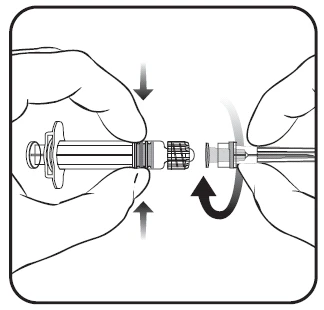
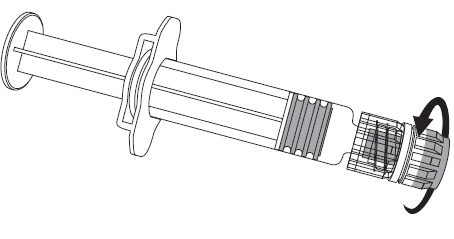
To attach the needle to the prefilled syringe, carefully follow the instructions shown in Figures 1 and 2. The prefilled syringe supplied with Varilrix vaccine may differ slightly from the one illustrated (it may lack a threaded end for screwing on the needle). In such a case, the needle should be attached without screwing.
Needle
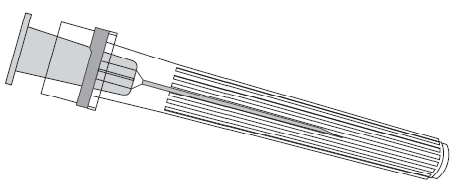
Prefilled syringe
Figure 1. Figure 2.
Always hold the prefilled syringe by its barrel, not by the plunger or the Luer Lock Adaptor (LLA), and keep the needle aligned with the axis of the prefilled syringe (as shown in Figure 2). Failure to follow these instructions may cause misalignment of the LLA and result in leakage from the prefilled syringe.
If the LLA becomes detached during needle attachment, a new dose of the vaccine (a new prefilled syringe and vial) must be used.
-
Unscrew the cap of the prefilled syringe by turning it counterclockwise (as shown in Figure 1).
Regardless of whether the LLA rotates or not, proceed with the following instructions: -
Attach the needle to the prefilled syringe by gently connecting the needle hub to the LLA and turning it a quarter turn clockwise until the needle locks into place (as shown in Figure 2).
-
Remove the needle shield, which may sometimes require some force.
-
Add the solvent to the powder. Then shake vigorously until the powder is completely dissolved.
-
Withdraw the entire contents of the vial back into the syringe.
-
For administration of the vaccine, use a new needle. To do this, unscrew the current needle from the prefilled syringe and attach a new injection needle, following the procedure described in point 2.
The vaccine should be administered immediately after reconstitution.
However, it has been demonstrated that the reconstituted vaccine may be stored for up to 90 minutes at room temperature (25°C) or up to 8 hours in a refrigerator (at 2°C – 8°C). If the reconstituted vaccine is not used within the recommended time or was not stored under the recommended conditions, it must be discarded.
Any unused portions of the medicinal product or waste material must be disposed of in accordance with local regulations.
Package leaflet: information for the user
VARILRIX, powder and solvent for solution for injection
Varicella vaccine (live)
Please read all of this leaflet carefully before vaccination, as it contains important information for the patient.
- Keep this leaflet for future reference.
- If you have any questions, please consult your doctor, pharmacist, or nurse.
- This vaccine has been prescribed for a specific individual. Do not share it with others.
- If the patient experiences any adverse reactions, including any not listed in this leaflet, inform the doctor, pharmacist, or nurse. See section 4.
Leaflet contents:
- What Varilrix vaccine is and what it is used for
- Important information before vaccination with Varilrix
- How to use Varilrix vaccine
- Possible side effects
- How to store Varilrix vaccine
- Contents of the pack and other information
1. What Varilrix vaccine is and what it is used for
Varilrix vaccine is used in individuals from 12 months of age onwards to
prevent varicella (chickenpox). In certain circumstances, Varilrix vaccine may also be
administered to infants from 9 months of age.
Vaccination within 3 days of exposure to someone with chickenpox may help prevent
contracting varicella or reduce the severity of the disease.
How Varilrix vaccine works
After vaccination with Varilrix, the patient's immune system (the body's natural defence system)
produces antibodies that protect against infection with the varicella virus.
Varilrix vaccine contains a weakened form of the virus, making it unlikely to
cause varicella in healthy individuals.
As with all vaccines, Varilrix vaccine may not fully protect all vaccinated individuals.
2. Important information before using Varilrix vaccine
When not to use Varilrix vaccine
- if the patient suffers from any disease (such as blood disorders, cancer, human immunodeficiency virus (HIV) infection or acquired immunodeficiency syndrome (AIDS)), or if the patient has recently taken or is still taking any medicines that may weaken the immune system (with the exception of low-dose corticosteroids used in the treatment of asthma or during replacement therapy). Whether the patient should receive the vaccine will depend on the level of their immunity. See section 2 "Warnings and precautions".
- if the patient has ever had an allergic reaction to any component of this vaccine (listed in section 6). Symptoms of allergy include itchy skin rash, difficulty breathing, swelling of the face or tongue.
- if the patient has ever experienced symptoms of hypersensitivity to neomycin (an antibiotic). Contact dermatitis (skin rash due to direct skin contact with allergens such as neomycin) does not constitute a contraindication to vaccination, but medical advice should be sought.
- if the patient has ever experienced symptoms of hypersensitivity after administration of varicella vaccine.
- if pregnancy has been confirmed. In addition, pregnancy should be avoided for one month after vaccination.
Warnings and precautions
Before receiving Varilrix vaccine, discuss with your doctor, pharmacist or nurse:
- if the patient has a serious illness with fever. Vaccination may need to be postponed until recovery. A mild infection, such as a cold, should not be a reason to delay vaccination, but you should consult your doctor first.
- if the patient has a weakened immune system due to illness (e.g. HIV infection) and/or treatment, or is about to start taking a medicine that weakens the immune system. The patient should be closely monitored, as the response to the vaccine may not be sufficient to provide protection against the disease (see section 2 "When not to use Varilrix vaccine").
- if the patient has a tendency to bleed or bruise easily.
Fainting may occur after or even before any injectable vaccine is given (particularly in adolescents). Therefore, inform the doctor or nurse if the patient has ever fainted during an injection.
As with other vaccines, Varilrix may not fully protect all vaccinated individuals against chickenpox. However, in vaccinated individuals, the disease is usually much milder than in unvaccinated individuals.
In rare cases, the weakened form of the virus may be transmitted from a vaccinated person to another person. This usually occurred when the vaccinated person had spots or blisters. In healthy individuals infected this way, only a mild rash usually appears, which is not harmful.
After vaccination, adults or children should, if possible, avoid close contact for up to 6 weeks with the following individuals:
- individuals with weakened immune systems;
- pregnant women who have never had chickenpox or have never been vaccinated against chickenpox;
- newborns of mothers who have never had chickenpox or have never been vaccinated against chickenpox.
Varilrix and other medicines
Tell your doctor or pharmacist about all medicines you are currently taking or have recently taken, even those available without a prescription, as well as any vaccinations, and about any medicines you plan to take.
Inform your doctor if a tuberculin skin test is planned.
If the test is performed within 6 weeks after vaccination with Varilrix, the result may not be reliable.
In individuals who have received human antibodies (immunoglobulins) or have received blood transfusions, vaccination should be postponed for at least 3 months.
For 6 weeks after administration of Varilrix vaccine, aspirin or other salicylates (substances found in some medicines used to reduce fever and relieve pain) should be avoided, as this may cause a serious illness called Reye's syndrome, which can adversely affect all body organs.
Varilrix vaccine may be administered at the same time as other vaccines. Different vaccines should be injected at different sites on the body.
Pregnancy, breastfeeding and fertility
Varilrix vaccine should not be given to pregnant women.
If the patient is pregnant, breastfeeding, suspects she may be pregnant, or plans to have a child, she should consult her doctor or pharmacist before receiving this vaccine. In addition, it is important that the patient avoids becoming pregnant for one month after vaccination. During this time, an effective method of contraception should be used to prevent pregnancy.
Inform your doctor if you are breastfeeding or plan to breastfeed. The doctor will decide whether you can be vaccinated with Varilrix.
Driving and using machines
Varilrix vaccine has no effect or has a negligible effect on the ability to drive and use machines. However, some of the adverse reactions listed in section 4 "Possible side effects" may temporarily affect the ability to drive and use machines.
Varilrix contains sorbitol and phenylalanine
This vaccine contains 6 mg of sorbitol per dose.
This vaccine contains 331 micrograms of phenylalanine per dose. Phenylalanine may be harmful for patients with phenylketonuria (PKU), a rare genetic disorder in which phenylalanine accumulates in the body because the body does not eliminate it properly.
3. How to use the Varilrix vaccine
The Varilrix vaccine should be administered subcutaneously or intramuscularly, into the upper arm or the outer thigh.
Individuals from 12 months of age onwards should receive 2 doses of the Varilrix vaccine, with an interval of at least 6 weeks between them. The interval between the first and second dose must not be shorter than 4 weeks.
In certain circumstances, the first dose of the Varilrix vaccine may be given to infants from the completed 9th month of life up to 11 months of age (inclusive). In such cases, 2 doses of the vaccine should be administered with an interval of at least 3 months.
In individuals at increased risk of severe varicella infection, such as those undergoing antineoplastic therapy, additional doses of the vaccine may be required. The interval between doses must not be shorter than 4 weeks.
The appropriate number of doses and timing of administration will be determined by a physician based on relevant official recommendations.
Use of more Varilrix vaccine than recommended
Using more Varilrix vaccine than recommended is highly unlikely, as the vaccine is supplied in a vial as a single dose and is administered by a doctor or nurse. There have been a few reported cases of accidental administration, and only in some of these cases were adverse symptoms such as somnolence and convulsions observed.
Missing a dose of the Varilrix vaccine
You should contact your doctor, who will decide whether the next dose of the vaccine should be administered and determine the appropriate timing for it.
4. Possible adverse reactions
Like all medicines, the Varilrix vaccine can cause adverse reactions, although they do not occur in everyone.
The following adverse reactions may occur after vaccination:
♦ Very common (may occur in 1 or more of every 10 people):
- pain and redness at the injection site
♦ Common (may occur in fewer than 1 in 10 people):
- rash (spots and/or blisters)
- swelling at the injection site*
- fever of 38°C or higher (measured rectally)*
♦ Uncommon (may occur in fewer than 1 in 100 people):
- upper respiratory tract infection
- sore throat and discomfort when swallowing (pharyngitis)
- swollen lymph nodes
- irritability
- headache
- feeling sleepy
- cough
- runny nose, itchy or blocked nose, sneezing (rhinitis)
- nausea
- vomiting
- varicella-like rash
- itching
- joint pain
- muscle pain
- fever higher than 39.5°C (measured rectally)
- fatigue
- general malaise
♦ Rare (may occur in fewer than 1 in 1000 people):
- eye inflammation (conjunctivitis)
- abdominal pain
- diarrhoea
- itchy, raised rash (urticaria)
* Swelling at the injection site and fever may occur very commonly in adolescents and adults. Swelling may also occur very commonly after the second dose in children under 13 years of age.
Following routine administration of Varilrix vaccine, several cases of the following adverse reactions have been reported:
-
Infection or encephalitis (inflammation of the brain) has been observed following vaccination with vaccines containing live attenuated varicella virus. In several cases, this condition has led to death, particularly in individuals with weakened immune systems (as stated in section 2, Varilrix vaccine must never be used in patients with impaired immune systems). If a vaccinated person experiences loss or decreased level of consciousness, seizures, or loss of motor control, together with fever and headache, seek immediate medical help, as these may be symptoms of infection or encephalitis. Inform the doctor or pharmacist that the patient has received a live attenuated varicella vaccine.
-
infection or inflammation of the spinal cord and peripheral nerves, causing transient difficulty in walking (instability) or temporary loss of motor control.
-
stroke (brain damage caused by interruption of blood supply to the brain).
-
seizures and epileptic fits.
-
herpes zoster (shingles).
-
small local bleeding or easier than usual bruising due to reduced platelet count.
-
allergic reactions. Such reactions may include itchy or blistering rash, swelling of the eyelids and face, difficulty breathing or swallowing, sudden drop in blood pressure, and loss of consciousness. These reactions may occur even before leaving the doctor's office. If any of these symptoms occur in a patient, seek immediate medical attention.
-
inflammation, narrowing or blockage of blood vessels. This may include unusual bleeding or bruising under the skin (Henoch-Schönlein purpura) or fever lasting longer than five days accompanied by a rash on the trunk, sometimes followed by peeling of the skin on the palms and soles, redness of the eyes, lips, throat and tongue (Kawasaki disease).
-
erythema multiforme (symptoms include red, often itchy spots, similar to the rash seen in measles, which appear on the limbs and sometimes on the face and other parts of the body).
Reporting of adverse reactions
If any adverse reactions occur in adults or children, including any adverse reactions not listed in this leaflet, inform a doctor, pharmacist or nurse. Adverse reactions can be reported directly to the Department of Monitoring Adverse Drug Reactions at the Office for Registration of Medicinal Products, Medical Devices and Biocidal Products:
Al. Jerozolimskie 181C
02-222 Warsaw
Phone: +48 22 49 21 301
Fax: +48 22 49 21 309
Website: https://smz.ezdrowie.gov.pl
Adverse reactions can also be reported to the marketing authorization holder.
Reporting adverse reactions helps provide more information on the safety of the medicine.
5. How to store Varilrix vaccine
Keep the vaccine out of the sight and reach of children.
Do not use this vaccine after the expiry date stated on the packaging. The expiry date (EXP) refers to the last day of the stated month.
Store and transport in a refrigerated condition (2°C – 8°C).
Keep in the original packaging to protect from light.
The vaccine should be administered immediately after reconstitution.
If this is not possible, the reconstituted vaccine may be stored for up to 90 minutes at room temperature (25°C) or up to 8 hours in a refrigerator (at 2°C – 8°C). If the reconstituted vaccine has not been used within the recommended time or has not been stored under the recommended conditions, it must be discarded.
Medicines must not be disposed of via wastewater or household waste. Ask your pharmacist how to dispose of medicines no longer in use. This will help protect the environment.
6. Contents of the pack and other information
What Varilrix vaccine contains
- The active substance of the vaccine is live, attenuated varicella virus (Oka strain, propagated in human diploid cells of the MRC-5 line). Each reconstituted dose of vaccine (0.5 ml) contains not less than 10 PFU (PFU, from Plaque Forming Unit) of varicella virus.
- Other vaccine components are:
Powder: amino acids (including phenylalanine), anhydrous lactose, sorbitol (E 420), mannitol (E 421).
Solvent: water for injections.
What Varilrix vaccine looks like and contents of the pack
Varilrix is available as a powder and solvent for solution for injection
(a single-dose vial of powder and 0.5 ml of solvent in an ampoule).
Pack size: 10 units.
Varilrix consists of a light cream to yellowish or pinkish powder and a clear, colourless solvent (water for injections), which must be used to reconstitute the vaccine.
Marketing Authorisation Holder and Manufacturer
GlaxoSmithKline Biologicals S.A.
rue de l’Institut 89
1330 Rixensart, Belgium
For further information about this vaccine, please contact the local representative of the Marketing Authorisation Holder.
GSK Services Sp. z o.o.
ul. Rzymowskiego 53
02-697 Warsaw
Tel. +48 (22) 576 90 00
This medicine is authorised for sale in the European Economic Area under the following names:
| Member State | Name |
| Belgium, Czech Republic, Denmark, Estonia, Germany, Hungary, Malta, Norway, Poland, Romania | VARILRIX |
| Lithuania | Varilrix powder and solvent for solution for injection |
Information intended exclusively for healthcare professionals:
As with all injectable vaccines, appropriate medical treatment and supervision must always be available in case of rare anaphylactic reactions following vaccination.
Alcohol and other disinfectants should be allowed to evaporate from the skin before administration, as they may inactivate the attenuated viruses present in the vaccine.
Varilrix vaccine must never be administered intravenously or intradermally.
This medicinal product must not be mixed with other medicinal products, as compatibility studies have not been conducted.
The solvent and the reconstituted vaccine should be visually inspected. Due to minor pH differences, the reconstituted vaccine may range in color from light orange to pinkish fuchsia. After reconstitution, semi-transparent particles of the product may be visible. This is a normal phenomenon and does not affect the vaccine's efficacy.
If the vaccine has a different color or contains foreign particulate matter, it must not be used.
Reconstitute the vaccine by adding the entire contents of the solvent vial to the vial containing the powder. Shake the vial vigorously until the powder is completely dissolved.
Withdraw the entire contents of the vial.
A new needle should be used for vaccine administration.
The vaccine should be administered immediately after reconstitution.
However, it has been demonstrated that the reconstituted vaccine may be stored for up to 90 minutes at room temperature (25°C) or up to 8 hours in a refrigerator (at 2°C – 8°C). If the reconstituted vaccine has not been used within the recommended time or has not been stored under the recommended conditions, it must be discarded.
Any unused portions or waste materials of the medicinal product should be disposed of in accordance with local regulations.