Vancomycin polpharma
Poland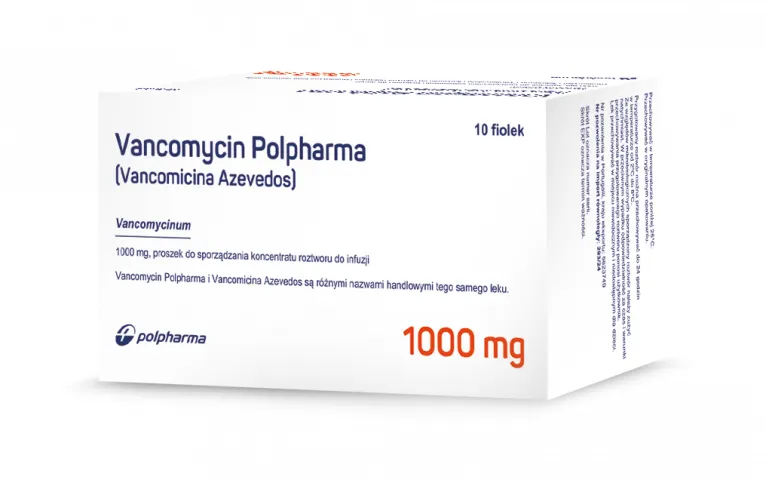
Table of Contents
- Package leaflet: Information for the patient
- 1. What Vancomycin Polpharma is and what it is used for
- 2. Important information before using Vancomycin Polpharma
- 3. How to use Vancomycin Polpharma
- 4. Possible adverse reactions
- 5. How to store Vancomycin Polpharma
- 6. Contents of the pack and other information
- Information intended exclusively for healthcare professionals
Package leaflet: Information for the patient
Warning! Keep the leaflet, information on the immediate packaging in a foreign language.
Vancomycin Polpharma (Vancomicina Azevedos), 1000 mg, powder for preparation of
concentrate for infusion solution
Vancomycinum
Vancomycin Polpharma and Vancomicina Azevedos are different trade names of the same
medicinal product.
Please read the entire leaflet carefully before use, as it contains important information for the patient.
- Keep this leaflet for future reference.
- If you have any questions, consult your doctor, pharmacist, or nurse.
- If you experience any adverse reactions, including any not listed in this leaflet, inform your doctor, pharmacist, or nurse. See section 4.
Table of contents of the leaflet:
- What Vancomycin Polpharma is and what it is used for
- Important information before using Vancomycin Polpharma
- How to use Vancomycin Polpharma
- Possible side effects
- How to store Vancomycin Polpharma
- Contents of the pack and other information
1. What Vancomycin Polpharma is and what it is used for
Vancomycin is an antibiotic belonging to the class of glycopeptide antibiotics. Vancomycin acts by killing certain bacteria that cause infections. Vancomycin in powder form is used to prepare a concentrate for infusion solution or an oral solution. Vancomycin is administered intravenously (by infusion) in all age groups for the treatment of the following serious infections:
- skin and subcutaneous tissue infections;
- bone and joint infections;
- lung infections known as pneumonia;
- infections of the inner lining of the heart (endocarditis) and prevention of bacterial endocarditis in at-risk patients undergoing major surgical procedures;
- central nervous system infections;
- bloodstream infections associated with the above-mentioned infections.
Oral vancomycin may be administered to adults and children for the treatment of infection of the mucous membrane of the small and large intestine associated with mucosal damage (pseudomembranous colitis) caused by Clostridium difficile bacteria.
2. Important information before using Vancomycin Polpharma
When not to use Vancomycin Polpharma
- if the patient is allergic to vancomycin.
Warnings and precautions
Severe adverse reactions, potentially leading to loss of vision, have occurred after vancomycin has been injected into the eye.
Before starting treatment with Vancomycin Polpharma, discuss this with your doctor, hospital pharmacist, or nurse if:
- the patient has previously experienced an allergic reaction to teicoplanin, as this may indicate that the patient is also allergic to vancomycin;
- the patient has hearing problems, especially if they are elderly (hearing tests may be necessary during treatment);
- the patient has impaired kidney function (blood tests and tests of liver and kidney function will be necessary during treatment);
- the patient is receiving vancomycin by infusion to treat Clostridium difficile-associated diarrhoea, instead of oral administration;
- the patient has ever experienced severe skin rash, skin peeling, blisters, and/or oral mucosal ulcers after receiving vancomycin.
Serious skin reactions, including Stevens-Johnson syndrome, toxic epidermal necrolysis, drug reaction with eosinophilia and systemic symptoms (DRESS), and acute generalized exanthematous pustulosis (AGEP), have been reported during vancomycin therapy. If the patient experiences any of the symptoms described in section 4, vancomycin should be discontinued immediately and medical advice should be sought without delay.
During treatment with Vancomycin Polpharma, discuss with your doctor, hospital pharmacist, or nurse if:
- the patient is receiving vancomycin for a prolonged period (blood tests and monitoring of liver and kidney function may be necessary during treatment);
- the patient develops any skin reaction during treatment;
- the patient develops severe or persistent diarrhoea during or after completion of vancomycin therapy; in such a case, immediate medical consultation is required. This may be a sign of intestinal inflammation (pseudomembranous colitis), which may occur during antibiotic treatment.
Children
Vancomycin should be used with particular caution in premature infants and young infants, as their kidneys are not fully developed, which may lead to accumulation of vancomycin in the blood. In this age group, blood tests may be necessary to monitor vancomycin blood levels.
Concomitant administration of vancomycin and anaesthetic agents in children has been associated with skin flushing (erythema) and allergic reactions. Additionally, concomitant use with other medications such as aminoglycoside antibiotics, non-steroidal anti-inflammatory drugs (NSAIDs, e.g. ibuprofen), or amphotericin B (an antifungal agent) may increase the risk of kidney damage, and therefore more frequent blood and kidney function tests may be required.
Vancomycin Polpharma and other medicines
Inform your doctor, pharmacist, or nurse about all medicines the patient is currently taking or has recently taken, as well as any medicines the patient plans to take.
Exercise particular caution if the patient is taking other medicines that may interact with vancomycin, for example:
- Concomitant use of vancomycin and anaesthetic agents may cause hypotension, dyspnoea, skin flushing, urticaria, and pruritus; it may also cause a severe reaction resembling an allergic reaction. The incidence of these events is lower when vancomycin is administered by slow intravenous infusion prior to the anaesthetic agent.
- When vancomycin is used concomitantly with drugs that may impair hearing, nerves, and/or kidneys (especially: ethacrynic acid, aminoglycoside antibiotics, amphotericin B, bacitracin, polymyxin B, piperacillin with tazobactam, colistin, viomycin, or cisplatin), the doctor will closely monitor the patient's condition.
- Special caution will be exercised by the doctor when vancomycin is used concomitantly with muscle relaxants.
Pregnancy, breastfeeding, and fertility
If the patient is pregnant or breastfeeding, suspects she may be pregnant, or is planning pregnancy, she should consult her doctor before using this medicine.
Vancomycin may be administered during pregnancy only if absolutely necessary and when, in the opinion of the doctor, the benefits of treatment outweigh the risks. The doctor may recommend monitoring serum vancomycin levels to reduce the risk of toxic effects on the foetus.
Vancomycin passes into human milk; therefore, it may be used during breastfeeding only if other antibiotics have proven ineffective. If treatment of the mother with vancomycin is absolutely necessary, the doctor will carefully monitor the infant's condition or may recommend discontinuation of breastfeeding.
There are no studies on the effect on fertility.
Driving and operating machinery
Vancomycin Polpharma has no or negligible influence on the ability to drive and operate machinery.
3. How to use Vancomycin Polpharma
The patient will receive Vancomycin Polpharma administered by medical personnel during hospitalization. The doctor will decide the daily dose and duration of treatment.
Dosage
The dose administered will depend on:
- the patient's age,
- the patient's body weight,
- the type of infection,
- kidney function status,
- the patient's hearing status,
- any other medications the patient is taking.
Intravenous administration
Adults and adolescents (aged 12 years and older)
The dosage will be determined according to the patient's body weight. The usual infusion dose is 15 to 20 mg per kg of body weight. This dose is typically administered every 8 to 12 hours. In some cases, the doctor may decide to use an initial dose of up to 30 mg per kg of body weight. The maximum daily dose of vancomycin should not exceed 2 g.
Use in children
Children from 1 month of age and children under 12 years of age
The dosage will be determined according to the patient's body weight. The usual infusion dose is 10 to 15 mg per kg of body weight. This dose is typically administered every 6 hours.
Preterm neonates and full-term newborns (0 to 27 days of age)
The dose will be calculated based on post-conceptual age [gestational age (time elapsed from the first day of the mother's last menstrual period to birth) plus postnatal age (time elapsed since birth)].
In elderly patients, pregnant women, and patients with impaired kidney function (including dialysis patients), an adjusted dose may be required.
Oral administration
Adults and adolescents (aged 12 years and older)
The recommended dose is 125 mg every 6 hours. In some cases, the doctor may decide to use a higher daily dose, up to a maximum of 500 mg every 6 hours. The maximum daily dose should not exceed 2 g.
If the patient has previously had other disorders (mucosal infection), an adjusted dose and duration of treatment may be necessary.
Use in children
Newborns, infants, and children under 12 years of age
The recommended dose is 10 mg per kg of body weight. This dose is usually administered every 6 hours. The maximum daily dose should not exceed 2 g.
Method of administration
Intravenous infusion (drip) means that the medicine flows from an infusion bottle or bag through a tube into one of the patient's veins. The doctor or nurse will always administer vancomycin into the bloodstream, never into muscle.
Vancomycin should be administered intravenously over at least 60 minutes.
When used to treat gastrointestinal disorders (e.g. pseudomembranous colitis), the medicine must be given orally as an oral solution (the patient will take the medicine by mouth).
Instructions for preparing the solution prior to administration are provided in the section "Information intended exclusively for healthcare professionals" at the end of this leaflet.
Duration of treatment
The duration of treatment depends on the type of infection present in the patient and may last several weeks.
The duration of treatment may vary depending on the individual patient's response to therapy.
During treatment, the patient may undergo blood tests and urine analysis, and may also have hearing tests performed to monitor for potential adverse effects.
If you have any further questions about the use of this medicine, please consult your doctor, pharmacist, or nurse.
4. Possible adverse reactions
Like any medicine, this medicine can cause adverse reactions, although not everyone will experience them.
Vancomycin may cause allergic reactions, but severe allergic reactions (anaphylactic reactions) are rare. If the patient suddenly develops wheezing, difficulty breathing, redness of the upper body, rash or itching, the attending physician should be notified immediately.
If the patient notices any of the following symptoms, vancomycin should be discontinued and medical advice should be sought immediately:
- red, flat lesions on the trunk resembling target-like or circular spots, often with blisters in the center, skin peeling, and ulcers in the mouth, throat, nose, genital organs, or eyes. These severe skin rashes may be preceded by fever and flu-like symptoms (Stevens-Johnson syndrome and toxic epidermal necrolysis).
- widespread rash, high fever, and enlarged lymph nodes (DRESS syndrome or drug hypersensitivity syndrome).
- red, scaling rash with subcutaneous nodules and blisters accompanied by fever at the beginning of treatment (acute generalized exanthematous pustulosis, see section 2 "Warnings and precautions").
Common adverse reactions (may occur in up to 1 in 10 patients):
- decrease in blood pressure
- shortness of breath, wheezing (a high-pitched sound caused by an obstruction in airflow in the upper respiratory tract)
- rash and inflammation of the oral mucosa, itching, itchy rash, urticaria
- kidney function disturbances detected usually in blood tests
- redness of the upper body and face, phlebitis
Uncommon adverse reactions (may occur in up to 1 in 100 patients):
- transient or permanent hearing loss
Rare adverse reactions (may occur in up to 1 in 1,000 patients):
- decrease in the number of white blood cells, red blood cells, and platelets (blood cells responsible for blood clotting)
- increase in certain white blood cells in the blood
- disturbances in balance, tinnitus, dizziness
- vasculitis
- nausea
- kidney inflammation and kidney failure
- chest and back muscle pain
- fever, chills
Very rare adverse reactions (may occur in up to 1 in 10,000 patients):
- sudden onset of severe allergic skin reaction involving skin peeling or blister formation. This may be accompanied by high fever and joint pain.
- cardiac arrest
- intestinal inflammation causing abdominal pain and diarrhoea, which may contain blood.
Frequency not known (frequency cannot be estimated from available data):
- vomiting, diarrhoea
- confusion, drowsiness, lack of energy, swelling, fluid retention, reduced urine output
- rash with swelling and pain behind the ears, neck, groin, under the chin and under the arms (lymph node swelling), abnormal blood test results and liver function abnormalities
- blistering rash with fever
Reporting of adverse reactions
If any adverse reactions occur, including any adverse reactions not listed in this leaflet, inform your doctor, pharmacist or nurse. Adverse reactions can be reported directly to the Department of Monitoring Adverse Drug Reactions of the Office for Registration of Medicinal Products, Medical Devices and Biocidal Products:
Al. Jerozolimskie 181C, 02-222 Warsaw
Tel.: + 48 22 49 21 301,
Fax: + 48 22 49 21 309
Website: https://smz.ezdrowie.gov.pl
Reporting adverse reactions helps to provide more information on the safety of the medicine.
5. How to store Vancomycin Polpharma
- Keep this medicine out of the sight and reach of children.
- Do not use after the expiry date stated on the packaging following the EXP. The expiry date refers to the last day of the stated month.
- Store below 25°C.
- Store in the original packaging.
- Storage of solutions: see "Preparation of infusion solution" at the end of the leaflet, in the section intended for medical personnel.
- Medicines must not be disposed of via wastewater or household waste. Ask your pharmacist how to dispose of medicines no longer required. These measures will help protect the environment.
6. Contents of the pack and other information
What Vancomycin Polpharma contains
The active substance is vancomycin in the form of vancomycin hydrochloride. Each vial contains 1000 mg of vancomycin. Vancomycin Polpharma does not contain any other ingredients.
What Vancomycin Polpharma looks like and contents of the pack
Vancomycin Polpharma is a white or slightly brownish powder.
Vial made of colourless type I glass, with a rubber stopper and aluminium cap, in a cardboard box.
The pack contains 10 vials.
For further information, please contact the responsible party or the parallel importer.
Responsible party in Portugal, country of export:
Laboratórios Azevedos – Indústria Farmacêutica, S.A.
Estrada Nacional 117-2, Alfragide
2614-503 Amadora
Portugal
Manufacturer:
Sofarimex – Indústria Química e Farmacêutica, S.A.
Av. das Indústrias, Alto de Colaride
2735-213 Cacém
Portugal
Parallel importer:
Zakłady Farmaceutyczne POLPHARMA S.A.
ul. Pelplińska 19
83-200 Starogard Gdański
Repackaged in:
CEFEA Sp. z o.o. Sp. komandytowa
ul. Działkowa 56
02-234 Warsaw
LABOR Przedsiębiorstwo Farmaceutyczno-Chemiczne Sp. z o.o.
ul. Długosza 49
51-162 Wrocław
Marketing authorisation number in Portugal, country of export: 5623749
Parallel import authorisation number: 293/24
(logo of the parallel importer)
___________________________________________________________________________
Information intended exclusively for healthcare professionals
The medicinal product should be administered by intravenous infusion or orally. It must not be given as a rapid intravenous bolus injection or by intramuscular injection.
Intravenous administration
The initial dose should be based on total body weight. Subsequent dose adjustments should be guided by serum concentrations with the aim of achieving the target therapeutic concentration. Renal function should also be taken into account when determining subsequent doses and dosing intervals.
The following dosing regimens are recommended:
Patients aged 12 years and older
The recommended dose is 15 to 20 mg/kg body weight every 8 to 12 hours (doses exceeding 2 g per single dose should not be used).
In critically ill patients, a loading dose of 25–30 mg/kg body weight may be used to facilitate rapid achievement of the target minimum serum vancomycin concentration.
Infants from one month of age and children under 12 years of age
The recommended intravenous dose is 10 to 15 mg/kg body weight every 6 hours.
Term newborns (from birth to 27 days postnatal age) and preterm newborns (from birth to expected date of delivery plus 27 days)
To determine the appropriate dosing regimen for newborns, advice should be sought from a physician experienced in treating neonates. One possible vancomycin dosing regimen for newborns is presented in the table below:
| PMA (weeks) | Dose (mg/kg b.w.) | Interval between doses (hours) |
| <29 | 15 | 24 |
| 29 – 35 | 15 | 12 |
| >35 | 15 | 8 |
PMA: postconceptional age [time elapsed from the first day of the last menstrual period to birth (gestational age) plus the time elapsed after birth (postnatal age)].
Duration of treatment
The recommended duration of treatment is given in the table below. In each case, the duration of treatment should be adjusted according to the type and severity of infection and the individual clinical response.
| Indication | Duration of treatment |
|---|---|
Complicated skin and soft tissue infections
| 7 to 14 days |
| 4 to 6 weeks* |
| Bone and joint infections | 4 to 6 weeks** |
| Community-acquired pneumonia | 7 to 14 days |
| Hospital-acquired pneumonia, including ventilator-associated pneumonia | 7 to 14 days |
| Infective endocarditis | 4 to 6 weeks*** |
| Acute bacterial meningitis | 10 to 21 days |
* Continue until no further debridement of necrotic tissue is required,
the patient's clinical condition has improved, and the patient has been afebrile for 48 to 72 hours.
** In the case of prosthetic joint infections, consider longer cycles of oral
suppressive therapy with appropriate antibiotics.
*** The duration and need for combination therapy depend on the type of prosthesis and
the microorganism involved.
Elderly patients
Due to age-related reduction in renal function, lower maintenance doses may be necessary.
Patients with renal impairment
In adult and pediatric patients with impaired renal function, consider administering an initial loading dose followed by serum trough concentration monitoring of vancomycin, rather than adhering to a fixed dosing schedule, especially in patients with severe renal impairment or those undergoing renal replacement therapy, due to multiple variable factors affecting vancomycin concentrations in these patients.
In patients with mild or moderate renal impairment, the initial dose should not be reduced. In patients with severe renal impairment, prolonging the interval between doses is preferred over administering smaller doses.
Concomitantly administered medicinal products that may reduce vancomycin clearance and/or increase its adverse effects should be carefully evaluated.
Vancomycin is only minimally removed by intermittent hemodialysis. However, the use of high-permeability filter membranes or continuous renal replacement therapy (CRRT) increases vancomycin clearance, and supplemental doses are generally required (usually administered after the hemodialysis session in the case of intermittent hemodialysis).
Adult patients
Dose adjustments in adult patients may be based on estimated glomerular filtration rate (eGFR) calculated using the following formula:
Men: [body weight (kg) × (140 − age (years))] / (72 × serum creatinine concentration (mg/dL))
Women: 0.85 × the value calculated using the above formula
The usual initial dose for adult patients is 15 to 20 mg/kg body weight; this dose may be administered every 24 hours to patients with creatinine clearance between 20 and 49 mL/min. In patients with severe renal impairment (creatinine clearance below 20 mL/min) or those undergoing renal replacement therapy, appropriate dosing intervals and subsequent dose sizes largely depend on the type of RRT procedure used and should be determined based on serum vancomycin trough concentrations and residual renal function. Depending on the clinical situation, administration of the next dose may be withheld until vancomycin serum concentration measurements are available.
In critically ill patients with renal impairment, the initial loading dose (25 to 30 mg/kg body weight) should not be reduced.
Children and adolescents
Dose adjustments in children aged 1 year and older and in adolescents may be based on estimated glomerular filtration rate (eGFR) using the modified Schwartz formula:
eGFR (mL/min/1.73 m²) = (height in cm × 0.413) / serum creatinine concentration (mg/dL)
eGFR (mL/min/1.73 m²) = (height in cm × 36.2) / serum creatinine concentration (μmol/L)
For neonates and infants under 1 year of age, expert consultation is recommended, as the Schwartz formula is not applicable to these patients.
The dosing recommendations for children and adolescents provided in the table below follow the same principles as those for adult patients.
| GFR (ml/min/1.73 m2) | Intravenous dose | Frequency of administration |
| 50-30 | 15 mg/kg | every 12 hours |
| 29-10 | 15 mg/kg | every 24 hours |
| <10 | 10-15 mg/kg | Repeat dosing based on concentration* |
| Intermittent hemodialysis | ||
| Peritoneal dialysis | ||
| Continuous renal replacement therapy | 15 mg/kg | Repeat dosing based on concentration* |
* Appropriate intervals between doses and the size of subsequent doses largely depend on
the applied RRT method and should be established based on serum vancomycin concentrations
before administration and residual renal function. Depending on the clinical situation,
administration of the next dose may be withheld until serum vancomycin concentration
is measured.
Patients with hepatic impairment
Dose adjustment is not necessary in patients with hepatic impairment.
Pregnancy
In pregnant women, significantly increased doses may be required to achieve therapeutic
serum vancomycin concentrations.
Obese patients
In obese patients, the initial dose should be individually adjusted according to total body weight,
similarly as in patients with normal body weight.
Oral administration
Patients aged 12 years and older
Treatment of infections caused by Clostridium difficile (CDI)
For the first episode of non-severe CDI, the recommended vancomycin dose is 125 mg every
6 hours for 10 days. This dose may be increased to 500 mg every 6 hours for 10 days in cases of
severe or complicated disease. The maximum daily dose should not exceed 2 g.
In patients with multiple recurrences, treatment of the current CDI episode with vancomycin
125 mg four times daily for 10 days may be considered, followed by gradual dose reduction
down to 125 mg daily or use of a pulsed regimen, i.e., 125–500 mg/day every 2–3 days for at least
3 weeks.
Neonates, infants, and children under 12 years of age
The recommended vancomycin dose is 10 mg/kg body weight every 6 hours for 10 days. The
maximum daily dose should not exceed 2 g.
Adjustment of the duration of vancomycin treatment according to the individual clinical course
of the disease may be necessary. Whenever possible, the antibacterial agent suspected of causing
CDI should be discontinued. Adequate fluid and electrolyte replacement should be ensured.
Monitoring serum vancomycin concentrations
The frequency of monitoring therapeutic drug concentrations should be individually tailored
to the clinical situation and response to treatment; sampling frequency may range from daily
in some hemodynamically unstable patients to at least once weekly in stable patients showing
a clear response to therapy. In patients undergoing intermittent hemodialysis, serum vancomycin
concentration should be measured before the start of a hemodialysis session.
Monitoring serum vancomycin concentration after oral administration should be performed
in patients with inflammatory bowel diseases.
The minimum therapeutic blood vancomycin concentration should be 10–20 mg/l, depending
on the site of infection and pathogen susceptibility. Clinical laboratories usually recommend
a minimum concentration of 15–20 mg/l, ensuring better coverage of organisms classified
as susceptible with an MIC ≥1 mg/l.
In predicting individual dosing required to achieve an appropriate AUC value, model-based
methods may be useful. Model-based approaches can be applied both in calculating the initial
individual dose and in modifying doses based on TDM results.
Method of administration
Intravenous administration
Vancomycin is usually administered intravenously as an intermittent infusion; the dosing
recommendations provided in this section for the intravenous route refer to this method of
administration.
Vancomycin should be administered exclusively by slow intravenous infusion lasting at least
one hour or at a maximum rate of 10 mg/min (longer duration) in a sufficiently diluted solution
(at least 200 ml per 1000 mg).
Patients with restricted fluid intake may receive a 1000 mg/100 ml solution; however, with this
higher concentration, the risk of infusion-related adverse reactions is increased.
Continuous vancomycin infusion may be considered, e.g., in patients with unstable vancomycin
clearance.
Oral administration
The content of the vial may be used to prepare an oral solution. The oral solution is prepared by
dissolving the content of one vial (1000 mg vancomycin) in 30 ml of water. The appropriate dose
can be administered orally or via a nasogastric tube. Syrup may be added to the solution to improve
taste.
Preparation of infusion solution
The content of the vial should be dissolved in 20 ml of water for injections.
1 ml of the resulting solution contains 50 mg of vancomycin. The solution may be further diluted
depending on the route of administration.
Multiple infusions
The prepared solution should be diluted in 200 ml of 5% glucose solution or 0.9% sodium chloride
solution. The vancomycin concentration in the resulting solution should not exceed 5 mg/ml. The
solution should be administered slowly intravenously, at a maximum rate of 10 mg/min, over at
least 60 minutes.
Continuous infusion
Should be used only when multiple infusions are not feasible. The vancomycin solution with a
concentration of 50 mg/ml should be diluted in an appropriate volume of 5% glucose solution or
0.9% sodium chloride solution so that the patient receives the prescribed daily dose as a continuous
infusion over 24 hours.
Stability and storage conditions of solutions
The prepared solution may be stored for up to 24 hours at a temperature of 2°C to 8°C. For
microbiological reasons, the prepared solution should be used immediately. Otherwise, the
responsibility for storage time and conditions of the prepared solution lies with the user.
Pharmaceutical incompatibilities
The solution has a low pH and may be physically or chemically unstable when mixed with other
substances. Vancomycin solutions should not be mixed with other solutions except those whose
compatibility has been reliably confirmed.
Mixing vancomycin with alkaline solutions should be avoided.
Simultaneous use and mixing of vancomycin solutions with chloramphenicol, corticosteroids,
methicillin, heparin, aminophylline, cephalosporin antibiotics, and phenobarbital is not recommended.
Overdose
In case of overdose, effects resulting from high serum vancomycin concentrations (ototoxicity
and nephrotoxicity) may be expected.
Symptomatic treatment maintaining glomerular filtration is recommended. Vancomycin is
only slightly removed from blood by hemodialysis or peritoneal dialysis. Limited benefit has been
reported from hemofiltration using Amberlite XAD-4 resin.
Other sources of information
Medical advice/education
Antibiotics are used to treat bacterial infections. They are ineffective against viral infections.
If a physician has prescribed antibiotics for a patient, they are necessary for treating a specific,
current illness.
Despite antibiotic use, some bacteria may survive or continue to multiply. This phenomenon is
called resistance; it causes antibiotic treatment to sometimes be ineffective.
Improper use of antibiotics promotes the development of resistance. Patients can also contribute
to the development of resistance and thereby delay recovery or reduce the effectiveness of
antibiotic therapy if they do not adhere to proper:
- dosing,
- treatment schedule,
- duration of treatment.
Therefore, to maintain the effectiveness of this medication, the following should be observed:
1 – use antibiotics only when prescribed by a physician
2 – strictly follow the prescribed method of use
3 – do not reuse antibiotics without a physician's recommendation, even to treat a similar illness.