Valhit
Poland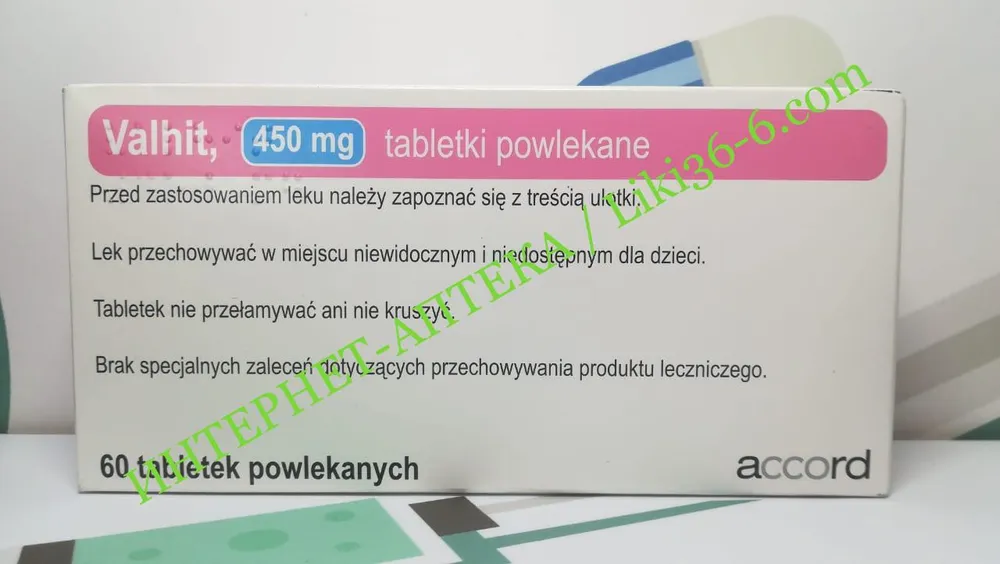
Table of Contents
Package leaflet: Information for the user
Valhit, 450 mg, film-coated tablets
Valganciclovirum
Please read all of this leaflet carefully before taking this medicine because it contains
important information for the patient.
- Keep this leaflet. You may need to read it again.
- If you have any further questions, ask your doctor or pharmacist.
- This medicine has been prescribed for a specific individual. Do not pass it on to others. This medicine may harm others, even if their symptoms are the same.
- If you experience any side effects, including any not listed in this leaflet, inform your doctor or pharmacist. See section 4.
Contents of the leaflet
- What Valhit is and what it is used for
- What you need to know before taking Valhit
- How to take Valhit
- Possible side effects
- How to store Valhit
- Contents of the pack and other information
1. What Valhit is and what it is used for
Valhit belongs to a group of medicines that act by directly preventing the replication of viruses. Valganciclovir, the active substance in the tablets, is converted in the body to ganciclovir. Ganciclovir prevents the replication of a virus called cytomegalovirus (CMV) and its spread to healthy cells in the body. In patients with weakened immune systems, CMV may cause infections in various organs, which can be life-threatening.
Valhit is used:
- for the treatment of cytomegalovirus (CMV) retinitis in adult patients with acquired immunodeficiency syndrome (AIDS); CMV infection of the retina may cause visual disturbances and even blindness;
- for prevention of CMV infection in CMV-negative children and adults who have received a solid organ transplant from a CMV-positive donor.
2. Important information before using Valhit
When not to use Valhit:
- if the patient is allergic to valganciclovir, ganciclovir, or any of the other ingredients of this medicine (listed in section 6);
- if the patient is breastfeeding.
Warnings and precautions
Before starting treatment with Valhit, discuss this with your doctor or pharmacist.
-
if the patient is allergic to acyclovir, penciclovir, valacyclovir, or famciclovir. These are other
medicines used to treat viral infections.
When to exercise special caution when using Valhit -
If the patient has a low number of white blood cells, red blood cells, or platelets (small cells involved in blood clotting). The treating physician will arrange blood tests before starting treatment with Valhit and may order additional blood tests during treatment.
-
If the patient is undergoing radiotherapy or hemodialysis.
-
If the patient has kidney problems. The treating physician may prescribe a reduced dose and may recommend regular blood tests during treatment.
-
If the patient is currently taking ganciclovir capsules and the doctor has decided to switch to Valhit tablets. It is extremely important not to take more tablets than prescribed by the doctor to avoid the risk of overdose.
Valhit and other medicines
Tell your doctor or pharmacist about all medicines the patient is currently taking or has recently taken, as well as any medicines the patient plans to take. This includes medicines available without a prescription.
Taking Valhit together with other medicines may affect the concentration of the drug in the blood and may cause harmful effects. If the patient is currently taking a medicine containing any of the following active substances, inform the doctor:
- imipenem with cilastatin (antibiotics); taking them together with Valhit may cause seizures;
- zidovudine, didanosine, lamivudine, stavudine, tenofovir, abacavir, emtricitabine, or similar medicines used in the treatment of AIDS;
- adefovir or any other medicines used in the treatment of hepatitis B;
- probenecid (a medicine used to treat gout); concomitant use of probenecid and Valhit may increase the concentration of ganciclovir in the blood;
- mycophenolate mofetil, cyclosporine, or tacrolimus (used after organ transplantation);
- vincristine, vinblastine, doxorubicin, hydroxyurea, or similar medicines used in the treatment of cancer;
- trimethoprim, trimethoprim-sulfonamide combinations, and dapsone (antibacterial medicines);
- pentamidine (a medicine used to treat parasitic diseases or lung infections);
- flucytosine or amphotericin B (antifungal medicines).
Valhit with food and drink
Valhit should be taken with meals. If the patient is unable to eat for any reason, the prescribed dose of Valhit should still be taken.
Pregnancy, breastfeeding, and effects on fertility
If the patient is pregnant, she should not use Valhit unless otherwise advised by a doctor. If the patient is pregnant or planning to become pregnant, she must inform her doctor before taking this medicine. Taking Valhit during pregnancy may harm the unborn child.
Do not take Valhit during breastfeeding. If the doctor recommends starting treatment with Valhit, the patient should stop breastfeeding before starting the medicine.
Women of childbearing potential must use effective contraception during treatment and for at least 30 days after treatment ends.
If a man is taking Valhit, he should use a condom during sexual intercourse with a partner who could become pregnant, both during treatment and for 90 days after treatment ends.
Driving and operating machinery
The patient should not drive or operate any vehicles, devices, or machinery if dizziness, fatigue, tremors, or confusion occur during treatment.
Before taking any medicine, consult a doctor or pharmacist.
3. How to use Valhit
This medicine should always be used exactly as prescribed by your doctor. If in doubt, consult your doctor or pharmacist.
Handle the tablets with care. Do not break or crush them. Swallow the tablets whole, preferably during a meal. If you accidentally touch a damaged tablet, wash your hands thoroughly with soap and water. If powder from the tablet gets into your eyes, rinse the eyes thoroughly with sterile water or, if unavailable, with clean water.
You must strictly follow the number of tablets prescribed by your doctor to avoid overdose.
If possible, take Valhit tablets during meals – see section 2.
Adults
Prevention of CMV disease in transplant recipients
Treatment should be started within 10 days after transplantation. The usual recommended dose is 2 tablets ONCE daily. Continue this dose for 100 days.
For kidney transplant recipients, your doctor may recommend taking the tablets for 200 days.
Treatment of active CMV retinitis in AIDS patients (so-called initial treatment)
The typical dose of Valhit is 2 tablets TWICE daily, taken for 21 days (three weeks). Unless otherwise directed by your doctor, do not take this dose for longer than 21 days, as this may increase the risk of adverse effects.
Long-term maintenance treatment to prevent recurrence of active CMV retinitis in AIDS patients (so-called maintenance treatment)
The usual dose is 2 tablets ONCE daily. Try to take the tablets at the same time each day. Your doctor will decide how long you should continue taking Valhit. If retinitis worsens during this treatment, your doctor may recommend repeating the initial treatment (as above) or may decide to use another medicine to treat the CMV infection.
Elderly patients
The use of Valhit has not been studied in elderly patients.
Patients with impaired kidney function
In patients with impaired kidney function, your doctor may recommend a lower number of tablets per day or may advise taking them only on certain days of the week. It is very important to take exactly the number of tablets prescribed by your doctor.
Patients with impaired liver function
The use of Valhit has not been studied in patients with impaired liver function.
Use in children and adolescents
Prevention of CMV disease in pediatric solid organ transplant recipients
Treatment in children should be started within 10 days after organ transplantation. The recommended dose may vary depending on the child's size and should be administered ONCE daily. The treating doctor will determine the appropriate dose based on the child's height, body weight, and kidney function. Continue treatment at this dose for 100 days. If the child received a kidney transplant, the doctor may recommend continuing treatment for 200 days.
If a child is unable to swallow Valhit coated tablets, valganciclovir in the form of oral suspension powder may be used instead.
Taking more Valhit than prescribed
If you have taken or suspect you have taken more tablets than prescribed, contact your doctor immediately or go to a hospital. Overdosing may lead to serious adverse effects, particularly affecting the blood or kidneys. Hospital treatment may be necessary.
Missed dose of Valhit
If you forget to take a tablet, take the missed dose as soon as possible, and then take the next dose at the usual time. Do not take a double dose to make up for a missed dose.
Stopping Valhit treatment
Do not stop taking Valhit unless your doctor tells you to stop.
If you have any further questions about the use of this medicine, consult your doctor or pharmacist.
4. Possible adverse reactions
Like all medicines, this medicine can cause adverse reactions, although not everybody will experience them.
Allergic reactions
Severe and sudden allergic reactions to valganciclovir (anaphylactic shock) occur no more frequently
than in 1 out of 1,000 patients. If any of the symptoms listed below appear, STOP taking Valhit
and seek immediate hospital care:
- raised, itchy skin rash (urticaria);
- sudden swelling of the throat, face, lips or mouth, which may cause difficulty swallowing or breathing;
- sudden swelling of hands, feet or ankles.
Serious adverse reactions
Inform your doctor immediately if you notice any of the following adverse reactions – your doctor may
then instruct you to discontinue taking Valhit, and you may require immediate treatment:
Very common: may affect more than 1 in 10 people
decreased number of white blood cells – with signs of infection such as sore throat, mouth ulcers or fever
decreased number of red blood cells – symptoms of this disorder may include shortness of breath,
feeling tired, palpitations or pale skin
Common: may affect up to 1 in 10 people
blood infection (sepsis) – symptoms include fever, chills, palpitations, confusion and slurred speech
decreased number of platelets – symptoms include easier than usual bleeding or bruising, blood in urine or stool, or bleeding gums;
bleeding may be more severe
marked decrease in various types of blood cells
pancreatitis – symptoms include abdominal pain radiating to the back
seizures
Uncommon: may affect up to 1 in 100 people
bone marrow failure to produce blood cells
hallucinations – hearing or seeing things that do not exist
thought or mood disturbances, loss of contact with reality
kidney function disorders
Other adverse reactions
Inform your doctor, pharmacist or nurse if you notice any of the following adverse reactions:
Very common: may affect more than 1 in 10 people
- oral thrush and fungal mouth infection
- upper respiratory tract infection (e.g. sinusitis, tonsillitis)
- loss of appetite
- headache
- cough
- shortness of breath
- diarrhoea
- nausea or vomiting
- abdominal pain
- rash
- feeling tired
- fever
Common: may affect up to 1 in 10 people
- influenza
- urinary tract infection – symptoms include fever, more frequent urination than usual, pain during urination
- skin and subcutaneous tissue infection
- mild allergic reaction – symptoms may include redness and itching of the skin
- weight loss
- feeling depressed, anxious or confused
- sleep problems
- feeling of weakness or numbness in hands or feet, possibly causing balance disturbances
- altered sensation to touch, tingling, numbness, pricking or burning sensations
- altered taste sensation
- chills
- eye inflammation (conjunctivitis), eye pain or vision problems
- ear pain
- low blood pressure, which may cause dizziness or fainting
- difficulty swallowing
- constipation, flatulence, indigestion, abdominal pain, abdominal distension
- mouth ulcers
- abnormal liver and kidney laboratory test results
- night sweats
- itching, rash
- hair loss
- back, muscle or joint pain, muscle cramps
- dizziness, weakness or general malaise
Uncommon: may affect up to 1 in 100 people
- feeling of restlessness
- tremors, chills
- deafness
- irregular heartbeat
- urticaria, dry skin
- presence of blood in urine
- male infertility – see section "Fertility"
- chest pain
Retinal detachment (detachment of the inner layer of the eye) has occurred only in patients with AIDS
treated with Valhit for CMV infection.
Additional adverse reactions in children and adolescents
Adverse reactions reported in children and adolescents are similar to those occurring in adults.
Reporting of adverse reactions
If any adverse reactions occur, including any adverse reactions not listed in this leaflet, inform your doctor or pharmacist.
Adverse reactions can be reported directly to the Department of Monitoring Adverse Reactions of Medicinal Products
of the Office for Registration of Medicinal Products, Medical Devices and Biocidal Products
Al. Jerozolimskie 181C
02-222 Warsaw
Tel.: + 48 22 49 21 301
Fax: + 48 22 49 21 309
Website: https://smz.ezdrowie.gov.pl
Adverse reactions can also be reported to the marketing authorization holder.
Reporting adverse reactions helps provide more information on the safety of the medicine.
5. How to store Valhit
Keep this medicine out of sight and reach of children.
Do not use this medicine after the expiry date stated on the carton and label on the bottle after EXP. The expiry date refers to the last day of the stated month.
No special storage conditions apply.
Medicines should not be disposed of via wastewater or household waste. Ask your pharmacist how to dispose of medicines no longer required. Such measures help protect the environment.
6. Contents of the pack and other information
What Valhit contains
- The active substance is valganciclovir. Each coated tablet contains 496.3 mg of valganciclovir hydrochloride, equivalent to 450 mg of valganciclovir (Valganciclovirum).
- Other components:
Tablet core: microcrystalline cellulose PH101, crospovidone (type A), povidone K-30, stearic acid 50.
Coating Opadry Pink 15B24005: hypromellose 3cP, hypromellose 6cP, titanium dioxide (E 171), polyethylene glycol 400, iron oxide red (E 172), polysorbate 80.
What Valhit looks like and contents of the pack
Valhit is available as film-coated tablets. The tablets are described below.
Valhit tablets are pink, oval-shaped, biconvex (16.7 x 7.8 mm), with the imprint
"J" on one side and "156" on the other.
Blister pack OPA/Aluminium/PVC/Aluminium in a cardboard box. The pack contains 30, 60, 90 or
120 tablets.
HDPE bottle with PP cap, seal and child-resistant closure, in a cardboard box. The pack contains 60 tablets.
Not all pack sizes may be marketed.
Marketing Authorisation Holder:
Accord Healthcare Polska Sp. z o.o.
ul. Taśmowa 7
02-677 Warsaw
Poland
Manufacturer/Importer:
Pharmadox Healthcare Limited
KW20A Kordin Industrial Park
Paola, PLA 3000
Malta
Accord Healthcare Polska Sp. z o.o.
ul. Lutomierska 50
95-200 Pabianice
Poland
Accord Healthcare B.V.
Winthontlaan 20
3526 KV Utrecht
The Netherlands
For further information about this medicinal product, please contact the Marketing Authorisation Holder:
Accord Healthcare Polska Sp. z o.o.
ul. Taśmowa 7, 02-677 Warsaw, Poland
tel: +48 22 577 28 00
fax: +48 22 577 29 01
This medicinal product is authorised for marketing in the European Economic Area under the following names:
| Member State | Product Name |
| Austria | Valganciclovir Accord 450 mg film-coated tablets |
| Cyprus | Valganciclovir Accord 450 mg film-coated tablets |
| Czech Republic | Virexan 450 mg |
| Denmark | Valganciclovir Accord 450 mg film-coated tablets |
| Estonia | Valganciclovir Accord |
| Finland | Valganciclovir Accord 450 mg tablet, film-coated |
| France | Valganciclovir Accord 450 mg comprimé pelliculé |
| Netherlands | Valganciclovir Accord 450 mg filmomhulde tabletten |
| Spain | Valganciclovir Accord 450 mg comprimidos recubiertos con película |
| Ireland | Valganciclovir 450 mg film-coated tablets |
| Lithuania | Valganciclovir Accord 450 mg plėvele dengtos tabletės |
| Latvia | Valganciclovir Accord 450 mg apvalkotās tabletes |
| Malta | Valganciclovir 450 mg film-coated tablets |
| Norway | Valganciclovir Accord |
| Poland | Valhit |
| Portugal | Valganciclovir Accord |
| Sweden | Valganciclovir Accord 450 mg filmdragerade tabletter |
| United Kingdom | Valganciclovir 450 mg film-coated tablets |
| Italy | Valganciclovir Accord |