Vagifem
Poland
Table of Contents
Patient Information Leaflet
Warning! Keep this leaflet! Information on the immediate packaging in a foreign language.
Vagifem, 10 micrograms, vaginal tablets
Estradiol
Please read this leaflet carefully before using this medicine, as it contains
important information for the patient.
- Keep this leaflet so that you can read it again if necessary.
- If you have any questions, please consult your doctor or pharmacist.
- This medicine has been prescribed for a specific individual. Do not pass it on to others. This medicine may harm others, even if their symptoms are the same.
- If you experience any adverse effects, including any not listed in this leaflet, inform your doctor or pharmacist. See section 4, "Possible side effects".
Contents of the leaflet
- What Vagifem is and what it is used for
- What you need to know before using Vagifem
- How to use Vagifem
- Possible side effects
- How to store Vagifem
- Contents of the pack and other information
1. What Vagifem is and what it is used for
Vagifem contains the active substance estradiol.
- Estradiol is a female sex hormone.
- It belongs to a group of hormones called estrogens.
- It is identical to the estradiol naturally produced by the ovaries.
Vagifem belongs to a group of medicines known as local oestrogen replacement therapy administered vaginally.
It is used to relieve menopausal symptoms in the vagina, such as dryness or irritation. In medical terminology, this condition is known as "atrophic vaginitis". It is caused by a decrease in estrogen levels in the body and occurs naturally after menopause.
Vagifem works by replacing the estrogen normally produced by the ovaries. The medicine is administered vaginally, so the hormone is released exactly where it is needed. This may help relieve vaginal discomfort.
Experience with treatment in women over 65 years of age is limited.
2. Important information before using Vagifem
Medical history and regular check-ups
Hormone replacement therapy (HRT) carries certain risks that should be considered when deciding whether to start or continue HRT.
Experience with treating women in premature menopause (due to ovarian failure or surgical intervention) is limited. If a woman experiences premature menopause, the risks associated with HRT may differ. Please consult your doctor.
Before starting (or resuming) HRT, your doctor should take a full medical and family history. Your doctor may decide to perform examinations, such as breast examination and/or gynecological examination, if necessary.
If you start using Vagifem, you should consult your doctor at least once a year. During follow-up visits, you should discuss with your doctor the benefits and risks of continuing Vagifem treatment.
Women should undergo regular breast screening examinations as recommended by their doctor.
When not to use Vagifem
If any of the conditions listed below are present or you have any doubts related to them, consult your doctor before starting Vagifem.
Do not use Vagifem if you:
- are allergic (hypersensitive) to estradiol or any of the other ingredients of Vagifem (listed in section 6, "Contents of the pack and other information");
- have or have had breast cancer or suspect you may have it;
- have or have had or suspect a hormone-dependent tumour, such as endometrial cancer (cancer of the lining of the womb);
- have unexplained vaginal bleeding;
- have excessive thickening of the lining of the womb (endometrial hyperplasia) that has not been treated;
- have or have had venous thromboembolism (blood clots), e.g. in the legs (deep vein thrombosis) or lungs (pulmonary embolism);
- have a blood clotting disorder (such as protein C, protein S or antithrombin deficiency);
- currently have or recently had an arterial blood clot-related disease, e.g. myocardial infarction (heart attack), stroke, or angina pectoris;
- have or have had liver disease and liver function tests have not returned to normal;
- have a rare inherited blood disorder called porphyria.
If any of the above conditions occur for the first time while using Vagifem, stop taking it immediately and contact your doctor as soon as possible.
Warnings and precautions
Inform your doctor if you currently have or have had any of the following conditions, as they may recur or worsen during treatment with Vagifem. In such cases, your doctor may decide that more frequent monitoring is necessary.
- asthma;
- epilepsy;
- diabetes;
- gallstones;
- high blood pressure;
- migraine or severe headaches;
- liver disease, e.g. benign liver tumour;
- endometriosis (presence of endometrial tissue outside the uterus) or a history of excessive endometrial growth (endometrial hyperplasia);
- otosclerosis (a condition affecting the ear bones and hearing);
- systemic lupus erythematosus (an autoimmune disease affecting multiple organs);
- increased risk of estrogen-dependent tumours (e.g. history of breast cancer in mother, sister or grandmother);
- increased risk of venous thrombosis (see "Venous blood clots (venous thromboembolism)");
- uterine fibroids;
- very high levels of blood lipids (triglycerides);
- fluid retention due to impaired heart or kidney function;
- hereditary or acquired angioedema.
Stop using Vagifem and contact your doctor immediately if any of the following conditions occur during HRT:
- migraine headache occurring for the first time;
- yellowing of the skin or eyes (jaundice), which may indicate liver disease;
- swelling of the face, tongue and/or throat, or difficulty swallowing, or hives together with breathing difficulties, indicating angioedema;
- significant increase in blood pressure (symptoms include headache, fatigue, dizziness);
- any of the conditions listed under "When not to use Vagifem" above;
- if you become pregnant;
- if you experience symptoms of blood clots such as:
- painful swelling and redness in the legs,
- sudden chest pain,
- difficulty breathing. See "Venous blood clots (venous thromboembolism)" for more information.
Note: Vagifem is not a contraceptive. If less than 12 months have passed since your last menstrual period or if you are under 50 years of age, additional contraception may be needed. Please consult your doctor.
HRT and cancer
Endometrial hyperplasia and endometrial cancer
Long-term use of oral HRT containing only estrogen increases the risk of developing endometrial cancer (cancer of the lining of the womb).
It is not known whether this risk also applies to repeated or prolonged (longer than one year) use of Vagifem. However, Vagifem is absorbed into the bloodstream only to a very small extent, and therefore adding a progestogen is not necessary.
Bleeding or spotting is usually not a cause for concern, but you should consult your doctor, as it may be a sign of endometrial thickening.
The risks described below apply to systemic HRT (hormone therapy circulating in the blood). Vagifem is intended for local vaginal use and is absorbed into the bloodstream only minimally. Worsening or recurrence of the conditions mentioned below during Vagifem use is less likely, but if you have any concerns, consult your doctor.
Breast cancer
Available data indicate that Vagifem does not increase the risk of breast cancer in women who have never previously had the disease. It is not known whether Vagifem can be safely used in women who have had breast cancer.
Regular breast examinations are recommended. Contact your doctor if you notice any of the following changes:
- skin indentation,
- changes in the nipple,
- presence of lumps that are visible or palpable.
Additionally, screening mammograms are recommended as advised by your doctor.
Ovarian cancer
Ovarian cancer is rare—much less common than breast cancer. Estrogen-only HRT is associated with a slightly increased risk of ovarian cancer.
Comparison
The risk of ovarian cancer depends on age. For example, among women aged 50 to 54 who do not use HRT, about 2 in 2,000 women will be diagnosed with ovarian cancer within 5 years. Among women who have used HRT for 5 years, about 3 in 2,000 women will be diagnosed (i.e. about 1 additional case).
Effects of HRT on the heart and circulation
Venous blood clots (venous thromboembolism)
The risk of venous blood clots is 1.3 to 3 times higher in women using HRT compared to non-users, especially during the first year of use.
Venous blood clots can have serious consequences and, if they travel to the lungs, may cause chest pain, shortness of breath, loss of consciousness, or even death.
The risk of venous blood clots is higher if you are older or if any of the following apply to you. Inform your doctor if any of these apply:
- you are unable to walk for prolonged periods due to major surgery, injury, or illness (see also section 3, "If surgery is planned");
- you are significantly overweight (BMI > 30 kg/m²);
- you have a history of thromboembolic disorders requiring long-term anticoagulant therapy;
- you or a close family member have previously had blood clots in the legs, lungs, or other organs;
- you have systemic lupus erythematosus;
- you have been diagnosed with cancer.
If you experience symptoms of blood clots, see "Stop using Vagifem and contact your doctor immediately".
Comparison
Among women aged 50 to 59 who do not use HRT, the estimated number of venous blood clot cases over 5 years is 4 to 7 per 1,000 women.
Among women aged 50 to 59 using estrogen-only HRT for more than 5 years, the number increases to 5 to 8 per 1,000 women (i.e. 1 additional case).
Heart disease (heart attack)
There is no increased risk of heart disease in women using estrogen-only HRT.
Stroke
The risk of stroke is about 1.5 times higher in women using HRT compared to non-users. The number of additional stroke cases due to HRT use increases with age.
Comparison
Among women aged 50 to 59 who do not use HRT, the average number of stroke cases over 5 years is about 8 per 1,000 women. Among women of the same age using HRT, the number is 11 per 1,000 women (i.e. 3 additional cases).
Other conditions
HRT does not prevent memory loss. The risk of possible memory loss may be somewhat higher in women who start HRT after the age of 65. Consult your doctor.
Vagifem and other medicines
Tell your doctor or pharmacist about all medicines you are currently taking or have recently taken, including over-the-counter medicines, herbal remedies, or other natural products. The likelihood of interactions with other medicines is low because Vagifem is applied locally in the vagina. However, Vagifem may affect other local vaginal treatments.
Pregnancy and breastfeeding
Vagifem is intended for use only in postmenopausal women. If you become pregnant, stop using Vagifem and contact your doctor.
Driving and operating machinery
The effect of Vagifem on the ability to drive or operate machinery is unknown.
3. How to use Vagifem
Always use this medicine exactly as your doctor has instructed. If in doubt, consult your doctor or pharmacist.
How to use the medicine
- Vagifem treatment can be started on any day.
- The vaginal tablet should be inserted into the vagina using the applicator.
The “INSTRUCTIONS FOR USE” at the end of this leaflet provide detailed guidance. The instructions should be read carefully before using Vagifem.
What dose to use
- For the first 2 weeks, use one vaginal tablet once daily.
- Afterwards, use one vaginal tablet twice a week. Maintain an interval of 3 to 4 days between doses.
General information about treatment of menopausal symptoms
- Your doctor will determine the lowest effective dose of Vagifem for the shortest possible duration needed to treat your symptoms. Talk to your doctor if the prescribed dose seems too high or too low.
- Treatment should continue only if the benefits outweigh the risks. Discuss this with your doctor.
Use of more than the recommended dose of Vagifem
- If you use more Vagifem than recommended, contact your doctor or pharmacist.
- Vagifem is intended for local, intravaginal use. The dose of estradiol is so low that a significant number of tablets would need to be used to reach the dose typically administered in oral treatment.
If you miss a dose of Vagifem
- If you miss a dose, use the missed tablet as soon as possible.
- Do not use a double dose to make up for a missed dose.
Stopping Vagifem treatment
Do not stop treatment with Vagifem without consulting your doctor. Your doctor will explain the consequences of stopping treatment and discuss other possible treatment options.
If surgery is planned
If you are scheduled for surgery, inform your surgeon that you are using Vagifem. It may be necessary to stop using Vagifem 4 to 6 weeks before surgery to reduce the risk of blood clots (see section 2, “Blood clots in the veins (venous thrombosis)”).
Consult your doctor before restarting Vagifem after surgery.
If you have any further questions about the use of this medicine, consult your doctor or pharmacist.
4. Possible adverse reactions
Like all medicines, this medicine can cause adverse reactions, although not everyone experiences them.
The conditions listed below are reported more frequently in women using hormone replacement therapy (HRT) medicines that circulate in the blood than in women who do not use HRT. This risk is lower with medicines administered vaginally, such as Vagifem:
- ovarian cancer;
- blood clots in the legs or lungs (venous thromboembolism);
- stroke;
- possible memory loss, if HRT is started after the age of 65. For further information, see section 2, "Important information before using Vagifem".
Common: may affect less than 1 in 10 women
- headache,
- abdominal pain,
- vaginal bleeding, vaginal discharge or discomfort.
Uncommon: may affect less than 1 in 100 women
- fungal infections of the genital organs,
- malaise (nausea),
- rash,
- weight gain,
- hot flushes,
- hypertension.
Very rare: may affect less than 1 in 10,000 women
- diarrhoea,
- fluid retention,
- worsening of migraine,
- generalized hypersensitivity (e.g. anaphylactic reaction/anaphylactic shock).
The following adverse reactions have been reported during systemic estrogen therapy:
- gallbladder stones,
- various skin disorders:
- skin discolouration, especially on the face or neck, known as chloasma (melasma);
- painful red skin nodules (erythema nodosum);
- rash with characteristic redness or pain (erythema multiforme).
Reporting of adverse reactions
If any adverse reactions occur, including any not listed in this leaflet, tell your doctor or pharmacist. Adverse reactions can be reported directly to the Department of Monitoring Adverse Drug Reactions of the Office for Registration of Medicinal Products, Medical Devices and Biocidal Products, Al. Jerozolimskie 181C, 02-222 Warsaw, tel.: +48 22 49 21 301, fax: +48 22 49 21 309, website: https://smz.ezdrowie.gov.pl.
Reporting adverse reactions helps provide more information on the safety of the medicine.
5. How to store Vagifem
Keep this medicine out of the sight and reach of children.
Do not store in the refrigerator.
Do not use this medicine after the expiry date stated on the packaging. The expiry date refers to the last day of the stated month.
Medicines must not be disposed of via wastewater or household waste. Ask your pharmacist how to dispose of medicines no longer required. Such measures help protect the environment.
This medicine may pose a risk to the aquatic environment.
6. Contents of the pack and other information
What Vagifem contains
- The active substance is estradiol 10 micrograms (in the form of estradiol hemihydrate). Each vaginal tablet contains 10 micrograms of estradiol (as estradiol hemihydrate).
- The other ingredients are: hypromellose, lactose monohydrate, maize starch and magnesium stearate.
- The tablet coating ingredients are: hypromellose and macrogol 6000.
What Vagifem looks like and contents of the pack
Each white vaginal tablet is placed in a single-use applicator.
The Vagifem tablet has the imprint NOVO 278 on one side.
Pack sizes:
18 vaginal tablets with applicators.
24 vaginal tablets with applicators.
For more detailed information, please contact the responsible party or the parallel importer.
Marketing Authorisation Holder in Greece, country of export:
Νονο Nordisk Hellas Ltd
Panagouli 80 & Agias Triados 65
153 43 Agia Paraskevi
Greece
Manufacturer:
Novo Nordisk A/S
Novo Allé
DK-2880 Bagsværd
Denmark
Parallel importer:
InPharm Sp. z o.o.
ul. Strumykowa 28/11
03-138 Warsaw
Poland
Repackaged in:
InPharm Sp. z o.o. Services sp. k.
ul. Chełmżyńska 249
04-458 Warsaw
Poland
Marketing Authorisation Number in Greece, country of export: 54165/6-7-2016
Parallel Import Licence Number: 350/24
INSTRUCTIONS FOR USE
How to use Vagifem
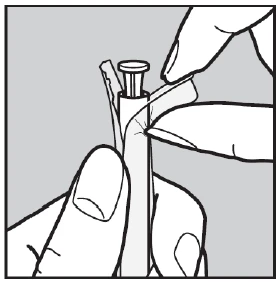
- Open the individual blister pack from the side shown in the picture.
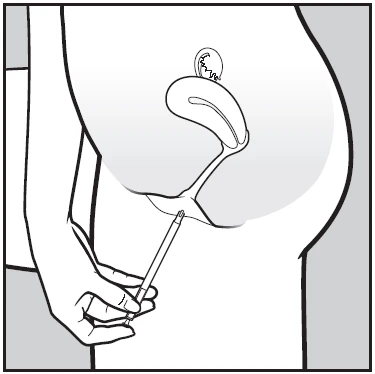
- Gently insert the applicator into the vagina until resistance is felt (8–10 cm).
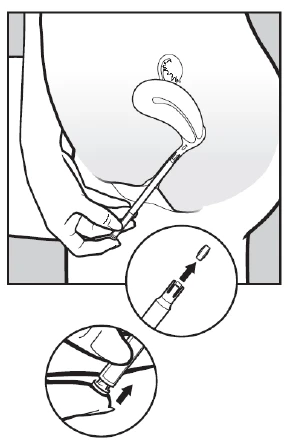
- To release the tablet, gently press the plunger until a click is heard. The tablet will immediately adhere to the vaginal wall. The tablet will not fall out when standing or walking.
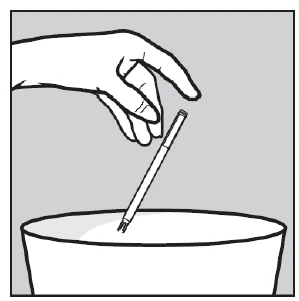
- Remove the applicator and dispose of it in the trash.