Ursofalk
Poland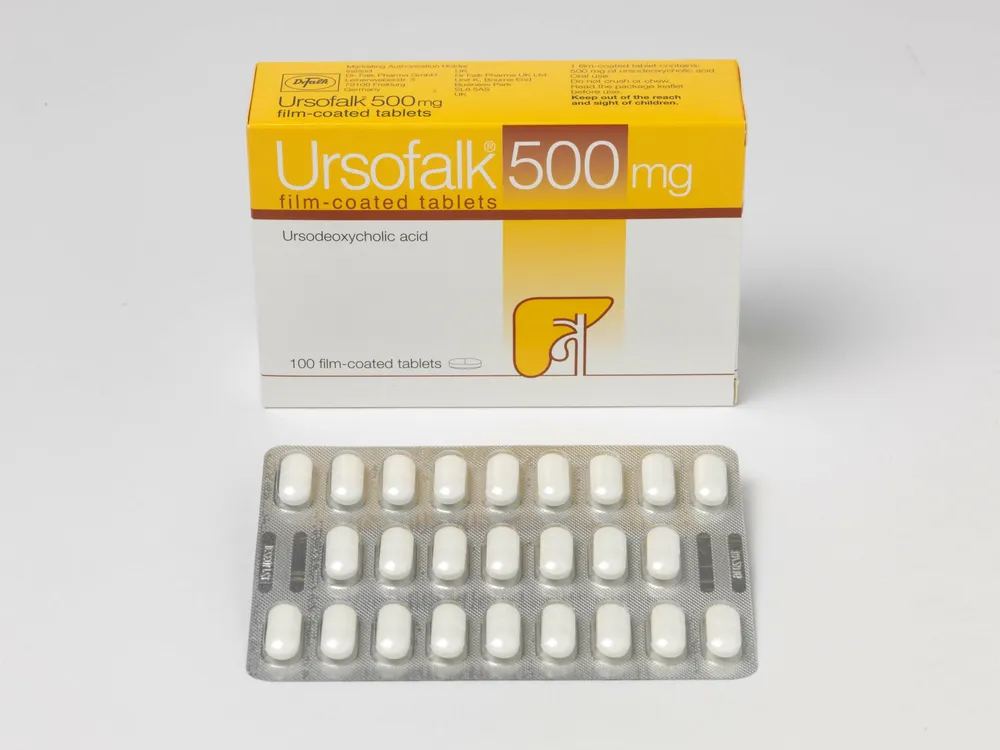
Table of Contents
- Patient Information Leaflet
- 1. What Ursofalk 500 mg coated tablets are and what they are used for
- 2. Important information before using Ursofalk 500 mg coated tablets
- 3. How to use Ursofalk 500 mg enteric-coated tablets
- 4. Possible adverse reactions
- 5. How to store Ursofalk 500 mg coated tablets
- 6. Contents of the pack and other information
Patient Information Leaflet
Ursofalk 500 mg, coated tablets
Acidum ursodeoxycholicum
Please read all of this leaflet carefully before taking this medicine, because it contains
important information for you.
- Keep this leaflet. You may need to read it again.
- If you have any further questions, please ask your doctor or pharmacist.
- This medicine has been prescribed for a specific individual. Do not pass it on to others. It may harm them, even if their symptoms are the same.
- If you experience any side effects, including any not listed in this leaflet, tell your doctor or pharmacist. See section 4.
Leaflet Contents
- What Ursofalk 500 mg coated tablets are and what they are used for
- What you need to know before you take Ursofalk 500 mg coated tablets
- How to take Ursofalk 500 mg coated tablets
- Possible side effects
- How to store Ursofalk 500 mg coated tablets
- Contents of the pack and other information
1. What Ursofalk 500 mg coated tablets are and what they are used for
Active substance: ursodeoxycholic acid is a naturally occurring bile acid,
present in small amounts in human bile.
Indications
- Dissolution of cholesterol gallstones in patients for whom surgery is contraindicated. The diameter of the stones must not exceed 15 mm, the stones must be radiolucent (visible on cholecystography as no shadowing on X-ray), and gallbladder function should be preserved despite the presence of stones.
- Treatment of primary biliary cholangitis (a chronic inflammatory disease of the bile ducts associated with liver cirrhosis), provided that decompensated cirrhosis is absent (acute liver disease in a stage where the remaining liver tissue is no longer able to compensate for impaired function).
- Liver disorders associated with cystic fibrosis (mucoviscidosis) in children aged 6 to 18 years.
2. Important information before using Ursofalk 500 mg coated tablets
When not to use Ursofalk coated tablets
- if the patient has hypersensitivity (allergy) to bile acids (i.e. ursodeoxycholic acid) or to any of the other ingredients of this medicine (listed in section 6);
- if the patient has acute inflammation of the gallbladder or bile ducts;
- if the patient has obstruction of the common bile duct or cystic duct;
- if the patient experiences frequent upper abdominal pain resembling cramps (episodes of biliary colic);
- if the patient has calcified gallstones visible on X-ray;
- if the patient has impaired gallbladder contractility;
- if the patient is a child with biliary atresia and insufficient bile flow, despite prior surgical intervention.
If in doubt about the above symptoms, consult a doctor. If any of the above conditions occurred in the past, inform the doctor.
Warnings and precautions
Ursofalk 500 mg coated tablets should be used under medical supervision.
During treatment, the doctor may recommend liver function tests every 4 weeks during the first 3 months of treatment, and then every 3 months thereafter.
If Ursofalk 500 mg coated tablets are used to dissolve gallstones, the doctor should perform an ultrasound examination of the gallbladder after the first 6–10 months of treatment.
Female patients taking Ursofalk 500 mg coated tablets for gallstone dissolution should use effective non-hormonal contraceptive methods, as hormonal contraceptives may promote gallstone formation.
When Ursofalk 500 mg coated tablets are used in the treatment of primary biliary cholangitis (PBC), symptoms such as pruritus may occasionally worsen at the beginning of treatment. In such cases, contact the doctor to consider reducing the initial dose.
If chronic diarrhoea occurs, seek immediate medical advice, as it may be necessary to reduce the dose or discontinue treatment with Ursofalk.
Ursofalk 500 mg coated tablets and other medicines
Inform the doctor about all medicines currently or recently taken, as well as any medicines planned for use.
The effects of the following medicines may be altered (interactions).
Ursofalk 500 mg coated tablets may reduce the effectiveness of the following medicines:
§ cholestyramine, colestipol (medicines that lower blood cholesterol levels), or aluminium hydroxide, aluminium oxide (medicines that bind gastric acid). If treatment with one of these substances is necessary, it should be taken at least two hours before or after Ursofalk 500 mg coated tablets;
§ ciprofloxacin, dapsone (antibiotics), nitrendipine (a medicine used to lower blood pressure), and other medicines metabolized similarly. If necessary, the doctor may adjust the doses of these medicines.
Ursofalk 500 mg coated tablets may alter the effect of the following medicines:
§ cyclosporine (a medicine that suppresses the immune system). In patients receiving cyclosporine, the doctor may recommend monitoring blood levels of cyclosporine and, if necessary, reducing its dose;
§ rosuvastatin (a medicine used to lower high blood cholesterol levels).
If the patient is taking Ursofalk 500 mg coated tablets to dissolve gallstones, they should inform the doctor about any concomitant medications containing oestrogen hormones or cholesterol-lowering agents such as clofibrate. These medicines may promote gallstone formation and thus counteract the therapy with Ursofalk 500 mg coated tablets.
Inform the doctor about all recently used medicines, including those available without a prescription.
Pregnancy, breastfeeding, and fertility
If the patient is pregnant, breastfeeding, suspects she may be pregnant, or is planning to have a child, she should consult a doctor or pharmacist before using this medicine.
Fertility
Animal studies have not shown any effect of this medicine on fertility. There are no available data on the effect of this medicine on human fertility.
Pregnancy
There are insufficient data on the use of ursodeoxycholic acid in pregnant women. Animal studies have indicated a risk of fetal harm.
Ursofalk 500 mg coated tablets should not be used during pregnancy unless the doctor considers it absolutely necessary.
Women of childbearing potential should use this medicine only in combination with effective contraception. Non-hormonal methods or low-oestrogen oral contraceptives are recommended. However, in female patients taking Ursofalk 500 mg coated tablets for gallstone dissolution, effective non-hormonal contraceptive methods should be used, as hormonal oral contraceptives may exacerbate cholelithiasis.
Pregnancy should be ruled out before starting treatment with Ursofalk 500 mg coated tablets.
Breastfeeding
There are only a few documented cases of ursodeoxycholic acid use during breastfeeding. The concentration of ursodeoxycholic acid in breast milk is very low, so adverse effects in breastfed infants are unlikely.
Driving and operating machinery
Ursofalk 500 mg coated tablets do not affect the ability to drive or operate machinery.
3. How to use Ursofalk 500 mg enteric-coated tablets
This medicine should always be used exactly as directed by the physician. In case of doubt, consult
your doctor or pharmacist.
Dosage depends on the indication and is as follows:
Dissolution of cholesterol gallstones
Dosage
Approximately 10 mg/kg body weight/day, corresponding to:
body weight up to 60 kg 1 enteric-coated tablet
body weight 61 – 80 kg 1 ½ enteric-coated tablets
body weight 81 – 100 kg 2 enteric-coated tablets
body weight above 100 kg 2 ½ enteric-coated tablets
Administration of Ursofalk 500 mg enteric-coated tablets
Do not crush Ursofalk enteric-coated tablets; swallow them whole with a small amount of water or
another liquid. The medicine should be taken in the evening, before bedtime. The medicine must be taken regularly.
Duration of therapy
Dissolution of gallstones usually takes 6–24 months. If the diameter of the stones has not decreased within 12 months, therapy should be discontinued.
The physician should evaluate the effectiveness of treatment every 6 months. During follow-up visits, monitor whether the stones have become calcified. Presence of calcification is an indication to discontinue therapy.
Treatment of primary biliary cholangitis (chronic cholangitis)
Dosage
During the first 3 months of therapy, Ursofalk 500 mg enteric-coated tablets should be taken in the morning, at noon, and in the evening. When liver function parameters have improved, the daily dose may be taken once daily in the evening.
| Body weight (kg) | Daily dose (mg/kg body weight) | Ursofalk 500 mg coated tablets | |||
| First 3 months | Later therapy | ||||
| morning | noon | evening | evening (1 x daily) | ||
| 47 – 62 | 12 – 16 | ½ | ½ | ½ | 1½ |
| 63 – 78 | 13 – 16 | ½ | ½ | 1 | 2 |
| 79 – 93 | 13 – 16 | ½ | 1 | 1 | 2½ |
| 94 – 109 | 14 – 16 | 1 | 1 | 1 | 3 |
| Over 110 | 1 | 1 | 1½ | 3½ | |
For patients who have difficulty swallowing tablets or for patients with body weight below 47 kg,
Ursofalk can be administered as an oral suspension.
Administration of Ursofalk 500 mg enteric-coated tablets
Enteric-coated tablets should be swallowed whole, without crushing, with a small amount of water or other liquid.
The medicine should be taken regularly.
Duration of therapy
There are no time limitations for taking Ursofalk 500 mg enteric-coated tablets in primary biliary cholangitis.
Other recommendations
In rare cases, patients with primary biliary cholangitis may experience worsening of symptoms (e.g., pruritus) at the beginning of treatment. If this occurs, the physician may reduce the daily dose of Ursofalk and then gradually increase the dose (weekly) until the recommended dose is reached.
Use in children (aged 6 to 18 years) for the treatment of liver disorders in cystic fibrosis
Dosage:
The recommended daily dose is 20 mg per kg of body weight, divided into 2–3 doses. If necessary, the physician may recommend further increasing the dose up to 30 mg per kg of body weight per day.
| Body weight (kg) | Daily dose (mg/kg body weight) | Ursofalk 500 mg coated tablets | ||
| morning | noon | evening | ||
| 20 – 29 | 17-25 | ½ |
| ½ |
| 30 – 39 | 19-25 | ½ | ½ | ½ |
| 40 – 49 | 20-25 | ½ | ½ | 1 |
| 50 – 59 | 21-25 | ½ | 1 | 1 |
| 60 – 69 | 22-25 | 1 | 1 | 1 |
| 70 – 79 | 22-25 | 1 | 1 | 1½ |
| 80 – 89 | 22-25 | 1 | 1½ | 1½ |
| 90 – 99 | 23-25 | 1½ | 1½ | 1½ |
| 100 – 109 | 23-25 | 1½ | 1½ | 2 |
| >110 | 1½ | 2 | 2 | |
If you feel that the effect of the medicine is too strong or too weak, consult your doctor or pharmacist.
Use of a higher than recommended dose of Ursofalk 500 mg tablets
An overdose of the medicine may cause diarrhea. If chronic diarrhea occurs, consult your doctor immediately. During diarrhea, fluids and electrolytes should be replenished.
Missed dose of Ursofalk 500 mg tablets
Do not take a double dose to make up for a missed dose; continue treatment with the prescribed dose.
Stopping treatment with Ursofalk 500 mg tablets
Before stopping or prematurely discontinuing treatment with Ursofalk 500 mg tablets, consult your doctor.
If you have any further doubts regarding the use of this medicine, consult your doctor or pharmacist.
4. Possible adverse reactions
Like all medicines, this medicine can cause adverse reactions, although not everybody will experience them.
Common: not more frequent than in 1 out of 10 treated patients
- pale, loose stools or diarrhoea.
Very rare: not more frequent than in 1 out of 10,000 treated patients
- during therapy for primary biliary cholangitis: severe pain in the upper right quadrant of the abdomen, worsening of liver disease symptoms, which partially resolve after discontinuation of therapy;
- calcification of gallstones;
- urticaria.
Frequency not known: frequency cannot be estimated from the available data
- itching;
- nausea, vomiting.
Reporting of adverse reactions
If any adverse reactions occur, including any adverse reactions not listed in this leaflet, inform a doctor or pharmacist. Adverse reactions can be reported directly to the Department of Monitoring Adverse Drug Reactions of the Office for Registration of Medicinal Products, Medical Devices and Biocidal Products, Al. Jerozolimskie 181C, 02-222 Warsaw, phone: 22 49 21 301, fax: 22 49 21 309;
Website: https://smz.ezdrowie.gov.pl
Adverse reactions can also be reported to the marketing authorization holder.
Reporting adverse reactions helps to provide more information on the safety of the medicine.
5. How to store Ursofalk 500 mg coated tablets
Keep the medicine out of the sight and reach of children.
Do not use Ursofalk 500 mg coated tablets after the expiry date stated on the blister and carton after: EXP. The expiry date refers to the last day of the stated month.
Medicines should not be disposed of via wastewater or household waste. Ask your pharmacist how to dispose of medicines no longer required. Such measures will help protect the environment.
6. Contents of the pack and other information
What Ursofalk 500 mg coated tablets contain
- The active substance is ursodeoxycholic acid. One coated tablet contains 500 mg of ursodeoxycholic acid.
- The other ingredients are: microcrystalline cellulose, povidone K25, crospovidone (type A), magnesium stearate, colloidal anhydrous silica, polysorbate 80, talc, hypromellose, macrogol 6000.
What Ursofalk 500 mg coated tablets look like and contents of the pack
Ursofalk 500 mg coated tablets are white, oval, biconvex, with a score line on both sides.
Ursofalk 500 mg coated tablets are available in packs containing 50 or 100 coated tablets.
Not all pack sizes may be marketed.
Marketing Authorisation Holder and Manufacturer
Dr. Falk Pharma GmbH
Leinenweberstrasse 5
79108 Freiburg
Germany
For further information, please contact the representative of the Marketing Authorisation Holder in Poland:
Ewopharma AG Sp. z o.o., ul. Leszno 14, 01-192 Warsaw, tel. 22 620 11 71.