Ursocam
Poland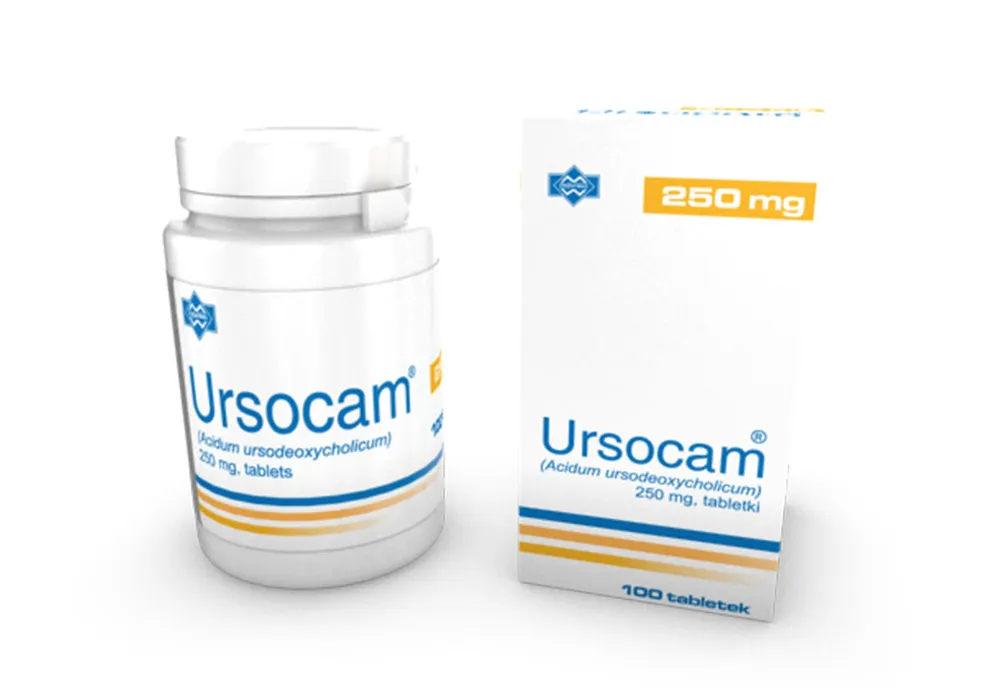
Table of Contents
Package leaflet: Information for the patient
URSOCAM, 250 mg, tablets
Acidum ursodeoxycholicum
Please read the entire leaflet carefully before using the medicine, as it contains
important information for the patient.
- Keep this leaflet, as you may need to read it again.
- If you have any questions, please consult your doctor or pharmacist.
- This medicine has been prescribed for a specific individual. Do not pass it on to others. The medicine may harm another person, even if their symptoms are the same.
- If you experience any adverse reactions, including any not listed in this leaflet, inform your doctor or pharmacist. See section 4.
Leaflet contents:
- What URSOCAM is and what it is used for
- Important information before taking URSOCAM
- How to take URSOCAM
- Possible side effects
- How to store URSOCAM
- Contents of the pack and other information
1. What URSOCAM is and what it is used for
URSOCAM is a medicine with strong choleretic and cholagogue effects. It reduces cholesterol secretion into bile, prevents the formation of gallstones, and promotes their dissolution. By lowering the concentration of other bile acids in bile, it reduces their toxic effects on liver cells.
URSOCAM is indicated for:
- Dissolution of radiolucent cholesterol gallstones with a diameter not exceeding 15 mm in patients who retain normal gallbladder function;
- Symptomatic treatment of primary biliary cirrhosis, provided that decompensated cirrhosis is not present;
- Symptomatic treatment of intrahepatic cholestasis of pregnancy during the second and third trimesters;
- Symptomatic treatment of bile reflux-induced gastric mucosal inflammation;
- Symptomatic treatment of other liver and biliary tract diseases of various etiologies;
- Symptomatic treatment of liver and biliary tract dysfunction associated with cystic fibrosis in children and adolescents aged 6 to 18 years.
2. Important information before using URSOCAM
Do not use URSOCAM if you have:
- hypersensitivity to the active substance and/or any of the excipients,
- acute inflammation of the gallbladder or bile ducts,
- obstruction of the common bile duct or cystic duct. URSOCAM should not be used if the gallbladder is not visible on X-ray, if calcifications are present within gallstones, if gallbladder contractile function is impaired, or if biliary colic occurs frequently.
Exercise special caution when using URSOCAM:
URSOCAM should be used under medical supervision.
Liver function parameters – AspAT (GOT), AlAT (GPT), and γ-GT – should be monitored by the physician every 4 weeks during the first 3 months of treatment, then every 3 months thereafter.
To assess treatment efficacy and detect early calcification of gallstones, the physician may order a radiological examination of the gallbladder (oral cholecystography) 6–10 months after starting treatment, depending on the size of the stones. Imaging (both plain and contrast X-rays) should be performed in both upright and supine positions (ultrasonographic monitoring).
You should consult your doctor, even if the above warnings refer to conditions that occurred in the past.
Pregnancy:
Before taking any medication, consult your doctor.
Animal studies have shown a risk of harm during use of URSOCAM in early pregnancy. Due to the lack of adequate data in humans, women of childbearing potential should use this medication only while simultaneously using contraceptive measures. Pregnancy must be reported to the doctor before starting treatment. For safety reasons, URSOCAM should not be used during the first trimester of pregnancy.
Breastfeeding:
Before taking any medication, consult your doctor.
There are insufficient data on whether ursodeoxycholic acid passes into breast milk. URSOCAM should not be used during breastfeeding.
Driving and operating machinery:
No effect of the medication on the ability to drive or operate mechanical equipment has been observed.
Use with other medicines:
URSOCAM should not be taken with cholestyramine, colestipol, or aluminium hydroxide and/or antacids containing aluminium hydroxide and magnesium trisilicate. These substances bind ursodeoxycholic acid in the gastrointestinal tract, preventing its absorption and rendering treatment ineffective. If concomitant use of a medication containing any of these substances is necessary, URSOCAM should be taken at least two hours before or after the other medication.
URSOCAM may enhance the gastrointestinal absorption of cyclosporine. In patients receiving cyclosporine, blood cyclosporine levels should be monitored and the cyclosporine dose adjusted if necessary.
In isolated cases, URSOCAM may reduce the absorption of ciprofloxacin.
Ursodeoxycholic acid reduces peak serum concentration (C_) and area under the curve (AUC) of the calcium antagonist nitrendipine, indicating changes in serum concentration over time. In one case, an interaction with dapsone (reduced therapeutic effect) has been reported. Based on its effects on nitrendipine pharmacokinetics, dapsone efficacy, and in vitro study results, ursodeoxycholic acid may induce cytochrome P450 3A4 isoenzyme, which is involved in drug metabolism.
Therefore, caution is advised when co-administering drugs metabolized by this enzyme. Dose adjustments of concomitant medications may be necessary.
You should inform your doctor about all medications you are currently taking, including those available without a prescription.
3. How to use URSOCAM
This medicine should always be taken according to the doctor's instructions. If in doubt, consult
your doctor or pharmacist.
Adults
Dissolution of gallstones
orally, 8–10 mg/kg body weight per day, divided into 2 doses.
(according to the scheme given in the table)
| Body weight (kg) | Daily dose (mg) | Number of tablets | |
| morning | evening | ||
| up to 60 | 500 | 2 | |
| 61-80 | 750 | 1 | 2 |
| 81-100 | 1000 | 1 | 3 |
| over 100 | 1250 | 2 | 3 |
The time required for dissolution of gallstones usually ranges from 6 to 24 months. If there is no reduction in the size of gallstones after 12 months, therapy should not be continued.
The effectiveness of treatment should be evaluated every 6 months using ultrasonographic or radiographic examinations. During follow-up examinations, it should be verified whether calcification of the gallstones has occurred in the meantime. In such a case, treatment must be discontinued.
Symptomatic treatment of primary biliary cirrhosis of the liver
The daily dose depends on body weight and amounts to 3 to 7 tablets (14 ± 2 mg of ursodeoxycholic acid per kg body weight).
During the first 3 months of treatment, URSOCAM should be administered in divided daily doses. When liver function parameters have improved, the daily dose may be taken once daily in the evening.
| Body weight (kg) | URSOCAM 250 mg tablets | |||
| First 3 months | Subsequent therapy | |||
| Morning | Afternoon | Evening | Evening (once daily) | |
| 47 – 62 | 1 | 1 | 1 | 3 |
| 63 – 78 | 1 | 1 | 2 | 4 |
| 79 – 93 | 1 | 2 | 2 | 5 |
| 94 – 109 | 2 | 2 | 2 | 6 |
| over 110 | 2 | 2 | 3 | 7 |
The tablets should be swallowed whole, without chewing, with a small amount of liquid. It is important to ensure that
the tablets are taken regularly.
There are no time limitations for the use of URSOCAM in primary biliary cirrhosis.
Treatment of intrahepatic cholestasis of pregnancy
10–16 mg/kg body weight per day, divided into 2–3 doses. This corresponds to 3 to 5 tablets.
Treatment of bile reflux gastritis
One tablet of URSOCAM should be swallowed whole with liquid, once daily, in the evening before bedtime.
In the treatment of gastritis with bile reflux, URSOCAM should generally be taken for 10–14 days. Usually, the duration of treatment depends on the course of the disease. The treating physician will decide on the duration of treatment in individual cases.
Treatment of other liver and biliary tract diseases of various etiologies
10–20 mg/kg body weight per day in 2–3 divided doses. This corresponds to 3 to 7 tablets. When equal division of the daily dose is not possible, the larger dose should be administered in the evening.
Children and adolescents
Treatment of liver and biliary tract functional disorders associated with cystic fibrosis in children
and adolescents aged 6 to 18 years
20 mg/kg body weight per day of ursodeoxycholic acid in 2–3 divided doses, with the possibility of increasing up to 30 mg/kg body weight per day, if necessary.
| Body weight (kg) | Daily dose (mg/kg body weight) | URSOCAM, 250 mg, tablets | ||
| Morning | Noon | Evening | ||
| 20 – 29 | 17 – 25 | 1 | 1 | |
| 30 – 39 | 19 – 25 | 1 | 1 | 1 |
| 40 – 49 | 20 – 25 | 1 | 1 | 2 |
| 50 – 59 | 21 – 25 | 1 | 2 | 2 |
| 60 – 69 | 22 – 25 | 2 | 2 | 2 |
| 70 – 79 | 22 – 25 | 2 | 2 | 3 |
| 80 – 89 | 22 – 25 | 2 | 3 | 3 |
| 90 – 99 | 23 – 25 | 3 | 3 | 3 |
| 100 – 109 | 23 – 25 | 3 | 3 | 4 |
| > 110 | 3 | 4 | 4 | |
Method of administration
Oral administration.
If you take more URSOCAM than you should:
Diarrhea may occur in case of overdose. Overdose is unlikely because increasing the dose leads to reduced absorption of ursodeoxycholic acid, thus increasing the portion of the dose excreted in feces.
If you forget to take a dose of URSOCAM:
If you miss a dose of URSOCAM, do not take a double dose to make up for the missed dose.
4. Possible adverse reactions
Like any medicine, URSOCAM may cause adverse reactions, although they do not occur in everyone.
**Common (**less than 1 in 10 patients)
- pale stools or diarrhoea.
Very rare (less than 1 in 10,000 patients, including single cases)
- during treatment of primary biliary cirrhosis: occurrence of severe pain in the upper right quadrant of the abdomen, worsening of liver disease symptoms, which partially resolved after discontinuation of the drug;
- calcification of gallstones;
- urticaria.
Reporting of adverse reactions
If any adverse reactions occur, including any adverse reactions not listed in this leaflet, please inform your doctor or pharmacist. Adverse reactions can be reported directly to the Department for Monitoring Adverse Drug Reactions of the Office for Registration of Medicinal Products, Medical Devices and Biocidal Products:
Al. Jerozolimskie 181C
02-222 Warsaw
Tel.: + 48 22 49 21 301
Fax: + 48 22 49 21 309
Website: https://smz.ezdrowie.gov.pl
Adverse reactions can also be reported to the marketing authorization holder.
Reporting adverse reactions helps to provide more information on the safety of the medicine.
5. How to store the medicine URSOCAM
Keep the medicine out of the reach and sight of children.
Do not use the medicine after the expiry date stated on the packaging.
No special storage conditions are required.
6. Contents of the pack and other information
What Ursocam contains
- The active substance is ursodeoxycholic acid. One tablet contains 250 mg of ursodeoxycholic acid.
- The other ingredients are: microcrystalline cellulose (type 102), hydroxypropylcellulose, magnesium stearate.
What Ursocam looks like and contents of the pack
Ursocam is an uncoated tablet, white to off-white in colour, round, biconvex, with a uniform surface, free from spots and defects.
Pack sizes: 25, 90 or 100 tablets.
Blister packs made of orange PVC film and heat-sealable aluminium foil, or containers made of plastic (PE/PP) or HDPE containers with PP cap, containing 25 tablets (blister or container), 90 tablets (blister or container), and 100 tablets (blister or container), packed in a cardboard box.
Not all pack sizes may be marketed.
Marketing Authorisation Holder and Manufacturer:
Polfarmex S.A.
ul. Józefów 9
99-300 Kutno
Poland
Tel.: + 48 24 357 44 44
Fax: + 48 24 357 45 45
e-mail: [email protected]