Uromitexan
Poland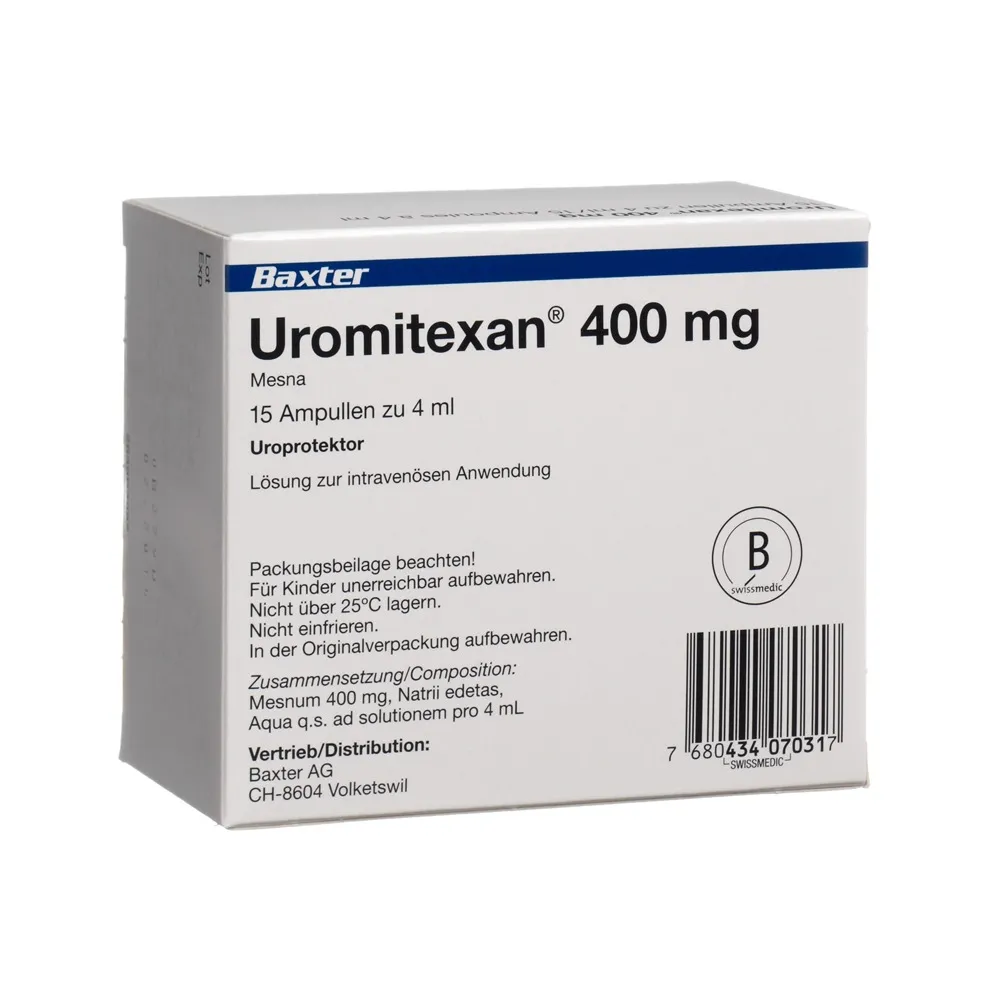
Table of Contents
Patient Information Leaflet
Keep this leaflet! Information on the immediate packaging in a foreign language.
Uromitexan, 100 mg/ml, solution for injection
Mesna
Please read all of this leaflet carefully before this medicine is administered, because it contains
important information for you.
- Keep this leaflet, as you may need to read it again.
- If you have any further questions, please consult your doctor, pharmacist, or nurse.
- This medicine has been prescribed for a specific individual. Do not pass it on to others.
- It may harm other people, even if their symptoms are the same as yours.
- If any of the side effects worsens, or if you experience any side effects not listed in this leaflet, inform your doctor, pharmacist, or nurse. See section 4.
Contents of this leaflet
- What Uromitexan is and what it is used for
- Important information before receiving Uromitexan
- How to use Uromitexan
- Possible side effects
- How to store Uromitexan
- Contents of the pack and other information
1. What Uromitexan is and what it is used for
Uromitexan, solution for injection, is administered only when the patient is also receiving ifosfamide or cyclophosphamide. Both ifosfamide and cyclophosphamide may cause damage to the tissue lining the urinary bladder. This damage may be indicated by the presence of blood in the urine. A very small amount of blood may not be visible to the patient; therefore, the doctor or nurse will perform a urine test using a special test strip or microscopic examination to check for blood in the urine. A larger amount of blood in the urine will be noticeable to the patient, as the urine will appear red; blood clots may very rarely be visible.
Uromitexan protects the tissue lining the urinary bladder from the damaging effects of ifosfamide and cyclophosphamide.
2. Important information before using Uromitexan
When not to use Uromitexan:
- if the patient is allergic (hypersensitive) to the active substance or to any of the other ingredients of this medicine (listed in section 6) – symptoms of an allergic reaction may include breathlessness, wheezing, rash, itching, or swelling of the face and lips;
- if the patient has ever had an allergic reaction to a similar medicine.
Uromitexan will not be administered to a patient if any of the above situations apply.
If in doubt, consult a doctor, nurse, or pharmacist before using Uromitexan.
Warnings and precautions
Before starting treatment with Uromitexan, discuss with a doctor, nurse, or pharmacist if:
- the patient has been diagnosed with rheumatoid arthritis,
- the patient has been diagnosed with systemic lupus erythematosus (also known as lupus or SLE),
- the patient has immune system disorders known as "autoimmune diseases", in which the immune system attacks the body's own tissues. In such cases, the doctor may decide to change the treatment.
Severe hypersensitivity reactions may occur after administration of Uromitexan, in some cases life-threatening – see section 4. These reactions may occur during the first administration of the medicine, several weeks after administration, or upon subsequent administration of this medicine.
Sodium content
Uromitexan, solution for injection, contains approximately 59 mg of sodium per 400 mg of mesna.
Tests during treatment with Uromitexan
Because Uromitexan does not always prevent damage to the lining of the bladder, the doctor or nurse will recommend regular laboratory tests to check for blood in the urine or using special test strips.
Inform the doctor, nurse, or pharmacist about any other laboratory tests or test strip use, as treatment with Uromitexan may affect their results.
Test strips may be used to test blood or urine to detect the presence of certain chemicals in the blood called "ketone bodies", or red blood cells in the urine.
Visiting another doctor or hospital
If visiting another doctor or being admitted to hospital, regardless of the reason, inform the medical staff about all medicines being taken. Do not take any other medicines until the doctor has been informed about the use of Uromitexan.
If the patient is unsure whether any of the above conditions apply, they should contact a doctor, nurse, or pharmacist before using Uromitexan.
Uromitexan and other medicines
Uromitexan is used exclusively with ifosfamide and cyclophosphamide. It does not interact with these medicines, and there are no reports of interactions with other medicines.
Tell the doctor or nurse about all medicines currently used, recently used, or planned for use, including those available without a prescription.
Pregnancy, breastfeeding, and fertility
Consult a doctor before using any medicine.
Uromitexan is used only with ifosfamide and cyclophosphamide. Uromitexan may be administered to a pregnant patient only if, in the doctor's opinion, treatment with Uromitexan is essential. If the patient is pregnant or may be pregnant, she should consult a doctor before using this medicine.
Breastfeeding must be avoided during treatment with Uromitexan.
Uromitexan with food, drink, and alcohol
Food does not affect the absorption of Uromitexan or its excretion in urine.
Driving and operating machinery
Patients treated with Uromitexan may experience adverse effects (such as fainting, dizziness, drowsiness/somnolence, vertigo, and visual disturbances) that may affect the ability to drive or operate machinery. The doctor will decide whether the patient can safely perform these activities.
3. How to use Uromitexan
This medicine should always be used exactly as prescribed by the doctor. If in doubt, consult the doctor.
The treating doctor will decide the dose and timing of administration. This will depend on the dose, timing, and route of administration of ifosfamide or cyclophosphamide. It will also depend on whether the patient has urinary tract infections, symptoms of previous bladder damage from treatment with ifosfamide or cyclophosphamide, or whether radiotherapy to the bladder area has been administered.
If ifosfamide or cyclophosphamide is administered over several hours (as an infusion), Uromitexan is usually given as an injection before the end of the infusion. After this administration, further doses of Uromitexan are required to protect the bladder until ifosfamide or cyclophosphamide has been completely eliminated from the body.
Administration of Uromitexan
Uromitexan, solution for injection, is administered by injection.
- Uromitexan, solution for injection, will be administered by a doctor or nurse.
- During treatment with Uromitexan, the patient should drink adequate amounts of fluids each day, at least 2 litres per day.
- This helps dilute the urine and maintain normal urinary flow, which also helps protect the bladder. The patient should urinate (empty the bladder) whenever necessary. Do not alter normal habits.
Use in children and adolescents
The efficacy and safety of Uromitexan in children have not been established.
Children usually urinate more frequently than adults, therefore it may be necessary to shorten the interval between doses and/or increase the number of individual doses.
Use in elderly patients
The doctor will exercise caution when selecting the dose for elderly patients due to the higher likelihood of impaired liver, kidney, or heart function, coexisting diseases, or concomitant use of other medicines. The molar ratio of oxazaphosphorine to mesna should remain unchanged.
If the patient has any doubts about how the injection is administered, they should contact the doctor, nurse, or pharmacist.
Use of a higher than recommended dose of Uromitexan
It is unlikely that the patient will receive a higher dose of Uromitexan by injection than recommended, as the medicine will be administered by trained and qualified medical personnel who will immediately stop the infusion if an excessive dose is given.
Missed dose of Uromitexan
It is very important that Uromitexan is administered exactly at the time specified by the treating doctor. The dosing schedule is carefully designed to ensure full protection of the patient's bladder from damage.
- If the medicine is administered by injection by a doctor or nurse, it is unlikely that any dose will be missed.
- If the patient believes that a dose of the injection has been missed, they should contact the doctor or nurse immediately.
Discontinuation of Uromitexan treatment
If there are any further doubts regarding the use of this medicine, consult the doctor, pharmacist, or nurse.
4. Possible adverse reactions
Like all medicines, this medicine can cause adverse reactions, although not everyone will experience them.
The following adverse reactions have occurred with the use of Uromitexan.
You should immediately inform the doctor if any of the following symptoms occur in the patient,
as the patient may require urgent medical attention:
Most serious adverse reactions:
- Anaphylaxis, a reaction whose symptoms include, among others, shortness of breath, wheezing, rash, itching or swelling of the face and lips (severe hypersensitivity reactions). Severe hypersensitivity reactions may lead to difficulty in breathing or shock, possibly resulting in death (anaphylactic shock, anaphylactic/anaphylactoid reactions);
- Stevens-Johnson syndrome or toxic epidermal necrolysis (Lyell's syndrome). These are life-threatening conditions, with symptoms including, among others, rash, ulcers, sore throat, fever, conjunctivitis, blistering of the skin, and detachment of the epidermis;
- Drug rash with eosinophilia and systemic symptoms (DRESS), a life-threatening drug hypersensitivity reaction. Symptoms include, among others: rash, fever, pain and swelling of internal organs, swollen and tender lymph nodes, changes in blood cells (eosinophilia).
Most frequently occurring adverse reactions (affects more than 1 in 10 patients):
- nausea, headache, diarrhoea,
- fever, sudden flushing of the face, rash,
- reactions at the injection site, such as itching or rash around the injection site,
- transient sudden abdominal or stomach pain (colic),
- dizziness, drowsiness, lethargy,
- flu-like symptoms.
Some of these adverse reactions may be caused by ifosfamide or cyclophosphamide and not by Uromitexan, since it is always used simultaneously with these medicines.
Other possible adverse reactions may include:
Common adverse reactions (affects 1 to 10 in 100 patients):
- vomiting,
- sore throat,
- swelling and/or enlargement of lymph nodes (lymphadenopathy),
- decreased appetite,
- feeling of dehydration,
- insomnia,
- nightmares,
- dizziness,
- sensations of tingling, numbness, burning, pricking (paraesthesiae),
- fainting,
- increased or abnormally painful sensitivity to touch (hyperaesthesia),
- reduced sensitivity to touch (hypoesthesia),
- attention disturbances,
- eye inflammation (conjunctivitis),
- blurred vision,
- light sensitivity (photophobia),
- palpitations,
- sensation of blocked nose,
- cough,
- severe, sharp pain on breathing (pleuritic pain),
- dryness of the mouth,
- difficulty in breathing or wheezing (bronchospasm),
- shortness of breath (dyspnoea),
- discomfort in the larynx,
- nosebleeds,
- mucosal irritation,
- bloating with passage of gas,
- burning stomach pain,
- constipation,
- bleeding gums,
- itching,
- excessive sweating (hyperhidrosis),
- joint pain,
- back pain,
- muscle pain,
- pain in hands or feet (limb pain),
- jaw pain,
- difficulty in urination (dysuria),
- chills,
- chest pain,
- malaise,
- fatigue,
- at the injection site: pain, redness, urticaria, swelling,
- increased liver enzyme activity (aminotransferases).
Very rare adverse reactions (affects less than 1 in 10,000 patients):
- itching,
- increased tendency to bleed or bruise,
- red and/or itchy skin,
- skin redness,
- blistering,
- scabs,
- red eyes (conjunctivae),
- hot or cold hands and feet,
- swelling with or without rash,
- angioedema,
- local swelling of tissues,
- limb and joint pain,
- general weakness,
- lack of energy,
- exhaustion,
- mucosal reactions,
- sore throat and nose,
- circulatory disorders,
- ST segment elevation in electrocardiogram recording,
- increased values in some liver function tests,
- increased respiratory rate.
Adverse reactions with unknown frequency (frequency cannot be estimated from available data):
- decreased number of platelets involved in blood clotting (thrombocytopenia),
- decreased number of white blood cells that fight infections (leukopenia, lymphopenia),
- decreased number of red and white blood cells as well as platelets (aplastic anaemia),
- abnormally elevated levels of eosinophils, a type of white blood cell produced in the bone marrow, blood or tissues (eosinophilia),
- allergic reactions,
- seizures,
- swelling around the eyes,
- changes in the electrical activity of the heart observed as an abnormal recording in ECG (abnormal electrocardiogram),
- rapid heartbeat (tachycardia),
- low or high blood pressure (hypotension, hypertension),
- accelerated breathing,
- severe breathing difficulties (respiratory failure),
- reduced oxygen concentration in the body (hypoxia, decreased oxygen saturation),
- coughing up blood or sputum containing blood (haemoptysis),
- inflammation of the mucous membrane of the mouth,
- unpleasant taste in the mouth,
- increased activity of certain liver enzymes (gamma-glutamyl transferase, alkaline phosphatase),
- hepatitis,
- drug hypersensitivity reaction characterized by rash, fever, enlarged lymph nodes and internal organs (drug rash with eosinophilia and systemic symptoms),
- ulceration or blistering,
- swelling of deeper skin layers due to fluid accumulation (angioedema),
- recurring lesions occurring in the same area when the same medicine is administered (persistent drug reaction),
- skin rash on areas exposed to light (photosensitivity rash),
- pink-red skin rash, raised, itchy lumps (urticaria),
- burning sensation,
- itchy, red rash which may develop into ulcers (erythema multiforme, erythema),
- acute kidney failure,
- facial swelling,
- tissue swelling, usually in the lower limbs, associated with fluid accumulation (peripheral oedema),
- weakness, fatigue (asthenia),
- reactions at the injection site (thrombophlebitis, irritation),
- abnormal results in blood coagulation tests.
Reporting of adverse reactions
If any adverse reactions occur, including any adverse reactions not listed in this leaflet, inform your doctor, pharmacist or nurse. Adverse reactions can be reported directly to the Department of Monitoring Adverse Drug Reactions, Office for Registration of Medicinal Products, Medical Devices and Biocidal Products, Al. Jerozolimskie 181C, 02-222 Warsaw, phone: +48 22 49 21 301, fax: +48 22 49 21 309, website: https://smz.ezdrowie.gov.pl.
Reporting adverse reactions allows the collection of further information on the safety of the medicine.
5. How to store Uromitexan
Keep the medicine out of sight and reach of children.
Do not use this medicine after the expiry date stated on the packaging. The expiry date refers to the last day of the specified month.
Do not store above 30°C.
Medicines must not be disposed of via wastewater or household waste. Ask your pharmacist how to dispose of medicines no longer in use. This will help protect the environment.
6. Contents of the packaging and other information
What Uromitexan contains
The active substance is mesna. Each ampoule contains 100 mg of mesna in 1 ml of solution for
injection.
The other ingredients are: disodium edetate, water for injections.
One 4 ml ampoule contains 400 mg of mesna.
What Uromitexan looks like and contents of the pack
Uromitexan is a solution for injection, clear, colourless and sterile.
The medicine is supplied in ampoules made of colourless type I hydrolytic glass, containing 4 ml of
solution for injection.
Pack sizes contain 15 or 30 ampoules, presented in a cardboard carton.
For further information about the medicine, please contact the Marketing Authorisation Holder or the Parallel Importer.
Marketing Authorisation Holder in Italy, the country of export:
Baxter S.p.A., Via del Serafico, 89, 00142 Rome, Italy
Manufacturer:
Baxter Oncology GmbH, Kantstrasse 2, D-33790 Halle/Westfalia, Germany
Parallel Importer:
InPharm Sp. z o.o.
ul. Strumykowa 28/11
03-138 Warsaw, Poland
Repackaged by:
InPharm Sp. z o.o. Services sp. k.
ul. Chełmżyńska 249
04-458 Warsaw, Poland
Marketing Authorisation Number in Italy, the country of export: 025312024
Parallel Import Licence Number: 269/20