Upsarin c
Poland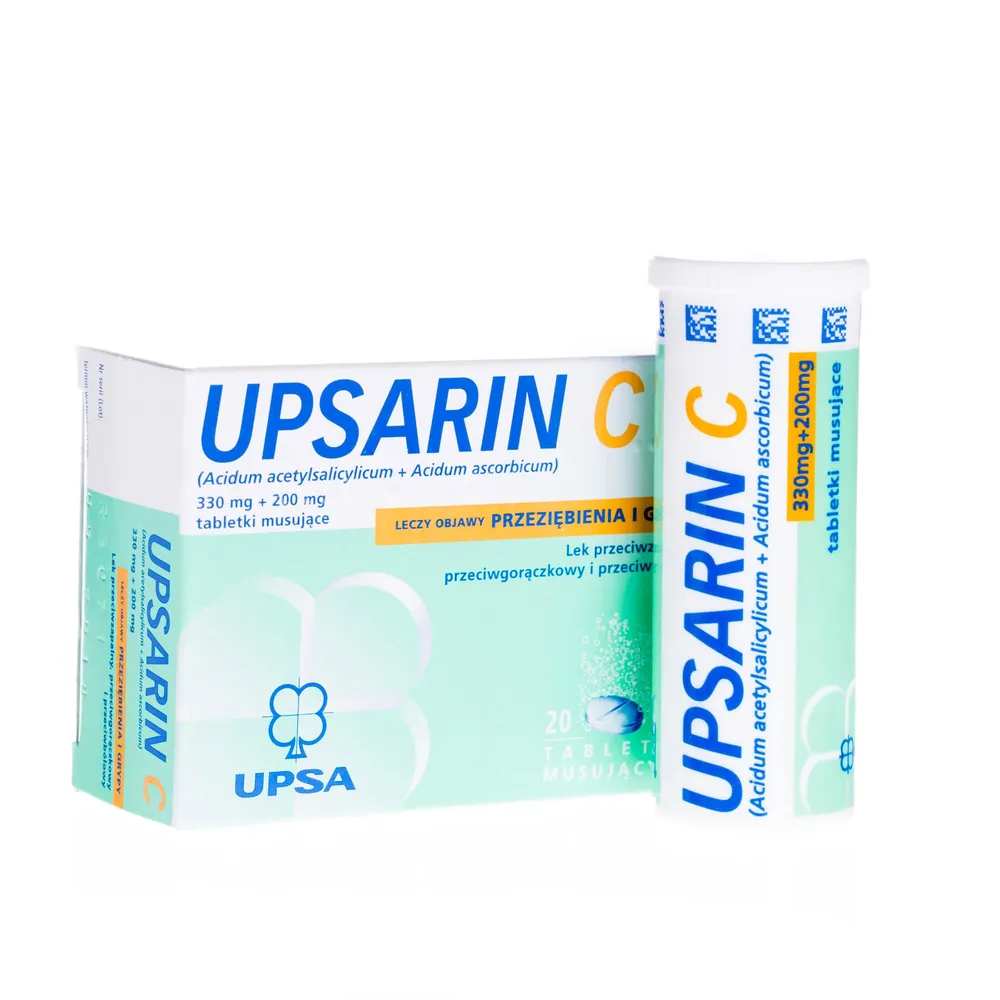
Table of Contents
Patient Information Leaflet
Warning! Keep this leaflet. Information on the immediate packaging is in a foreign language.
Upsarin C
330 mg + 200 mg, effervescent tablets
Acetylsalicylic acid + Ascorbic acid
Please read this leaflet carefully before using the medicine, as it contains
important information for the patient.
This medicine should always be taken exactly as described in this patient leaflet or as advised by
your doctor, pharmacist, or nurse.
- Keep this leaflet, as you may need to read it again.
- If you need advice or further information, consult your doctor or pharmacist.
- If you experience any adverse reactions, including any not listed in this leaflet, inform your doctor, pharmacist, or nurse. See section 4.
- If there is no improvement after 3 days of treatment for fever or after 5 days for pain, or if your condition worsens, contact your doctor.
Table of Contents:
- What is Upsarin C and what is it used for
- Important information before taking Upsarin C
- How to take Upsarin C
- Possible side effects
- How to store Upsarin C
- Further information
1. What is Upsarin C and what is it used for
Upsarin C is a combination medicine containing two active substances: acetylsalicylic acid and ascorbic acid (vitamin C).
Acetylsalicylic acid has anti-inflammatory, antipyretic, and analgesic properties. Ascorbic acid, or vitamin C, is essential for redox, immune, and detoxification processes in the body's cells. The presence of vitamin C in the medicine is beneficial during colds, when the body's demand for vitamin C increases.
Indications:
- Symptomatic treatment of flu and colds.
- Feverish conditions.
- Pain of various origins (headaches, joint and muscle pain, toothaches, neuralgia).
2. Important information before taking Upsarin C
When not to use Upsarin C:
- If you are allergic to acetylsalicylic acid, ascorbic acid (vitamin C), or any of the other ingredients of this medicine (listed in section 6),
- In patients with a history of gastrointestinal perforation or bleeding associated with previous treatment with non-steroidal anti-inflammatory drugs (NSAIDs),
- In patients with a history of bronchial asthma induced by salicylates or substances with similar effects (especially NSAIDs),
- In patients with active peptic ulcer disease of the stomach or duodenum,
- If you have bleeding disorders or coagulation disturbances,
- If you have severe liver failure,
- If you have severe renal failure,
- If you have severe heart failure,
- During the third trimester of pregnancy and while breastfeeding (see "Pregnancy, breastfeeding and fertility"),
- If you are being treated simultaneously with methotrexate at doses exceeding 20 mg/week,
- If you are taking oral anticoagulants and have a history of peptic ulcer disease of the stomach or duodenum,
- In children under 12 years of age with feverish illnesses, particularly influenza or chickenpox, due to the risk of Reye's syndrome (a rare but serious condition causing liver and brain damage).
Warnings and precautions
Before starting treatment with Upsarin C, consult your doctor, pharmacist, or nurse.
Avoid concomitant use of this medicine with non-steroidal anti-inflammatory drugs (NSAIDs), including selective cyclooxygenase-2 inhibitors.
This medicine contains acetylsalicylic acid. To avoid overdose, check whether other medicines you are taking (including those prescribed or available without prescription) contain acetylsalicylic acid.
Consult your doctor before using Upsarin C in the following situations:
- First and second trimesters of pregnancy;
- During heavy menstrual bleeding;
- Before and after surgical procedures (even minor ones such as tooth extraction), as acetylsalicylic acid may prolong bleeding time (due to its antiplatelet effect, which may last for several days);
- When taking anticoagulant medicines concurrently (see section "Upsarin C and other medicines");
- If you have a genetic condition involving glucose-6-phosphate dehydrogenase deficiency, as acetylsalicylic acid may trigger hemolysis;
- If you have reduced uric acid excretion, the product may provoke a gout attack (acetylsalicylic acid, even in small doses, reduces uric acid excretion);
- If you are breastfeeding (see "Pregnancy, breastfeeding and fertility");
- During treatment of rheumatic diseases.
Taking the medicine at the lowest effective dose for the shortest duration necessary to relieve symptoms reduces the risk of adverse effects.
Long-term use of medicines containing acetylsalicylic acid may cause headache that worsens with continued dosing.
Regular use of analgesics, especially those containing multiple active substances, may lead to severe kidney dysfunction and renal failure.
Cases of acute renal failure have been reported following initiation of therapy with multiple doses of NSAIDs or in patients with impaired kidney function treated with tenofovir. Renal function should be monitored when tenofovir is used concomitantly with NSAIDs.
Upsarin C and other medicines
Inform your doctor or pharmacist about all medicines you are currently taking or have recently taken, as well as any medicines you plan to take.
Do not use Upsarin C with the following medicines:
Oral anticoagulants – increased risk of bleeding, especially in patients with a history of peptic ulcer disease of the stomach or duodenum.
Methotrexate (used in cancer treatment) at doses exceeding 20 mg/week – increased bone marrow toxicity.
Avoid using Upsarin C with the following medicines:
Methotrexate (used in cancer treatment) at doses ≤ 20 mg/week – increased bone marrow toxicity.
Oral anticoagulants, low-molecular-weight heparins (and similar), unfractionated heparins, thrombolytic agents (increased risk of prolonged bleeding time, hemorrhage, and gastric mucosal damage by salicylates), and antiplatelet agents (e.g., ticlopidine, ticagrelor, clopidogrel).
Acetazolamide – increased adverse effects (metabolic acidosis) have been observed.
Anagrelide – increased incidence of hemorrhagic events.
Other non-steroidal anti-inflammatory drugs (NSAIDs), deferasirox – increased risk of gastrointestinal ulceration and bleeding.
Glucocorticoids – administered systemically, except hydrocortisone used as replacement therapy in Addison's disease.
Glucocorticoids (except hydrocortisone) when used with salicylic acid doses exceeding 1 g per dose and/or 3 g daily, especially in the treatment of rheumatic diseases.
Pemetrexed in patients with mild to moderate renal impairment – increased risk of pemetrexed toxicity (reduced renal clearance due to the effect of acetylsalicylic acid at anti-inflammatory doses, i.e., ≥ 1 g per dose and/or ≥ 3 g daily).
Medicines increasing urinary excretion of uric acid (e.g., probenecid, benzbromarone) – reduced efficacy of antigout agents (used in the treatment of gout).
Diuretics (when used with acetylsalicylic acid at doses of 3 g/day or higher).
Angiotensin-converting enzyme (ACE) inhibitors and angiotensin II receptor antagonists – when used concomitantly with acetylsalicylic acid at doses of 3 g/day or higher – reduced antihypertensive effect.
Locally acting gastrointestinal medicines, acid-neutralizing agents, and activated charcoal.
Deferoxamine – concomitant use with ascorbic acid (vitamin C) may increase tissue iron toxicity, particularly in the heart, leading to cardiac failure.
Selective serotonin reuptake inhibitors (SSRIs) (citalopram, dapoxetine, escitalopram, fluoxetine, fluvoxamine, paroxetine, sertraline) – increased risk of gastrointestinal bleeding.
Ascorbic acid (vitamin C)
When used in high doses (exceeding 2 g/day), it may interfere with laboratory test results obtained by redox methods (determination of creatinine concentration and glucose levels in blood and urine – diabetes monitoring using glucose oxidase test strips).
Taking Upsarin C with alcohol
Alcohol may increase the risk of gastrointestinal adverse effects, such as mucosal ulceration and bleeding.
Pregnancy, breastfeeding and fertility
If you are pregnant, breastfeeding, think you may be pregnant, or are planning to have a baby, consult your doctor or pharmacist before using this medicine.
Upsarin C may be used during the first and second trimesters of pregnancy only if clearly necessary. It is contraindicated during the third trimester of pregnancy.
Upsarin C is contraindicated during breastfeeding.
Pregnancy
Acetylsalicylic acid may be used during the first and second trimesters of pregnancy only if clearly necessary, after careful consideration of the benefit-risk ratio of treatment. If acetylsalicylic acid must be used by women attempting to conceive or during the first and second trimesters of pregnancy, the lowest possible dose should be taken for the shortest possible duration.
During the third trimester of pregnancy, acetylsalicylic acid may cause premature closure of the fetal ductus arteriosus and renal dysfunction. It may also prolong pregnancy duration, inhibit uterine contractions, and cause complications during delivery.
The medicine is contraindicated during the third trimester of pregnancy.
Breastfeeding
The medicine is contraindicated during breastfeeding, as acetylsalicylic acid passes in small amounts into the breast milk of nursing mothers.
Fertility
Not applicable.
Driving and operating machinery
Upsarin C does not affect the ability to drive or operate machinery.
Upsarin C contains sodium and sodium benzoate (E 211)
Each effervescent tablet contains 485 mg of sodium (the main component of table salt). This corresponds to 24.3% of the maximum recommended daily dietary sodium intake for adults. Patients, especially those monitoring dietary sodium intake, who take 1 or more effervescent tablets daily over a long period, should consult their doctor or pharmacist.
Each effervescent tablet contains 48 mg of sodium benzoate (E 211).
3. How to use Upsarin C
This medicine should always be used exactly as described in this patient leaflet or as directed by a
physician, pharmacist, or nurse. If in doubt, consult a physician,
pharmacist, or nurse.
Do not take other medicines (including prescription or over-the-counter medicines) containing acetylsalicylic acid simultaneously.
Recommended dose:
Adults: 1 to 2 effervescent tablets. The dose may be repeated every 4 to 8 hours if necessary.
The maximum daily dose for adults is 3 g of acetylsalicylic acid and 1 g of ascorbic acid. Do not exceed a dose of 5 effervescent tablets per day.
Adolescents over 12 years to 15 years of age: 1 effervescent tablet. The dose may be repeated every 6 hours if necessary. The maximum daily dose of acetylsalicylic acid is 50 mg/kg body weight.
Do not exceed a dose of 4 effervescent tablets per day.
For adolescents over 12 years of age, this medicine should only be used after consultation with and on the advice of a physician.
Elderly patients: 1 effervescent tablet. The dose may be repeated every 4 hours if necessary.
The maximum daily dose for elderly patients is 2 g of acetylsalicylic acid and 1 g of ascorbic acid.
Do not exceed a dose of 5 tablets per day.
Method of administration
For oral use. Dissolve the effervescent tablet in a glass of water and drink the solution immediately after dissolving. Take after meals.
Frequency of administration
Regular administration of the medicine helps avoid fluctuations in pain and fever intensity. Intervals between consecutive doses should be at least 4 hours. Do not exceed the maximum daily doses.
Duration of treatment
If pain symptoms persist for more than 5 days or fever for more than 3 days despite taking the medicine, consult a physician.
Use of a higher than recommended dose of Upsarin C
Poisoning with Upsarin C may result from prolonged use or overdose due to accidental ingestion, which may be life-threatening, especially in elderly individuals and young children.
Symptoms of overdose include headache, dizziness, tinnitus, and sensation of hearing loss, which may resolve after reducing the dose.
In cases of severe poisoning, the following may occur: hyperventilation (excessively deep and rapid breathing leading to excessive elimination of CO₂ and reduced blood CO₂ levels), fever, respiratory alkalosis, metabolic acidosis, circulatory shock, respiratory failure, and severe hypoglycemia (reduced blood glucose concentration below normal levels), coma.
Missed dose of Upsarin C
Do not take a double dose to make up for a missed dose.
If you have any doubts regarding the use of this medicine, consult a physician or pharmacist.
4. Possible adverse reactions
Like any medicine, this medicine may cause adverse reactions, although not everyone experiences them.
Related to acetylsalicylic acid
Infections and parasitic invasions
Reye's syndrome.
Nervous system disorders
Headache, dizziness, sensation of hearing loss, tinnitus, which are usually symptoms of overdose.
Gastrointestinal disorders
Nausea, vomiting, diarrhoea, bloating, constipation, dyspepsia, abdominal pain, melaena, haematemesis, ulcerative stomatitis, exacerbation of colitis and Crohn's disease. Gastric or duodenal ulcer, perforation, gastrointestinal bleeding.
Blood and lymphatic system disorders
Increased risk of bleeding, haemorrhages (epistaxis, gingival bleeding, purpura, etc.), prolonged bleeding time, prolonged prothrombin time, thrombocytopenia. The risk of bleeding may persist for 4 to 8 days after discontinuation of acetylsalicylic acid. This may lead to an increased risk of haemorrhage in the event of surgery.
Intracranial haemorrhage and cerebral haemorrhage.
Immune system disorders
Urticaria, bronchial asthma, skin reactions, anaphylactic reactions, angioedema.
Cardiac and vascular disorders
Edema, arterial hypertension, and heart failure have been reported in association with NSAID therapy.
Skin and subcutaneous tissue disorders
Bullous reactions, including Stevens-Johnson syndrome and toxic epidermal necrolysis (very rare).
Related to ascorbic acid
Blood and lymphatic system disorders
At doses exceeding 3 g/day, there is a risk of hemolysis in individuals with glucose-6-phosphate dehydrogenase (G6PD) deficiency.
Nervous system disorders
Dizziness.
Gastrointestinal disorders
At doses greater than 1 g/day, there is a possibility of digestive disturbances (heartburn, diarrhoea, abdominal pain).
Skin and subcutaneous tissue disorders
Urticaria, rash.
Renal and urinary disorders
At doses greater than 1 g/day, there is a possibility of urinary system disorders (oxalate, cystine and/or uric acid stone formation).
Reporting of adverse reactions
If any adverse reactions occur, including any adverse reactions not listed in this leaflet, inform a doctor, pharmacist, or nurse. Adverse reactions can be reported directly to the Department of Monitoring Adverse Reactions of Medicinal Products at the Office for Registration of Medicinal Products, Medical Devices and Biocidal Products: Al. Jerozolimskie 181C, 02-222 Warsaw, tel.: +48 (22) 49 21 301, fax: +48 (22) 49 21 309, website: https://smz.ezdrowie.gov.pl
Reporting adverse reactions enables better assessment of the safety of the medicine and contributes to providing more information on its safe use.
5. How to store Upsarin C
Store below 25°C.
Keep the tube tightly closed to protect from moisture.
Keep the medicine out of sight and reach of children.
Do not use this medicine after the expiry date stated on the packaging.
The expiry date refers to the last day of the stated month.
Medicines must not be disposed of via wastewater or household waste. Ask your pharmacist how to dispose of medicines no longer required. This will help protect the environment.
6. Other information
What Upsarin C contains
The active substances are: acetylsalicylic acid - 330 mg and ascorbic acid - 200 mg.
Other ingredients: citric acid, sodium bicarbonate, sodium benzoate (E 211), povidone.
What Upsarin C looks like and contents of the pack
Effervescent tablets.
Pack: polypropylene tube closed with a polyethylene cap containing a desiccant, in a cardboard box.
The cardboard box contains: 1 or 2 tubes with 10 effervescent tablets each.
For further information, please contact the marketing authorisation holder or the parallel importer.
Marketing authorisation holder in Bulgaria, country of export:
UPSA SAS
3, Rue Joseph Monier, 92500 Rueil-Malmaison, France
Manufacturer:
UPSA SAS
979 Avenue des Pyrénées
47520 Le Passage, France
UPSA SAS
304, avenue du Docteur Jean Bru
47000 Agen, France
Parallel importer:
Delfarma Sp. z o.o., ul. Św. Teresy od Dzieciątka Jezus 111, 91-222 Łódź
Repackaged in:
Delfarma Sp. z o.o., ul. Św. Teresy od Dzieciątka Jezus 111, 91-222 Łódź
Marketing authorisation number in Bulgaria, country of export: 20020043
Parallel import authorisation number: 162/10