Unguentum undecylenicum
Poland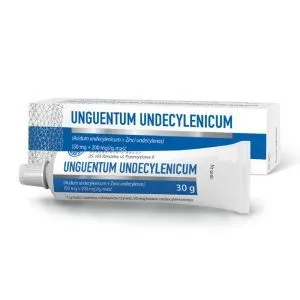
Table of Contents
- Patient Information Leaflet
- 1. What Unguentum undecylenicum is and what it is used for
- 2. Important information before using the medicine Unguentum undecylenicum
- 3. How to use Unguentum undecylenicum
- 4. Possible adverse reactions
- 5. How to store the medicine Unguentum undecylenicum
- 6. Contents of the pack and other information
Patient Information Leaflet
UNGUENTUM UNDECYLENICUM, (50 mg + 200 mg)/g, ointment
Undecylenic acid + Zinc undecylenate
Please read this leaflet carefully before using the medicine, as it contains
important information for the patient.
This medicine should always be used exactly as described in this patient leaflet or as directed by
your doctor or pharmacist.
- Keep this leaflet, as you may need to read it again.
- If you need advice or further information, please consult your pharmacist.
- If you experience any adverse reactions, including any possible side effects not listed in this leaflet, inform your doctor or pharmacist. See section 4.
- If there is no improvement after 14 days of treatment, or if you feel worse, consult your doctor.
Table of contents
- What Unguentum undecylenicum is and what it is used for
- Important information before using Unguentum undecylenicum
- How to use Unguentum undecylenicum
- Possible side effects
- How to store Unguentum undecylenicum
- Contents of the pack and other information
1. What Unguentum undecylenicum is and what it is used for
Unguentum undecylenicum is an ointment intended for topical application to the skin. The medicine contains the active substances undecylenic acid and zinc undecylenate, which have antifungal activity against dermatophytes (species Epidermophyton floccosum, Trichophyton, and Microsporum). The medicine acts not only on fungal hyphae but also on fungal spores.
Indications
The medicine is used in the topical treatment of:
tinea cruris (fungal infection of the groin);
tinea pedis (athlete's foot) and tinea manuum (fungal infection of the hands);
tinea capitis (fungal infection of the scalp);
superficial forms of tinea imbricata;
pityriasis versicolor.
The medicine is used both therapeutically and prophylactically.
Tinea cruris – typically begins in the depth of the inguinal fold and spreads peripherally, affecting the area towards the thighs; sometimes extends to the pubic mound and perineum.
Tinea pedis and tinea manuum – most commonly occurs between the toes. Fungal lesions between the toes are characterized by maceration, desquamation, and may also present in a vesicular form. This infection may also affect the plantar arch of the foot. Itching, pain, inflammation, and vesicle formation may be mild or severe. In chronic cases of tinea pedis, nail infection may develop.
Tinea capitis – superficial fungal infection of the hairy skin, primarily affecting children, characterized by lesions where hairs break off, appearing as if cut short, with redness, scaling, and itching of the skin in the affected area.
Tinea imbricata of smooth skin – may occur anywhere on the body, with lesions most commonly appearing on exposed skin (face, hands, neck). On smooth skin, ring-shaped vesicular lesions may develop. Lesions are clearly demarcated from surrounding skin, with nodular, vesicular, and pustular eruptions at the edges. Itching varies in intensity, sometimes being severe.
Pityriasis versicolor – most commonly affects the skin of the chest and arms, where small initially pinkish-yellowish spots appear, gradually darkening, enlarging, and merging into larger lesions with sharply defined, irregular borders. Under the influence of sunlight, hypopigmented areas develop at the sites of fungal infection, contrasting with the pigmentation of surrounding skin.
2. Important information before using the medicine Unguentum undecylenicum
When not to use Unguentum undecylenicum:
if the patient is allergic to undecylenic acid, zinc undecylenate, or any of the
other ingredients of this medicine (listed in section 6);
on skin lesions with significant inflammatory reaction;
on mucous membranes;
around the eyes;
on extensive skin surfaces;
in children under 11 years of age.
Warnings and precautions
Before starting treatment with Unguentum undecylenicum, consult a doctor or
pharmacist.
Exercise particular caution:
when using the medicine in patients with kidney disease;
when using the medicine in elderly patients – due to skin thinning and dryness, apply the medicine only on small skin areas.
Unguentum undecylenicum and other medicines
Tell your doctor or pharmacist about all medicines the patient is currently taking or has recently taken, as well as any medicines the patient intends to use.
Pregnancy and breastfeeding
If the patient is pregnant or breastfeeding, suspects she may be pregnant, or is planning to have a child, she should consult a doctor or pharmacist before using this medicine.
Unguentum undecylenicum should not be used in pregnant or breastfeeding women.
Use in pregnant or breastfeeding women – only on a doctor's prescription.
Driving and operating machinery
Unguentum undecylenicum has no effect on the ability to drive or operate machinery.
Unguentum undecylenicum contains ethyl parahydroxybenzoate and methyl parahydroxybenzoate.
The medicine may cause allergic reactions (delayed-type reactions are possible).
3. How to use Unguentum undecylenicum
This medicine should always be used exactly as described in the patient leaflet or as directed by a
physician or pharmacist. If in doubt, consult a doctor or pharmacist.
This medicine is intended for topical use on the skin.
Unless otherwise directed by a physician, affected areas should be covered twice daily with a thin
layer of the ointment. Treatment should be continued, even after symptoms have subsided, for at least
2 to 3 weeks.
Hands should be washed after applying the medicine.
Unguentum undecylenicum should not be used in children under 11 years of age.
Use of a larger than recommended dose of Unguentum undecylenicum
Symptoms of overdose with Unguentum undecylenicum are not known when used according to
indications and recommended dosage.
If accidentally ingested, the medicine may cause nausea, vomiting, diarrhoea, headache, olfactory disturbances, joint swelling and lymph node swelling.
In case of ingestion, contact a physician immediately.
Missed dose of Unguentum undecylenicum
Do not use a double dose to make up for a missed dose.
If you have any further doubts concerning the use of this medicine, consult a doctor or pharmacist.
4. Possible adverse reactions
Like all medicines, this medicine can cause adverse reactions, although not everyone will experience them.
Adverse reactions occurring rarely (less frequently than in 1 out of 1,000 people):
Local skin irritation symptoms such as burning sensation and rash may occur.
The medicine may cause irritation of mucous membranes.
Adverse reactions with unknown frequency (frequency cannot be estimated from the available data):
Due to the presence of ethyl parahydroxybenzoate (E 214) and methyl parahydroxybenzoate (E 218), the medicine may cause urticaria and allergic reactions (delayed-type reactions possible).
Occasionally, immediate allergic reactions with urticaria and bronchospasm may occur.
In such a case, treatment must be discontinued and medical advice must be sought immediately.
Reporting of adverse reactions
If any adverse reactions occur, including any adverse reactions not listed in this leaflet, inform a doctor, pharmacist, or nurse. Adverse reactions can be reported directly to the Department of Monitoring Adverse Drug Reactions of the Office for Registration of Medicinal Products, Medical Devices and Biocidal Products
Al. Jerozolimskie 181C
02-222 Warsaw
Tel.: + 48 22 49 21 301
Fax: + 48 22 49 21 309
Website: https://smz.ezdrowie.gov.pl
Adverse reactions can also be reported to the marketing authorization holder.
Reporting adverse reactions helps to provide more information on the safety of the medicine.
5. How to store the medicine Unguentum undecylenicum
Store below 25°C.
Keep the tube tightly closed.
Store the medicine in a place inaccessible and out of sight of children.
Do not use this medicine after the expiry date stated on the packaging. The expiry date refers to the last day of the stated month.
Medicines must not be disposed of via wastewater or household waste. Ask your pharmacist how to dispose of medicines no longer required. This will help protect the environment.
6. Contents of the pack and other information
What Unguentum undecylenicum contains
The active substances in the medicine are undecylenic acid and zinc undecylenate.
1 g of the ointment contains 50 mg of undecylenic acid and 200 mg of zinc undecylenate.
The other ingredients are: white vaseline, anhydrous eucerin, methyl parahydroxybenzoate (E 218), ethyl parahydroxybenzoate (E 214).
What Unguentum undecylenicum looks like and contents of the pack
Unguentum undecylenicum is a creamy, homogeneous ointment with a characteristic odour.
The medicine is packed in an aluminium tube with a cap made of polyethylene or polypropylene, containing 30 g of ointment, placed in a cardboard box.
Marketing Authorisation Holder and Manufacturer
CHEMA-ELEKTROMET
Labour Cooperative
Przemysłowa Street 9
35-105 Rzeszów
Phone: +48 17 862 05 90
e-mail: [email protected]