Uman albumin 20% kedrion
Poland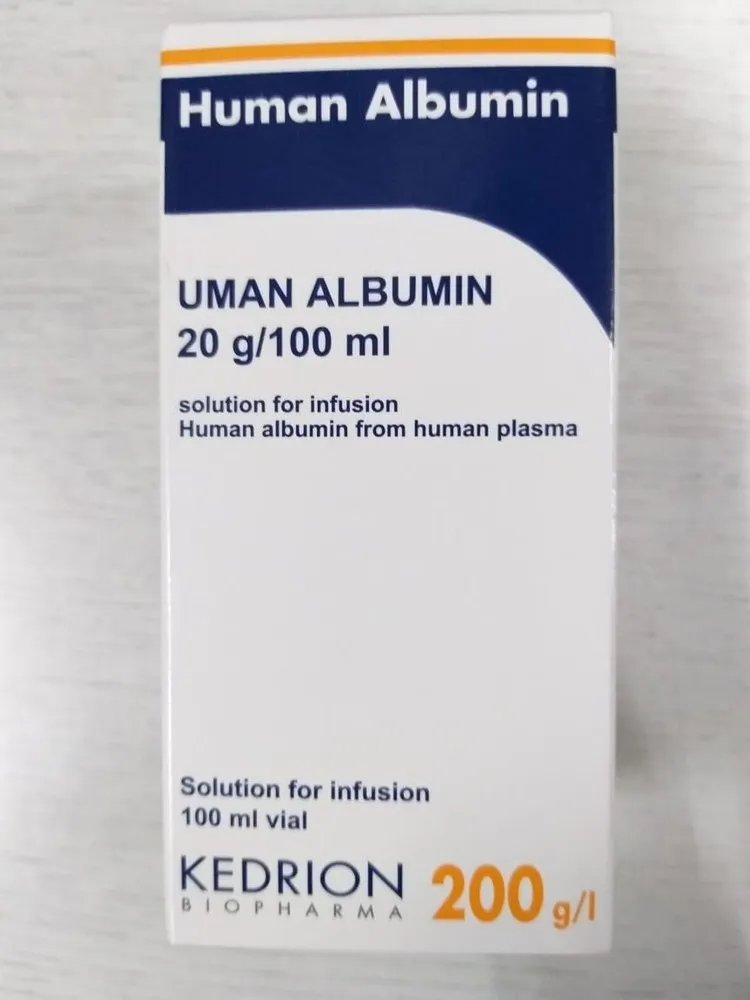
Table of Contents
- Package leaflet: Information for the patient
- 1. What UMAN ALBUMIN 20% KEDRION is and what it is used for
- 2. Important information before using UMAN ALBUMIN 20% KEDRION
- 3. How to use UMAN ALBUMIN 20% KEDRION
- 4. Possible adverse reactions
- 5. How to store UMAN ALBUMIN 20% KEDRION
- 6. Contents of the pack and other information
- Information intended exclusively for medical professionals:
Package leaflet: Information for the patient
UMAN ALBUMIN 20% KEDRION
200 g/l, concentrate for solution for infusion
Human albumin
Please read carefully the entire leaflet before use, as it contains
important information for the patient.
- Keep this leaflet, as you may need to read it again.
- If you have any questions, please consult your doctor.
- This medicine has been prescribed for a specific individual. Do not give it to others. The medicine may harm another person, even if their symptoms are the same.
- If you experience any adverse reactions, including any not listed in this leaflet, inform your doctor or pharmacist. See section 4.
Table of contents of the leaflet:
- What UMAN ALBUMIN 20% KEDRION is and what it is used for
- Important information before using UMAN ALBUMIN 20% KEDRION
- How to use UMAN ALBUMIN 20% KEDRION
- Possible side effects
- How to store UMAN ALBUMIN 20% KEDRION
- Contents of the pack and other information
1. What UMAN ALBUMIN 20% KEDRION is and what it is used for
UMAN ALBUMIN 20% KEDRION is a solution of human albumin, an essential protein in human blood.
UMAN ALBUMIN 20% KEDRION is used to restore and maintain circulating blood volume when a volume deficit has been diagnosed and when use of a colloidal solution is indicated.
2. Important information before using UMAN ALBUMIN 20% KEDRION
When not to use UMAN ALBUMIN 20% KEDRION
- if the patient is allergic to human albumin or to any of the other components of this medicine (listed in section 6).
Warnings and precautions
Before starting treatment with UMAN ALBUMIN 20% KEDRION, discuss this with your
doctor.
If the patient has previously experienced symptoms of allergy to human albumin, inform the
doctor or nurse immediately.
If an allergic or anaphylactoid reaction is suspected, the infusion must be stopped immediately. In case of shock, standard shock treatment procedures should be applied.
Caution should be exercised when administering albumin if hypervolaemia (increased blood volume) and its consequences or haemodilution (blood dilution) could pose a particular risk to the patient.
Inform the doctor if the patient has any of the following conditions:
- uncompensated cardiac insufficiency,
- arterial hypertension,
- oesophageal varices,
- pulmonary oedema,
- haemorrhagic diathesis,
- severe anaemia,
- renal and extrarenal anuria.
The albumin concentration in UMAN ALBUMIN 20% KEDRION is higher than in blood plasma.
Therefore, when administering concentrated albumin solution, adequate hydration of the patient must be ensured. The patient should be monitored during infusion to prevent circulatory overload and overhydration.
Human albumin solutions with a concentration of 200–250 g/l have relatively low electrolyte content compared to albumin solutions with a concentration of 40–50 g/l. During albumin administration, the doctor will monitor the patient's electrolyte levels and take appropriate measures to restore or maintain electrolyte balance (see: Information intended exclusively for medical professionals).
Albumin solutions must not be diluted with water for injections, as this may cause haemolysis (breakdown of red blood cells) in the patient.
If large volume replacement is required, coagulation parameters and haematocrit (a blood test parameter) should be monitored. The doctor will ensure appropriate replacement of other blood components (clotting factors, electrolytes, platelets, and red blood cells).
If the dose and infusion rate have not been adjusted to the patient's circulatory status, overhydration (hypervolaemia) may occur. At the first clinical signs of circulatory overload, such as headache, dyspnoea, jugular vein distension, increased blood pressure, elevated venous pressure, or pulmonary oedema, the infusion must be stopped immediately.
Viral safety
When administering medicines derived from human blood or plasma, certain procedures are applied to prevent transmission of infections. These include careful donor selection to exclude infection risks, and testing each batch of plasma for the presence of viruses/infections.
Manufacturers also apply virus inactivation and removal procedures during the production process.
Despite these measures, it cannot be completely excluded that administration of such medicines may transmit infectious agents, including unknown or newly emerging viruses and other pathogens.
There are no confirmed reports of virus transmission with albumin manufactured according to the approved process and specifications given in the European Pharmacopoeia.
It is recommended that each time UMAN ALBUMIN 20% KEDRION is administered to a patient, the product name and batch number be recorded to maintain traceability of the batches used in the patient.
Children and adolescents
The safety and efficacy of UMAN ALBUMIN 20% KEDRION in children and adolescents have not been established in controlled clinical trials.
UMAN ALBUMIN 20% KEDRION and other medicines
Inform the doctor or pharmacist about all medicines currently used or recently used by the patient, as well as any medicines the patient plans to use.
To date, no interactions between human albumin and other medicines are known.
Incompatibilities: UMAN ALBUMIN 20% KEDRION must not be mixed with other medicines, whole blood, or red blood cell concentrates (except solutions recommended in the Information intended exclusively for medical professionals).
Pregnancy, breastfeeding and fertility
If the patient is pregnant, breastfeeding, suspects she may be pregnant, or is planning to have a child, she should consult her doctor before using this medicine.
The safety of UMAN ALBUMIN 20% KEDRION in pregnant women has not been established in controlled clinical trials. However, clinical experience with albumin suggests that it does not have harmful effects on pregnancy or the foetus and newborn.
There are insufficient data on the passage of albumin into human milk.
Reproduction studies in animals using UMAN ALBUMIN 20% KEDRION have not been conducted.
Human albumin is a normal component of human blood.
Driving and operating machinery
This medicine has no influence on the ability to drive or operate machinery.
UMAN ALBUMIN 20% KEDRION contains sodium.
The medicine contains up to 157 mg of sodium (the main component of table salt) per 50 ml vial and 314 mg of sodium per 100 ml vial. This corresponds to 7.85% in the 50 ml vial and 15.7% in the 100 ml vial of the maximum recommended daily dietary sodium intake for adults.
3. How to use UMAN ALBUMIN 20% KEDRION
UMAN ALBUMIN 20% KEDRION is administered intravenously only by a doctor or
qualified nurse.
This medicine should always be used as prescribed by the doctor. If in doubt, consult
your doctor.
Dosage and method of administration – see: Information intended exclusively for medical professionals.
Use in children and adolescents
The safety and efficacy of UMAN ALBUMIN 20% KEDRION in children and adolescents have not yet been established.
Use of a higher than recommended dose of UMAN ALBUMIN 20% KEDRION
Fluid overload (hypervolemia) may occur if the dose or infusion rate is too high. At the first signs of circulatory overload (headache, dyspnea, jugular vein distension) or increased blood pressure, elevated central venous pressure, and pulmonary edema, the infusion must be stopped immediately and the patient's hemodynamic parameters should be closely monitored.
If you have any further questions about the use of this medicine, consult your doctor.
4. Possible adverse reactions
Like all medicines, this product may cause adverse reactions, although not everyone experiences them.
If any of the adverse reactions listed below occur, contact a doctor or the nearest hospital immediately:
- After administration of human albumin solution, mild adverse reactions may rarely occur, such as sudden flushing of the face,
- urticaria,
- fever,
- nausea.
These mild reactions may occur rarely and usually resolve immediately upon reducing the infusion rate or stopping the infusion.
Severe reactions, such as shock, may very rarely occur after administration of human albumin solution. In case of shock, the infusion must be stopped immediately and standard shock treatment procedures should be initiated.
After the introduction of UMAN ALBUMIN 20% KEDRION into the market, the following adverse reactions of unknown frequency (frequency cannot be determined from available data) have been observed following administration of the medicine:
- urticaria
- pruritus
- dyspnoea
- hypotension
- erythema
- chills
- fever
- tremor
Viral safety – see section 2.
Reporting of adverse reactions
If any adverse reactions occur, including any adverse reactions not listed in this leaflet, inform a doctor or nurse. Adverse reactions can be reported directly to the Department of Monitoring Adverse Drug Reactions of the Office for Registration of Medicinal Products, Medical Devices and Biocidal Products:
Al. Jerozolimskie 181C,
02-222 Warsaw,
tel: 22 492 13 01,
fax: 22 492 13 09,
Website: https://smz.ezdrowie.gov.pl
Adverse reactions can also be reported to the marketing authorization holder.
Reporting adverse reactions contributes to the further enhancement of the medicine's safety profile.
5. How to store UMAN ALBUMIN 20% KEDRION
Keep the medicine out of sight and reach of children.
Do not use this medicine after the expiry date (EXP) stated on the packaging. The expiry date refers to the last day of the stated month.
Store below 30°C.
Keep in the outer packaging to protect from light.
Do not freeze.
Storage conditions must be strictly observed.
Do not use the medicine if the solution is cloudy or contains a precipitate. Such appearance may indicate that the protein is unstable or that the solution has become contaminated.
After opening the container, the contents should be used immediately.
Medicines must not be disposed of via wastewater or household waste. Ask your pharmacist how to dispose of medicines no longer required. This will help protect the environment.
6. Contents of the pack and other information
What UMAN ALBUMIN 20% KEDRION contains
- The active substance is human albumin. The solution contains: 200 g/l human plasma proteins, of which human albumin constitutes not less than 95%.
A 50 ml bottle contains 10 g of human albumin.
A 100 ml bottle contains 20 g of human albumin.
The solution is hyperoncotic.
- Other components are:
Sodium chloride 4.52 g/l
Sodium caprylate 2.660 g/l (16 mmol/l)
N-Acetyltryptophan 3.940 g/l (16 mmol/l)
Water for injections up to 1 l
The total sodium ion content in the medicinal product is 123.5 - 136.5 mmol/l.
What UMAN ALBUMIN 20% KEDRION looks like and contents of the pack
1 bottle of 50 ml or 100 ml in a cardboard box.
The solution is clear, slightly opalescent, almost colourless, yellow, amber, or green.
Marketing Authorisation Holder and Manufacturer
Marketing Authorisation Holder
Kedrion S.p.A. - Loc. Ai Conti, 55051 Castelvecchio Pascoli, Barga (Lucca), Italy
Manufacturer
Kedrion S.p.A. - 55027 Bolognana Gallicano (Lucca), Italy
For further information, please contact the representative of the Marketing Authorisation Holder:
MB&S, ul. Chełmska 30/34,
00-725 Warsaw
Tel: 22 - 851 52 10
Information intended exclusively for medical professionals:
Dosage, concentration, and infusion rate should be individually adjusted according to the patient's needs.
The dosage depends on the patient's body weight, severity of injury or illness, and ongoing losses of fluid or protein. The required dose should be determined based on assessment of proper circulating blood volume, rather than on the basis of serum albumin concentration.
When administration of human albumin is necessary, hemodynamic status should be monitored regularly, including:
- arterial blood pressure and pulse
- central venous pressure
- pulmonary arterial pressure
- urine output
- electrolyte concentrations
- hematocrit/hemoglobin
Administration method
Human albumin may be administered directly as an intravenous infusion or diluted in an isotonic solution (e.g. 5% glucose solution or 0.9% sodium chloride solution).
Albumin solutions must not be diluted with water for injections, due to the risk of causing hemolysis of red blood cells in the patient.
The infusion rate should be individually adjusted according to the patient's condition and indication.
During plasma exchange procedures, the infusion rate should be adjusted to match the plasma removal rate.
If larger volumes are administered, the medicinal product should be warmed to room temperature or body temperature before use.