Ultravist 300
Poland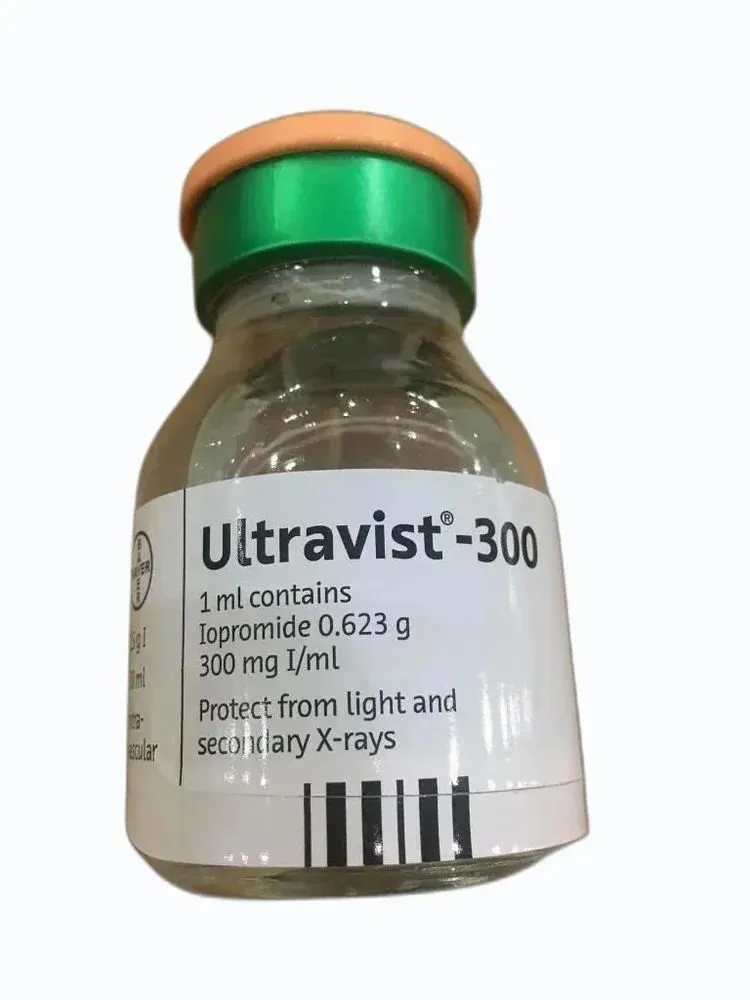
Table of Contents
Ultravist 300, 623.40 mg/ml, solution for injection
Ultravist 370, 768.86 mg/ml, solution for injection
Iopromide
Please read the entire leaflet carefully before using this medicine, as it contains
important information for the patient.
- Keep this leaflet for future reference.
- If you have any questions, consult your doctor or pharmacist.
- This medicine has been prescribed for a specific individual. Do not pass it on to others. This medicine may harm others, even if their symptoms are identical.
- If you experience any adverse reactions, including those not listed in this leaflet, inform your doctor or radiology staff. See section 4.
Table of contents:
- What Ultravist is and what it is used for
- Important information before using Ultravist
- How to use Ultravist
- Possible side effects
- How to store Ultravist
- Contents of the pack and other information
1. WHAT ULTRAVIST IS AND WHAT IT IS USED FOR
Ultravist is a contrast medium in the form of a solution for injection, intended for use in X-ray diagnostics.
All contrast agents used in X-ray diagnostics, including Ultravist, contain iodine. X-rays do not pass through contrast agents because they are absorbed by iodine. Areas of the body where Ultravist accumulates after injection into the bloodstream or body cavities become visible during X-ray examination.
Indications
This medicine is intended for diagnostic use only.
Depending on the route of administration and concentration of Ultravist, imaging of blood vessels (veins and arteries) is achieved, and abnormalities in the urinary tract, kidneys, brain, heart, breasts, and body cavities can be detected.
2. IMPORTANT INFORMATION BEFORE USING ULTRAVIST
When not to use Ultravist
- if the patient is allergic to iodine, iopromide, or any of the other ingredients of this medicine (listed in section 6).
Warnings and precautions
Before administration, Ultravist should be warmed to body temperature, as it is then better tolerated and its viscosity is reduced, facilitating injection.
Before administering the contrast agent Ultravist, medical personnel will inspect it and, if discoloration, presence of solid particles in the solution (including crystals), or container damage is observed, will not administer the agent. Ultravist is a highly concentrated solution and, rarely, may crystallize (milky appearance and/or sediment at the bottom or floating crystals).
Due to the possibility of pharmaceutical incompatibility, the contrast agent Ultravist must not be mixed with other medicinal products.
Before administration of the contrast agent Ultravist, inform the doctor if the patient feels anxious. States of excessive excitement, anxiety, and pain may increase the risk of adverse reactions or intensify reactions to contrast agents (see section "Possible adverse effects").
Ultravist should not be administered if the patient is dehydrated (has not taken sufficient fluids). To avoid this, the doctor will ensure the patient has taken adequate fluids before the examination (see section "Warnings and precautions").
Before starting Ultravist, discuss with the doctor or nurse:
- if the patient has asthma or any other type of allergy (e.g. allergy to seafood, hay fever, urticaria);
- if the patient is allergic to iodine-containing contrast agents, iopromide, or any excipient listed in the section on excipients;
- if the patient previously experienced a reaction to contrast agents;
- if the patient has impaired kidney function;
- if the patient has polyuria;
- if the patient has oliguria;
- if the patient has high blood uric acid levels (hyperuricemia, gout);
- if the patient has heart or circulatory diseases;
- if the patient has diabetes;
- if the patient has epilepsy or other nervous system disorders;
- if the patient has hyperthyroidism or suspected hyperthyroidism;
- if the patient has neck swelling due to enlarged thyroid gland (goiter);
- if the patient has multiple myeloma (plasma cell cancer) or increased production of specific proteins (paraproteinemia), or muscle weakness (myasthenia);
- if the patient has arterial hypertension caused by a pheochromocytoma (adrenal gland tumor);
- if the patient is taking certain medications;
- if the patient ever experienced severe skin rash, skin peeling, blisters, and/or oral ulcers after receiving Ultravist.
This is particularly important for elderly individuals, newborns, infants, and young children.
If any of the above conditions are present, the doctor will decide whether the examination can be performed.
Inform the doctor if the patient has kidney problems. The doctor will ensure the patient is well hydrated before the examination. However, intravenous fluid administration (IV fluids) is not recommended if the patient has kidney problems.
Inform the doctor if the patient has severe kidney problems associated with heart disease. Intravenous fluid administration (IV fluids) may be dangerous for the heart.
The doctor will not perform a test dose (a small dose of the contrast agent Ultravist) to assess hypersensitivity, as test doses do not reliably predict hypersensitivity and themselves have occasionally caused severe, even fatal, hypersensitivity reactions.
Exercise particular caution when using Ultravist:
Severe adverse skin reactions have been reported with the use of Ultravist, including Stevens-Johnson syndrome (SJS), toxic epidermal necrolysis (TEN), drug reaction with eosinophilia and systemic symptoms (DRESS), and acute generalized exanthematous pustulosis (AGEP). If any symptoms described in section 4 occur, seek immediate medical help.
Hypersensitivity and pseudoallergic reactions have been observed after administration of X-ray contrast agents such as Ultravist (see "Possible adverse effects").
Inform the doctor if allergic reactions to Ultravist, its excipients, or any other contrast agent occurred in the past. If bronchial asthma or other allergic reactions ever occurred, this may indicate an increased risk of allergic-type reactions (including severe reactions).
Allergic-type reactions are characterized by symptoms affecting the cardiovascular system (heart and blood vessels), respiratory system (lungs), and skin (skin reactions).
Reactions resembling allergic reactions may occur, ranging from mild to severe, including anaphylactic shock (see section "Possible adverse effects"). Such reactions are difficult to predict and may occur irregularly. Most of these reactions occur within 30 minutes after administration, but delayed reactions (after several hours or days) may also occur.
Inform the doctor about the use of beta-blockers (medications used to treat hypertension), due to the possible occurrence of resistance to treatment with beta-adrenergic agonists (medications used in shock).
After administration of Ultravist, medical personnel will monitor the patient's condition for possible severe hypersensitivity reactions, with emergency treatment equipment readily available.
Before the examination, the doctor may administer corticosteroids (medications used, among others, to treat inflammatory conditions) if there is a risk of acute allergic reaction (e.g. if a previous moderate or severe acute reaction occurred or if asthma or allergy requiring treatment is present).
Thyroid function disorders
Inform the doctor if goiter or hyperthyroidism is suspected or diagnosed in the patient, due to the possibility of hyperthyroidism or thyroid storm after administration of iodine-containing contrast agents. In patients with suspected or diagnosed hyperthyroidism, thyroid function tests and/or prophylactic administration of thyroid function-inhibiting drugs may be considered before administering Ultravist.
Inform the doctor if the patient has had thyroid disease in the past, including hypothyroidism (underactive thyroid gland), as the use of iodine-containing contrast agents may result in abnormal blood test results suggesting potential hypothyroidism or transient (temporary) worsening of thyroid function, which may require treatment.
Newborns may also be exposed to Ultravist via the mother during pregnancy.
If the child is under 3 years of age:
The doctor may monitor and test thyroid function, especially in newborns.
Nervous system disorders
Inform the doctor if the patient has had central nervous system (CNS) disorders (e.g. seizures).
In situations where the seizure threshold may be lowered or blood-brain barrier permeability increased (e.g. use of certain medications), the patient may be at increased risk of neurological complications. Neurological complications occur more frequently in connection with cerebral angiography and similar diagnostic procedures.
During or shortly after the imaging procedure, a transient brain dysfunction called encephalopathy may occur. If any subjective or objective symptoms related to this condition described in section 4 occur, seek immediate medical help.
Acute kidney injury
When Ultravist is used for intravascular injections (fluid into blood vessels), there is a risk of developing contrast-induced kidney injury (acute contrast-induced nephropathy). As a result, the kidneys may temporarily not function properly. Some patients may experience kidney failure.
This is especially likely if any of the following conditions are present:
- pre-existing kidney failure (kidneys not functioning properly). See also sections "How to use Ultravist" / "Patients with kidney failure",
- diabetes,
- multiple myeloma (plasma cell cancer),
- paraproteinemia (excessive production of specific proteins),
- dehydration;
- or if the patient has received multiple or high doses of Ultravist. Contrast-enhanced radiological examinations may be performed in patients with non-functioning kidneys undergoing dialysis using Ultravist.
Cardiovascular diseases
If the patient is to receive Ultravist intravascularly (into blood vessels) and has severe heart disease, including advanced coronary artery disease, there is an increased risk of arrhythmias (abnormal heart rhythm or rate) and significant hemodynamic disturbances (circulation changes).
Intravascular administration of contrast agents to patients with heart failure may cause pulmonary edema (fluid accumulation in the lungs) (see sections "Important information before using Ultravist" / "Patients with kidney failure").
Pheochromocytoma
If the patient is to receive Ultravist intravascularly (into blood vessels) and has a pheochromocytoma (adrenal gland tumor), there may be an increased risk of hypertensive crisis (severe form of high blood pressure).
Myasthenia
If the patient is to receive Ultravist intravascularly (into blood vessels) and has myasthenia (chronic muscle disease), administration of Ultravist may worsen disease symptoms.
Contrast-enhanced mammography exposes the patient to a higher level of ionizing radiation than conventional mammography, but still remains within the range defined by international mammography guidelines. Radiation dose depends on breast thickness and the type of mammography equipment used.
Ultravist and other medicines
Tell the doctor about all medicines the patient is currently taking or has recently taken, as well as any medicines the patient plans to take, including those available without prescription.
Some medicines may affect the action of Ultravist. These include:
- biguanides (a type of medicine used to treat diabetes);
- interleukin;
- radioactive substances used to treat the thyroid.
The doctor will advise how to use these medicines before the examination.
Using Ultravist with food and drink
The patient should not eat for 2 hours before the examination, but may drink. Further instructions will be provided by the doctor.
Pregnancy and breastfeeding
Pregnancy
If the patient is pregnant or breastfeeding, suspects she may be pregnant, or is planning to have a child, she should consult a doctor before using this medicine.
No studies have been conducted in pregnant women.
Animal studies have not shown harmful effects of the contrast agent on pregnancy, embryonic or fetal development, course of delivery, or postnatal development of the newborn.
Breastfeeding
No studies have been conducted on the safety of Ultravist in breastfeeding women. Iopromide, the active substance of the contrast agent, passes into breast milk to a small extent; therefore, the risk of harmful effects on the infant is low. (See section "Important information before using Ultravist" / " Warnings and precautions" / "Thyroid function disorders").
Ultravist contains sodium
The medicine contains 0.255 mg of sodium (main component of table salt) per mL. This corresponds to 0.013% of the maximum recommended daily dietary sodium intake for adults.
3. HOW TO USE ULTRAVIST
Ultravist is administered by trained medical personnel.
Before intravascular (into blood vessels) injection of Ultravist, the doctor will assess the patient's
health status and inquire about any concomitant medications, as they may influence the risk of
thromboembolic complications (blood clot formation).
Additionally, the doctor will:
- pay particular attention to the technique used during the angiographic procedure;
- flush the catheter appropriately and frequently (if possible, with added heparin – an anticoagulant);
- shorten the duration of the procedure as much as possible to minimize the risk of thrombosis and embolism (formation and migration of blood clots leading to vessel blockage).
Dosage – intravascular injection (into blood vessels)
The appropriate dose of Ultravist is determined individually by the physician based on the patient's age,
body weight, purpose, and diagnostic technique.
Generally, doses not exceeding 1.5 g of iodine per kg of body weight are well tolerated.
This corresponds to:
- 5 ml of Ultravist 300 per kg of body weight;
- 4.05 ml of Ultravist 370 per kg of body weight.
Dosage – administration into body cavities
Arthrography: 5–15 ml of Ultravist 300/370
Endoscopic retrograde cholangiopancreatography (ERCP): dosage is adjusted according to the
diagnostic issue and the size of the area being examined.
Other: dosage is adjusted according to the diagnostic issue and the size of the area being examined.
Newborns (age: <1 month) and infants (age: 1 month–2 years)
The physician will exercise special caution when determining the dose, selecting radiological examination parameters, and evaluating the general condition of infants (under 1 year of age), especially newborns, as these patients belong to a group particularly susceptible to electrolyte imbalances and hemodynamic instability.
Patients with renal impairment
Since iopromide, the active substance in Ultravist, is excreted almost entirely unchanged by the kidneys, elimination of iopromide is prolonged in patients with renal impairment. To reduce the risk of contrast-induced nephropathy in patients with pre-existing renal dysfunction, the physician will use the smallest possible dose (see “Important information before using Ultravist” / “ Warnings and precautions”).
Contrast-enhanced mammography (CEM)
Ultravist will be administered intravenously (large volume injected into a vein), preferably using an automatic injector if possible.
Adult women:
Ultravist 300/370: 1.5 ml/kg body weight.
Accidental overdose of Ultravist
If a larger amount of Ultravist than recommended has been administered and the patient's condition worsens, medical advice must be sought immediately. Symptoms may include disturbances in fluid and electrolyte balance, renal failure, and cardiovascular or pulmonary complications. The physician will monitor fluid and electrolyte balance and renal function, and may prescribe dialysis to remove the drug from the body.
4. POSSIBLE ADVERSE REACTIONS
Like all medicines, this medicine can cause adverse reactions, although not everyone will experience them.
The most severe adverse reactions (life-threatening and potentially fatal)
in patients receiving Ultravist are: anaphylactoid shock (allergy-type reactions),
respiratory arrest, bronchospasm (difficulty breathing), laryngeal edema, pharyngeal edema, asthma,
coma, cerebral infarction (reduced blood flow through part of the brain), stroke, cerebral edema,
seizures, cardiac arrhythmias, cardiac arrest (heart stops beating), myocardial ischemia (heart disease characterized by pain due to lack of blood supply to the heart), myocardial infarction,
heart failure, bradycardia (slow heart rate), cyanosis (bluish discoloration of the skin and mucous membranes due to lack of oxygen), hypotension (low blood pressure), shock, dyspnea (shortness of breath), pulmonary edema (fluid accumulation in the lungs), respiratory failure (insufficient oxygen reaches the lungs and carbon dioxide is not fully expelled), and aspiration.
The most commonly observed adverse reactions in patients receiving Ultravist are:
headache, nausea, and vasodilation.
If any of the following subjective or objective symptoms occur (frequency unknown), seek immediate medical help:
- Reddish skin patches on the trunk, resembling a target or circular lesions, often with blisters in the center, skin peeling, and ulcers in the mouth, throat, nose, genital organs, or eyes. These severe skin rashes may be preceded by fever and flu-like symptoms (Stevens-Johnson syndrome, toxic epidermal necrolysis).
- Widespread rash, high body temperature, and enlarged lymph nodes (DRESS syndrome or drug hypersensitivity syndrome).
- Red, scaly, widespread rash with subcutaneous nodules and blisters, accompanied by fever, occurring after imaging procedures (acute generalized exanthematous pustulosis).
- Transient brain dysfunction (encephalopathy), which may cause memory loss, confusion, hallucinations, visual disturbances, vision loss, seizures, loss of coordination, hemiparesis (weakness on one side of the body), speech difficulties, and loss of consciousness.
Possible adverse reactions are listed below according to their likelihood of occurrence.
Common (may occur in 1 to 10 out of 100 patients):
- Dizziness
- Headache
- Taste disturbances
- Blurred vision / visual disturbances
- Chest pain, discomfort
- Hypertension (high blood pressure)
- Vasodilation
- Vomiting
- Nausea
- Pain
- Injection site reactions (e.g. pain, warmth, swelling, inflammation, and damage to surrounding soft tissues in case of extravasation)
- Feeling of warmth
Uncommon (may occur in 1 to 10 out of 1,000 patients):
- Hypersensitivity / anaphylactoid reactions (anaphylactoid shock, respiratory arrest, bronchospasm (difficulty breathing), laryngeal edema, pharyngeal edema, tongue or facial swelling, laryngospasm, pharyngospasm, asthma, conjunctivitis, lacrimation, sneezing, cough, mucosal edema, rhinitis, hoarseness, throat irritation, urticaria, pruritus (intense itching), angioedema
- Vasovagal reactions (loss of consciousness / fainting)
- Confusion
- Motor restlessness
- Paresthesia (skin sensory disturbances such as burning, pricking, itching, or tingling) / hypoesthesia (reduced sensitivity to touch)
- Somnolence
- Arrhythmia (irregular heart rhythm or rate)
- Hypotension (low blood pressure)
- Dyspnea (shortness of breath)
- Abdominal pain
- Edema (swelling of tissues)
Rare (may occur in 1 to 10 out of 10,000 patients):
- Anxiety
- Cardiac arrest (heart stops beating)
- Myocardial ischemia (heart disease characterized by pain due to lack of blood supply to the heart)
- Palpitations (irregular, rapid heartbeat or pulsation)
Not known (frequency cannot be estimated from available data):
- Thyroid storm (severe complications of hyperthyroidism)
- Thyroid dysfunction
- Coma
- Ischemia, cerebral infarction (reduced blood flow through part of the brain)
- Stroke
- Cerebral edema (reported only with intravascular administration)
- Seizures
- Transient cortical blindness (reported only with intravascular administration)
- Loss of consciousness
- Agitation
- Amnesia (memory loss)
- Tremor
- Speech disorders
- Paresis, paralysis (partial or complete loss of ability to move)
- Hearing disorders
- Myocardial infarction
- Heart failure
- Bradycardia (slow heart rate)
- Tachycardia (fast heart rate)
- Cyanosis (bluish discoloration of the skin and mucous membranes due to lack of oxygen)
- Shock
- Thromboembolic complications (formation of blood clots in blood vessels leading to stroke) (reported only with intravascular administration)
- Vasoconstriction (reported only with intravascular administration)
- Pulmonary edema (fluid accumulation in the lungs)
- Respiratory failure (insufficient oxygen reaches the lungs and carbon dioxide is not fully expelled)
- Aspiration
- Swallowing disorders
- Salivary gland enlargement
- Diarrhea
- Vesicular syndromes (e.g. Stevens-Johnson syndrome or Lyell's syndrome) (serious inflammatory skin and mucosal lesions)
- Rash
- Erythema (skin redness)
- Excessive sweating
- Compartment syndrome (in case of extravasation) (increased pressure within muscles leading to muscle, nerve damage and impaired blood flow) (reported only with intravascular administration)
- Renal function disorders (reported only with intravascular administration)
- Acute renal failure (reported only with intravascular administration)
- Malaise
- Chills
- Pallor
- Fluctuations in body temperature
In addition to the adverse reactions listed above, following administration of the medicine during ERCP procedures, increased pancreatic enzyme activity and pancreatitis have been observed, the frequency of which is unknown.
If any adverse reaction worsens or if any adverse reactions not listed in this leaflet occur, inform your doctor or radiology department staff immediately.
Reporting of adverse reactions
If any adverse reactions occur, including those not listed in this leaflet, inform your doctor or pharmacist. Adverse reactions can be reported directly to the Department of Monitoring Adverse Drug Reactions at the Office for Registration of Medicinal Products, Medical Devices and Biocidal Products: Al. Jerozolimskie 181C, 02-222 Warsaw, Tel.: +48 22 49 21 301, Fax: +48 22 49 21 309, website: https://smz.ezdrowie.gov.pl.
Adverse reactions can also be reported to the responsible entity.
Reporting adverse reactions helps to gather more information on the safety of using the medicine.
5. HOW TO STORE ULTRAVIST
Do not use this medicine after the expiry date stated on the packaging. The expiry date refers to the last day of the stated month.
Keep out of the reach and sight of children.
Store below 30°C, protected from light and X-ray radiation.
6. CONTENTS OF THE PACKAGE AND OTHER INFORMATION
What Ultravist contains
- The active substance is iopromide.
Ultravist 300
1 ml of injection solution contains 623.40 mg of iopromide.
Ultravist 370
1 ml of injection solution contains 768.86 mg of iopromide.
- Other components of Ultravist are: calcium sodium edetate, trometamol, hydrochloric acid 10%, sodium hydroxide (for pH adjustment), water for injections.
What Ultravist looks like and contents of the pack:
Ultravist 300:
10 vials of 5 ml, 5 vials of 10 ml, 10 vials of 10 ml, 1 vial of 20 ml, 10 vials of 20 ml, 1 bottle of 50 ml, 10 bottles of 50 ml, 1 bottle of 75 ml, 10 bottles of 75 ml, 1 bottle of 100 ml, 10 bottles of 100 ml, 1 bottle of 150 ml, 10 bottles of 150 ml, 1 bottle of 200 ml, 10 bottles of 200 ml, 1 bottle of 500 ml, 8 bottles of 500 ml.
Ultravist 370:
1 vial of 20 ml, 10 vials of 20 ml, 1 vial of 30 ml, 10 vials of 30 ml, 1 bottle of 50 ml, 10 bottles of 50 ml, 10 bottles of 75 ml, 1 bottle of 100 ml, 10 bottles of 100 ml, 1 bottle of 150 ml, 10 bottles of 150 ml, 1 bottle of 200 ml, 10 bottles of 200 ml, 1 bottle of 500 ml, 8 bottles of 500 ml.
Not all pack sizes may be marketed.
Marketing Authorisation Holder and Manufacturer
Marketing Authorisation Holder
Bayer AG
Kaiser-Wilhelm-Allee 1
51373 Leverkusen
Germany
Manufacturer
Bayer AG Berlin
Müllerstrasse 178
13353 Berlin
Germany
Berlimed S.A., Madrid
Francisco Alonso, 7
Poligono Industrial Santa Rosa
28806 Alcalá de Henares, Madrid
Spain
For further information about this medicinal product, please contact the Marketing Authorisation Holder's representative:
Bayer Sp. z o.o.
Al. Jerozolimskie 158
02-326 Warsaw
Tel. (0-22) 572 35 00
Information intended exclusively for medical professionals:
Indications
The medicinal product is intended for diagnostic use only.
Ultravist 300/370: for intravenous, intra-arterial, and intracavitary administration.
A contrast agent for use in computed tomography (CT), angiography, venography, intravenous or intra-arterial digital subtraction angiography (DSA), intravenous urography, endoscopic retrograde cholangiopancreatography (ERCP), arthrography, and other body cavity examinations, for use in adult women in contrast-enhanced mammography for the evaluation and detection of known or suspected breast lesions, as a supplement to mammography (with or without ultrasound) or as an alternative to magnetic resonance imaging (MRI) when MRI is contraindicated or unavailable.
Ultravist 370: a contrast agent recommended for use in angiocardiography.
Route of administration:
Before administration, Ultravist contrast agent should be warmed to body temperature.
Contrast agents should be inspected visually prior to administration. Do not use contrast agents if significant discoloration, presence of particulate matter in the solution (including crystals), or container damage is observed. Ultravist is a highly concentrated solution and, rarely, may crystallize (milky-turbid appearance and/or sediment at the bottom or floating crystals).
Vials:
Any unused portion of the contrast agent remaining after patient examination must be discarded.
Large-volume containers:
The contrast agent must be administered exclusively using an automated injection system or another registered procedure ensuring sterility of the contrast solution.
Follow the manufacturer's instructions for the device.
Any unused portion of Ultravist contrast agent remaining in an opened container must be discarded 10 hours after the first opening of the container.