Ultrafastin
Poland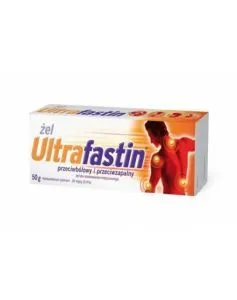
Table of Contents
Patient Information Leaflet
ULTRAFASTIN, 25 mg/g (2.5%) gel
Ketoprofenum lysinum
Please read this leaflet carefully before using the medicine, as it contains important information for the patient.
- Keep this leaflet for future reference.
- If you have any questions, please consult your doctor or pharmacist.
- This medicine has been prescribed for a specific individual. Do not pass it on to others. The medicine may harm others, even if their symptoms are the same.
- If you experience any adverse reactions, including any not listed in this leaflet, inform your doctor or pharmacist. See section 4.
Table of contents
- What Ultrafastin is and what it is used for
- Important information before using Ultrafastin
- How to use Ultrafastin
- Possible side effects
- How to store Ultrafastin
- Contents of the pack and other information
1. What Ultrafastin is and what it is used for
Ultrafastin is a topical medicine. Its active substance, ketoprofen lysine salt, belongs to the group of non-steroidal anti-inflammatory and analgesic drugs (NSAIDs). Ketoprofen is well absorbed through intact skin. It does not tend to accumulate in the body. Ultrafastin is metabolized in the liver and excreted in urine as inactive metabolites.
Ultrafastin is indicated for the treatment of:
- Muscular and joint trauma-related pain;
- Tendonitis.
2. Important information before using Ultrafastin
When not to use Ultrafastin:
- if the patient is allergic to ketoprofen or any of the other ingredients of this medicine (listed in section 6);
- if the patient is allergic to acetylsalicylic acid or other non-steroidal anti-inflammatory drugs, tiaprofenic acid, fenofibrate, UV filters, or perfumes;
- if the patient has skin allergies;
- if the patient has infectious diseases accompanied by skin lesions;
- if the patient has burns;
- if the patient has damaged skin;
- in children and adolescents under 15 years of age;
- if the patient is in the last three months of pregnancy.
The treated area of skin must not be exposed to sunlight (even if the sky is overcast) or to UV radiation in solariums during treatment and for 2 weeks after discontinuing the use of the medicine.
Immediately discontinue use if skin reactions occur, including skin reactions after concomitant use of medicines containing octocrylene (octocrylene is one of the excipients used to delay degradation under light in various cosmetics and hygiene products such as: shampoos, after-shave products, shower gels and bath products, skin creams, lipsticks, anti-wrinkle creams, makeup removers, hair lacquers).
Warnings and precautions
Exposure to sunlight (even if the sky is overcast) or UVA radiation on areas of skin where Ultrafastin has been applied may cause serious skin reactions (photosensitivity).
Therefore, it is necessary to:
- protect the treated areas of skin by wearing clothing during treatment and for two weeks after stopping the medicine, to avoid the risk of photosensitivity. During treatment and for 2 weeks after its completion, exposure to sunlight (including solariums) should be avoided;
- thoroughly wash hands after each application of Ultrafastin, unless the hands are the area being treated.
Treatment should be immediately discontinued if any skin reactions develop after applying Ultrafastin.
The eyes and mucous membranes should be protected from contact with Ultrafastin.
Do not apply the medicine to large areas of the body.
Do not use under occlusive dressings.
When massaging into the skin over prolonged periods, protective gloves should be worn.
Do not exceed the recommended duration of use due to the increasing risk of developing contact dermatitis and hypersensitivity reactions with prolonged use.
Exercise caution in patients with chronic asthma associated with chronic inflammation of the nasal mucosa, sinusitis, and/or nasal polyps. These patients have a higher risk of allergic reactions to acetylsalicylic acid and/or NSAIDs than the general population.
Use of Ultrafastin gel in patients with circulatory disorders, kidney or liver dysfunction
Ketoprofen should be used with caution in patients with circulatory disorders, kidney or liver dysfunction, as isolated cases of systemic adverse effects involving kidney function disturbances have been reported.
Children and adolescents
The safety of use in children has not been established.
Do not use Ultrafastin gel in children and adolescents under 15 years of age.
Ultrafastin and other medicines
Inform your doctor or pharmacist about all medicines currently used or recently used, as well as any medicines planned for use.
Ketoprofen used topically is absorbed in small amounts; therefore, interactions with other medicines are unlikely.
Pregnancy and breastfeeding
If the patient is pregnant or breastfeeding, suspects she may be pregnant, or is planning to have a child, she should consult a doctor or pharmacist before using this medicine.
Do not use Ultrafastin if the patient is in the last three months of pregnancy.
During the first 6 months of pregnancy, do not use Ultrafastin unless the doctor considers its use absolutely necessary. If treatment is required during this period, the lowest possible dose for the shortest possible time should be used.
Oral forms (e.g. tablets) of ketoprofen may cause adverse effects in the unborn child. It is not known whether the same risk applies when Ultrafastin is applied to the skin.
Use of this medicine is not recommended in breastfeeding women.
Driving and operating machinery
There is no data on adverse effects of Ultrafastin affecting the ability to drive or operate machinery.
Ultrafastin contains methyl parahydroxybenzoate and propyl parahydroxybenzoate
This medicine may cause allergic reactions (including delayed-type reactions).
3. How to use Ultrafastin
This medicine should always be used as directed by a physician. If in doubt, consult a doctor or pharmacist.
Topical gel for application to the skin.
Adults
Apply a small amount of gel 2 to 3 times daily to the skin over the painful area and massage gently for several minutes. After applying the gel, wash hands unless the hands are the area being treated.
Treatment should not last longer than 1 week.
Use of a higher than recommended dose of Ultrafastin
Overdose with topically applied ketoprofen is unlikely. If too much gel has been applied to the skin, excess should be washed off with water.
The possibility of adverse effects should be considered.
If the gel has been accidentally ingested, contact a doctor or pharmacist immediately.
Following accidental ingestion, symptoms such as drowsiness, nausea, and vomiting may occur, depending on the amount of substance swallowed. Ingestion of large doses may lead to respiratory depression, coma, convulsions, gastrointestinal bleeding, increased or decreased arterial blood pressure, and acute kidney failure.
If less than 1 hour has passed since the overdose, the doctor may perform gastric lavage and initiate symptomatic treatment.
Missed dose of Ultrafastin
If a dose has been missed, continue treatment by applying and massaging into the skin the recommended amount of gel.
Do not apply a double dose to make up for a missed dose.
If you have any further questions about the use of this medicine, consult your doctor or pharmacist.
4. Possible adverse reactions
Like all medicines, this medicine can cause adverse reactions, although not everyone experiences them.
The following adverse reactions have been observed after administration of Ultrafastin.
Uncommon adverse reactions (in less than 1 in 100 patients): local skin reactions such as erythema, rash, pruritus, and burning sensation.
Rare adverse reactions (in less than 1 in 1,000 patients): (dermatological disorders) photosensitivity and urticaria. Severe reactions such as bullous or exanthematous eruptions, which may spread or become generalized.
Very rare adverse reactions (in less than 1 in 10,000 patients): worsening of pre-existing renal insufficiency.
Frequency not known (cannot be estimated from available data): anaphylactic shock, angioedema, hypersensitivity reactions.
Other adverse effects (gastrointestinal, renal effects) result from the penetration of the active substance through the skin and therefore depend on the amount of gel used, the skin surface treated, the degree of tissue absorption, duration of therapy, and whether or not an occlusive dressing is used.
In patients allergic to acetylsalicylic acid and other NSAIDs, bronchial asthma attacks may occur.
Reporting of adverse reactions
If any adverse reactions occur, including those not listed in this leaflet, inform your doctor or pharmacist. Adverse reactions can be reported directly to the Department of Monitoring of Adverse Drug Reactions of the Office for Registration of Medicinal Products, Medical Devices and Biocidal Products
Al. Jerozolimskie 181C
02 222 Warsaw
Phone: +48 22 49 21 301
Fax: +48 22 49 21 309
Website: https://smz.ezdrowie.gov.pl
Adverse reactions can also be reported to the marketing authorization holder.
Reporting adverse reactions helps to provide more information on the safety of this medicine.
5. How to store Ultrafastin
Keep this medicine out of sight and reach of children.
Do not use this medicine after the expiry date stated on the packaging. The expiry date refers to the last day of the stated month.
The marking on the package following the abbreviation EXP indicates the expiry date, and the marking following the abbreviation Lot/LOT indicates the batch number.
Store below 25°C.
After first opening the package, the medicine should be used within 6 months.
Medicines must not be disposed of via wastewater or household waste. Ask your pharmacist how to dispose of medicines no longer in use. This will help protect the environment.
6. Contents of the package and other information
What Ultrafastin contains
- The active substance is lysine salt of ketoprofen. 1 g of gel contains 25 mg of ketoprofen lysine salt.
- Other components of the medicine are: macrogol 200, tromethamine, carbomer 980, methyl parahydroxybenzoate, propyl parahydroxybenzoate, purified water.
What Ultrafastin looks like and contents of the pack
Ultrafastin is a clear yellow, slightly opalescent gel. The carton contains an aluminum membrane tube closed with a cap with a piercing device, containing 50 g of gel.
Marketing Authorisation Holder
Zakłady Farmaceutyczne POLPHARMA S.A.
Pelplińska 19, 83-200 Starogard Gdański
tel. +48 22 364 61 01
Manufacturer
Zakłady Farmaceutyczne POLPHARMA S.A.
Medana Branch in Sieradz
Władysława Łokietka 10, 98-200 Sieradz