Tussi drill
Poland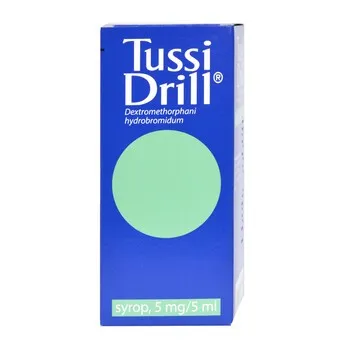
Table of Contents
Patient Information Leaflet
Tussi Drill, 5 mg/5 ml, syrup
Dextromethorphani hydrobromidum
Please read the following information carefully before using the medicine, as it contains
important information for the patient.
This medicine should always be used exactly as described in this patient leaflet or as directed by a
doctor or pharmacist.
- Keep this leaflet, so that you can read it again if necessary.
- If you need advice or further information, please consult your pharmacist.
- If the patient experiences any adverse reactions, including any not listed in this leaflet, inform a doctor or pharmacist. See section 4.
- If there is no improvement after 5 days, or if the patient feels worse, contact a doctor.
Table of Contents
- What Tussi Drill is and what it is used for
- Important information before taking Tussi Drill
- How to take Tussi Drill
- Possible side effects
- How to store Tussi Drill
- Contents of the pack and other information
1. What Tussi Drill is and what it is used for
Tussi Drill syrup belongs to a group of medicines used to suppress and relieve dry cough, known as antitussives.
This medicine is an oral syrup intended for short-term treatment of acute dry cough.
The medicine is intended for children over 6 years of age.
Indications:
For temporary relief of acute dry cough.
If there is no improvement after 5 days, or if the patient feels worse, contact a doctor.
2. Important information before using Tussi Drill
When not to use Tussi Drill:
if the patient is allergic to the active substance (dextromethorphan) or to any of the other
components of this medicine (listed in section 6);
if the patient has breathing difficulties (respiratory failure or risk of respiratory failure);
if the patient has severe obstructive lung disease (airway narrowing within the lungs) or asthma;
if the patient is taking antidepressant medicines known as monoamine oxidase inhibitors (MAOIs)
or has taken such medicines within the last 14 days;
if the patient is taking a medicine containing cinacalcet (a medicine that reduces parathyroid
hormone levels in the blood);
if the patient is breastfeeding (see section "Pregnancy, breastfeeding and fertility");
in children under 6 years of age.
Warnings and precautions
Talk to your doctor or pharmacist before starting treatment.
This medicine may lead to psychological and physical dependence. For this reason, treatment
should be short-term. Special caution is advised in adolescents and young adults, as well as in
patients with a history of drug or psychoactive substance abuse.
There are two types of cough: dry cough and productive (wet) cough with mucus. Tussi Drill should
not be used to treat productive cough. Remember that productive cough is an important protective
mechanism of the bronchi and lungs, helping to clear bronchial secretions, and therefore should
not be suppressed.
Cough is a symptom of disease. If there is no improvement within 5 days or if cough recurs despite
treatment, consult your doctor to determine the underlying cause and initiate appropriate therapy.
Do not use Tussi Drill if the patient has chronic or persistent cough or if the cough is associated
with excessive mucus production.
Do not use this antitussive medicine simultaneously with expectorants or mucolytics (medicines
that thin bronchial secretions).
Before starting treatment with Tussi Drill, talk to your doctor or pharmacist:
if the patient has liver disease (liver function disorders, liver failure) or impaired kidney function
(kidney failure), as there is insufficient data on the use of this medicine in patients with liver and/or
kidney dysfunction;
if the patient is taking certain antidepressants or antipsychotics, as Tussi Drill may interact with
them, potentially leading to a condition known as "serotonin syndrome." Symptoms may include
mental status changes (e.g., agitation, hallucinations, coma), and other disturbances such as body
temperature above 38°C, rapid heartbeat, unstable blood pressure, exaggerated reflexes, muscle
rigidity, lack of coordination, and/or gastrointestinal symptoms (e.g., nausea, vomiting, diarrhea).
If such symptoms occur, discontinue the medicine immediately and seek medical help or go to the
nearest emergency department.
During treatment, inform your doctor if:
a dry cough becomes a productive cough with mucus accumulation in the airways, or if the patient
develops fever or has a fever;
there is no improvement after 5 days of treatment;
the patient feels worse.
During treatment, avoid consuming alcoholic beverages and taking medicines containing alcohol
(see: "Tussi Drill with other medicines").
Children
Do not use Tussi Drill in children under 6 years of age.
Tussi Drill with other medicines
Tell your doctor or pharmacist about all medicines the patient is currently taking, has recently taken,
or plans to take.
Do not use other antitussive medicines at the same time to avoid exceeding the maximum
recommended dose.
Do not use Tussi Drill with:
- antidepressant medicines, including monoamine oxidase inhibitors (MAOIs), e.g., moclobemide, toloxatone;
- medicines containing cinacalcet (medicines that reduce parathyroid hormone levels in the blood);
- expectorant medicines.
Avoid using Tussi Drill together with alcohol or medicines containing alcohol, as alcohol may
enhance the sedative effect of the antitussive medicine.
Tussi Drill is metabolized by the hepatic cytochrome P450 2D6 enzyme. Do not use Tussi Drill
together with medicines that inhibit the activity of hepatic cytochrome P450 2D6, as this may
significantly increase dextromethorphan levels in the body and increase the risk of adverse effects.
Before using Tussi Drill with any of the following medicines, consult your doctor, as caution is
required when using them together:
- central nervous system depressants: morphine derivatives (analgesics, antitussives, products used in opioid substitution therapy), antipsychotics (neuroleptics), barbiturates, benzodiazepines, non-benzodiazepine anxiolytics, hypnotics; medicines used to treat sleep problems caused by depression; medicines used to treat high blood pressure (e.g., clonidine and its derivatives);
- anticholinergic medicines (including imipramine derivatives, phenothiazine neuroleptics, antispasmodics, certain H1 antihistamines, anticholinergics used in Parkinson’s disease, disopyramide), which may cause gastrointestinal problems (slowed intestinal motility) leading to severe constipation;
- medicines used to treat depression (fluoxetine, paroxetine, sertraline, bupropion);
- medicines used to treat heart rhythm disorders (amiodarone, propafenone, quinidine, flecainide, disopyramide);
- analgesics and medicines used in opioid addiction treatment (methadone);
- antifungal medicines (terbinafine);
- medicines used to treat psychiatric disorders (haloperidol, perphenazine, thioridazine);
- antihistamines (used, among others, in allergic reactions); medicines used for attention deficit hyperactivity disorder (ADHD) in children;
- baclofen (used to relax muscles in conditions such as multiple sclerosis, cerebral palsy, or other disorders affecting the brain and nervous system);
- thalidomide (used in the treatment of multiple myeloma).
If in doubt whether the patient is taking any of the listed medicines, consult a doctor.
Tussi Drill and alcohol
This section does not apply to Tussi Drill, as the medicine is intended for use in children over 6 years
of age. However, the following information is relevant regarding the active substance of the
medicine, dextromethorphan hydrobromide.
Tussi Drill may cause drowsiness and dizziness. These effects may be intensified by concomitant
alcohol consumption, as alcohol enhances the sedative effect of the antitussive medicine. Avoid
alcoholic beverages and medicines containing alcohol.
Pregnancy, breastfeeding and fertility
This section does not apply to Tussi Drill, as the medicine is intended for use in children over 6 years
of age. However, the following information is relevant regarding the active substance of the
medicine, dextromethorphan hydrobromide.
If the patient is pregnant or breastfeeding, suspects she may be pregnant, or is planning to become
pregnant, she should consult her doctor or pharmacist before using this medicine.
Pregnancy
Due to insufficient data, the use of Tussi Drill is not recommended during pregnancy or in women
of childbearing age who are not using effective contraception.
High doses of dextromethorphan administered in late pregnancy may lead to respiratory depression
in the newborn. Even short-term use of dextromethorphan, regardless of dose, during the third
trimester of pregnancy may cause neonatal withdrawal syndrome.
Due to its alcohol content, the use of this medicine is not recommended during pregnancy.
Breastfeeding
Dextromethorphan, when taken in doses exceeding the recommended ones, may cause respiratory
arrest and reduced muscle tone in infants.
Dextromethorphan is contraindicated during breastfeeding.
Fertility
There are no data on the effect of Tussi Drill on fertility; therefore, a risk cannot be excluded.
Driving and operating machinery
This section does not apply to Tussi Drill, as the medicine is intended for use in children over 6 years
of age. However, the following information is relevant regarding the active substance of the
medicine, dextromethorphan hydrobromide.
When using this medicine, side effects such as drowsiness and dizziness may occur, which could be
dangerous when driving or operating machinery.
Alcohol may intensify the sedative effect of dextromethorphan (the active substance in Tussi Drill).
Tussi Drill contains ethanol
The medicine contains 18 mg of alcohol (ethanol) per 5 ml of syrup. The amount of alcohol in 5 ml of
medicine is equivalent to less than 1 ml of beer or 1 ml of wine.
The small amount of alcohol in this medicine will not cause noticeable effects.
Tussi Drill contains maltitol
5 ml of syrup contains 5 g of liquid maltitol. If the patient has previously been diagnosed with
intolerance to certain sugars, consult a doctor before administering the medicine. The medicine may
have a mild laxative effect. Calorific value: 2.3 kcal/g of maltitol.
Tussi Drill contains sodium methyl parahydroxybenzoate (E 219) and sodium propyl parahydroxybenzoate
The medicine may cause allergic reactions (including delayed-type reactions).
Tussi Drill contains sodium
The medicine contains less than 1 mmol (23 mg) of sodium per dose (5 ml of syrup), meaning the
medicine is considered "sodium-free."
Tussi Drill contains glucose
If the patient has previously been diagnosed with intolerance to certain sugars, consult a doctor
before taking the medicine.
Tussi Drill contains propylene glycol (E 1520)
The medicine contains 23.5 mg of propylene glycol per 5 ml of syrup, corresponding to a maximum
daily dose of 4.7 mg/kg body weight/day.
Tussi Drill contains sulfur dioxide (E 220)
The medicine may rarely cause severe hypersensitivity reactions and bronchospasm.
3. How to use Tussi Drill
This medicine should always be taken exactly as described in this patient leaflet or as directed by a doctor or pharmacist. If in doubt, consult a doctor or pharmacist.
This medicine is intended for children aged over 6 years.
The maximum single dose of dextromethorphan bromide in children is 0.25 mg/kg body weight.
This dose may be administered no more than 4 times daily, with intervals of at least 6 hours, e.g. for a child weighing 20 kg: 1 measuring spoonful 4 times daily.
Use the lowest effective dose.
Do not exceed a single dose of 0.25 mg/kg body weight.
Do not exceed a daily dose of 1 mg/kg body weight.
Symptomatic treatment should be short-term (up to 5 days). Consult a doctor if there is no improvement after 5 days or if the patient feels worse.
The use of Tussi Drill should be limited only to temporary treatment of acute, dry cough.
Do not exceed the maximum recommended dose.
One measuring spoonful contains 5 ml of syrup (5 mg dextromethorphan bromide).
The medicine should be taken orally, using the measuring spoon provided. After each use, the measuring spoon should be rinsed with water.
Children and adolescents
In cases of overdose in children, severe adverse reactions may occur, including neurological disturbances. Caregivers should not administer doses exceeding those recommended.
Taking more Tussi Drill than recommended
If a patient takes more Tussi Drill than prescribed, or if a child accidentally swallows this medicine, stop using the medicine immediately and contact a doctor or go to the nearest hospital emergency department without delay.
The following symptoms may occur: nausea, vomiting, involuntary muscle contractions (dystonia), agitation, confusion, drowsiness, disturbances of consciousness, involuntary rapid eye movements (nystagmus), cardiac complications such as rapid heartbeat (tachycardia) and abnormal ECG, coordination disturbances, psychosis with visual hallucinations, and increased excitability. Other symptoms of significant overdose include coma, severe respiratory disturbances (respiratory depression), and seizures.
If you miss a dose of Tussi Drill
Do not take a double dose to make up for a missed dose.
If a dose is missed, take the next dose as soon as possible, provided the patient is still coughing. However, do not exceed the recommended daily dose of the medicine.
4. Possible adverse reactions
Like all medicines, Tussi Drill may cause adverse reactions, although not everyone experiences them.
The following adverse reactions may occur (their frequency is unknown (cannot be estimated based on available data)):
nausea, vomiting, constipation.
drowsiness, dizziness.
allergic reactions such as: itching (pruritus), rash, itchy rash (urticaria), difficulty in breathing (bronchospasm), sudden onset of swelling of the face, tongue and (or) throat and (or) legs (angioedema), which, when affecting the oral cavity or throat, may impair breathing and require urgent medical intervention. If such symptoms occur, administration of the medicine should be discontinued and immediate medical help should be sought.
Cases of dekstrometorfan abuse have been reported, particularly among adolescents, young adults and patients with a history of drug or psychotropic substance abuse, in order to improve well-being or induce hallucinations (see also section "Warnings and precautions").
Reporting of adverse reactions
If any adverse reactions occur, including any adverse reactions not listed in this leaflet, inform your doctor or pharmacist. Adverse reactions can be reported directly to the Department of Monitoring Adverse Drug Reactions, Office for Registration of Medicinal Products, Medical Devices and Biocidal Products:
Al. Jerozolimskie 181C, 02-222 Warsaw, phone: +48 22 49-21-301, fax: +48 22 49-21-309,
website: https://smz.ezdrowie.gov.pl
Adverse reactions can also be reported to the marketing authorization holder.
Reporting adverse reactions helps to enhance the safety information available for this medicine.
5. How to store Tussi Drill
Keep this medicine out of sight and reach of children.
Do not use this medicine after the expiry date stated on the carton and bottle:
EXP. The expiry date refers to the last day of the stated month.
No special storage conditions are required for this medicine.
The shelf life after first opening the bottle: 5 days.
Do not use after the expiry date.
Medicines must not be disposed of via the sewage system or household waste. Ask your pharmacist
how to dispose of medicines no longer required. Such measures will help protect
the environment.
6. Contents of the pack and other information
What Tussi Drill contains
- The active substance is dextromethorphan hydrobromide. 5 ml (1 measuring teaspoon) of syrup contains 5 mg of dextromethorphan hydrobromide.
- Other ingredients are: liquid maltitol, sodium methyl parahydroxybenzoate (E 219), sodium propyl parahydroxybenzoate, caramel flavour 28A103 (containing glucose syrup, ethanol, flavouring substances, caffeine, propylene glycol (E 1520) and sulfur dioxide (E 220)), lactic acid, purified water.
What Tussi Drill looks like and contents of the pack
Tussi Drill is a viscous, clear, almost colourless syrup.
Pack: 150 ml syrup in a glass bottle, with a 5 ml measuring spoon, in a cardboard box.
Marketing Authorisation Holder
PIERRE FABRE MEDICAMENT
Les Cauquillous
81500 Lavaur
France
Manufacturer
PIERRE FABRE MEDICAMENT PRODUCTION
Site PROGIPHARM
Rue du Lycée
45500 Gien
France
For further information, please contact the representative of the Marketing Authorisation Holder:
Pierre Fabre Medicament Polska sp. z o.o.
ul. Belwederska 20/22
00-762 Warszawa
tel. 22 559 63 00