Tritace 5
Poland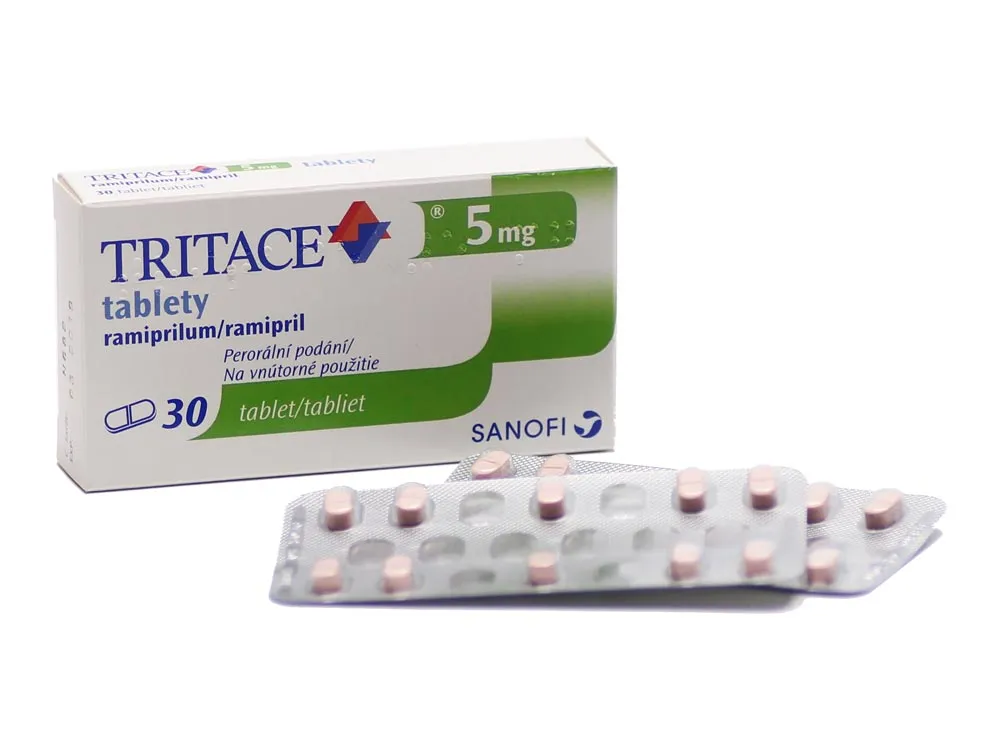
Table of Contents
Package leaflet: Information for the user
Warning! Keep this leaflet! Information on the immediate packaging is in a foreign language.
Tritace 5 (Cardace 5 mg), 5 mg, tablets
Ramiprilum
Tritace 5 and Cardace 5 mg are different trade names for the same medicine.
Please read the entire leaflet carefully before using the medicine, as it contains
important information for the patient.
- Keep this leaflet, so that you can read it again if necessary.
- If you have any questions, please consult your doctor or pharmacist.
- This medicine has been prescribed for a specific individual. Do not pass it on to others. The medicine may harm someone else, even if their symptoms are the same.
- If you experience any adverse effects, including any not listed in this leaflet, inform your doctor or pharmacist. See section 4.
Table of contents
- What Tritace 5 is and what it is used for
- Important information before taking Tritace 5
- How to take Tritace 5
- Possible side effects
- How to store Tritace 5
- Contents of the pack and other information
1. What Tritace 5 is and what it is used for
Tritace 5 contains the active substance ramipril. It belongs to a group of medicines called ACE inhibitors (angiotensin-converting enzyme inhibitors).
Tritace 5 works by:
- reducing the production in the body of substances that raise blood pressure,
- reducing tension and widening blood vessels,
- helping the heart to pump blood through the body.
Tritace 5 may be used to:
- treat high blood pressure (hypertension),
- reduce the risk of heart attack or stroke,
- reduce or delay the progression of kidney problems (regardless of whether the patient has diabetes),
- treat heart failure, when the heart does not pump enough blood to the rest of the body,
- treat patients after a heart attack complicated by heart failure.
2. Important information before using Tritace 5
When not to use Tritace 5
- If the patient is allergic to ramipril, another medicine in the ACE inhibitor class, or any of the other ingredients of this medicine (listed in section 6). Symptoms of an allergic reaction may include: rash, difficulty swallowing or breathing, swelling of the lips, face, throat or tongue.
- If the patient has ever had a serious allergic reaction called "angioedema". Symptoms include: itching, hives, red spots on the palms, soles and throat, swelling of the throat and tongue, swelling around the eyes and lips, difficulty breathing and swallowing.
- If the patient is taking or has taken sacubitril in combination with valsartan, a medicine used to treat chronic (long-term) heart failure in adults.
- If the patient is undergoing dialysis or other type of blood filtration. Depending on the type of equipment used, Tritace 5 may not be suitable.
- If the patient has kidney function disorders due to reduced blood flow to the kidneys (renal artery stenosis).
- During the last 6 months of pregnancy (see section below "Pregnancy and breastfeeding").
- If blood pressure is very low or unstable – the doctor may recommend frequent blood pressure monitoring.
- If the patient has diabetes or kidney function disorders and is being treated with a blood pressure-lowering medicine containing aliskiren.
Do not use Tritace 5 if any of the above situations apply.
If in doubt about using this medicine, consult a doctor before starting Tritace 5.
Warnings and precautions
Before starting Tritace 5, discuss this with your doctor or pharmacist if:
- The patient has heart, liver or kidney disease.
- The patient has recently lost a significant amount of electrolytes or fluids (through vomiting, diarrhoea, excessive sweating, a low-sodium diet, long-term use of diuretics (water tablets), or dialysis).
- The patient is due to undergo treatment to reduce allergic reactions to bee or wasp venom (desensitisation).
- The patient is to receive medicines used in anaesthesia. These may be used during surgical or dental procedures. It may be necessary to stop taking Tritace 5 one day before the procedure; if in doubt, contact your doctor.
- The patient has high potassium levels in the blood (shown in blood tests).
- The patient is taking medicines or has conditions that may lower sodium levels in the blood. The doctor may recommend regular blood tests, particularly to check blood sodium levels, especially in elderly patients.
- The patient is taking medicines that may increase the risk of angioedema (a serious allergic reaction), such as mTOR inhibitors (e.g. temsirolimus, everolimus, sirolimus), vildagliptin, neprilysin inhibitors (NEP) (such as racecadotril), or sacubitril in combination with valsartan (sacubitril with valsartan – see section 2 "When not to use Tritace 5").
- The patient has collagenosis, such as scleroderma or systemic lupus erythematosus.
- The patient is pregnant, suspects she may be pregnant, or is planning pregnancy. Use of Tritace 5 is not recommended during the first three months of pregnancy, and use after the third month may harm the unborn child (see section below "Pregnancy and breastfeeding").
- The patient is taking any of the following medicines used to treat high blood pressure:
- an angiotensin II receptor antagonist (AIIRA), also known as a sartan – for example, valsartan, telmisartan, irbesartan, especially if the patient has kidney disorders related to diabetes,
- aliskiren. The doctor may recommend regular monitoring of kidney function, blood pressure, and blood electrolyte levels (e.g. potassium). See also the section "When not to use Tritace 5".
Children and adolescents
Tritace 5 is not recommended for use in children and adolescents under 18 years of age, as the safety and efficacy of Tritace 5 have not been established.
If any of the above situations apply (or there is any doubt), contact a doctor before starting Tritace 5.
Tritace 5 and other medicines
Tell your doctor or pharmacist about all medicines the patient is currently taking, has recently taken, or plans to take. Tritace 5 may affect the action of other medicines, and other medicines may affect the action of Tritace 5.
Tell your doctor if the patient is taking any of the following medicines. These may reduce the effect of Tritace 5:
- Pain-relieving and anti-inflammatory medicines (e.g. non-steroidal anti-inflammatory drugs [NSAIDs], such as ibuprofen or indometacin, and aspirin).
- Medicines used to treat low blood pressure, shock, heart failure, asthma or allergies, such as: ephedrine, noradrenaline or adrenaline. The doctor will monitor the patient's blood pressure.
Tell your doctor if the patient is taking any of the following medicines. These may increase the risk of adverse effects when used together with Tritace 5:
- sacubitril in combination with valsartan – used to treat chronic (long-term) heart failure in adults (see section 2 "When not to use Tritace 5"),
- pain-relieving and anti-inflammatory medicines (e.g. non-steroidal anti-inflammatory drugs [NSAIDs], such as ibuprofen or indometacin, and aspirin),
- medicines used in cancer treatment (chemotherapy),
- medicines used to prevent organ transplant rejection, such as cyclosporine,
- diuretics (water tablets), such as furosemide,
- medicines that increase potassium levels in the blood, such as: spironolactone, triamterene, amiloride, potassium salts, trimethoprim used alone or in combination with sulfamethoxazole (used to treat bacterial infections), and heparin (a blood-thinning medicine),
- corticosteroid anti-inflammatory medicines, such as prednisolone,
- allopurinol (used to reduce uric acid levels in the blood),
- propranolol (used for heart rhythm disorders),
- temsirolimus (used in cancer treatment),
- sirolimus, everolimus (used to prevent transplant rejection),
- vildagliptin (used to treat type 2 diabetes),
- racecadotril (used to treat diarrhoea),
- the doctor may recommend a dose adjustment and/or additional precautions if the patient is taking an angiotensin II receptor antagonist (AIIRA) or aliskiren (see also sections "When not to use Tritace 5" and "Warnings and precautions").
Tell your doctor if the patient is taking any of the following medicines. Their effect may be altered when taking Tritace 5:
- antidiabetic medicines, such as oral glucose-lowering agents and insulin. Tritace 5 may lower blood glucose levels. Blood glucose levels should be monitored regularly during treatment with Tritace 5.
- lithium (used for psychiatric disorders). Tritace 5 may increase lithium levels in the blood. The doctor will recommend monitoring lithium levels in the blood.
If any of the above conditions apply (or if there is any doubt), consult a doctor before starting Tritace 5.
Tritace 5 with food and alcohol
- Drinking alcohol while taking Tritace 5 may cause dizziness and lightheadedness. If in doubt about how much alcohol is safe while taking Tritace 5, talk to your doctor about the possible combined effects of blood pressure-lowering medicines and alcohol.
- Tritace 5 can be taken with or without food.
Pregnancy and breastfeeding
Pregnancy
If the patient is pregnant or breastfeeding, suspects she may be pregnant, or is planning to become pregnant, she should consult a doctor before using this medicine. Tritace 5 should not be used during the first 12 weeks of pregnancy and must not be used from the 13th week of pregnancy onwards, as its use during pregnancy may harm the unborn child. If pregnancy occurs while taking Tritace 5, inform the doctor immediately. Before planning a pregnancy, therapy should be changed to an appropriate alternative treatment.
Breastfeeding
The patient should not take Tritace 5 if she is breastfeeding.
Before taking any medicine, consult a doctor or pharmacist.
Driving and using machines
Dizziness may occur while taking Tritace 5. The risk of dizziness is higher at the beginning of treatment with Tritace 5 and after a dose increase. If the patient experiences dizziness, they should not drive, use tools or operate machinery.
Tritace 5 contains sodium
This medicine contains less than 1 mmol (23 mg) of sodium per tablet, i.e. it is considered "sodium-free".
3. How to use Tritace 5
This medicine should always be taken as instructed by the doctor. If in doubt, consult
the doctor or pharmacist.
The following products are available on the market: Tritace 2.5 (2.5 mg), Tritace 5 (5 mg), Tritace 10 (10 mg).
Dosage
Treatment of arterial hypertension
-
The usual initial dose is 1.25 mg or 2.5 mg once daily.
-
The doctor may adjust the dose until adequate control of blood pressure is achieved.
-
The maximum dose is 10 mg once daily.
-
If diuretics (diuretic medicines) are being used, the doctor may discontinue or reduce the dose of the diuretic before starting treatment with Tritace 5.
Prevention of myocardial infarction or stroke -
The usual initial dose is 2.5 mg once daily.
-
The doctor may decide to increase the dose.
-
The usual dose is 10 mg once daily.
Reduction or delay of deterioration in kidney function -
The usual initial dose is 1.25 mg or 2.5 mg once daily.
-
The doctor may modify the dosage.
-
The usual dose is 5 mg or 10 mg once daily.
Treatment of heart failure -
The usual initial dose is 1.25 mg once daily.
-
The doctor may modify the dosage.
-
The maximum dose is 10 mg per day. Administration in two divided doses is recommended.
Treatment after myocardial infarction -
The usual initial dose is 1.25 mg to 2.5 mg once daily.
-
The doctor may modify the dosage.
-
The usual dose is 10 mg per day. Administration in two divided doses is recommended.
Elderly patients
The doctor will recommend a lower than usual initial dose, which will then be gradually increased.
How to take the medicine
- This medicine should be taken orally, at the same time each day.
- Tablets should be taken with liquid.
- Do not crush or chew the tablets.
Taking more Tritace 5 than prescribed
Contact a doctor or go to the nearest hospital emergency department immediately.
Do not drive yourself; ask someone to take you to the hospital or call an ambulance.
Bring the medicine packaging with you so the doctor knows which medicine has been taken.
Missed dose of Tritace 5
- If a dose is missed, take the next scheduled dose at the usual time.
- Do not take a double dose to make up for the missed dose.
If you have any further doubts about the use of this medicine, consult your doctor or pharmacist.
4. Possible adverse reactions
Like all medicines, this medicine can cause adverse reactions, although not everyone will experience them.
If the patient notices any of the following serious adverse reactions, treatment with Tritace 5 must be
discontinued and immediate contact with a doctor is required – urgent medical assistance may be
necessary:
- Swelling of the face, lips or throat causing difficulty in swallowing or breathing, together with itching and rash. These may be symptoms of a severe allergic reaction to Tritace 5.
- Severe skin changes, including rash, mouth ulcers, worsening of pre-existing skin disorders, redness, blisters or skin peeling (such as Stevens-Johnson syndrome, toxic epidermal necrolysis or erythema multiforme).
If any of the following conditions occur, contact a doctor promptly:
- Rapid heartbeat, irregular or stronger heartbeats (palpitations), chest pain, sensation of pressure in the chest, or more severe conditions including heart attack or stroke.
- Shortness of breath or cough. These may indicate lung disorders.
- Easy bruising, prolonged bleeding time, any signs of bleeding (e.g. bleeding gums), purpuric skin spots, or more frequent infections, sore throat and fever, fatigue, weakness, dizziness or pale skin. These may indicate blood or bone marrow disorders.
- Severe abdominal pain which may radiate to the back. These may be symptoms of pancreatitis.
- Fever, chills, weakness, loss of appetite, abdominal pain, nausea, yellowing of the skin or whites of the eyes (jaundice). These may be symptoms of liver disorders, such as hepatitis or liver damage.
Other adverse reactions
Tell your doctor if any of the following symptoms become severe or persist for more than a few days.
Common (may affect less than 1 in 10 patients)
- Headache or feeling of fatigue,
- Dizziness; risk is higher at the beginning of treatment with Tritace 5 and after dose increase,
- Fainting, hypotension (abnormally low blood pressure), especially after sudden change from lying to sitting or standing position,
- Dry, persistent cough, sinusitis or bronchitis, shortness of breath,
- Abdominal or intestinal pain, diarrhoea, indigestion, nausea or vomiting,
- Rash with or without raised lesions,
- Chest pain,
- Muscle cramps or pain,
- Elevated potassium levels in blood tests.
Uncommon (may affect less than 1 in 100 patients)
- Balance disorders (dizziness),
- Itching of the skin and sensory disturbances such as numbness, tingling, pricking, burning sensation or crawling sensation on the skin (paraesthesiae),
- Loss or disturbances of taste sensation,
- Sleep disturbances,
- Depression, anxiety, nervousness or restlessness,
- Nasal congestion, breathing difficulties or worsening of asthma,
- Intestinal swelling known as "intestinal angioedema", presenting with abdominal pain, vomiting and diarrhoea,
- Heartburn, constipation or dry mouth,
- Increased urine output during the day,
- Excessive sweating,
- Loss or decrease of appetite (anorexia),
- Rapid or irregular heartbeat,
- Swelling of hands and feet; may be a sign of increased fluid retention,
- Sudden flushing of the face,
- Blurred vision,
- Joint pain,
- Fever,
- Impotence, decreased libido in men and women,
- Increased number of certain white blood cells (eosinophilia) in blood tests,
- Blood test results indicating changes in liver, pancreas or kidneys.
Rare (may affect less than 1 in 1000 patients)
- Feeling of uneasiness, disorientation, confusion,
- Red, swollen tongue,
- Excessive skin scaling, itchy nodular rash,
- Nail disorders (e.g. loosening or separation of the nail from the nail bed),
- Rash or purpura (bruising) of the skin,
- Skin spots and cold extremities,
- Redness, itching, swelling and watering of the eyes,
- Hearing disturbances and tinnitus,
- Weakness,
- Decreased number of red blood cells, white blood cells or platelets, or decreased haemoglobin concentration in blood tests.
Very rare (may affect less than 1 in 10,000 patients)
- Photosensitivity (increased sensitivity to sunlight).
Other reported adverse reactions:
If any of the symptoms listed below worsen or persist for more than a few days, inform your doctor.
- Difficulty concentrating,
- Swelling of the lips,
- Detection of low blood cell counts in blood tests,
- Detection of abnormally low sodium levels in blood tests,
- Concentrated urine (dark in colour), nausea or vomiting, muscle cramps, confusion and seizures, which may result from inappropriate ADH secretion (antidiuretic hormone – vasopressin). If any of the above symptoms occur, contact your doctor immediately,
- Colour changes in fingers upon exposure to cold, accompanied by tingling or pain upon warming (Raynaud's phenomenon),
- Breast enlargement in men,
- Slowed or impaired reactions,
- Burning sensation,
- Smell disturbances,
- Hair loss.
Reporting of adverse reactions
If any adverse reactions occur, including those not listed in this leaflet, inform your doctor or pharmacist. Adverse reactions can be reported directly to the Department of Monitoring Adverse Drug Reactions at the Office for Registration of Medicinal Products, Medical Devices and Biocidal Products, Al. Jerozolimskie 181C, 02-222 Warsaw, tel.: +48 22 49 21 301, fax: +48 22 49 21 309, website: https://smz.ezdrowie.gov.pl.
Reporting adverse reactions helps to provide more information on the safety of the medicine.
5. How to store Tritace 5
Keep this medicine out of the sight and reach of children.
Do not use this medicine after the expiry date stated on the packaging. The expiry date refers to the last day of the stated month.
No special storage instructions apply.
Medicines must not be disposed of via wastewater or household waste. Ask your pharmacist how to dispose of medicines no longer required. Such measures help protect the environment.
6. Contents of the packaging and other information
What Tritace 5 contains
The active substance is ramipril. Each tablet contains 5 mg of ramipril.
The other ingredients are: hypromellose, pregelatinized starch, microcrystalline cellulose, sodium stearyl fumarate, red iron oxide (E 172).
What Tritace 5 looks like and contents of the pack
The tablets are pale red, oblong, divisible, measuring 8 x 4 mm, with an imprint of "5" and "company logo" on one side and "5" and "HMP" on the other side. The tablet can be divided into equal doses.
Tritace 5 tablets are packed in packs containing 28 tablets in PVC/Aluminum blisters.
For more detailed information, please contact the Marketing Authorisation Holder or the Parallel Importer.
Marketing Authorisation Holder in Latvia, country of export:
Sanofi Winthrop Industrie
82, avenue Raspail
94250 Gentilly
France
Manufacturer:
Sanofi S.r.l., Strada Statale 17, Km 22, 67019 Scoppito, Italy
Delpharm Dijon, 6, boulevard de l’Europe, 21800 Quetigny, France
S.C. ZENTIVA S.A., B-dul Theodor Pallady nr. 50, Sector 3, 032266 Bucharest, Romania
Sanofi Aventis Deutschland GmbH, Industriepark Höchst Brüningstraße 50, D-65926 Frankfurt am Main, Germany
Parallel Importer:
InPharm Sp. z o.o.
ul. Strumykowa 28/11
03-138 Warsaw
Poland
Repackaged by:
InPharm Sp. z o.o. Services sp. k.
ul. Chełmżyńska 249
04-458 Warsaw
Poland
Marketing Authorisation Number in Latvia, country of export: 99-0108
Parallel Import Licence Number: 267/23