Trimesolphar
Poland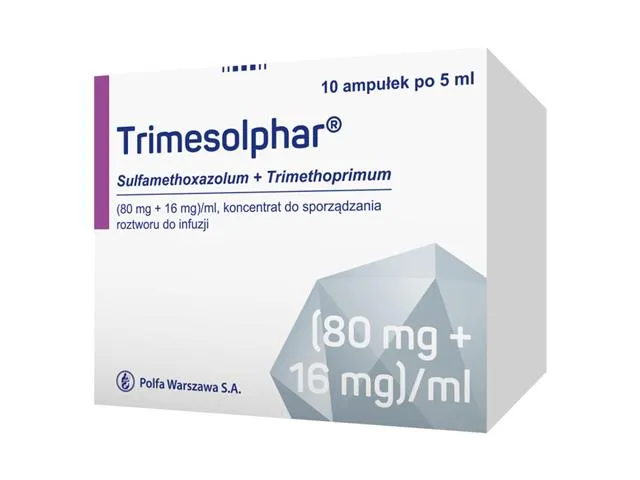
Table of Contents
- Package leaflet: Information for the patient
- 1. What Trimesolphar is and what it is used for
- 2. Information before using Trimesolphar
- 3. How to use Trimesolphar
- 4. Possible adverse reactions
- 5. How to store Trimesolphar
- 6. Contents of the pack and other information
- Information intended exclusively for healthcare professionals:
Package leaflet: Information for the patient
Trimesolphar, (80 mg + 16 mg)/ml, concentrate for solution for infusion
Sulfamethoxazolum + Trimethoprimum
Please read this leaflet carefully before using the medicine, as it contains
important information for the patient.
- Keep this leaflet so that you can read it again if necessary.
- If you have any further questions, please consult your doctor, pharmacist, or nurse.
- This medicine has been prescribed for a specific individual. Do not pass it on to others. The medicine may harm someone else, even if their symptoms are the same.
- If the patient experiences any adverse reactions, including any adverse reactions not listed in this leaflet, they should inform their doctor, pharmacist, or nurse. See section 4.
Leaflet contents
- What Trimesolphar is and what it is used for
- Important information before using Trimesolphar
- How to use Trimesolphar
- Possible side effects
- How to store Trimesolphar
- Contents of the pack and other information
1. What Trimesolphar is and what it is used for
Trimesolphar is an antibacterial medicine containing two active substances – sulfamethoxazole and trimethoprim (co-trimoxazole). It is intended for intravenous administration after prior dilution, in patients who cannot take the medicine orally.
Trimesolphar is used:
- in the treatment of severe uncomplicated urinary tract infections;
- in the treatment and prevention of pneumonia caused by Pneumocystis jirovecii;
- in the treatment and prevention of toxoplasmosis (a disease caused by microorganisms, manifesting with lesions in the eyes, nervous system, and in the developing fetus if the mother is infected);
- in the treatment of nocardiosis (a disease caused by microorganisms, manifesting with skin lesions or organ involvement, e.g. in the lungs). Trimesolphar is intended for use in adults, adolescents, children, and infants above the age of 6 weeks.
Trimesolphar is always administered by medical personnel.
2. Information before using Trimesolphar
When not to use Trimesolphar:
- if the patient is allergic to sulfamethoxazole, trimethoprim, drugs from the sulfonamide group, or any of the other ingredients of this medicine (listed in section 6);
- if the patient has severe liver parenchymal damage;
- if the patient has severe renal failure;
- if the patient has ever experienced a disorder called thrombocytopenia, causing bruising or bleeding, especially after taking drugs known as sulfonamides;
- if the patient has been diagnosed with porphyria – a rare disease that may affect the skin or nervous system.
Cotrimoxazole should not be administered to infants during the first 6 weeks of life.
Trimesolphar is not intended for the treatment of sore throat caused by bacteria known as beta-hemolytic streptococci of group A.
Warnings and precautions
Before starting treatment with Trimesolphar, discuss this with your doctor.
- Life-threatening skin reactions (Stevens-Johnson syndrome, toxic epidermal necrolysis [Lyell's syndrome]) have been reported after cotrimoxazole use. These reactions initially appear as red spots or circular patches on the trunk, often with blisters in their center.
- Additional symptoms to watch for include ulcers in the mouth, throat, nose, genital organs, and conjunctivae (red and swollen eyes). These potentially life-threatening skin rashes are often accompanied by flu-like symptoms. The rash may progress to widespread blisters or skin peeling.
- The highest risk of serious skin reactions occurs during the first weeks of treatment.
- If the patient has previously experienced Stevens-Johnson syndrome or toxic epidermal necrolysis [Lyell's syndrome] following administration of Trimesolphar, the drug must never be given again to this patient. If the patient develops a rash or the skin symptoms described above, inform the doctor immediately.
The doctor will exercise particular caution when using Trimesolphar and take appropriate measures:
- in patients with folic acid deficiency (e.g., elderly individuals, alcohol-dependent persons, those treated with anticonvulsants, or those with malabsorption syndrome), or with glucose-6-phosphate dehydrogenase deficiency;
- in individuals with severe atopy or asthma;
- in patients with cardiovascular or respiratory disorders; if cough or breathlessness worsens, inform the doctor immediately;
- in patients with impaired kidney and/or liver function;
- in elderly patients;
- in malnourished patients; in patients with blood disorders – if the patient has blood abnormalities such as low red blood cell count (anemia), low white blood cell count (leukopenia), or low platelet count leading to bleeding and bruising (thrombocytopenia);
- when prolonged use beyond the recommended duration is necessary;
- in patients diagnosed or suspected of having porphyria (disorders in heme formation – the red pigment which is part of certain enzymes);
- in patients with phenylketonuria (an inherited metabolic disorder) who do not follow the appropriate diet for this condition;
- in cases of increased potassium and decreased sodium levels in blood. Concurrent use of cotrimoxazole with certain medications, potassium supplements, or high-potassium foods may lead to severe hyperkalemia (elevated blood potassium levels). Symptoms of severe hyperkalemia may include muscle cramps, irregular heartbeat, diarrhea, nausea, dizziness, or headache.
Throughout the treatment period, the doctor should monitor whether the patient is producing adequate urine output.
In rare cases, crystals may appear in the urine. This risk is increased in malnourished individuals.
Severe, life-threatening adverse reactions have been reported, such as acute hepatic necrosis, agranulocytosis, aplastic anemia, other hematopoietic and blood disorders, and respiratory hypersensitivity reactions – see section 4.
An association has been observed between cotrimoxazole use and the occurrence of metabolic acidosis, manifested by very deep and rapid breathing, disturbances in consciousness, cardiac arrhythmias, and changes in blood pressure.
Trimesolphar contains two active substances. The doctor should prescribe this medicine only after considering the possibility of using a single antibacterial agent.
Hemophagocytic lymphohistiocytosis
Very rarely, severe immunological reactions have occurred due to dysregulated activation of white blood cells, leading to inflammatory states (hemophagocytic lymphohistiocytosis). These conditions may be life-threatening if not diagnosed early and treated promptly. If several of the following symptoms occur simultaneously or with slight delay – fever, swollen lymph nodes, weakness, dizziness, breathlessness, cyanosis, or skin rash – contact the doctor immediately.
Furthermore, cotrimoxazole should be avoided in infants under 8 weeks of age due to their predisposition to hyperbilirubinemia (elevated blood bilirubin levels).
Effect on laboratory tests
Trimethoprim may alter serum (blood plasma) creatinine levels when measured using the picrate method.
Trimesolphar and other medicines
Inform your doctor about all medicines currently used, recently taken, or planned for use. This is particularly important for the following medicines:
- diuretics, e.g., hydrochlorothiazide;
- pyrimethamine – an antimalarial drug; cases of megaloblastic anemia have been reported in patients taking Trimesolphar and pyrimethamine at doses exceeding 25 mg per week – simultaneous use of these drugs is not recommended;
- anticoagulants, e.g., warfarin;
- phenytoin – an antiepileptic drug;
- sulfonylurea antidiabetic drugs such as glibenclamide, glipizide, tolbutamide (sulfonylureas), repaglinide;
- digoxin – a cardiac medication;
- cyclosporine – a drug used after organ transplantation, e.g., kidney;
- azathioprine – a drug used to prevent transplant rejection and in treating autoimmune diseases;
- methotrexate – a drug used in cancer treatment; patients receiving methotrexate and Trimesolphar concurrently should be given folic acid supplements;
- lamivudine – an antiviral drug used in HIV infection;
- procainamide – an antiarrhythmic drug;
- amantadine, zidovudine – antiviral drugs;
- rifampicin – an antibacterial drug;
- drugs that increase blood potassium levels, such as potassium-sparing diuretics (e.g., spironolactone), angiotensin-converting enzyme (ACE) inhibitors, angiotensin receptor blockers. Symptoms of high blood potassium (severe hyperkalemia) may include muscle cramps, irregular heartbeat, diarrhea, nausea, dizziness, or headache.
- folic acid.
Trimesolphar with food and drink
Food and drink do not affect the action of Trimesolphar. Patients receiving this medicine should drink plenty of fluids to prevent precipitation of drug crystals in the urine.
Pregnancy, breastfeeding, and effects on fertility
Inform your doctor if the patient:
- is pregnant;
- suspects she is pregnant;
- plans to become pregnant;
- is breastfeeding.
The decision to use Trimesolphar will be made by the doctor. See also below: "Trimesolphar contains propylene glycol, ethanol, and sodium".
Effect on fertility
There are no available data on the effect on fertility.
Driving and using machines
The effect of Trimesolphar on the ability to drive and operate machinery has not been determined.
Trimesolphar contains propylene glycol, ethanol, and sodium
The medicine contains 420 mg of propylene glycol in each 1 ml, equivalent to 2100 mg/5 ml.
Before administering the medicine to a child under 5 years of age, consult a doctor or pharmacist, especially if the child is taking other medicines containing propylene glycol or alcohol.
Patients with impaired liver or kidney function, and pregnant or breastfeeding women, should not take this medicine without medical advice. The doctor may decide to perform additional monitoring in such patients.
This medicine contains 500 mg of alcohol (96% ethanol) in every 5 ml of solution, equivalent to 12 ml of beer or 5 ml of wine.
The amount of alcohol in this medicine is unlikely to affect adults and adolescents, and its effect in children is likely to be unnoticeable. It may cause some effects in younger children, such as drowsiness. The alcohol in this medicine may alter the effects of other medicines.
Consult your doctor or pharmacist before using this medicine if you are taking other medicines, are alcohol-dependent, or if you are pregnant or breastfeeding.
The medicine contains 34.5 mg of sodium (the main component of table salt) in 5 ml, corresponding to 1.73% of the maximum recommended daily dietary sodium intake for adults.
The medicine must be administered only after dilution – see section: "Information intended exclusively for healthcare professionals" at the end of the leaflet. The sodium content originating from the diluent should be taken into account when calculating the total sodium content in the prepared diluted solution. For precise information on the sodium content of the diluent used, refer to the summary of product characteristics of the diluent.
3. How to use Trimesolphar
This medicine should always be used as directed by the physician. If in doubt, consult your
doctor.
Trimesolphar is always administered by medical personnel.
- The medicine is given after prior dilution, slowly, as an intravenous infusion (i.e. by drip infusion using appropriate equipment with controlled rate of administration).
- The dose of the medicine is determined by the doctor. The dose used depends on the indication, as well as the patient's age, body weight, and general health status. For detailed dosing and administration instructions, see "Information intended exclusively for healthcare professionals" at the end of this leaflet.
Use of a higher than recommended dose of Trimesolphar
- Trimesolphar is administered by medical personnel, so it is unlikely that a patient will receive more medicine than intended. However, if the patient suspects that an excessive dose has been administered, they should inform the doctor or nurse immediately.
- Following administration of a higher than recommended dose, nausea, vomiting, dizziness, confusion (impaired consciousness) may occur; in severe overdose – bone marrow suppression. Appropriate management will be undertaken by medical personnel.
Missed dose of Trimesolphar
Trimesolphar is administered by medical personnel, so it is unlikely that a dose will be missed. However, if the patient suspects that a dose has been missed, they should inform the doctor or nurse.
4. Possible adverse reactions
Like all medicines, this medicine can cause adverse reactions, although not everyone will experience them.
Serious adverse reactions
Immediately inform a doctor or nurse if the patient experiences:
- first signs of an allergic reaction (e.g. swelling of the face, lips, tongue, throat, causing difficulty in breathing or swallowing) or severe skin reactions with blistering or peeling of the skin – see section "Warnings and precautions". Such symptoms have occurred very rarely after administration of the medicine.
- painful, raised, purple-colored skin lesions appearing on the limbs, and sometimes on the face and neck, accompanied by fever (Sweet's syndrome);
- if the patient simultaneously develops multiple symptoms such as fever, very low blood pressure, or rapid heartbeat, immediate medical attention at an emergency department is required, as these may be symptoms of shock. Such symptoms have occurred with unknown frequency after administration of the medicine (frequency cannot be estimated from available data). The doctor will decide on further management.
Very common (occurs in more than 1 in 10 patients):
- increased potassium levels in blood (manifesting as weakness, drowsiness, fatigue, irregular heartbeat).
Common (occurs in less than 1 in 10 patients):
- fungal infections of the mucous membranes of the mouth, vagina, skin, and nails;
- headache;
- nausea, diarrhoea;
- rash.
Uncommon (occurs in less than 1 in 100 patients):
- vomiting.
Very rare (occurs in less than 1 in 10,000 patients):
- pseudomembranous colitis (manifesting as diarrhoea, acute or persistent);
- disturbances in the number of various types of blood cells, including those presenting with fever and frequent infections;
- methemoglobinemia;
- purpura;
- skin petechiae, hemolysis in patients with glucose-6-phosphate dehydrogenase deficiency;
- serum sickness syndrome (systemic allergic reaction which may occur, e.g., after intravenous administration of the medicine, manifesting inter alia as fever, muscle pain, abdominal pain, joint swelling), anaphylactic reactions (a type of severe allergic reaction), angioedema (see symptoms listed at the beginning of section 4), allergic myocarditis, drug fever, allergic vasculitis, polyarteritis nodosa, systemic lupus erythematosus (immune system disorders leading to inflammatory processes affecting multiple internal organs);
- low levels of blood sugar (glucose) and/or sodium, loss of appetite;
- metabolic acidosis – see section "Warnings and precautions";
- depression, hallucinations;
- aseptic meningitis (symptoms: sudden severe headache, neck stiffness accompanied by high fever; symptoms resolve quickly after discontinuation of the medicine, but in many cases occurred upon re-exposure to co-trimoxazole or trimethoprim alone), seizures, peripheral neuropathy, ataxia;
- uveitis (middle layer of the eye wall);
- dizziness, tinnitus;
- cough, dyspnoea, pulmonary infiltrates (may be early signs of respiratory hypersensitivity, which very rarely may lead to death);
- glossitis, stomatitis;
- pancreatitis (manifesting as severe abdominal pain);
- cholestatic jaundice, hepatic necrosis (may lead to death);
- increased serum transaminase (enzymes) levels, increased bilirubin (bile pigment) levels;
- photosensitivity, exfoliative dermatitis, angioedema, persistent drug rash, erythema multiforme, potentially life-threatening severe skin reactions (Stevens-Johnson syndrome, toxic epidermal necrolysis [Lyell's syndrome]) – see symptoms listed at the beginning of section 4 and in section "Warnings and precautions";
- joint pain, muscle pain;
- renal function disorders, kidney diseases: tubulointerstitial nephritis and uveitis, renal tubular acidosis.
Frequency not known (frequency cannot be estimated from available data):
- psychotic disorder (a mental state in which one may lose touch with reality).
Adverse reactions associated with treatment of Pneumocystis jirovecii pneumonia
Very rare:
- severe hypersensitivity reactions associated with Pneumocystis jirovecii pneumonia, urticaria, drug fever, neutropenia, thrombocytopenia, increased liver enzyme levels, hyperkalemia, hyponatremia, rhabdomyolysis (muscle breakdown – manifests as severe muscle pain, kidney function impairment); Rhabdomyolysis has also been reported in HIV-positive patients receiving cotrimoxazole prophylactically or for treatment of Pneumocystis jirovecii pneumonia.
Reporting of adverse reactions
If any adverse reactions occur, including any not listed
in this leaflet, inform your doctor, pharmacist, or nurse. Adverse reactions can be reported directly to the Department of Monitoring Adverse Drug Reactions of the Office for Registration of Medicinal Products, Medical Devices
and Biocidal Products
Al. Jerozolimskie 181C
02-222 Warsaw
Tel.: + 48 22 49 21 301
Fax: + 48 22 49 21 309
Website: https://smz.ezdrowie.gov.pl
Adverse reactions can also be reported to the marketing authorization holder.
Reporting adverse reactions helps provide more information on the safety of the medicine.
5. How to store Trimesolphar
Keep the medicine out of the sight and reach of children.
Store below 25°C.
Keep the ampoules in the original packaging to protect from light.
Do not use this medicine after the expiry date stated on the ampoule and carton. The expiry date refers to the last day of the stated month.
The label on the packaging shows the expiry date after the abbreviation EXP, and the batch number after the abbreviation Lot.
Medicines must not be disposed of via wastewater or household waste. Ask your pharmacist how to dispose of medicines no longer required. This will help protect the environment.
6. Contents of the pack and other information
What Trimesolphar contains
- The active substances are sulfamethoxazole and trimethoprim. Each ml of concentrate contains 80 mg of sulfamethoxazole and 16 mg of trimethoprim. Each 5 ml ampoule contains 400 mg of sulfamethoxazole and 80 mg of trimethoprim, equivalent to 480 mg of co-trimoxazole.
- Other components: propylene glycol, ethanol 96%, ethanolamine, sodium hydroxide, sodium hydroxide 10% (for pH adjustment), water for injections.
What Trimesolphar looks like and contents of the pack
Trimesolphar is a colourless or slightly yellowish solution in ampoules.
The cardboard pack contains 10 ampoules made of colourless glass, each containing 5 ml of concentrate.
Marketing Authorisation Holder and Manufacturer
Zakłady Farmaceutyczne POLPHARMA S.A.
ul. Pelplińska 19, 83-200 Starogard Gdański
tel. +48 22 364 61 01
Information intended exclusively for healthcare professionals:
Please refer to the current Summary of Product Characteristics for Trimesolphar.
Trimesolphar, (80 mg + 16 mg)/ml, concentrate for solution for infusion
Sulfamethoxazole + Trimethoprim
Preparation and administration instructions for Trimesolphar
Trimesolphar concentrate for solution for infusion is intended for intravenous use only and must be diluted prior to administration.
Trimesolphar should be used only during periods when the patient cannot take oral medication, when immediate initiation of treatment is required, or when the patient is already receiving intravenous fluids and concurrent drug administration is convenient. Although intravenous administration of cotrimoxazole may be beneficial in severely ill patients, it may not offer greater therapeutic benefit compared to oral formulations.
Trimesolphar must be diluted immediately before use. After adding Trimesolphar to the infusion solution, the resulting mixture should be shaken vigorously to ensure thorough mixing. If precipitation or crystals are observed before or during infusion, the mixture must be discarded and a new one prepared.
The following dilution regimen is recommended for Trimesolphar:
1 ampoule (5 ml) of Trimesolphar in 125 ml of infusion solution
2 ampoules (10 ml) of Trimesolphar in 250 ml of infusion solution
3 ampoules (15 ml) of Trimesolphar in 500 ml of infusion solution
The following infusion solutions are permitted for dilution of Trimesolphar:
- 5% and 10% glucose solution,
- 0.9% NaCl solution,
- Ringer's solution,
- 0.45% NaCl with 2.5% glucose solution.
The prepared Trimesolphar infusion solution must not be mixed with other medicinal products or with infusion solutions other than those listed above. Chemical and physical stability of the diluted product has been demonstrated for 6 hours at 25°C. From a microbiological standpoint, the diluted product should be used immediately. If not used immediately, responsibility for storage conditions and duration lies with the user.
The infusion should be administered over approximately 60 to 90 minutes; the duration of infusion depends on the patient's hydration status.
If large fluid volumes cannot be administered to the patient, a higher concentration of cotrimoxazole may be used – 5 ml in 75 ml of 5% glucose. The prepared solution should be infused over no more than one hour.
Instructions for opening the ampoule
Before opening the ampoule, ensure that all the solution is in the lower part of the ampoule. Gently shake or tap the ampoule to facilitate the solution flowing downward.
Each ampoule has a colored dot (see Figure 1) indicating the score line located beneath it.
- To open the ampoule, hold it vertically with both hands, with the colored dot facing inward – see Figure 2. The upper part of the ampoule should be gripped so that the thumb is positioned above the colored dot.
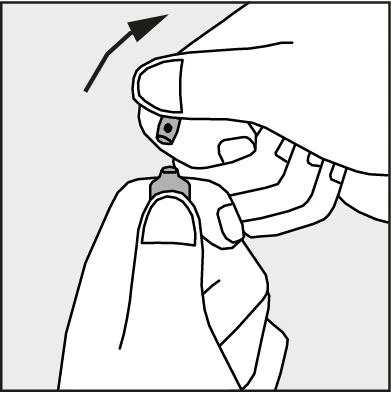
- Press as indicated by the arrow in Figure 3. Ampoules are intended for single use only and should be opened immediately before use. Any unused portion of the medicinal product must be discarded in accordance with applicable regulations.
Figure 1.
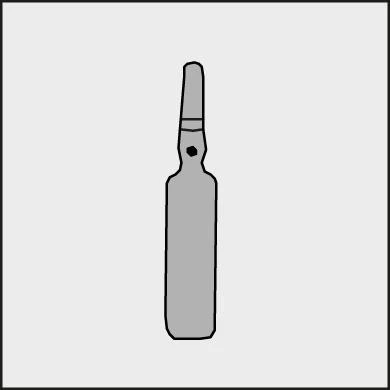
Figure 2.
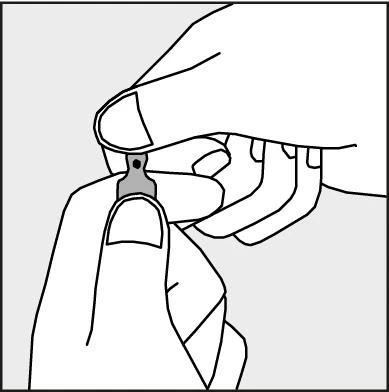
Figure 3.
Dosage
Recommended dosage for acute infections
Adults and adolescents over 12 years of age:
2 ampoules (10 ml) every 12 hours.
Children aged 12 years and younger:
The recommended dosage is approximately 30 mg sulfamethoxazole and 6 mg trimethoprim per kg body weight per day, administered in two equal divided doses.
Below is a dosage schedule for Trimesolphar based on the child's age – the product must be diluted before administration (see: "Preparation and administration instructions for Trimesolphar").
From 6 weeks to 5 months of age: 1.25 ml every 12 hours.
From 6 months to 5 years of age: 2.5 ml every 12 hours.
From 6 to 12 years of age: 5 ml every 12 hours.
See also section 2 of the patient leaflet.
In the treatment of particularly severe infections, doses may be increased by 50% in all age groups.
Treatment should continue for 2 days after symptoms resolve; in most cases, treatment for at least 5 days is necessary.
Elderly patients
In elderly patients, regular monthly blood laboratory tests are recommended. Additionally, particular caution is advised in these patients, as this group is more susceptible to adverse reactions and may experience more pronounced adverse effects, especially if other conditions are present, such as renal impairment, hepatic dysfunction, and/or concomitant use of other medications.
Patients with hepatic dysfunction
There are no data available on dosage in patients with hepatic dysfunction. See also section 2 of the patient leaflet.
Special dosage recommendations
(If not otherwise specified, standard dosage should be used.)
Patients with renal impairment
In adults and adolescents over 12 years of age (no data available for children under 12 years of age) with renal impairment, dosage adjustment should be based on creatinine clearance.
| Creatinine clearance [ml/min] | Recommended dosage |
| Above 30 | normal dose |
| 15 to 30 | ½ normal dose |
| Below 15 | not recommended |
Serum sulfamethoxazole concentration should be determined every 2–3 days using samples taken 12 hours after administration of Trimesolphar. If total sulfamethoxazole concentration exceeds 150 micrograms/ml, treatment should be discontinued until concentrations decrease to below 120 micrograms/ml.
See also section 2 of the patient leaflet.
Pneumocystis jirovecii pneumonia (PJP)
Treatment
100 mg sulfamethoxazole and 20 mg trimethoprim per kg body weight per day in 2 or more divided doses. As soon as possible, patients should be switched to the oral formulation of the drug and treatment continued for a total of 14 days. The aim is to achieve a peak plasma or serum trimethoprim concentration of at least 5 micrograms/ml (this is verified in the patient after administration of the drug as a one-hour infusion).
Prophylaxis
Standard dosing throughout the period of risk exposure.
Nocardiosis
Standard dosing for treatment or prophylaxis of nocardiosis has not been established. In adults, doses ranging from 6 to 8 tablets daily have been used for periods up to 3 months (one tablet contains 400 mg sulfamethoxazole and 80 mg trimethoprim).
Toxoplasmosis
Appropriate dosing for treatment or prevention of toxoplasmosis has not been established. The decision should be based on clinical experience. For prophylaxis, a dosage regimen similar to that used for prevention of Pneumocystis jirovecii pneumonia may be appropriate.