Trileptal
Poland
Table of Contents
Package leaflet: Information for the user
Trileptal, 60 mg/mL, oral suspension
Oxcarbazepinum
Please read all of this leaflet carefully before taking this medicine, because it contains
important information for you.
- Keep this leaflet. You may need to read it again.
- If you have any further questions, ask your doctor or pharmacist.
- This medicine has been prescribed for a specific individual. Do not pass it on to others. It may harm them, even if their symptoms are the same.
- If you experience any side effects, including any not listed in this leaflet, tell your doctor or pharmacist. See section 4.
Contents of the leaflet
- What Trileptal is and what it is used for
- What you need to know before taking Trileptal
- How to take Trileptal
- Possible side effects
- How to store Trileptal
- Contents of the pack and other information
1. What Trileptal is and what it is used for
What Trileptal is
The active substance in Trileptal is oxcarbazepine.
Trileptal belongs to a group of medicines called antiepileptic or anticonvulsant drugs.
When Trileptal is used
Medicines such as Trileptal are routinely used in the treatment of epilepsy.
Epilepsy is a disorder of brain function that causes patients to have repeated seizures. These are caused by transient disturbances in the brain's electrical activity. In healthy individuals, brain cells coordinate body movements through organized signals sent by nerve cells to muscles. In epilepsy, brain cells send too many signals in a disorganized manner. As a result, uncoordinated muscle movements occur, known as epileptic seizures.
Trileptal is used in the treatment of partial seizures, with or without secondary generalization into tonic-clonic seizures.
In partial seizures, only a limited area of the brain is involved, although they may spread to the entire brain, causing tonic-clonic seizures. There are two types of partial seizures: simple and complex. In simple partial seizures, the patient does not lose consciousness. In complex partial seizures, loss of consciousness occurs.
The action of Trileptal consists of suppressing hyperexcitable nerve cells in the brain, thereby eliminating or reducing the frequency of epileptic seizures.
Trileptal may be used as monotherapy or in combination with other antiepileptic drugs.
Usually, doctors try to find one medicine that works best for a given adult or child. However, in patients with more severe forms of epilepsy, it may be necessary to use two or more medicines to prevent seizures.
Trileptal can be used in adults and children aged 6 years and older.
If you have any questions about how Trileptal works or why this medicine has been prescribed, please consult your doctor.
2. Important information before using Trileptal
Trileptal must always be taken exactly as prescribed by your doctor, even if this differs
from the information provided in this leaflet.
Monitoring during Trileptal treatment
Before and during treatment with Trileptal, your doctor may carry out blood tests to determine
the appropriate dose of the medicine for you. Your doctor will inform you when these tests should be performed.
When not to use Trileptal
- if you are allergic to oxcarbazepine, eslicarbazepine, or any of the other ingredients of this medicine (listed in section 6). If this applies to you, inform your doctor before taking Trileptal. If you think you may be allergic, consult your doctor for advice.
Warnings and precautions
Before starting Trileptal, discuss this with your doctor or pharmacist:
- if you have previously experienced a hypersensitivity reaction (rash or other allergic symptoms) to carbamazepine or any other medicines. If you are allergic to carbamazepine, there is a 1 in 4 chance (25%) that you may also be allergic to oxcarbazepine (Trileptal);
- if you have kidney disease;
- if you have severe liver disease;
- if you are taking diuretics (medicines used to remove salt and water from the body by increasing urine production);
- if you have heart disease, characterized by difficulty in breathing and/or swelling of the feet or legs due to fluid retention;
- if you have low sodium levels in the blood (see section 4: Possible side effects);
- if you are taking hormonal contraceptives (such as birth control pills), Trileptal may reduce their effectiveness. It is recommended to use other or additional (non-hormonal) contraceptive methods during treatment with Trileptal to prevent unintended pregnancy. If you experience irregular vaginal bleeding or spotting, inform your doctor immediately. If in doubt, consult your doctor or healthcare provider. Patients of Han Chinese or Thai origin have an increased risk of severe skin reactions associated with carbamazepine or chemically similar substances, which can be predicted by a blood test. Your doctor should advise whether such testing is necessary before starting oxcarbazepine.
Contact your doctor immediately or go to the nearest hospital if, after starting treatment with Trileptal,
any of the following symptoms occur:
- allergic reaction; symptoms include swelling of the lips, eyelids, face, throat, or mouth, sudden breathing difficulties, fever with swollen lymph nodes, rash, or blistering skin lesions;
- jaundice (yellowing of the skin and whites of the eyes) – this may be a sign of liver inflammation;
- increased frequency of seizures; this is particularly important in children, but may also occur in adults;
- a group of symptoms including fatigue, shortness of breath during physical activity, paleness, headache, chills, dizziness, frequent infections with fever, sore throat, mouth ulcers, unusually easy bruising or bleeding, nosebleeds, red or purple skin spots, or unexplained skin discoloration – these may indicate blood disorders;
- in a small number of patients treated with antiepileptic medicines such as Trileptal, thoughts of self-harm or suicide have occurred. If such thoughts occur, the patient should contact their doctor immediately;
- rapid or extremely slow heart rate.
Children and adolescents
Your doctor may recommend monitoring thyroid function before and during treatment in children.
Trileptal and other medicines
Tell your doctor or pharmacist about all medicines you are currently taking, have recently taken, or plan to take.
This is especially important for:
- hormonal contraceptives (see section Warnings and precautions);
- other antiepileptic medicines and enzyme-inducing medicines such as carbamazepine, phenobarbital, phenytoin, lamotrigine, and rifampicin;
- medicines that reduce sodium levels in the blood, such as diuretics (used to remove salt and water from the body by increasing urine production), desmopressin, and non-steroidal anti-inflammatory drugs such as indomethacin;
- lithium and monoamine oxidase inhibitors (medicines used to treat mood disorders and certain types of depression);
- medicines that affect the immune system, such as cyclosporine and tacrolimus.
Trileptal with food and alcohol
Trileptal can be taken during or independently of meals.
Alcohol may enhance the sedative effect of Trileptal. Alcohol consumption should be avoided
during treatment with Trileptal. If in doubt, consult your doctor.
Pregnancy and breastfeeding
If you are pregnant, breastfeeding, think you may be pregnant, or are planning to have a child,
you should consult your doctor or pharmacist before using this medicine.
Pregnancy
During pregnancy, it is important to keep seizures under control, but the use of antiepileptic medicines may pose risks to the unborn child.
Congenital malformations
Studies have not shown an increased risk of congenital malformations associated with oxcarbazepine use during pregnancy, but a risk of fetal malformations cannot be completely ruled out. The risk of congenital malformations is higher in offspring of women treated with combination therapy compared to monotherapy.
Neurodevelopmental disorders
Some studies suggest that in utero exposure to oxcarbazepine may negatively affect brain function development (neurodevelopment) in children, while other studies have not shown such an effect. A potential impact on neurodevelopment cannot be excluded.
Birth weight
If the mother takes Trileptal during pregnancy, the newborn may be smaller and weigh less than expected [small for gestational age (SGA)]. In one study among women with epilepsy, about 15 out of 100 babies born to mothers who took oxcarbazepine during pregnancy were smaller and had lower birth weight than expected, compared to about 11 out of 100 babies born to women who did not take antiepileptic medicines during pregnancy.
Your doctor will inform you about the benefits and risks of taking Trileptal and help you decide whether to continue treatment.
Do not stop taking Trileptal during pregnancy without first consulting your doctor.
Breastfeeding
If you are taking this medicine, consult your doctor before starting breastfeeding.
The active substance in Trileptal passes into breast milk. Although available data indicate that the amount of Trileptal transferred to the nursing infant is small, adverse effects in the child cannot be ruled out. Your doctor will discuss with you the benefits and risks of breastfeeding while taking Trileptal. If you breastfeed while taking Trileptal and notice symptoms such as excessive sleepiness or poor weight gain in your baby, inform your doctor immediately.
Driving and using machines
Trileptal may cause drowsiness, dizziness, blurred or double vision, lack of muscle coordination, or reduced level of consciousness, especially at the beginning of treatment or during dose escalation.
It is very important to determine with your doctor whether you are able to drive or operate machinery while taking this medicine.
Trileptal contains sorbitol (E420), propylene glycol (E1520), parahydroxybenzoates, sodium, and ethanol
- Sorbitol (E420): This medicine contains 175 mg of sorbitol in 1 mL of oral suspension. Sorbitol is a source of fructose. If you (or your child) have previously been diagnosed with intolerance to certain sugars or hereditary fructose intolerance, a rare genetic disorder in which the body cannot break down fructose, you should contact your doctor before taking this medicine or giving it to your child. Sorbitol may cause gastrointestinal discomfort and may have a mild laxative effect.
- Propylene glycol (E1520): The medicine contains 25.4 mg of propylene glycol in 1 mL of oral suspension. Patients with impaired liver or kidney function should not take this medicine without medical advice. Your doctor may decide to perform additional tests in such patients.
- Parahydroxybenzoates: Propyl parahydroxybenzoate (E216) and methyl parahydroxybenzoate (E218) may cause allergic reactions (including delayed-type reactions).
- Sodium: The medicine contains less than 1 mmol (23 mg) of sodium per 1 mL, meaning the medicine is considered "sodium-free".
- Ethanol: This medicine contains 0.8 mg of alcohol (ethanol) in 1 mL of oral suspension. The amount of alcohol in 1 mL of this medicine is equivalent to less than 0.02 mL of beer or 0.01 mL of wine. The small amount of alcohol in this medicine will not cause noticeable effects.
- This medicine also contains cinnamaldehyde, citral, citronellol, geraniol, d-limonene, and linalool, which are components of the yellow lemon-plum flavour 39K020.
3. How to take Trileptal
This medicine should always be taken exactly as prescribed by your doctor or pharmacist, even if this differs
from the information provided in this leaflet. If in doubt, consult your doctor or pharmacist.
The dose of this medicine must be prescribed in millilitres (mL), not in milligrams (mg). This is very important,
because the dosing syringe used to draw the suspension from the bottle is graduated in mL.
If the medicine has been prescribed in mg, do not take the medicine and contact your doctor or pharmacist
immediately.
What dose to take
Use in adult patients
- The usual starting dose of Trileptal in adult patients (including elderly patients) is 10 mL of oral suspension (600 mg oxcarbazepine) per day.
- The usual regimen is 5 mL of oral suspension (300 mg oxcarbazepine) taken twice daily.
- Your doctor may gradually increase the dose until the best therapeutic effect is achieved. This is usually achieved with doses ranging from 10 mL to 40 mL of oral suspension (600 mg to 2400 mg oxcarbazepine) per day.
- The dose is the same whether Trileptal is taken alone or in combination with another antiepileptic medicine.
- In patients with kidney disease (impaired renal function), the starting dose is half the usual starting dose.
- In patients with severe liver disease, your doctor will determine the appropriate dose.
Use in children and adolescents
Trileptal may be used in children aged 6 years and older.
The dose for children will be calculated by the treating doctor and depends on the child's body weight.
- The starting dose is 8 to 10 milligrams per kilogram of body weight per day, given in two divided doses. For example, a child weighing 30 kg would start treatment with 150 mg (2.5 mL of oral suspension) twice daily.
- Your doctor may gradually increase the dose until the best treatment results are achieved. The optimal therapeutic effect is usually achieved at a dose of 30 milligrams per kilogram of body weight per day. The maximum dose for children is 46 milligrams per kilogram of body weight per day.
How to take Trileptal
For full instructions on how to take Trileptal, see the Instructions for Use at the end of this leaflet.
When and for how long to take Trileptal
Trileptal should be taken twice daily, at the same time each day, unless otherwise directed by your doctor.
Taking the medicine at the same time every day will provide the best control of epileptic seizures and will help the patient remember when to take the oral suspension.
The treating doctor will determine how long Trileptal treatment should continue for both adult and paediatric patients. This depends on the type of seizures. Treatment may last for many years in order to control seizure occurrence. Do not change the prescribed dose or stop treatment without consulting your doctor.
If you take more Trileptal than you should
If you take more oral suspension than prescribed by your doctor, seek immediate medical attention at the nearest hospital or contact your doctor. Symptoms of Trileptal overdose may include: drowsiness, dizziness, nausea, vomiting, increased involuntary movements, lethargy, confusion, muscle twitching or marked increase in seizures, problems with coordination, and/or involuntary eye movements, double vision, pinpoint pupils, blurred vision, feeling of fatigue, shallow and rapid breathing (reduced respiratory rate), irregular heartbeat (prolongation of QTc interval), tremor, headache, coma, loss of consciousness, involuntary movements of lips, tongue, limbs, agitation, low blood pressure, and breathing difficulties.
If you forget to take Trileptal
If you miss a dose, take it as soon as possible. However, if it is almost time for the next dose, do not take the missed dose. Continue with your regular dosing schedule. Do not take a double dose to make up for a missed dose.
If you have any doubts or miss several doses, consult your treating doctor.
Stopping Trileptal
Do not stop taking this medicine without consulting your doctor.
Never stop the medicine abruptly, as this may cause a sudden increase in seizures.
If treatment is to be discontinued, the medicine should be withdrawn gradually, according to your doctor's instructions.
If you have any further questions about the use of this medicine, consult your doctor or pharmacist.
4. Possible adverse effects
Like all medicines, this medicine can cause adverse effects, although not everyone will experience them.
You should contact your doctor immediately or go to the nearest hospital if any of the following adverse effects occur.
These include symptoms that occur uncommonly, rarely or very rarely. Your doctor will decide
whether treatment with Trileptal should be stopped immediately and how treatment should be continued.
Uncommon (may occur in fewer than 1 in 100 patients):
-
Fatigue, hair loss, muscle weakness, feeling cold (symptoms of hypothyroidism).
Rare (may occur in fewer than 1 in 1,000 patients): -
Swelling of the lips, eyelids, face, throat or mouth, accompanied by difficulty breathing, speaking or swallowing (symptoms of anaphylactic reaction and angioedema), or other signs of hypersensitivity such as rash, fever, muscle and joint pain.
-
Fatigue, shortness of breath during physical exertion, pallor, headache, chills, dizziness, frequent infections with fever, sore throat, mouth ulcers, bleeding and bruising more easily than normal, nosebleeds, red or purple skin spots, unexplained skin discoloration (symptoms of reduced platelet or white blood cell counts).
Very rare (may occur in fewer than 1 in 10,000 patients): -
Severe blistering skin lesions and (or) mucous membranes of the lips, eyes, mouth, nasal passages or genital organs (symptoms of severe hypersensitivity reactions, including Lyell's syndrome, Stevens-Johnson syndrome and erythema multiforme).
-
Red skin rash, mainly on the face, accompanied by fatigue, fever, nausea or loss of appetite (symptoms of systemic lupus erythematosus).
-
Lethargy, confusion, muscle twitching or markedly increased seizures (possible symptoms of low blood sodium levels) (see section: Warnings and precautions).
-
Flu-like symptoms with jaundice (yellowing of the skin or whites of the eyes) (symptoms of hepatitis).
-
Severe upper abdominal pain, vomiting, loss of appetite (symptoms of pancreatitis).
If any of the following adverse effects occur, you should contact your doctor as soon as possible.
Medical assistance may be required:
Common (may occur in fewer than 1 in 10 patients):
-
Tremor, coordination problems, involuntary eye movements, restlessness and nervousness, depression, mood swings, rash.
Very rare (may occur in fewer than 1 in 10,000 patients): -
Irregular heartbeat, very fast or very slow heartbeat.
Other adverse effects that may occur
These adverse effects of Trileptal are usually mild to moderate. Most of them are transient and usually gradually resolve.
Very common (may occur in more than 1 in 10 patients):
-
Fatigue, headache, dizziness, drowsiness, nausea, vomiting, double vision.
Common (may occur in fewer than 1 in 10 patients): -
Weakness, memory problems, difficulty concentrating, apathy, agitation, confusion, blurred vision, visual disturbances, constipation, diarrhoea, stomach (abdominal) pain, acne, hair loss, loss of balance.
-
Weight gain.
-
Speech disorders.
Uncommon (may occur in fewer than 1 in 100 patients): -
High blood pressure.
-
Urticaria (hives), increased liver enzyme activity (seen in blood test results).
Rare (may occur in fewer than 1 in 1,000 patients): -
There have also been reports of bone disorders, including osteopenia and osteoporosis (thinning of the bones) and fractures. Patients who have been taking antiepileptic medicines long-term, who have previously been diagnosed with osteoporosis, or who are taking steroids should consult their doctor or pharmacist.
You should contact your doctor if any of the above adverse effects worsen.
Reporting of adverse effects
If you experience any adverse effects, including any not listed in this leaflet, tell your doctor or pharmacist. Adverse effects can be reported directly to the Department of Monitoring of Adverse Drug Reactions, Office for Registration of Medicinal Products, Medical Devices and Biocidal Products
Al. Jerozolimskie 181C
02-222 Warsaw
Tel.: +48 22 49 21 301
Fax: +48 22 49 21 309
Website: https://smz.ezdrowie.gov.pl
Adverse effects can also be reported to the marketing authorisation holder.
Reporting adverse effects helps provide more information on the safety of this medicine.
5. How to store Trileptal
- Keep this medicine out of sight and reach of children.
- Do not use this medicine after the expiry date stated on the carton and bottle label. The expiry date refers to the last day of the stated month.
- Shelf life after first opening the bottle: 7 weeks.
- After 7 weeks, return any unused oral suspension to the pharmacy for safe disposal.
- Do not use Trileptal if the packaging has been previously opened or damaged.
- Medicines must not be disposed of via wastewater or household waste. Ask your pharmacist how to dispose of medicines no longer required. This will help protect the environment.
6. Contents of the pack and other information
What Trileptal contains
The active substance is oxcarbazepine.
Each mL of oral suspension contains 60 mg of oxcarbazepine.
The other ingredients are: purified water, 70% liquid sorbitol (non-crystallizing), propylene glycol, dispersible cellulose (containing microcrystalline cellulose and sodium carmellose), ascorbic acid (E 300), lemon-plum flavoured yellow flavour (containing ethanol), methyl parahydroxybenzoate (E 218), macrogol stearate 400, sorbic acid (E 200), sodium saccharin, propyl parahydroxybenzoate (E 216).
What Trileptal looks like and contents of the pack
Trileptal oral suspension is a white to slightly brownish or slightly reddish suspension. A slight change in colour to light brownish-red is normal and does not affect the quality of the medicine.
Trileptal oral suspension is available in a 250 mL amber glass bottle containing the oral suspension. The bottle has a child-resistant cap and is packaged in a cardboard box together with a 10 mL oral dosing syringe and an adapter. Each pack contains one bottle.
Marketing Authorisation Holder
Novartis Poland Sp. z o.o.
ul. Marynarska 15
02-674 Warszawa
Tel. + 48 22 375 48 88
Manufacturer / Importer
Novartis Farmacéutica, S.A.
Gran Via de les Corts Catalanes, 764
08013 Barcelona
Spain
INSTRUCTIONS FOR USE OF TRILEPTAL
Read carefully to ensure correct administration of the medicine
How to use the medicine kit
The medicine kit contains three components:
1. A plastic adapter, which should be placed into the neck of the bottle after first opening.
Once inserted into the neck of the bottle, the adapter must not be removed.
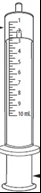
- An oral dosing syringe, adapted to fit the adapter, with a child-resistant cap, used for drawing up the prescribed dose of medicine.
- A bottle containing 250 mL of medicine. After each use, close the bottle with the cap.
Attaching the adapter to the medicine bottle
- Shake the bottle for at least 10 seconds.
- Open the bottle by firmly pressing down on the child-resistant cap and turning it counterclockwise (as indicated on the top surface of the cap).
Note: After each use, close the bottle with the cap.
- Place the opened bottle on a flat surface and firmly press the plastic adapter into the neck of the bottle as deeply as possible.
Note: It may not be possible to fully insert the adapter; in this case, closing the bottle with the child-resistant cap will further press the adapter into place.
To draw up the prescribed amount of medicine, follow the instructions under "Drawing up the medicine".
Drawing up the medicine
The medicine can be administered directly from the dosing syringe or mixed with a small amount of water.
- Shake the bottle thoroughly. Immediately draw up the required amount of suspension.
- To open the bottle, press down and turn the child-resistant cap. (Note: After each use, close the bottle with the cap.)
- Check that the plunger of the syringe is fully depressed.
- Hold the bottle in an upright position and insert the dosing syringe into the plastic adapter, ensuring it does not fall out.
- Carefully turn the bottle upside down while holding the dosing syringe.
- Slowly pull the plunger down to fill the syringe with the suspension. Push the plunger back in to remove any large air bubbles that may remain in the dosing syringe.
- Draw up the prescribed dose: slowly pull the plunger down until the upper edge of the black ring on the plunger aligns with the marking on the syringe indicating the prescribed dose.
Note: If the prescribed dose is greater than 10 mL, draw up the prescribed dose in two steps. First, fill the syringe with 10 mL and administer 10 mL of the medicine. Then measure the remaining part of the dose with the syringe. If in doubt, consult your doctor or pharmacist.
- Carefully turn the bottle upright. Remove the dosing syringe from the adapter by gently unscrewing it.
- The dose can be administered directly from the dosing syringe. The patient should be sitting upright, and the plunger should be pushed slowly to allow the patient to swallow the medicine. Alternatively, a small amount of water may be added to the measured dose just before administration. Mix the solution well and have the patient drink the entire mixture immediately.
- After use, close the bottle with the child-resistant cap, leaving the adapter in the bottle.
- Cleaning: After use, wipe the outside of the syringe with a clean, dry, disposable tissue.