Trelema
Poland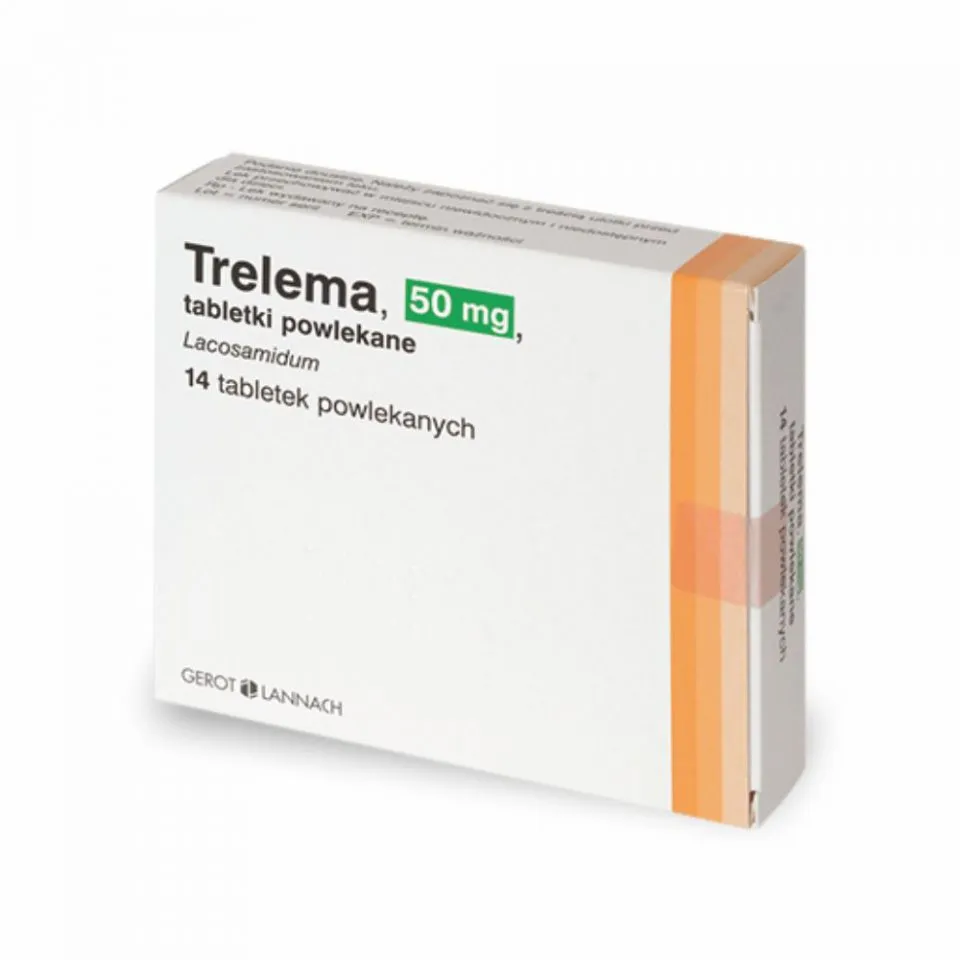
Table of Contents
Patient Information Leaflet
Trelema 50 mg, film-coated tablets
Trelema 100 mg, film-coated tablets
Trelema 150 mg, film-coated tablets
Trelema 200 mg, film-coated tablets
Lacosamide
Pack intended for initiating treatment (starter pack) exclusively for adolescents
and children weighing 50 kg or more, and for adults.
Please read this leaflet carefully before taking the medicine, as it contains
important information for the patient.
- Keep this leaflet, as you may need to read it again.
- If you have any questions, ask your doctor or pharmacist.
- This medicine has been prescribed for a specific individual. Do not pass it on to others. The medicine may harm another person, even if their symptoms are the same.
- If you experience any adverse reactions, including any not listed in this leaflet, tell your doctor or pharmacist. See section 4.
Contents of the leaflet
- What Trelema is and what it is used for
- What you need to know before taking Trelema
- How to take Trelema
- Possible side effects
- How to store Trelema
- Contents of the pack and other information
1. What Trelema is and what it is used for
What Trelema is
Trelema contains the active substance lacosamide. It belongs to a group of medicines called antiepileptic drugs, which are used in the treatment of epilepsy.
This medicine has been prescribed by your doctor to reduce the number of seizures.
What Trelema is used for
- Trelema is used:
- as monotherapy and in combination with other antiepileptic medicines in adults, adolescents, and children from the age of 2 years for the treatment of epilepsy characterized by partial-onset and secondarily generalized partial seizures. In this type of epilepsy, seizures initially affect only one side of the brain, but may subsequently spread to other areas on both sides of the brain.
- in combination with other antiepileptic medicines in adults, adolescents, and children from the age of 4 years for the treatment of primary generalized tonic-clonic seizures (major seizures involving loss of consciousness) in patients with idiopathic generalized epilepsy (a type of epilepsy considered to have a genetic basis).
2. Important information before taking Trelema
When not to take Trelema
- if the patient is allergic to lacosamide or any of the other ingredients of this medicine (listed in section 6); if in doubt about the possibility of an allergic reaction, consult a doctor.
- if the patient has a certain type of heart rhythm disorder called second- or third-degree atrioventricular block.
Do not take Trelema if any of the situations listed below apply to the patient. If in doubt, consult a doctor or pharmacist.
Warnings and precautions
Before starting treatment with Trelema, discuss with a doctor if:
- the patient has thoughts about self-harm or suicide. A small number of patients taking antiepileptic medicines such as lacosamide have had thoughts about self-harm or suicide. If such thoughts occur, contact a doctor immediately.
- the patient has heart problems affecting heart rhythm, such as a very slow, fast, or irregular heartbeat (e.g. atrioventricular block, atrial fibrillation or flutter).
- the patient has severe heart disease such as heart failure or has had a heart attack.
- the patient frequently experiences dizziness or falls. Trelema may cause dizziness, which could increase the risk of accidental injury or falls. Therefore, the patient should exercise particular caution until they are accustomed to the effects of this medicine.
If any of the above situations apply (or if there are any doubts), consult a doctor or pharmacist before using Trelema.
While taking Trelema, report to the doctor any occurrence of new types of seizures or worsening of existing seizures.
If the patient is taking Trelema and experiences symptoms of abnormal heartbeat (such as slow, fast, or irregular heartbeat, palpitations, shortness of breath, dizziness, fainting), seek immediate medical advice (see section 4).
Children
Trelema is not recommended for children under 2 years of age with partial-onset seizures, nor is it recommended for children under 4 years of age with primary generalized tonic-clonic seizures. The effectiveness of the medicine in children of this age has not yet been established, and it is not known whether it is safe for them.
Trelema and other medicines
Tell your doctor or pharmacist about all medicines currently taken or recently taken, as well as any medicines the patient plans to take.
Inform the doctor or pharmacist, in particular, if taking the following medicines that affect heart function:
- medicines used in heart diseases
- medicines that prolong the PR interval, visible on the ECG recording, such as medicines used in epilepsy or pain treatment, e.g. carbamazepine, lamotrigine, or pregabalin
- medicines used in certain heart rhythm disorders or heart failure
If any of the above situations apply (or if there are any doubts), consult a doctor or pharmacist before using Trelema.
Also inform the doctor or pharmacist if the patient is taking any of the following medicines, as they may weaken or intensify the effect of Trelema:
- medicines used to treat fungal infections, such as fluconazole, itraconazole, ketoconazole
- a medicine used in HIV infection, such as ritonavir
- medicines used to treat bacterial infections, such as clarithromycin or rifampicin
- a herbal medicine used to treat mild anxiety and depression containing St. John's wort (Hypericum perforatum).
If any of the above situations apply (or if there are any doubts), consult a doctor or pharmacist before using Trelema.
Trelema and alcohol
For safety reasons, alcohol must not be consumed during treatment with Trelema.
Pregnancy and breastfeeding
Women of childbearing potential should discuss contraception with their doctor.
If the patient is pregnant or breastfeeding, suspects she may be pregnant, or is planning to have a child, she should consult a doctor or pharmacist before using this medicine.
Trelema is not recommended during pregnancy, as the effect of this medicine on pregnancy and the unborn child is unknown.
Breastfeeding is not recommended while taking Trelema, as Trelema passes into breast milk. Seek immediate medical advice if the patient becomes pregnant or is planning a pregnancy. The doctor will help decide whether to continue treatment with Trelema.
Do not stop taking the medicine without consulting a doctor, as this may lead to an increase in the number of seizures. Worsening of the mother's condition may also harm the child.
Driving and using machines
Do not drive a car or ride a bicycle, and do not use any tools or operate machinery until it is clear how the medicine affects the patient, as Trelema may cause dizziness or blurred vision.
3. How to take Trelema
This medicine should always be taken exactly as directed by your doctor. If you have any doubts, you should
consult your doctor or pharmacist. Other forms of this medicine may be more suitable for children;
please consult your doctor or pharmacist.
Taking Trelema
- take the medicine twice daily, approximately every 12 hours
- try to take the medicine at the same times each day
- swallow the tablets with a glass of water
- Trelema may be taken with food or independently of meals
- the tablet may be divided into equal doses
Treatment usually starts with a low daily dose, which your doctor will gradually increase over several weeks.
Once the effective dose for you, known as the maintenance dose, has been reached, you will continue taking
this same daily dose. Trelema is intended for long-term use. You should continue taking the medicine for as
long as your doctor recommends, and not stop unless advised to do so.
Recommended dose
Below are the doses of Trelema usually recommended for patients in different age groups and with different body weights. Your doctor may prescribe a different dose if you have kidney or liver problems.
Adolescents and children weighing at least 50 kg, and adults
Use of Trelema as monotherapy
The usual starting dose of Trelema is 50 mg twice daily.
Your doctor may also prescribe a starting dose of 100 mg of Trelema twice daily.
Your doctor may increase the dose given twice daily by 50 mg each week until reaching a maintenance dose
between 100 mg and 300 mg twice daily.
Use of Trelema with other antiepileptic medicines
Starting treatment (first 4 weeks)
The starter pack is used when beginning treatment with Trelema.
The pack contains 4 different packages to be used during the first 4 weeks of treatment, one package per week.
Each package contains 14 tablets, corresponding to 2 tablets per day for 7 days. Each package contains Trelema tablets of different strengths to gradually increase the dose.
Treatment starts with a low dose of Trelema, usually 50 mg twice daily, and is increased weekly.
The usual doses administered daily during each of the first 4 weeks of treatment are shown in the table below.
Your doctor will inform you whether you need all 4 packages.
Table: Starting treatment (first 4 weeks)
Week Package for use First dose Second dose Total daily dose
(morning) (evening)
Week 1 Package marked "Week 1" 50 mg (1 tablet of 50 mg (1 tablet of 100 mg
Trelema 50 mg) Trelema 50 mg)
Week 2 Package marked "Week 2" 100 mg (1 tablet of 100 mg (1 tablet of 200 mg
Trelema 100 mg) Trelema 100 mg)
Week 3 Package marked "Week 3" 150 mg (1 tablet of 150 mg (1 tablet of 300 mg
Trelema 150 mg) Trelema 150 mg)
Week 4 Package marked "Week 4" 200 mg (1 tablet of 200 mg (1 tablet of 400 mg
Trelema 200 mg) Trelema 200 mg)
Maintenance treatment (after the first 4 weeks)
After the first 4 weeks of treatment, your doctor will determine the appropriate dose to continue
long-term treatment. This dose is called the maintenance dose and depends on your response to
treatment with Trelema. For most patients, the maintenance dose ranges between 200 mg and 400 mg
per day.
Children and adolescents weighing less than 50 kg
The starter pack is not suitable for children and adolescents weighing less than 50 kg.
Taking more Trelema than prescribed
If you take more Trelema than prescribed, contact your doctor immediately. Do not attempt to drive.
The following symptoms may occur:
- dizziness
- nausea or vomiting
- seizures (fits), heart problems such as slow, fast, or irregular heartbeat, fainting, or low blood pressure with rapid heartbeat and sweating.
Missing a dose of Trelema
- If you forget to take your dose at the usual time and it is more than 6 hours before the next dose, take the missed dose immediately.
- If you forget to take your dose at the usual time and it is less than 6 hours before the next dose, do not take the missed dose. Take the next dose at the usual time.
- Do not take a double dose to make up for a missed dose.
Stopping Trelema
- Do not stop taking Trelema without consulting your doctor, as seizure symptoms may return or worsen.
- If your doctor decides to discontinue Trelema, they will provide detailed instructions on how to gradually reduce the dose.
If you have any further questions about the use of this medicine, consult your doctor or pharmacist.
4. Possible adverse reactions
Like all medicines, this medicine can cause adverse reactions, although not everyone experiences them.
You should inform a doctor or pharmacist if the patient experiences any of the following symptoms:
Very common (may occur in more than 1 in 10 patients)
- Headache
- Dizziness or nausea
- Double vision
Common (may occur in less than 1 in 10 patients)
- Brief muscle jerks or muscle group jerks (myoclonic episodes)
- Difficulty with coordination of movement or walking
- Balance disorders, tremor, tingling (paresthesia), muscle spasms, tendency to fall or bruise easily
- Memory disturbances, thinking disorders, difficulty finding words, confusion
- Rapid uncontrolled eye movements (nystagmus), blurred vision
- Sensation of spinning (dizziness), feeling of being drunk
- Vomiting, dry mouth, constipation, indigestion, bloating, diarrhoea
- Reduced sensation and sensitivity to stimuli, difficulty speaking, attention disorders
- Tinnitus, such as buzzing, ringing, or whistling in the ears
- Irritability, sleep disturbances, depression
- Drowsiness, fatigue or weakness (asthenia)
- Itching, rash
Uncommon (may occur in less than 1 in 100 patients)
- Slowed heart rate, palpitations, irregular pulse, or other changes in the heart's electrical activity (conduction disorders)
- Excessive well-being, seeing and/or hearing things that are not real
- Allergic reactions to the medicine, hives (urticaria)
- Liver function abnormalities in test results, liver damage
- Thoughts of self-harm or suicide, or suicide attempt – contact a doctor immediately
- Feeling unwell or agitated
- Thinking disorders or loss of contact with reality
- Severe allergic reactions causing swelling of the face, throat, hands, feet, ankles, or lower legs
- Fainting
- Involuntary abnormal movements (dyskinesias)
Frequency unknown (cannot be estimated from available data)
- Abnormal rapid heartbeat (ventricular tachyarrhythmia)
- Sore throat, high fever, and more frequent than usual infections. Blood tests may show a significant decrease in the number of certain white blood cells (agranulocytosis)
- Severe skin allergic reactions with high fever and other flu-like symptoms, facial rash, spreading rash, swollen lymph nodes (enlarged lymph nodes). Blood tests may show increased liver enzyme levels and increased numbers of one type of white blood cell (eosinophilia)
- Widespread rash with blisters and peeling skin, especially around the mouth, nose, eyes, and genitals (Stevens-Johnson syndrome), and a more severe form causing skin detachment over more than 30% of the body surface (toxic epidermal necrolysis)
- Seizures
Additional adverse reactions in children
Additional adverse reactions observed in children include: fever, cold symptoms (nasopharyngitis), sore throat (pharyngitis), decreased appetite, behavioural changes, unusual behaviour (child not behaving as usual), and lack of energy (lethargy). Drowsiness is a very common adverse reaction in children and may occur in more than 1 in 10 children.
Reporting of adverse reactions
If any adverse reactions occur, including any adverse reactions not listed in this leaflet, you should inform a doctor or pharmacist. Adverse reactions can be reported directly to:
Department of Monitoring Adverse Reactions of Medicinal Products
Office for Registration of Medicinal Products, Medical Devices and Biocidal Products
Al. Jerozolimskie 181 C
02-222 Warsaw
Tel.: +48 22 49 21 301
Fax: +48 22 49 21 309
e-mail: [email protected]
Adverse reactions can also be reported to the marketing authorization holder.
By reporting adverse reactions, more information on the safety of this medicine can be collected.
5. How to store Trelema
Keep this medicine out of the sight and reach of children.
Do not use this medicine after the expiry date stated on the carton after: EXP.
The expiry date refers to the last day of the stated month.
There are no special requirements for storage of this medicine.
Medicines must not be disposed of via wastewater or household waste. Ask your pharmacist how to dispose of medicines that are no longer required. This will help protect the environment.
6. Contents of the pack and other information
What Trelema contains
- The active substance is lacosamide. Each Trelema 50 mg coated tablet contains 50 mg of lacosamide. Each Trelema 100 mg coated tablet contains 100 mg of lacosamide. Each Trelema 150 mg coated tablet contains 150 mg of lacosamide. Each Trelema 200 mg coated tablet contains 200 mg of lacosamide.
- Other ingredients are:
Tablet core
Microcrystalline cellulose
Low-substituted hydroxypropylcellulose
Hydroxypropylcellulose
Microcrystalline cellulose, silicified
Crospovidone
Colloidal anhydrous silica
Magnesium stearate
Tablet coating
Polyvinyl alcohol
Macrogol 3350
Titanium dioxide (E171)
Talc
Colourants:
50 mg coated tablets: indigo carmine (E132), iron oxide red (E172), iron oxide black (E172)
100 mg coated tablets: iron oxide yellow (E172)
150 mg coated tablets: iron oxide yellow (E172), iron oxide red (E172), iron oxide black (E172)
200 mg coated tablets: indigo carmine (E132)
What Trelema looks like and contents of the pack
Trelema 50 mg, coated tablets
Pink, oval, biconvex coated tablets with a division line on both sides.
The tablet can be divided into equal doses.
Trelema 100 mg, coated tablets
Yellow, oval, biconvex coated tablets with a division line on both sides.
The tablet can be divided into equal doses.
Trelema 150 mg, coated tablets
Brown, oval, biconvex coated tablets with a division line on both sides.
The tablet can be divided into equal doses.
Trelema 200 mg, coated tablets
Blue, oval, biconvex coated tablets with a division line on both sides.
The tablet can be divided into equal doses.
Packaged in PVC/Aluminium or PVC/PVdC/Aluminium blisters.
The starter pack (starter kit) contains 56 coated tablets in 4 packages:
- Package marked "Week 1" contains 14 tablets of 50 mg strength
- Package marked "Week 2" contains 14 tablets of 100 mg strength
- Package marked "Week 3" contains 14 tablets of 150 mg strength
- Package marked "Week 4" contains 14 tablets of 200 mg strength
Marketing Authorisation Holder
G.L. Pharma GmbH
Schlossplatz 1
8502 Lannach
Austria
Manufacturer
G.L. Pharma GmbH
Schlossplatz 1
8502 Lannach
Austria
Delorbis Pharmaceuticals Ltd.
2643 Ergates, Lefkosia
Cyprus
For further information and details on the medicinal product's trade names in other EEA countries, please contact the representative of the Marketing Authorisation Holder:
G.L. PHARMA POLAND Sp. z o.o.
Al. Jana Pawła II 61/313
01-031 Warsaw, Poland
Tel: 022/ 636 52 23; 636 53 02
[email protected]