Tramundin
Poland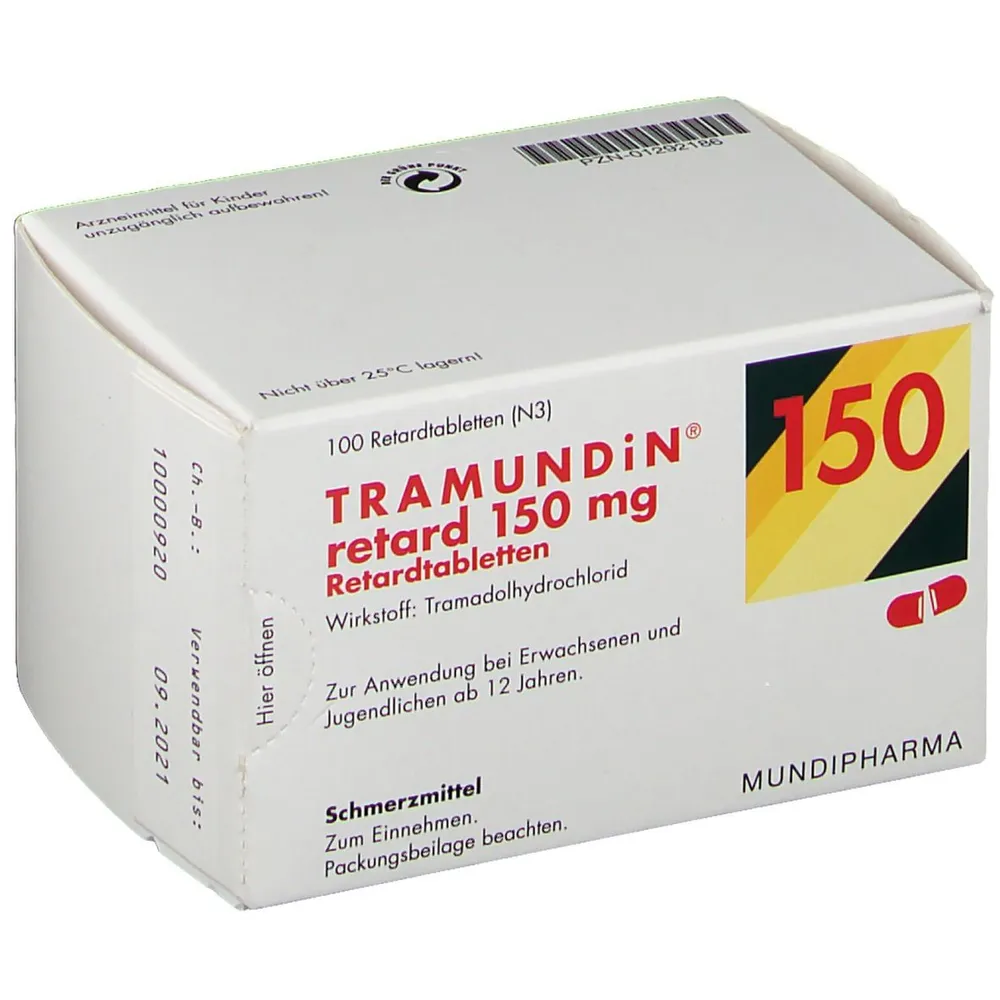
Table of Contents
Package leaflet: Information for the patient
Tramundin, 100 mg prolonged-release coated tablets
Tramadoli hydrochloridum
Please read the entire leaflet before taking the medicine, as it contains important information for the patient.
- Keep this leaflet, as you may need to read it again.
- Consult your doctor or pharmacist if you have any further questions.
- This medicine has been prescribed for a specific individual. Do not pass it on to others.
- The medicine may harm another person, even if their symptoms are the same.
- If any of the side effects worsens or if any side effects occur, including those not listed in this leaflet, inform your doctor or pharmacist. See section 4.
Table of contents of the leaflet:
- What Tramundin is and what it is used for
- What you need to know before taking Tramundin
- How to take Tramundin
- Possible side effects
- How to store Tramundin
- Contents of the pack and other information
1. What Tramundin is and what it is used for
Tramundin contains the active substance tramadoli hydrochloridum, which is an analgesic belonging to the opioid group. Its analgesic effect is due to its action on specific nerve cells in the spinal cord and brain.
Tramundin is used in the treatment of moderate to severe pain.
2. Important information before taking Tramundin
When not to take Tramundin
- if the patient is allergic (hypersensitive) to tramadol or any of the other ingredients of this medicine (listed in section 6);
- in case of acute intoxication with alcohol, analgesics, sleeping medicines, or other psychotropic medicines (medicines affecting mood, mental state, and psyche);
- if the patient is currently taking or has taken within the last two weeks monoamine oxidase inhibitors (MAO inhibitors) (medicines used, among others, in the treatment of depression) (see section Other medicines and Tramundin);
- if the patient has epilepsy that cannot be adequately controlled with treatment;
- if the patient is undergoing treatment for opioid dependence.
Warnings and precautions
Before starting treatment with Tramundin, discuss with your doctor if:
- the patient has breathing problems (respiratory center and respiratory function disorders);
- the patient has sleep apnea;
- the patient has depression and is taking antidepressant medicines, as some of them may interact with tramadol (see section Tramundin and other medicines);
- the patient is simultaneously taking any other medicines affecting the central nervous system and (or) consuming alcohol;
- the patient has developed tolerance to the medicine, is physically dependent on opioids, and shows symptoms of withdrawal syndrome;
- the patient has psychological dependence on medicines, psychotropic substances, and (or) alcohol;
- the patient has a head injury;
- the patient has increased intracranial pressure (possible after head injury or brain disease);
- the patient has experienced shock;
- the patient has disturbances of consciousness of unknown cause;
- the patient has a predisposition to epilepsy or seizures;
- the patient has liver and (or) kidney function disorders;
- Tramundin must not be used in patients with severe liver or kidney function disorders;
- the patient has constipation;
- the patient shows increased sensitivity to opioids.
Respiratory depression
The main risk of opioid overdose is respiratory depression.
Opioids may cause breathing disturbances during sleep, including central sleep apnea (CSA,
central sleep apnoea) and nocturnal hypoxia. In some patients, opioid use may increase the risk of CSA in a dose-dependent manner. Opioids may also worsen existing sleep apnea (see section 4). The doctor may then consider reducing the total daily dose of the opioid.
There is a small risk of developing the so-called serotonin syndrome when tramadol is taken alone or in combination with certain antidepressants. If the patient experiences any symptoms of this serious condition, medical advice should be sought immediately (see section 4 "Possible side effects").
Excessive fatigue, loss of appetite, severe abdominal pain, nausea, vomiting, or low blood pressure may indicate adrenal insufficiency (low cortisol levels). If such symptoms occur, contact your doctor, who will decide whether hormone replacement therapy is necessary.
Prolonged use of Tramundin may lead to the development of tolerance to tramadol (requiring increasingly higher doses to control pain). The medicine may cause psychological and physical dependence. Abrupt discontinuation of treatment may result in withdrawal syndrome. If the doctor decides that treatment with Tramundin is no longer necessary, a gradual dose reduction will be recommended to prevent withdrawal symptoms.
Tramundin may lead to dependence and may be abused. In patients with a tendency to misuse medicines or dependence on medicines and (or) alcohol, treatment with Tramundin should be short-term and under strict medical supervision.
You should also inform your doctor if any of the above problems have occurred during previous use of Tramundin or have affected the patient in the past.
Children
Tramundin is not intended for use in children under 12 years of age.
Elderly patients
In elderly patients, the intervals between doses may be prolonged (see also section How to take Tramundin).
Tramundin and other medicines
Inform your doctor about all medicines currently taken or recently taken, including those obtained without a prescription.
-
The analgesic effect of Tramundin may be reduced, and the duration of action may be shortened:
- if the patient is taking medicinal products containing carbamazepine (an anticonvulsant medicine).
-
The risk of adverse effects is higher:
Tramundin must not be used simultaneously with MAO inhibitors (medicines used, among others, in the treatment of depression). When MAO inhibitors were used within the last 14 days before taking another opioid (pethidine), life-threatening disturbances of the central nervous, respiratory, and circulatory systems were observed. Similar interactions with MAO inhibitors during Tramundin use cannot be excluded. See section "When not to take Tramundin".
-
if Tramundin is taken simultaneously with sedatives, e.g. benzodiazepines or their derivatives, the risk of drowsiness, breathing difficulties (respiratory depression), or coma, which may be life-threatening, increases. Therefore, combined treatment should only be considered when no other treatment options are available. If Tramundin is used together with sedatives, the doctor should limit the dose and duration of concomitant use. The patient should inform the doctor about all sedative medicines being taken and strictly follow the prescribed dosage. It may be helpful to inform a relative or close friend about the possibility of the above-mentioned symptoms. If the described symptoms occur, consult a doctor immediately.
-
when taking medicines that may lower the seizure threshold or provoke seizures (e.g. antidepressants and antipsychotics – used in the treatment of certain mental disorders). Seizures have been very rarely observed.
-
if Tramundin is taken simultaneously with alcohol or if the patient is taking other medicines affecting brain function, e.g. antitussives, certain analgesics, sleeping medicines, medicines used in the treatment of anxiety disorders, or substitution medicines used in drug addiction. In case of overdose, the risk of respiratory depression up to respiratory arrest is increased.
-
if the patient is taking certain antidepressants – Tramundin may interact with them and cause serotonin syndrome (see section 4 "Possible side effects").
-
if the patient is taking Tramundin simultaneously with anticoagulant medicines known as coumarin derivatives (e.g. warfarin). The anticoagulant effect of this medicine may be enhanced, leading to minor subcutaneous bleeding (petechiae).
Other possible interactions
-
if the patient is taking Tramundin simultaneously with analgesics containing buprenorphine, pentazocine, or nalbuphine, the analgesic effect of Tramundin may be reduced. Symptoms similar to those occurring after abrupt discontinuation of tramadol may appear.
-
if a patient undergoing surgery has been given the antiemetic medicine ondansetron, their requirement for tramadol during postoperative pain treatment may be increased.
Risk associated with concomitant use of sedatives, e.g. benzodiazepines or their derivatives:
Concomitant use of Tramundin and sedatives, e.g. benzodiazepines or their derivatives, may lead to excessive sedation, respiratory depression, coma, or death. Therefore, combined treatment with such sedatives should be used by the doctor only in patients for whom no alternative treatment options are available.
If Tramundin is used together with sedatives, the doctor should limit the dose and duration of concomitant use.
Careful monitoring for symptoms of respiratory depression and excessive sedation is necessary. It may be helpful to inform a relative or close friend about the possibility of the above-mentioned symptoms. If the described symptoms occur, consult a doctor immediately.
Note that the above information also applies to medicines taken recently.
Tramundin with food, drink, and alcohol
Do not drink alcohol during treatment with Tramundin, as this increases the risk of adverse effects.
Pregnancy
Consult your doctor or pharmacist before taking any medicine.
Tramundin must not be used during pregnancy.
Breastfeeding
Tramadol is excreted into breast milk. Therefore, during breastfeeding, Tramundin should not be taken more than once, or if Tramundin has been taken more than once, breastfeeding should be discontinued.
Driving and operating machinery
Tramundin may cause drowsiness and visual disturbances (blurred vision), thus affecting the ability to react to stimuli. This is particularly relevant at the beginning of treatment, when changing medicines, and in case of interactions with other substances affecting the central nervous system (medicines affecting mood, mental state, and psyche), especially in case of interaction with alcohol. If you feel that your ability to react is impaired, do not drive vehicles or operate electrical devices, machinery, or work without proper safety protection.
Important information about some ingredients of Tramundin
The medicine contains lactose.
One tablet contains 68 mg of lactose.
If the patient has previously been diagnosed with intolerance to certain sugars, the patient should consult a doctor before taking the medicine.
3. How to use Tramundin
This medicine should always be taken exactly as directed by the doctor. In case of doubt, consult a doctor or pharmacist.
The dose prescribed by the doctor is adjusted according to the intensity of pain and the individual sensitivity of the patient.
Unless otherwise directed by the doctor, the usual dosage is as follows:
Adults and adolescents over 12 years of age: 100 mg (1 tablet) of Tramundin every 12 hours.
Do not exceed 400 mg (4 tablets) in 24 hours.
Maintain a 12-hour interval between doses.
Do not change the dose prescribed by the doctor without first consulting the doctor.
Tramadol should not be used for longer than absolutely necessary. If the nature and severity of the disease require long-term treatment with Tramundin, the doctor will closely and regularly monitor the patient's condition (including by introducing necessary treatment breaks, if required) to determine whether continued treatment is still necessary.
The prolonged-release coated tablets should be swallowed whole, without chewing or crushing, with an adequate amount of liquid, regardless of meals.
The tablets may be divided into halves along the score line if so advised by the doctor.
Elderly patients
The doctor will determine the appropriate dose based on the patient's health status. For patients over 75 years of age, the doctor may recommend prolonging the interval between doses, if necessary.
The maximum daily dose for patients over 75 years of age is 300 mg, administered in divided doses.
Patients with hepatic impairment, renal impairment, dialysis patients, and patients with chronic pain:
Tramundin should not be used in cases of severe hepatic or renal impairment.
In cases of hepatic or renal impairment and in patients with chronic pain, consider extending the intervals between doses.
If you feel that the effect of Tramundin is too strong or too weak, consult your doctor.
Taking more Tramundin than recommended
If a patient accidentally takes a double dose, this dose usually does not cause any adverse effects under normal circumstances. If pain recurs, continue taking Tramundin according to the previous schedule.
Taking significantly higher doses may lead to: constricted pupils, vomiting, decreased blood pressure, circulatory collapse, disturbances of consciousness up to coma (deep unconsciousness), seizures, respiratory depression up to respiratory arrest, which may result in death.
If overdose is suspected or symptoms of overdose occur, contact a doctor or pharmacist immediately.
Missing a dose of Tramundin
If a patient forgets to take Tramundin, pain may return.
Do not take a double dose to make up for a missed dose; continue taking the medicine according to the previous schedule.
Stopping Tramundin treatment
If treatment is suddenly stopped or prematurely discontinued, this may lead to recurrence of pain.
If a patient wishes to discontinue treatment due to unacceptable side effects, contact the doctor. The doctor will discuss possible measures and determine whether other medicines may be suitable for treatment.
Do not abruptly stop taking this medicine without medical advice. If a patient wishes to discontinue the medicine, this should be discussed with the doctor, especially if the medicine has been taken long-term.
The doctor will advise when and how to stop taking the medicine; this may involve gradually reducing the dose to minimize the likelihood of withdrawal symptoms.
Generally, stopping treatment with Tramundin does not lead to any later effects.
However, in some patients who have used Tramundin for a long time, delayed effects may occur, such as motor restlessness, anxiety disorders, nervousness, insomnia, muscle tremors, and gastrointestinal symptoms.
Additionally, in very rare cases, panic attacks, hallucinations, paresthesia, tinnitus, or other symptoms have been observed after discontinuation of Tramundin treatment.
If any of these adverse effects occur after stopping treatment with Tramundin, contact a doctor.
In case of any doubts regarding the use of the medicine, consult a doctor or pharmacist.
4. Possible adverse reactions
Like all medicines, this medicine can cause adverse reactions, although not everyone will experience them.
The following frequency categories are used to classify the occurrence of adverse reactions:
Common (occurs in 1 to 10 out of 100 patients): dizziness, drowsiness, nausea, vomiting, constipation, dry mouth, excessive sweating, feeling of fatigue.
Uncommon (occurs in 1 to 10 out of 1,000 patients): allergic reactions, hypersensitivity reactions, anaphylactic shock, palpitations, tachycardia, hypotension, circulatory disturbances (orthostatic hypotension and fainting), cognitive disturbances, seizures, headache, psychomotor agitation, sensory disturbances, visual disturbances, emotional lability, confusion, decreased activity, drug dependence, euphoric states, hallucinations, dyspnea, bronchospasm, wheezing, respiratory depression, vomiting reflex, gastrointestinal irritation (feeling of pressure in the stomach, bloating), diarrhea, itching, rash, urticaria, angioedema, urinary disorders, urinary retention, withdrawal symptoms similar to those observed after discontinuation of opioids, including: agitation, anxiety, restlessness, insomnia, hyperkinesia, tremor, gastrointestinal symptoms, increased liver enzyme activity.
Rare (occurs in 1 to 10 out of 10,000 patients): difficulty in urination, changes in appetite, abnormal sensory feelings (paresthesia), tremor, involuntary muscle contractions, impaired coordination, fainting, sleep disturbances, restlessness, nightmares, blurred vision, weakness of skeletal muscles.
Very rare (occurs in fewer than 1 out of 10,000 patients): bradycardia (slow heart rate), hypertension.
Frequency not known (cannot be estimated from available data): pupil dilation, hiccups, decreased blood sugar levels (hypoglycemia), sleep apnea syndrome, serotonin syndrome, which may present with changes in mental status (e.g. agitation, hallucinations, coma), as well as other symptoms such as fever, tachycardia, unstable blood pressure, involuntary muscle contractions, muscle rigidity, lack of coordination and (or) gastrointestinal symptoms (e.g. nausea, vomiting, diarrhea) (see section 2 Important information before taking Tramundin).
The use of medicines such as tramadol may lead to drug dependence, making it difficult to discontinue treatment when further therapy is no longer necessary. In rare cases, individuals who have used tramadol long-term may feel unwell after abrupt discontinuation of treatment—this is known as drug withdrawal effect. Symptoms may include agitation, anxiety, restlessness or tremor, difficulty falling asleep, and gastrointestinal or digestive disturbances. In very few individuals, panic attacks, hallucinations, unusual sensations such as itching, tingling and numbness, and tinnitus may occur. If any of these symptoms occur after stopping Tramundin, consult a doctor.
Exacerbation of bronchial asthma has been reported during treatment with tramadol, but a causal relationship with the drug has not been established.
Concomitant use of Tramundin with anticoagulant medicines (e.g. phenprocoumon, warfarin) may increase the risk of bleeding. Any episode of prolonged or unexpected bleeding should be reported immediately to a doctor.
Reporting of adverse reactions
If any adverse reactions occur, including any adverse reactions not listed in this leaflet, inform your doctor, pharmacist, or nurse. Adverse reactions can be reported directly to:
Department of Monitoring of Adverse Drug Reactions, Office for Registration of Medicinal Products, Medical Devices and Biocidal Products, Al. Jerozolimskie 181C, 02-222 Warsaw, Poland. Tel.: +48 22 4921301, Fax: +48 22 4921309.
Website: https://smz.ezdrowie.gov.pl
Adverse reactions can also be reported to the marketing authorization holder.
Reporting adverse reactions helps to provide more information on the safety of the medicine.
5. How to store Tramundin
Keep this medicine out of sight and reach of children.
Store below 25 °C.
Do not use this medicine after the expiry date stated on the packaging after the words "Expiry date". The expiry date refers to the last day of the month.
Medicines must not be disposed of via wastewater or household waste. Ask your pharmacist how to dispose of medicines no longer required. These measures help protect the environment.
6. Contents of the pack and other information
What Tramundin contains
The active substance is tramadol hydrochloride.
One prolonged-release coated tablet contains 100 mg of tramadol hydrochloride.
Other ingredients are:
- Tablet core: cetostearyl alcohol, ethylcellulose dispersion (Surlease E-7-19030) [ethylcellulose 20 mPa*s, dibutyl sebacate, oleic acid, anhydrous colloidal silicon dioxide], talc, magnesium stearate.
- Tablet coating: Opadry II OY-L-28900 [hypromellose 15 mPa*s, lactose monohydrate, polyethylene glycol 4000, titanium dioxide (E171)].
What Tramundin looks like and contents of the pack
White, elongated coated tablets with a break line on one side.
Packaged in blisters of 10 tablets, available in cardboard packs containing 10 or 30 tablets.
Marketing Authorisation Holder and Manufacturer
Marketing Authorisation Holder:
Mundipharma A/S,
Frydenlundsvej 30,
2950 Vedbæk,
Denmark
Manufacturer:
Fidelio Healthcare Limburg GmbH,
Mundipharma Strasse 2,
D-65549 Limburg,
Germany
For more detailed information on this medicinal product, please contact the local representative of the Marketing Authorisation Holder: Mundipharma Polska Sp. z o.o.,
ul. J. Kochanowskiego 45A, 01-864 Warsaw, tel. 22 866 87 12, fax 22 866 87 13.