Tramal retard 150
Poland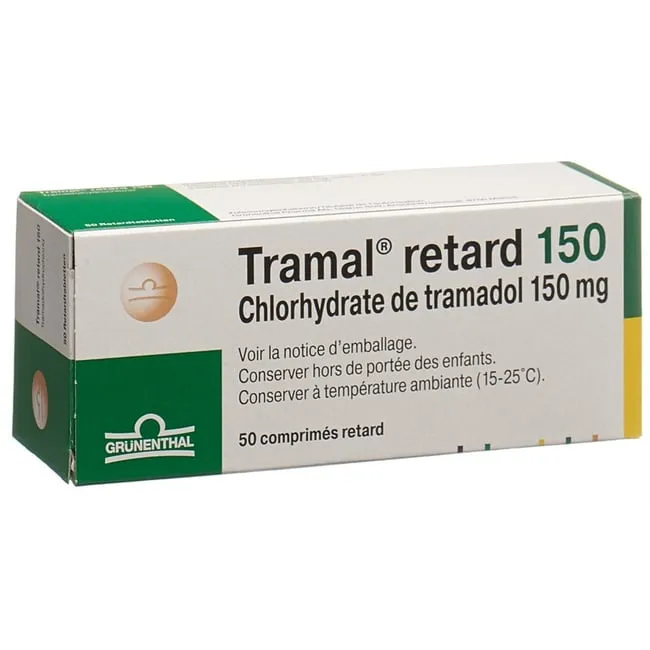
Table of Contents
Package leaflet: Information for the patient
Warning! Keep this leaflet. Information on the immediate packaging is in a foreign language.
Tramal Retard 150 (Tramal SR)
150 mg, prolonged-release tablets
Tramadoli hydrochloridum
Tramal Retard 150 and Tramal SR are different trade names for the same medicine.
Please read this leaflet carefully before using the medicine, as it contains
important information for the patient.
- Keep this leaflet, so that you can read it again if necessary.
- If you have any doubts, please consult your doctor or pharmacist.
- This medicine has been prescribed for a specific individual. Do not pass it on to others. The medicine may harm another person, even if their symptoms are the same.
- If the patient experiences any adverse reactions, including any adverse reactions not listed in this leaflet, inform your doctor, pharmacist, or nurse. See section 4.
Table of contents of the leaflet:
- What Tramal Retard 150 is and what it is used for
- Important information before taking Tramal Retard 150
- How to take Tramal Retard 150
- Possible side effects
- How to store Tramal Retard 150
- Contents of the pack and other information
1. What Tramal Retard 150 is and what it is used for
Tramadol – the active substance in Tramal Retard 150 – is an analgesic belonging to the group of opioids acting on the central nervous system. It exerts its analgesic effect by acting on specific receptors of nerve cells in the spinal cord and brain.
Tramal Retard 150 is indicated for the treatment of moderate to severe pain.
2. Important information before using Tramal Retard 150
When not to use Tramal Retard 150:
- if the patient is allergic to tramadol or any of the other ingredients of this medicine (listed in section 6);
- in case of acute intoxication with alcohol, hypnotics, analgesics, or psychotropic medicines (medicines affecting mood and emotions);
- during treatment with MAO inhibitors (certain antidepressants) or within 14 days after their discontinuation (see “Tramal Retard 150 and other medicines”);
- in patients with uncontrolled epilepsy;
- for the treatment of opioid dependence.
Warnings and precautions
Before starting treatment with Tramal Retard 150, consult a doctor:
- if the patient has a history of dependence on other analgesics (opioids);
- in case of disturbances in consciousness (if the patient feels fainting coming on);
- in shock (cold sweats may be a symptom);
- in case of increased intracranial pressure (which may occur after head injury or in brain diseases);
- in case of respiratory disorders;
- in patients with increased sensitivity to opioid medicines;
- in patients with epilepsy or an increased risk of seizures, as this risk may be further increased;
- in patients with liver or kidney disease;
- if the patient suffers from depression and is taking antidepressants, as some of them may interact with tramadol (see “Tramal Retard 150 and other medicines”). There is a small risk of developing the so-called serotonin syndrome when tramadol is taken together with certain antidepressants or tramadol alone. If any symptoms of this serious condition occur, the patient should immediately consult a doctor (see section 4 “Possible side effects”).
Sleep-related breathing disorders
Tramal Retard 100, 150 and 200 may cause sleep-related breathing disorders such as
sleep apnoea (pauses in breathing during sleep) and sleep-related hypoxemia (low oxygen levels
in the blood). Symptoms may include pauses in breathing during sleep, nocturnal awakenings due to
breathlessness, difficulty maintaining sleep, or excessive daytime sleepiness. If the patient
or another person observes these symptoms, contact a doctor. The doctor may recommend
reducing the dose.
Caution is advised in patients with respiratory depression, especially when concomitantly
using medicines that depress the central nervous system (see “Tramal Retard 150 and other
medicines”) or when using doses higher than recommended (see “Use of a higher than recommended
dose of Tramal Retard 150” in section 3 and section 4), as respiratory depression cannot be ruled out
in such cases.
Seizures have been observed in patients taking tramadol at recommended doses.
The risk of seizures may be higher if the tramadol dose exceeds the recommended maximum daily
dose (400 mg) or if the patient is simultaneously taking other medicines that lower the seizure
threshold (see section “Tramal Retard 150 and other medicines”).
Tramal Retard 150 may cause psychological and physical dependence. Long-term use of
Tramal Retard 150 may lead to reduced effectiveness, requiring higher doses (development of
tolerance). In patients with a history of drug abuse or addiction, treatment should be short-term and
under strict medical supervision.
Excessive fatigue, loss of appetite, severe abdominal pain, nausea, vomiting, or low blood pressure
may indicate adrenal insufficiency (low cortisol levels). If such symptoms occur, contact a doctor, who
will decide whether hormone replacement is necessary.
Consult a doctor if any of the above situations occur during treatment with Tramal Retard 150,
even if these warnings relate to conditions that occurred in the past.
Tramadol is metabolized in the liver by an enzyme. Some individuals have a genetic variation of
this enzyme, which may lead to different effects. In some people, pain relief may be insufficient,
while in others, severe adverse effects may be more likely.
Discontinue use and contact a doctor immediately if any of the following adverse effects occur:
slow or shallow breathing, confusion, drowsiness, pinpoint pupils, nausea or vomiting, constipation,
or loss of appetite.
Tramal Retard 150 and other medicines
Inform your doctor or pharmacist about all medicines currently or recently taken, as well as any
medicines planned for future use.
Tramal Retard 150 must not be used together with MAO inhibitors (medicines used to treat
depression) or within 14 days after their discontinuation.
The analgesic effect of Tramal Retard 150 may be reduced and its duration shortened when used
concomitantly with medicines containing:
- carbamazepine (an antiepileptic medicine),
- pentazocine, nalbuphine or buprenorphine (analgesics),
- ondansetron (an antiemetic medicine). Consult your doctor regarding the use and dosing of Tramal Retard 150.
The risk of adverse effects increases:
- when Tramal Retard 150 is used concomitantly with other analgesics such as morphine and codeine (also as a cough suppressant) and alcohol. Drowsiness or fainting may occur. In such cases, consult a doctor.
- concomitant use of Tramal Retard 150 with sedatives or hypnotics (e.g. benzodiazepines) increases the risk of drowsiness, breathing difficulties (respiratory depression), coma, and may be life-threatening. Therefore, concomitant use should only be considered when other treatment options are not possible. However, if a doctor prescribes Tramal Retard 150 together with sedatives, the dose and duration of combined treatment should be strictly limited by the doctor. Inform the doctor about all sedatives being taken and strictly follow dosing instructions. It may be helpful to inform family members or friends so they are aware of the above symptoms. Contact a doctor immediately if such symptoms occur.
- if the patient is taking other medicines that may cause seizures, such as certain antidepressants or antipsychotics, including: selective serotonin reuptake inhibitors (SSRIs), serotonin-noradrenaline reuptake inhibitors (SNRIs), tricyclic antidepressants, antipsychotics, and other medicines that lower the seizure threshold (e.g. bupropion, mirtazapine, tetrahydrocannabinol). The risk of seizures may increase if Tramal Retard 150 is taken simultaneously with these medicines. Consult a doctor whether it is safe to take Tramal Retard 150 while on these medicines.
- if the patient is taking certain antidepressants, Tramal Retard 150 may interact with them and cause serotonin syndrome (see section 4 “Possible side effects”).
- when anticoagulants of the coumarin derivatives (to reduce blood clotting), e.g. warfarin, are used concomitantly with Tramal Retard 150. Bleeding may occur due to the effect of these medicines on the coagulation system.
Ketoconazole (an antifungal medicine) and erythromycin (a bacteriostatic antibiotic) may inhibit
the metabolism of tramadol and probably also of its active metabolite.
Tramal Retard 150 with food, drink and alcohol
Do not drink alcohol while taking Tramal Retard 150, as the effect of the medicine may be intensified,
potentially leading to respiratory depression.
Food does not affect the efficacy of Tramal Retard 150.
Children and adolescents
Use in children with respiratory disorders
Tramadol is not recommended in children with respiratory disorders, as tramadol toxicity symptoms
may be more pronounced in this group.
Pregnancy, breastfeeding and fertility:
If the patient is pregnant or breastfeeding, suspects she may be pregnant, or is planning to become
pregnant, she should consult a doctor or pharmacist before using this medicine.
The safety of tramadol use during pregnancy has not been established. Therefore, Tramal Retard 150
should not be used during pregnancy.
Prolonged use of tramadol during pregnancy may lead to neonatal withdrawal syndrome.
Breastfeeding
Tramadol is excreted in breast milk. Therefore, during breastfeeding, Tramal Retard 150 should
not be taken more than once, or if Tramal Retard 150 has been taken more than once, breastfeeding
should be discontinued.
Experience with tramadol use in humans does not indicate that tramadol affects fertility in men or women.
Driving and operating machinery
Tramal Retard 150 may cause drowsiness, dizziness, and blurred vision, which may impair reaction
speed. Therefore, do not drive or operate any machinery.
Tramal Retard 150 contains lactose monohydrate
If the patient has an intolerance to certain sugars, consult a doctor before using this medicine. This
medicine contains lactose.
3. How to use Tramal Retard 150
This medicine should always be used as directed by the doctor. If in doubt, consult the doctor or pharmacist.
The doctor will adjust the dose according to the intensity of pain and the individual patient's response to treatment.
The dose used will be the lowest effective dose for pain relief. Do not use more than 400 mg of tramadol hydrochloride per day unless otherwise directed by the doctor.
Unless otherwise directed by the doctor, the usual dosage is as follows:
Adults and adolescents over 12 years of age:
One tablet of Tramal Retard 150 twice daily (equivalent to 300 mg of tramadol hydrochloride), preferably in the morning and evening.
If necessary, the doctor may prescribe a different dosage regimen better suited to the individual.
If required, the dose may be increased to 150 or 200 mg twice daily (equivalent to 300 mg to 400 mg of tramadol hydrochloride per day).
Children:
Tramal Retard 150 must not be used in children under 12 years of age.
Elderly patients:
In patients over 75 years of age, tramadol elimination may be delayed. In these patients, the doctor may recommend prolonging the interval between doses.
Patients with renal impairment, undergoing dialysis, or with hepatic impairment:
Tramal Retard 150 must not be taken in cases of severe hepatic and/or renal impairment.
In cases of mild or moderate impairment, the doctor may recommend prolonging the intervals between doses.
Method of administration:
Tramal Retard 150 tablets are for oral use.
The tablet must always be taken whole, with a small amount of liquid. Do not divide or chew the tablet.
The tablet may be taken independently of meals.
Duration of treatment:
Do not use Tramal Retard 150 longer than absolutely necessary. If long-term treatment is required due to the type and severity of the condition, the doctor will regularly monitor the patient's condition (including temporary interruption of treatment if necessary) to determine whether and at what dose treatment with Tramal Retard 150 should continue.
If you feel that the effect of Tramal Retard 150 is too strong or too weak, consult your doctor or pharmacist.
Use of a higher than recommended dose of Tramal Retard 150
After taking doses higher than recommended, the following may occur: pinpoint pupil constriction, vomiting, drop in arterial blood pressure, rapid heartbeat, collapse, disturbances of consciousness up to coma (a state of deep unconsciousness), seizures, respiratory depression up to respiratory arrest.
In such cases, seek immediate medical attention!
Missing a dose of Tramal Retard 150
If you forget to take the medicine at the scheduled time, pain symptoms may return.
Do not take a double dose to make up for the missed dose.
Resume the usual dosing schedule.
Stopping treatment with Tramal Retard 150
If treatment with Tramal Retard 150 is suddenly interrupted or prematurely discontinued, pain symptoms are likely to return.
If the patient wishes to discontinue treatment due to adverse effects, they should inform the doctor.
Do not abruptly stop taking this medicine without medical advice. If the patient wishes to stop treatment, this should be discussed with the doctor, especially if the medicine has been taken long-term.
The doctor will advise when and how to discontinue the medicine; this may involve gradually reducing the dose to minimize the likelihood of withdrawal symptoms.
Generally, no serious post-treatment symptoms are observed after discontinuation of Tramal Retard 150. However, in rare cases, after abrupt discontinuation of Tramal Retard 150 following prolonged use, the patient may feel unwell. Symptoms may include restlessness, anxiety, nervousness, tremors, excessive motor activity, difficulty falling asleep, and gastrointestinal or intestinal disturbances.
Very rarely, panic attacks, hallucinations, abnormal sensory perceptions such as itching, tingling, numbness, and tinnitus may occur.
Other rare central nervous system disturbances, such as confusion, delusions, altered perception of self (depersonalization), altered perception of reality (derealization), and persecutory delusions (paranoia), have occurred very rarely.
If any of the above symptoms occur after discontinuation of the medicine, consult a doctor immediately.
If you have any further doubts regarding the use of this medicine, consult your doctor or pharmacist.
4. Possible side effects
Like all medicines, this medicine can cause side effects, although not everybody will experience them.
You should consult a doctor immediately if symptoms of an allergic reaction occur,
such as: swollen face, tongue and (or) throat and (or) difficulty swallowing or
urticaria associated with breathing difficulties, low blood pressure, weakness, fainting
due to life-threatening anaphylactic shock. Allergic reactions are rare
- occurring in 1 to 10 out of 10,000 patients. The most common side effects reported more frequently than in 1 out of 10 people during treatment with Tramal Retard 150 were nausea and dizziness.
Very common (occurring in more than 1
out of 10 people): dizziness,
nausea.
Common (occurring in 1
out of 100 people): headache, somnolence,
vomiting, constipation, dryness of the oral mucosa,
excessive sweating, fatigue.
Uncommon (occurring in 1
out of 1,000 people): cardiovascular and circulatory disorders (palpitations, rapid heartbeat, feeling of weakness due to decreased arterial blood pressure in patients changing position from lying to standing, and collapse). Such adverse effects may occur especially when intravenous formulations of tramadol are administered, and in patients after physical exertion.
Vomiting reflex, gastrointestinal irritation (feeling of pressure in the stomach,
bloating), diarrhoea,
skin reactions (e.g. pruritus, rash, urticaria).
Rare (occurring in 1
out of 10,000 people): bradycardia,
increased arterial blood pressure,
changes in appetite,
slow breathing, shortness of breath (dyspnoea).
Exacerbation of bronchial asthma has been reported during tramadol treatment,
although a causal relationship between these events has not been established. In
cases of ingestion of doses significantly higher than recommended, and simultaneous
use of other medicines that depress the central nervous system (e.g. sedatives,
sleep-inducing medicines, other analgesics, alcohol), respiratory depression may
occur.
Abnormal perception of stimuli (e.g. pruritus, tingling, numbness),
tremors, seizures, muscle spasms, uncoordinated movements,
fainting, speech disorders;
Seizures occur mainly after administration of high doses
of tramadol and when other medicines that may provoke seizures are used simultaneously;
Hallucinations, confusion, sleep disturbances, delirium, restlessness and nightmares.
Psychiatric disorders may occur after administration of Tramal Retard 150. Their severity and type may vary (depending on the patient's personality and duration of treatment). These may include mood disturbances (usually excitement, sometimes irritability), changes in activity (usually decreased, sometimes increased), and reduced sensory and cognitive perception (changes in sensations and recognition which may lead to incorrect assessment of situations);
The medicine may cause dependence.
Withdrawal symptoms may occur if treatment is stopped abruptly (see "Discontinuation of Tramal Retard 150");
Constriction of pupils (miosis), blurred vision, excessive dilation of pupils
(mydriasis),
muscle weakness;
difficulty or pain when passing urine, reduced urine volume
(urinary retention);
allergic reactions (e.g. difficulty breathing, wheezing, skin swelling) and shock (sudden circulatory failure);
Very rare (occurring
in fewer than 1
out of 10,000 people):
increased liver enzyme activity.
Unknown frequency (cannot be estimated
from available data): hypoglycaemia, hiccups, serotonin syndrome, which
may manifest as changes in mental status (e.g. agitation, hallucinations,
coma), as well as other symptoms such as fever, tachycardia,
unstable blood pressure, involuntary muscle contractions, muscle rigidity, lack
of coordination and (or) gastrointestinal symptoms (e.g. nausea,
vomiting, diarrhoea) (see section 2 Important information before using Tramal Retard 150).
Reporting of side effects
If any side effects occur, including any side effects not listed in this leaflet, please inform your doctor, pharmacist or nurse. Side effects can be reported directly to the Department of Monitoring Adverse Drug Reactions of the Office for Registration of Medicinal Products, Medical Devices and Biocidal Products
Al. Jerozolimskie 181C
02-222 Warsaw
Tel: + 48 22 49 21 301
Fax: + 48 22 49 21 309
Website: https://smz.ezdrowie.gov.pl
Reporting side effects helps provide more information on the safety of this medicine.
5. How to store Tramal Retard 150
Keep this medicine out of sight and reach of children.
Do not use this medicine after the expiry date stated on the packaging. The expiry date refers to the last day of the stated month.
No special storage instructions apply.
Medicines must not be disposed of via wastewater or household waste. Ask your pharmacist how to dispose of medicines no longer required. This will help protect the environment.
6. Contents of the pack and other information
What Tramal Retard 150 contains
- The active substance is tramadol hydrochloride. One prolonged-release tablet of Tramal Retard 150 contains 150 mg of tramadol hydrochloride (Tramadoli hydrochloridum).
- Other components are:
Tablet core: hypromellose 100,000 mPas, colloidal anhydrous silica, magnesium stearate, microcrystalline cellulose.
Coating: hypromellose 6 mPas, lactose monohydrate, macrogol 6000, propylene glycol, talc, titanium dioxide (E 171), iron oxide red (E 172), quinoline yellow lake (E 104).
What Tramal Retard 150 looks like and contents of the pack:
Pale orange, round tablets, embossed with "T2" on one side and the manufacturer's logo on the other.
Packs contain 10, 30 or 50 tablets in blisters of 10 tablets, presented in a cardboard carton.
For more detailed information, please contact the responsible party or the parallel importer:
Marketing Authorisation Holder in Greece, country of export:
VIANEX S.A., Tatoiou Str., 18 km Athens-Lamia National Road, 146 71, Nea Erythrea, Greece
Manufacturer:
Grunenthal GmbH, Zieglerstrasse 6, 52078 Aachen, Germany
Parallel importer:
Delfarma Sp. z o.o., ul. Św. Teresy od Dzieciątka Jezus 111, 91-222 Łódź, Poland
Repackaged in:
Delfarma Sp. z o.o., ul. Św. Teresy od Dzieciątka Jezus 111, 91-222 Łódź, Poland
Marketing Authorisation numbers in Greece, country of export: 54733/27-06-2014
22044/15/06-03-2017
Parallel Import Licence Number: 167/22