Tramadol synteza
Poland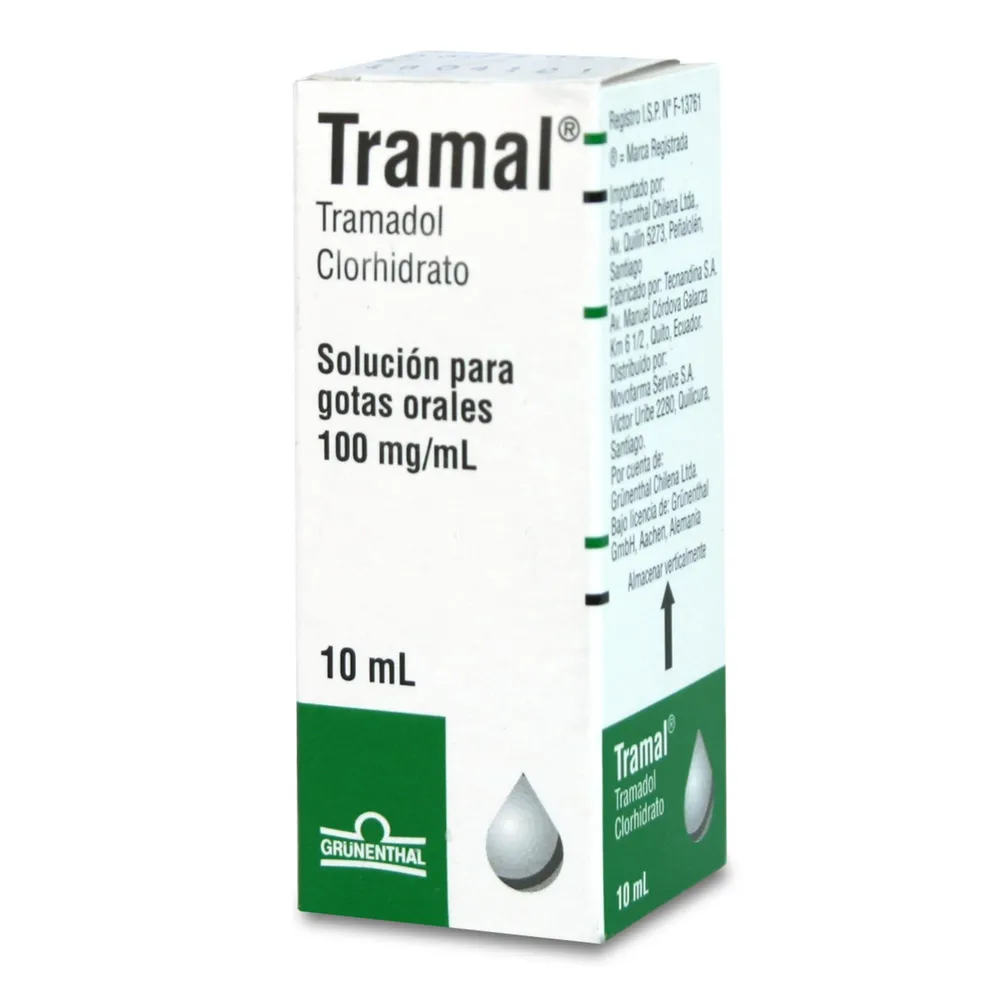
Table of Contents
Package leaflet: information for the patient
Tramadol Synteza, 100 mg/ml, oral drops
Tramadoli hydrochloridum
Please read carefully all the information in this leaflet before using the medicine, as it contains
important information for the patient.
- Keep this leaflet, so that you can read it again if necessary.
- If you have any questions, please consult your doctor or pharmacist.
- This medicine has been prescribed for a specific individual. Do not pass it on to others. The medicine may harm another person, even if their symptoms are the same.
- If you experience any adverse reactions, including any not listed in this leaflet, inform your doctor or pharmacist. See section 4.
Table of contents:
- What Tramadol Synteza is and what it is used for
- Important information before taking Tramadol Synteza
- How to take Tramadol Synteza
- Possible side effects
- How to store Tramadol Synteza
- Contents of the pack and other information
1. What Tramadol Synteza is and what it is used for
Tramadol Synteza contains the active substance tramadoli hydrochloridum, which has analgesic (pain-relieving) properties.
The medicine is used to treat moderate to severe pain.
2. Important information before taking Tramadol Synteza
When not to use Tramadol Synteza
- if you are allergic to tramadoli hydrochloridum or any of the other ingredients of this medicine (listed in section 6);
- in cases of intoxication with alcohol, medicines used to treat psychiatric disorders, centrally acting analgesics, or sedatives;
- in patients currently taking or within 2 weeks after discontinuation of medicines known as monoamine oxidase inhibitors (MAOIs) (used in severe depression);
- in patients undergoing treatment for opioid dependence;
- in patients with uncontrolled epilepsy. Tramadol Synteza is not appropriate for use in opioid-dependent patients.
Warnings and precautions
Before starting treatment with Tramadol Synteza, discuss it with your doctor or pharmacist.
Exercise particular caution when using Tramadol Synteza:
- in patients after head injury, in shock, in cases of impaired consciousness of unknown origin, in respiratory disorders or dysfunction of the respiratory center, and in cases of increased intracranial pressure;
- in patients with increased sensitivity to opioid medicines;
- in patients with a history of epilepsy or those prone to seizures of cerebral origin. Such patients should be treated with tramadoli hydrochloridum only if absolutely necessary;
- in patients concurrently taking other medicines that lower the seizure threshold (tramadoli hydrochloridum may increase the risk of seizures);
- in patients with a tendency to drug abuse or addiction. In such cases, treatment should be short-term and under strict medical supervision;
- in patients with renal or hepatic impairment.
Tramadoli hydrochloridum should not be used in substitution therapy for opioid-dependent patients, because although tramadol is an opioid receptor agonist, it does not alleviate morphine withdrawal symptoms.
Do not drink alcohol during treatment with tramadoli hydrochloridum.
Sleep-related breathing disorders
Tramadol Synteza may cause breathing disorders during sleep, such as sleep apnea (pauses in breathing during sleep) and sleep-related hypoxemia (low blood oxygen levels). Symptoms may include breathing pauses during sleep, nocturnal awakenings due to breathlessness, difficulty maintaining sleep, or excessive daytime sleepiness. If you or someone else observes these symptoms, contact your doctor. The doctor may recommend reducing the dose.
If any of the following symptoms occur during treatment with Tramadol Synteza, inform your doctor, pharmacist, or nurse:
Excessive fatigue, loss of appetite, severe abdominal pain, nausea, vomiting, or low blood pressure.
These may indicate adrenal insufficiency (low cortisol levels). If such symptoms occur, contact your doctor, who will decide whether hormone replacement is necessary.
Children
Due to the ethanol (alcohol) content, this medicine must not be given to children.
Tramadol Synteza and other medicines
Inform your doctor about all medicines you are currently taking, including those purchased without a prescription.
The amount of alcohol in this medicine may alter the effects of other medicines. If you are taking other medicines, consult your doctor or pharmacist.
Before starting treatment with Tramadol Synteza, inform your doctor or pharmacist if you are taking any of the following medicines or substances:
- monoamine oxidase inhibitors (MAOIs);
- cimetidine (a hepatic metabolism inhibitor);
- carbamazepine (a hepatic metabolism inducer);
- buprenorphine, nalbuphine, pentazocine, etc.;
- coumarin derivatives (e.g., warfarin and acenocoumarol);
- ketoconazole and erythromycin;
- ondansetron;
- tricyclic antidepressants, antipsychotics, and other medicines that lower the seizure threshold.
The risk of adverse effects increases:
- if you are taking other medicinal products that may cause seizures, such as certain antidepressants or antipsychotics. The risk of seizures may increase if you take Tramadol Synteza together with these medicines.
Your doctor should inform you whether Tramadol Synteza is suitable for you.
- if you are taking certain antidepressants. Tramadol Synteza may interact with these medicines, causing the following symptoms in patients: involuntary, rhythmic muscle contractions, including muscles controlling eye movement, agitation, excessive sweating, tremor, hyperreflexia, increased muscle tone, body temperature above 38°C.
Tramadol Synteza with food and drink
It is recommended to take the medicine after a meal.
Do not drink alcohol during treatment.
Pregnancy and breastfeeding
Pregnancy
The safety of tramadoli hydrochloridum during pregnancy has not been established. For this reason, the medicine should not be used in pregnant women.
Breastfeeding
The use of tramadoli hydrochloridum is not recommended during breastfeeding. Interruption of breastfeeding is not necessary following a single dose of the medicine.
Driving and operating machinery
The amount of alcohol in this medicine may affect the ability to drive and operate machinery, as it may impair judgment and reaction speed.
Warnings concerning excipients
This medicine contains 255 mg of alcohol (ethanol) per 0.5 ml of solution (equivalent to 50 mg of tramadoli hydrochloridum, 20 drops). The alcohol content in this dose is equivalent to 3 ml of wine or 7 ml of beer.
Harmful for people with alcohol-related disorders. If you are alcohol-dependent, consult your doctor or pharmacist before using this medicine.
Due to the ethanol (alcohol) content, this medicine must not be given to children. Consider caution in high-risk individuals, such as patients with liver disease or epilepsy. If you have epilepsy or liver problems, consult your doctor or pharmacist before using this medicine.
3. How to use Tramadol Synteza
This medicine should be used exactly as described in the patient leaflet or as advised by your doctor. If in doubt, consult your doctor or pharmacist.
Oral administration.
Recommended dose:
Adults and children over 14 years of age: single dose of 20 drops, corresponding to 50 mg of tramadol hydrochloride (0.5 ml of the medicine), taken orally on a spoonful of sugar or in water or fruit juice. If the analgesic effect is insufficient within 30 to 60 minutes after taking a single dose, the dose may be repeated.
Average daily dose: 20 drops every 6 hours (4 times 20 drops, i.e. 200 mg). The recommended maximum daily dose is 400 mg (8 times 20 drops).
The dose should be adjusted according to the intensity of pain and the individual patient's response to treatment. The lowest effective dose that adequately relieves pain should be used.
For chronic or cancer-related pain, the doctor may recommend a different dosing regimen.
Elderly patients
In patients over 75 years of age, tramadol elimination from the body may be delayed. In these patients, the doctor may recommend prolonging the interval between doses.
Patients with renal impairment, undergoing dialysis, or with hepatic impairment
Tramadol Synteza should not be taken in cases of severe hepatic and/or renal impairment.
In cases of mild or moderate impairment, the doctor may recommend prolonging the intervals between doses.
Use of a higher than recommended dose of Tramadol Synteza
If a dose higher than recommended is taken, stop taking the medicine immediately and consult your doctor or pharmacist without delay.
Prolonged use of doses higher than prescribed by the doctor may lead to drowsiness, weakness, and fainting.
Missing a dose of Tramadol Synteza
Continue treatment according to the dosing regimen recommended by your doctor.
Do not take a double dose to make up for a missed dose.
Stopping Tramadol Synteza
No withdrawal symptoms have been observed upon discontinuation of the medicine.
If you have any further questions about the use of this medicine, consult your doctor or pharmacist.
4. Possible side effects:
Like all medicines, Tramadol Synteza can cause side effects, although not everyone will experience them.
The most common side effects during treatment with Tramadol Synteza are dizziness and nausea, which may occur in more than 1 in 10 patients.
Very common (affects more than 1 in 10 patients):
dizziness, nausea
Common (affects more than 1 in 100 patients):
headache, drowsiness, constipation, dryness of the oral mucosa, vomiting, excessive sweating, feeling of fatigue
Uncommon (affects more than 1 in 1,000 patients):
cardiovascular disorders (palpitations, tachycardia, orthostatic hypotension, cardiovascular collapse), vomiting reflex, gastrointestinal irritation (feeling of pressure in the stomach, bloating), diarrhoea, skin reactions (itching, rash, urticaria)
Rare (affects more than 1 in 10,000 patients):
bradycardia, increased blood pressure, appetite changes, paresthesia, tremor, respiratory depression, epileptic-type seizures, involuntary muscle contractions, coordination disorders, fainting, hallucinations, disorientation, sleep disturbances, restlessness and nightmares, blurred vision, skeletal muscle weakness, urinary disorders (difficulty urinating, dysuria, urinary retention), allergic reactions (e.g. shortness of breath, bronchospasm, wheezing, angioedema) and anaphylaxis; withdrawal reactions similar to those observed after discontinuation of opioids, such as: agitation, anxiety, nervousness, insomnia, hyperkinesia, tremor, and gastrointestinal symptoms.
Very rare (affects less than 1 in 10,000 patients):
withdrawal symptoms: panic attacks, severe anxiety, hallucinations, paresthesia, tinnitus, and atypical central nervous system disorders (disorientation, delusions, depersonalization, loss of sense of reality, paranoia).
Frequency not known:
speech disorders, pupil dilation, hiccups
Other side effects
When significantly higher than recommended doses are used, and especially when combined with other substances that depress the central nervous system, respiratory depression may occur.
Epileptic-type seizures occur mainly after administration of high doses of tramadol and concomitant use of drugs that lower the seizure threshold.
Psychiatric disorders of various types, varying in severity and symptoms, may occur after tramadol administration, depending on the patient's personality and duration of treatment. These may include mood disturbances (usually excitement, sometimes dysphoria), changes in activity (usually decreased, sometimes increased), and changes in perception and cognitive functions (e.g. decision-making, perceptual disturbances). The medicine may cause dependence.
In a few isolated cases, increased activity of liver enzymes has been observed after tramadol administration.
Exacerbation of bronchial asthma has been reported during tramadol treatment, although a causal relationship has not been established.
Reporting of side effects
If any adverse effects occur, including any not listed in this leaflet, inform your doctor, pharmacist, or nurse. Side effects can be reported directly to the Department of Monitoring Adverse Drug Reactions, Office for Registration of Medicinal Products, Medical Devices and Biocidal Products, Al. Jerozolimskie 181C, 02-222 Warsaw, Tel.: +48 22 49 21 301, Fax: +48 22 49 21 309, Website: https://smz.ezdrowie.gov.pl.
Side effects can also be reported to the marketing authorization holder.
Reporting side effects helps provide more information on the safety of the medicine.
5. How to store Tramadol Synteza
Store below 25°C.
Keep the medicine out of the reach and sight of children.
Do not use this medicine after the expiry date stated on the carton.
Do not use this medicine after the expiry date stated on the carton. The expiry date refers to the last day of the stated month.
Medicines should not be disposed of via wastewater or household waste. Ask your pharmacist how to dispose of medicines no longer required. Such measures help protect the environment.
6. Contents of the packaging and other information
What Tramadol Synteza contains
- The active substance is tramadol hydrochloride. 1 ml of the product contains 100 mg of tramadol hydrochloride (Tramadoli hydrochloridum). 20 drops correspond to 50 mg of tramadol hydrochloride (0.5 ml of the medicinal product).
- The other ingredient is ethanol (70%).
What Tramadol Synteza looks like and contents of the pack
Tramadol Synteza is an oral solution in a 10 ml amber glass bottle (type III) with a dropper made of LDPE and a cap made of PP, placed in a cardboard box.
Marketing Authorisation Holder and Manufacturer
Przedsiębiorstwo Farmaceutyczno-Chemiczne „Synteza” Sp. z o.o.
ul. Św. Michała 67/71
61-005 Poznań
tel. 61 879-20-81
For further information about this medicinal product, please contact the representative of the Marketing Authorisation Holder:
Poland
Przedsiębiorstwo Farmaceutyczno-Chemiczne „Synteza” Sp. z o.o.
ul. Św. Michała 67/71
61-005 Poznań
Tel. 61 879-20-81