Tolak
Poland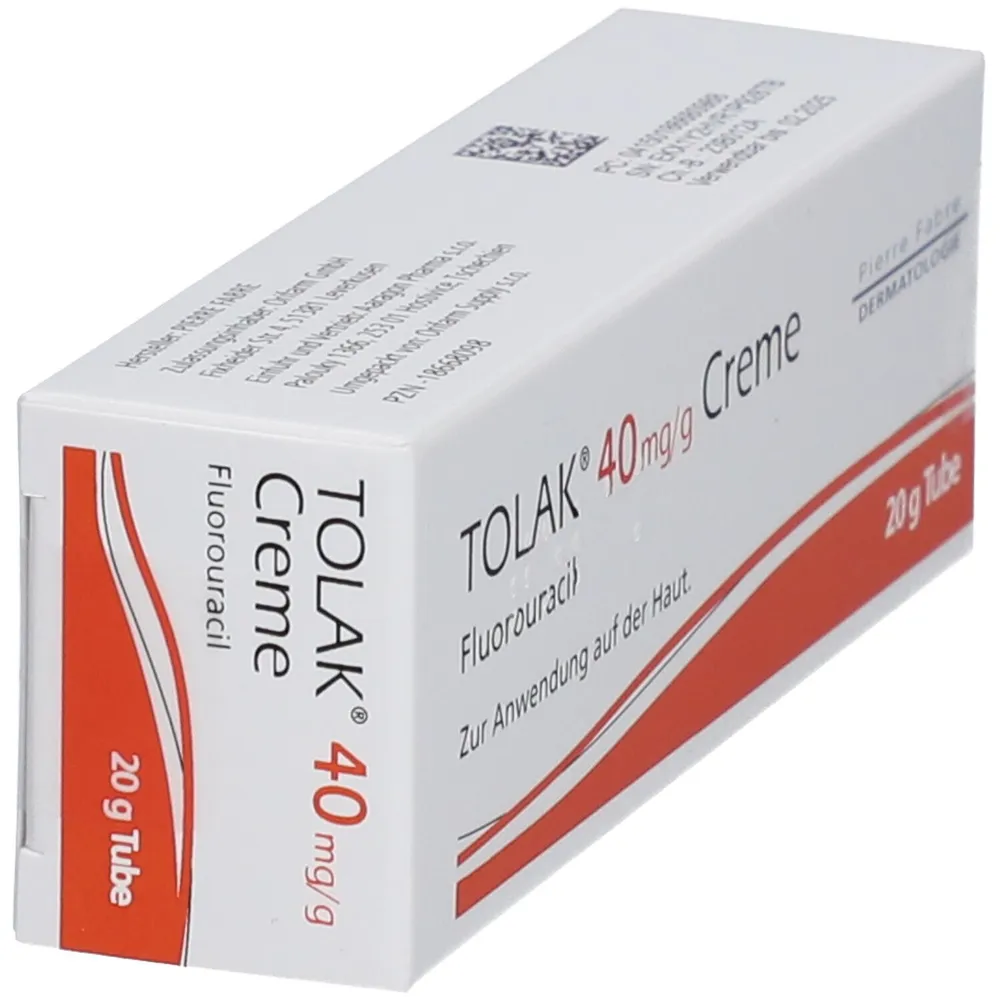
Table of Contents
Package leaflet: Information for the patient
Tolak, 40 mg/g, cream
Fluorouracilum
Please read this leaflet carefully before using the medicine, as it contains important information for the patient.
- Keep this leaflet so that you can read it again if necessary.
- If you have any questions, please consult your doctor or pharmacist.
- This medicine has been prescribed for a specific individual. Do not share it with others. The medicine may harm another person, even if their symptoms are the same.
- If you experience any adverse reactions, including any not listed in this leaflet, inform your doctor or pharmacist. See section 4.
Table of contents:
- What Tolak is and what it is used for
- Important information before using Tolak
- How to use Tolak
- Possible side effects
- How to store Tolak
- Contents of the pack and other information
1. What Tolak is and what it is used for
Tolak is a medicine containing fluorouracil as the active substance.
Fluorouracil belongs to a group of medicines known as antimetabolites, which inhibit cell growth (cytostatic agents).
Tolak is used in the treatment of a skin condition called actinic keratosis (sun-damaged skin) grade I and II on the face, ears and/or scalp in adults.
How Tolak works
During treatment with Tolak, redness may appear in the treated area of skin.
Tolak destroys cancerous and precancerous skin cells, while having a lesser effect on healthy cells.
Tolak is also used to treat skin lesions that were not previously visible to the naked eye, which may become red or inflamed.
Typically, the following reactions may occur sequentially: redness (erythema), inflammation and/or swelling, possible discomfort, skin damage (erosion), and eventually healing. This is an expected, normal response to treatment, indicating that Tolak is working.
A more pronounced reaction to treatment may occur (see section 4, "Possible side effects").
If the skin condition worsens significantly, if pain occurs, or if you are concerned, consult your doctor. The doctor may prescribe another cream to relieve discomfort.
Skin reactions are transient, usually mild to moderate, peak after about 4 weeks of treatment, and resolve within 2–4 weeks after treatment ends. Treatment response usually becomes apparent during the second week of use. After stopping treatment, the skin healing process may take approximately 4 weeks.
2. Important information before using Tolak
When not to use Tolak:
- If the patient is allergic (hypersensitive) to the active substance (fluorouracil) or to any of the other ingredients of this medicine (listed in section 6)
- If the patient is allergic (hypersensitive) to peanuts or soya
- In pregnant women
- In breastfeeding women
- In patients taking antiviral medicines of the nucleoside class (e.g. brivudine and sorivudine). These are medicines usually used in the treatment of chickenpox or shingles (see Tolak and other medicines).
Warnings and precautions
Before starting treatment with Tolak, discuss this with your doctor or pharmacist.
- Tolak must not be applied directly to the eyes, nose, mouth or other mucous membranes due to the risk of irritation, local inflammatory reaction or ulceration. In case of such contact, the cream should be washed off immediately with plenty of water.
- Do not use Tolak on open wounds or damaged skin.
- During treatment, redness of the treated skin area may occur, followed by an inflammatory reaction and/or swelling, discomfort, skin erosion, and eventually healing. This is an expected, normal response to treatment, indicating that Tolak is working. If the skin condition worsens significantly, or if pain or concern occurs, the patient should consult a doctor. The doctor may prescribe another cream to relieve discomfort.
- Do not use Tolak under bandages or dressings, as this may intensify skin inflammation.
- Corneal and conjunctival (parts of the eye) problems have been reported following application of fluorouracil to the skin. Tolak should not be used around the eyes. To avoid transferring the medicine to the eyes and/or contact lenses or around the eye area, hands must be washed thoroughly after applying Tolak.
- In case of accidental contact with the eyes, rinse them immediately with plenty of water.
- Allergic reactions (contact dermatitis) may occur. If intense itching or redness of the skin occurs at the application site or elsewhere, consult a doctor.
- Photosensitivity reactions resembling sunburn have been reported after exposure to light following application of fluorouracil to the skin. Exposure to ultraviolet radiation (e.g. natural sunlight, sunbeds) should be avoided during treatment with Tolak.
- If the patient knows they have reduced or absent activity of the enzyme dihydropyrimidine dehydrogenase (DPD) (partial or complete DPD deficiency), they should consult a doctor or pharmacist before using Tolak. Tolak may cause severe adverse reactions in individuals with this enzyme deficiency. Tolak should be discontinued and medical advice sought immediately if any of the following symptoms occur: mouth and/or throat sores (mucositis), inflammation of mucous membranes, abdominal pain, diarrhoea (with or without blood), vomiting, fever or chills.
Children and adolescents
Tolak is not intended for use in children and adolescents under 18 years of age.
Tolak with other medicines
Inform your doctor or pharmacist about all medicines currently or recently taken, as well as any medicines planned for use. In particular, inform your doctor if you are currently taking or have taken within the last 4 weeks medicines used to treat chickenpox or shingles (brivudine and sorivudine). Use of these medicines may increase the likelihood of adverse events during treatment with Tolak. Therefore, these medicines must not be used concurrently with Tolak.
Pregnancy, breastfeeding and effects on fertility
Tolak must not be used during pregnancy.
If a woman becomes pregnant during treatment, Tolak must be discontinued immediately and she should consult her doctor immediately for information on risks to the unborn child.
Women of childbearing potential must use an effective method of contraception during treatment with Tolak and for 6 months after the last dose of Tolak. Consult your doctor for advice on contraception if needed.
Men must use an effective method of contraception and avoid fathering a child during treatment with Tolak and for 3 months after the last dose.
It is unknown whether Tolak passes into human milk. Tolak must not be used during breastfeeding. If Tolak treatment is absolutely necessary during breastfeeding, breastfeeding must be discontinued.
Treatment with Tolak may impair fertility in women and men. Tolak should not be used in women and men attempting to conceive a child.
Driving and operating machinery
It is unlikely that treatment according to the recommended dosage will have any effect on the ability to drive or operate machinery.
Tolak contains:
- Butylhydroxytoluene (E 321): May cause local skin reactions (e.g. contact dermatitis) or irritation of the eyes and mucous membranes.
- Cetyl alcohol and stearyl alcohol: May cause local skin reactions (e.g. contact dermatitis).
- Methyl parahydroxybenzoate (E 218) and propyl parahydroxybenzoate: These substances may cause allergic reactions (which may be delayed).
- Arachis oil, refined (peanut oil): Do not use in patients allergic to peanuts or soya.
3. How to use Tolak
This medicine should always be used as directed by your doctor. If in doubt, consult your doctor or pharmacist.
How to use Tolak
Tolak should be applied once daily to the affected areas of skin for a period of 4 weeks as follows:
- Wash, rinse, and gently pat dry the areas of skin to be treated.
- Apply a thin layer of Tolak cream to the affected areas of skin.
- Gently and evenly massage Tolak into the skin with your fingers.
- Avoid contact of the medicine with other parts of the body, and do not transfer it from the patient's skin to the skin of other people.
- After applying Tolak, wash your hands thoroughly.
Use of more than the recommended dose of Tolak
If Tolak is used more frequently than once daily, the likelihood of local adverse reactions increases, as well as their severity.
If Tolak is accidentally swallowed by the patient or a child, seek immediate medical advice or go to the nearest hospital emergency department. In case of accidental ingestion of the cream, symptoms of fluorouracil overdose may include: nausea, vomiting, diarrhoea, ulceration in the mouth or throat (mucositis), inflammation of mucous membranes, stomach pain (abdominal pain), diarrhoea (bloody or not), vomiting, fever, or chills. In severe cases, blood disorders may occur.
Missed dose of Tolak
Do not use a double dose to make up for a missed dose. Continue treatment as directed by your doctor or as described in this leaflet.
Stopping Tolak treatment
Before stopping Tolak, consult your doctor, unless the patient experiences any of the following symptoms: ulceration in the mouth and/or throat (stomatitis), inflammation of mucous membranes, stomach pain (abdominal pain), diarrhoea (bloody or not), vomiting, fever, or chills. In such cases, stop using Tolak immediately and contact your doctor without delay (see section 2, "Warnings and precautions").
If you have any further questions about the use of this medicine, consult your doctor or pharmacist.
4. Possible adverse reactions
Like all medicines, this medicine can cause adverse reactions, although not everyone will experience them.
Common adverse reactions (may occur in up to 1 in 10 people):
- Skin reactions at the application site: irritation, pain, reaction, redness (erythema), itching (pruritus), inflammation, swelling (edema),
- Eye irritation.
Uncommon adverse reactions (may occur in up to 1 in 100 people):
- Impetigo (bacterial skin infection),
- Sore throat (pharyngitis),
- Insomnia,
- Nasal discomfort,
- Blisters on the lip surface,
- Nausea,
- Swelling around the eyes,
- Excessive tearing of the eyes,
- Redness,
- Skin disorders at the application site: bleeding, erosion, rash (dermatitis), discomfort, dryness, sensations such as numbness, tingling, pricking (paresthesia), sunburn-like reactions following exposure to light (photosensitivity reaction).
Frequency of the following adverse reactions unknown (cannot be estimated from available data):
- Allergic reactions (contact dermatitis – skin inflammation).
Reporting of adverse reactions
If any adverse reactions occur, including any adverse reactions not listed in this leaflet, inform your doctor or pharmacist. Adverse reactions can be reported directly to the Department of Monitoring Adverse Drug Reactions of the Office for Registration of Medicinal Products, Medical Devices and Biocidal Products:
Al. Jerozolimskie 181C, 02-222 Warsaw, tel.: +48 22 49 21 301, fax: +48 22 49 21 309,
website: https://smz.ezdrowie.gov.pl
Adverse reactions can also be reported to the marketing authorization holder.
Reporting adverse reactions helps to provide more information on the safety of the medicine.
5. How to store TOLAK
Keep this medicine out of sight and reach of children.
Do not store above 25°C.
Do not use this medicine after the expiry date stated on the cardboard box after: EXP.
The expiry date refers to the last day of the stated month.
After 4 weeks from opening, dispose of the opened tube, even if it is not empty. Do not store it for future use.
Record the date of first opening of the tube on the cardboard packaging (carton) to remember when to discard it.
Medicines must not be disposed of via wastewater or household waste. Ask your pharmacist how to dispose of medicines no longer required. Such measures help protect the environment.
6. Contents of the pack and other information
What Tolak contains
- The active substance is: fluorouracil. 1 gram of Tolak cream contains 40 mg of fluorouracil.
- The other ingredients are: purified water, purified arachis oil (peanut oil)*, isopropyl myristate, methyl Glucet-10, macrogol glycerides stearates, glycerol (E 422), cetyl alcohol*, stearyl alcohol*, sodium hydroxide (E 524), stearic acid, butylhydroxytoluene* (E 321), methyl parahydroxybenzoate* (E218), citric acid (E 330), propyl parahydroxybenzoate*. * See section 2. “Tolak contains”
What Tolak looks like and contents of the pack
A white or off-white cream in a tube of 20 g or 40 g.
Not all pack sizes may be marketed.
Marketing Authorisation Holder
Pierre Fabre Medicament
Les Cauquillous
81500 Lavaur
France
Importer:
PIERRE FABRE MEDICAMENT PRODUCTION
Parc Industriel de la Chartreuse
81100 Castres
France
This medicinal product is authorised in the European Economic Area under the following names:
- Tolak: Austria, Czech Republic, Denmark, France, Germany, Greece, Netherlands, Norway, Poland, Slovak Republic, Spain, Sweden
- Tolerak: Italy, Finland
- Efflurak: Belgium, Luxembourg, Portugal
For further information, please contact the representative of the Marketing Authorisation Holder:
Pierre Fabre Dermo-Cosmetique Polska Sp. z o.o.
ul. Belwederska 20/22
00-762 Warsaw
tel. 22 559 63 60
Other sources of information
Detailed information on this medicinal product is available on the website of the Office for Registration of Medicinal Products, Medical Devices and Biocidal Products.