Tobramycin sun
PolandTable of Contents
Patient Information Leaflet
TOBRAMYCIN SUN, 300 mg/5 mL, solution for nebulisation
tobramycinum
Please read all of this leaflet carefully before using this medicine, because it contains important information for you.
- Keep this leaflet. You may need to read it again.
- Speak to your doctor or pharmacist if you have any further questions.
- This medicine has been prescribed for you only. Do not pass it on to others. It may harm them, even if their symptoms are the same as yours.
- If you experience any side effects, tell your doctor or pharmacist. This includes any side effects not listed in this leaflet. See section 4.
Contents of this leaflet:
- What Tobramycin SUN is and what it is used for
- Before you use Tobramycin SUN
- How to use Tobramycin SUN
- Possible side effects
- How to store Tobramycin SUN
- Contents of the pack and other information
1. What Tobramycin SUN is and what it is used for
Tobramycin SUN contains an antibiotic called tobramycin. It belongs to a group of antibiotics known as aminoglycosides.
This medicine is used in patients aged 6 years and older with cystic fibrosis, to treat lung infection caused by the bacterium Pseudomonas aeruginosa.
Tobramycin SUN helps fight lung infections caused by Pseudomonas bacteria and helps improve breathing.
When inhaled, this antibiotic goes directly into the lungs to fight the bacteria causing the infection. Follow the instructions in this leaflet carefully to achieve the best possible results.
What is Pseudomonas aeruginosa?
This is a very common bacterium causing lung infections, which occurs at some point in the life of almost all patients with cystic fibrosis. In some individuals, infection appears later in life, while in others it occurs in early childhood.
It is one of the most dangerous bacteria for people with cystic fibrosis. Untreated lung infection caused by this bacterium leads to further lung damage and consequently causes breathing problems.
Tobramycin SUN works by killing the bacteria that cause lung infections. Infections can be successfully managed if detected early.
2. Important information before using Tobramycyna SUN
When NOT to use Tobramycyna SUN
- if the patient is allergic to tobramycin, any antibiotic from the aminoglycoside group, or any other component of the medicine (listed in section 6).
If this applies to the patient, this medicine must not be used and the patient should consult a doctor.
If the patient suspects they may be allergic, they should consult a doctor.
Warnings and precautions
Before starting treatment with Tobramycyna SUN, discuss with the doctor if the patient has or has ever had any of the following:
- hearing problems (including ringing in the ears and dizziness)
- kidney disease
- breathing difficulties with wheezing or coughing, chest tightness
- blood in sputum (expectorated mucus)
- muscle weakness that is persistent or worsening over time, for example associated with conditions such as myasthenia (muscle weakness) or Parkinson's disease. If any of the above symptoms apply to the patient, they should inform the doctor before using Tobramycyna SUN.
Inhaled medicines may cause chest tightness and wheezing, which may also occur during treatment with Tobramycyna SUN. The doctor will supervise the administration of the first dose and will check lung function before and after its administration. If the patient is not using a bronchodilator (e.g. salbutamol), the doctor may recommend using it before administering Tobramycyna SUN.
During treatment with Tobramycyna SUN, Pseudomonas bacterial strains may gradually become resistant to the medicine. This means that the medicine may become less effective with prolonged use. If in doubt, consult the doctor.
In patients receiving tobramycin intravenously, it may lead to hearing loss, dizziness, and kidney damage, and in pregnant women, to fetal harm.
Children and adolescents
Tobramycyna SUN may be used in adolescents and children aged 6 years and older. This medicine should not be given to children under 6 years of age.
Elderly patients
For patients aged 65 years and older, the doctor may recommend additional tests before deciding to use this medicine.
Tobramycyna SUN and other medicines
Tell the doctor or pharmacist about all medicines currently used, recently used, or planned to be used.
DO NOT use the following medicines during treatment with Tobramycyna SUN:
- furosemide or etacrynic acid, diuretic medicines (removing excess fluid from the body)
- other medicines that may affect kidney function, such as urea or mannitol administered intravenously
- other medicines that may damage the nervous system, kidneys, or hearing.
The following medicines may increase the likelihood of adverse effects if taken during treatment with tobramycin administered by injection:
- amphotericin B, cephalothin, cyclosporine, polymyxins (used in the treatment of bacterial infections), tacrolimus (used to suppress immune system activity). These medicines may damage the kidneys.
- platinum compounds, such as carboplatin and cisplatin (used in the treatment of certain types of cancer). These medicines may damage the kidneys or hearing.
- cholinesterase inhibitors, such as neostigmine and pyridostigmine (used in the treatment of muscle weakness) or botulinum toxin. These medicines may cause or worsen muscle weakness.
If the patient is taking one or more of the medicines listed above, they should consult the doctor before using Tobramycyna SUN.
Tobramycyna SUN must not be dissolved or mixed with other medicines in a nebulizer.
If the patient is using several different treatments for cystic fibrosis, they should be administered in the following order:
- administration of a bronchodilator (e.g. salbutamol);
- chest physiotherapy;
- administration of other inhaled medicines;
- then use Tobramycyna SUN.
For advice on the above order, consult the doctor.
Pregnancy and breastfeeding
Pregnancy
If the patient is pregnant, suspects she may be pregnant, or is planning to become pregnant, she should consult a doctor before using this medicine.
It is not known whether inhalation of the medicine during pregnancy causes adverse effects. Tobramycin and other aminoglycoside antibiotics administered by injection during pregnancy may be harmful to the fetus, causing, for example, deafness.
Breastfeeding
If the patient is breastfeeding, she should consult a doctor before using the medicine.
Driving and operating machinery
It is considered unlikely that the medicine has a negative effect on the ability to drive or operate machinery.
3. How to use Tobramycin SUN
Always use this medicine exactly as prescribed by your doctor. If in doubt, consult your doctor.
It is recommended to use two ampoules daily (one in the morning and one in the evening) for 28 days.
- The dose is the same for all individuals aged 6 years and older;
- The entire contents of one ampoule should be inhaled through the mouth using a nebulizer (one ampoule in the morning and one in the evening);
- It is best to maintain an interval between doses as close as possible to 12 hours. This interval must be at least 6 hours.
- After 28 days of treatment with Tobramycin SUN, a 28-day break should follow, during which Tobramycin SUN inhalation should not be used. After the break, start the next course of treatment (as shown in the diagram).
- It is important to use the medicine twice daily for 28 days and to follow the cycle: 28 days of treatment followed by 28 days off.
Tobramycin SUN treatment
Break from Tobramycin SUN
Use the medicine twice daily for 28 days
Do not use the medicine for the next 28 days
Repeat the cycle
Continue using the medicine in this manner for as long as your doctor recommends. If you have any doubts about when to use Tobramycin SUN, consult your doctor or pharmacist.
Instructions for using Tobramycin SUN
This section of the leaflet explains how to use, maintain, and handle Tobramycin SUN. Please read and follow these instructions carefully.
If you have any further questions about the use of this medicine, consult your doctor or pharmacist.
Equipment required for inhalation administration of Tobramycin SUN
Tobramycin SUN must be used with a clean and dry reusable nebulizer.
The LC PLUS nebulizer (manufactured by PARI GmbH) is suitable for use with this medicine.
Your doctor or physiotherapist can advise you on the correct use of the medicine with the required equipment. Different nebulizers may be needed for other inhaled medicines used in cystic fibrosis.
Preparing for inhalation administration of Tobramycin SUN
- Wash your hands thoroughly with soap and water.
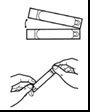
- Each foil pouch contains 4 ampoules. Open or cut the pouch. Remove one ampoule of medicine from the foil pouch. Store the remaining ampoules in the refrigerator in their original packaging.
- Place all parts of the nebulizer on a clean, dry paper towel or cloth.
- Ensure the patient has the appropriate compressor and connecting tubing for the nebulizer.
- Follow the manufacturer's instructions for proper use of the specific nebulizer model. Before using the medicine, confirm according to the manufacturer's instructions that the nebulizer and compressor are functioning correctly.
Using Tobramycin SUN with the PARI LC PLUS nebulizer (PARI GmbH)
For more detailed instructions on the correct use of the nebulizer, refer to the leaflet provided with the PARI LC PLUS model.
- Remove the nebulizer cap by turning it counterclockwise and lifting it off. Place the cap on a towel and position the nebulizer chamber upright on the towel.
- Connect one end of the tubing to the compressor air outlet. Ensure the tubing fits tightly onto the outlet. Plug the compressor into an electrical socket.
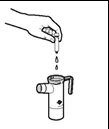
- Hold the lower part of the Tobramycin SUN ampoule in one hand and unscrew the top part with the other hand. Squeeze the entire contents of the ampoule into the nebulizer chamber.
- Replace the nebulizer cap, attach the mouthpiece and inhalation valve cap to the nebulizer in the correct positions, and connect the compressor as described in the instructions for the PARI LC PLUS nebulizer.
- Turn on the compressor. Check whether a continuous mist is emerging from the mouthpiece. If not, check all tubing connections and ensure the compressor is working properly.
- Stand or sit in an upright position to allow normal breathing.
- Place the mouthpiece between the teeth and just beyond the tip of the tongue. Breathe normally, but only through the mouth (if approved by your doctor, a nose clip may be used). Do not block airflow with the tongue.
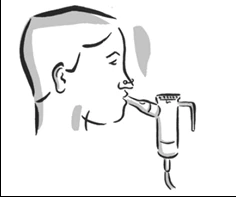
- Continue until the entire dose of Tobramycin SUN has been inhaled and the mist disappears. This usually takes about 15 minutes. When the nebulizer is empty, it may produce a gurgling sound.
- After use, clean and disinfect the nebulizer according to the manufacturer's instructions. Do not use a dirty or clogged nebulizer. Do not share the nebulizer with other people.
If treatment is interrupted due to coughing, rest, or other reasons, disconnect the compressor to preserve the medicine. Turn the compressor back on when the patient is ready to continue.
If the next dose is due in less than 6 hours, skip the missed dose.
Use of more than the recommended dose of Tobramycin SUN
If more of the medicine is inhaled than recommended, hoarseness may occur. Inform your doctor immediately.
If the medicine is swallowed, inform your doctor immediately.
Missing a dose of Tobramycin SUN
If you miss a dose of Tobramycin SUN and there are at least 6 hours before the next dose is due, take the missed dose as soon as possible. Otherwise, wait until the next scheduled dose. Do not take a double dose to make up for a missed dose.
Stopping treatment with Tobramycin SUN
Do not stop using this medicine unless instructed by your doctor, as this may result in inadequate control of lung infection and worsening of symptoms.
If you have any further questions about the use of this medicine, consult your doctor or pharmacist.
4. Possible side effects
Like all medicines, this medicine can cause side effects, although not everybody gets them.
Serious side effects
If any of the following serious side effects occur, tell your doctor immediately:
- unusual breathing difficulties with wheezing or cough and chest tightness
- allergic reactions including hives and itching
If any of the following serious side effects occur, tell your doctor immediately:
- hearing loss (ringing in the ears may be a sign of hearing loss), tinnitus (such as buzzing or hissing sounds)
During treatment with Tobramycyna SUN, worsening of the underlying lung disease may occur.
This may be due to the medicine not working. In such a case, inform your doctor immediately.
Other side effects
Tell your doctor as soon as possible if any of the following side effects occur:
Very common (may affect more than 1 in 10 people)
- runny or blocked nose, sneezing
- voice change (hoarseness)
- discoloration of sputum
- worsening of lung function test results
Common (may affect up to 1 in 10 people)
- general malaise
- muscle pain
- voice change with sore throat and difficulty swallowing (laryngitis)
Other side effects
- itching
- itchy rash
- rash
- loss of voice
- taste disturbances
- sore throat
Unknown frequency (cannot be estimated from available data)
- increased amount of sputum
- chest pain
- decreased appetite
When Tobramycyna SUN is used concurrently or following multiple treatment cycles with tobramycin or another aminoglycoside antibiotic administered by injection, hearing loss has been reported as a side effect.
Injected tobramycin or other aminoglycoside antibiotics may cause allergic reactions, hearing disturbances, or kidney damage.
Patients with cystic fibrosis have many symptoms related to this disease. These symptoms may persist during treatment with Tobramycyna SUN, but they should not occur more frequently or become more severe than before.
Reporting of side effects
If any side effects occur, including any not listed in this leaflet, tell your doctor, pharmacist, or nurse. Side effects can be reported directly to the Department of Monitoring Adverse Drug Reactions, Office for Registration of Medicinal Products, Medical Devices and Biocidal Products:
Al. Jerozolimskie 181C, 02-222 Warsaw, tel.: 22 49-21-301, fax: 22 49-21-309. Website: https://smz.ezdrowie.gov.pl.
Side effects can also be reported to the marketing authorization holder.
Reporting side effects helps to provide more information on the safety of this medicine.
5. How to store Tobramycyna SUN
Keep this medicine out of the sight and reach of children.
Do not use this medicine after the expiry date stated on the packaging after EXP.
The expiry date refers to the last day of the specified month.
Store in a refrigerator (2–8°C). Keep in the original packaging to protect from light.
During transport, the medicine may be stored in unopened or opened sachets at a temperature below 25°C for up to 28 days. Do not use the medicine if it has been stored at room temperature for longer than 28 days.
The medicine is colourless to slightly yellow, but this is not a strict rule and the solution may occasionally be somewhat darker. This does not affect the efficacy of the medicine, provided it has been stored properly.
Do not use the medicine if it becomes cloudy or if there are any solid particles in the solution.
An opened ampoule must never be stored. Once an ampoule is opened, the entire contents must be used immediately and any remaining medicine must be discarded.
The ampoules are labelled in English with the phrases "For oral inhalation only" and "STERILE", meaning "For oral inhalation only" and "STERILE", respectively.
Medicines must not be disposed of via wastewater or household waste. Ask your pharmacist how to dispose of medicines no longer required. Such measures help protect the environment.
6. Contents of the packaging and other information
What Tobramycin SUN contains
- The active substance is tobramycin. Each 5 mL ampoule contains 300 mg of tobramycin, corresponding to 60 mg/mL.
- The other ingredients are: sodium chloride, water for injections, nitrogen (E941), sulfuric acid (E513) (for pH adjustment) and/or sodium hydroxide (E524) (for pH adjustment).
What Tobramycin SUN looks like and contents of the pack
A clear, colourless, sterile infusion solution free from visible solid particles.
The medicine is supplied in ready-to-use ampoules. The ampoules are packed in foil pouches containing 4 ampoules,
which is sufficient for 2 days of treatment.
The medicine is available in packs of 56, 112 or 168 ampoules, sufficient for one, two or three treatment cycles, respectively.
Not all pack sizes may be marketed.
Marketing Authorisation Holder and Manufacturer
Sun Pharmaceutical Industries Europe B.V.
Polarisavenue 87
2132 JH Hoofddorp
The Netherlands
Manufacturer/Importer
Sun Pharmaceutical Industries Europe B.V.
Polarisavenue 87
2132 JH Hoofddorp
The Netherlands
Terapia S.A.
124 Fabricii Street
400632, Cluj-Napoca
Cluj County
Romania
This medicinal product is authorised in the European Economic Area and the United Kingdom (Northern Ireland) under the following names:
Germany: Tobramycin SUN 300 mg Lösung für einen Vernebler
Denmark: Tobramycin SUN
Spain: Tobramicina SUN 300 mg/ 5 ml solución para inhalación por nebulizador
France: Tobramycine SUN 300 mg/ 5 ml solution pour inhalation par nébuliseur
Italy: Tobramicina SUN
The Netherlands: Tobramycine SUN 300 mg/ 5 ml verneveloplossing
Romania: Tobramicină SUN 300 mg soluţie pentru nebulizator
United Kingdom (Northern Ireland): Tobramycin 300 mg/ 5 ml nebuliser solution