Tipifree
PolandTable of Contents
Package leaflet: Information for the user
Tipifree, 40 micrograms/ml, eye drops, solution
Travoprost
Please read all of this leaflet carefully before using this medicine because it contains
important information for you.
- Keep this leaflet. You may need to read it again.
- If you have any further questions, ask your doctor or pharmacist.
- This medicine has been prescribed for a specific individual. Do not pass it on to others. It may harm them even if their symptoms are the same as yours.
- If you experience any side effects, including any not listed in this leaflet, tell your doctor or pharmacist. See section 4.
Contents of the leaflet
- What Tipifree is and what it is used for
- Important information before using Tipifree
- How to use Tipifree
- Possible side effects
- How to store Tipifree
- Contents of the pack and other information
1. What Tipifree is and what it is used for
Tipifree contains travoprost, a medicine belonging to a group called prostaglandin analogues. It works by reducing pressure inside the eye. Tipifree may be used alone or together with other eye drops, such as beta-blockers, which also reduce intraocular pressure.
Tipifree is used to reduce high pressure inside the eye in adults, adolescents and children from 2 months of age. This pressure may lead to the development of a disease called glaucoma.
2. Important information before using Tipifree
When not to use Tipifree
- If the patient is allergic to travoprost or any of the other ingredients of this medicine (listed in section 6). In such a case, consult a doctor for advice.
Warnings and precautions
Before starting to use Tipifree, discuss this with a doctor or pharmacist.
-
Tipifree may increase the length, thickness, pigmentation, and (or) number of eyelashes. Changes around the eyelids have also been observed, including excessive hair growth and changes in the tissues around the eye.
-
Tipifree may change the colour of the iris (the coloured part of the eye). The change may be permanent. A change in the colour of the skin around the eye may also occur.
-
If the patient has undergone cataract surgery, consult a doctor before starting to use Tipifree.
-
If the patient currently has or has previously had eye inflammation (iritis or uveitis), consult a doctor before starting to use Tipifree.
-
Tipifree may rarely cause shortness of breath, wheezing, or worsening of asthma symptoms. If any breathing changes occur while using Tipifree, inform the doctor immediately.
-
Travoprost may be absorbed through the skin. If any amount of the medicine comes into contact with the skin, it should be rinsed off immediately with water. This is particularly important for women who are pregnant or planning to become pregnant.
-
If the patient wears soft contact lenses – do not use the medicine while wearing lenses. After instilling the drops, wait 15 minutes before reinserting the lenses.
Children and adolescents
Tipifree may be used in children aged 2 months to under 18 years at the same dosage as in adults. Use of Tipifree in children under 2 months of age is not recommended.
Tipifree and other medicines
Inform the doctor or pharmacist about all medicines the patient is currently taking or has recently taken, as well as any medicines planned for use.
Pregnancy, breastfeeding and fertility
If the patient is pregnant, breastfeeding, suspects she may be pregnant, or plans to have a child, she should consult a doctor before using this medicine.
Pregnant women must not use Tipifree. If the patient suspects she may be pregnant, she should inform her doctor. If pregnancy could occur during treatment with Tipifree, appropriate contraception must be used.
Tipifree must not be used during breastfeeding. Tipifree may pass into breast milk.
Driving and operating machinery
After instilling Tipifree, vision may be blurred for a time. Until these symptoms resolve, the patient should not drive or operate machinery.
Tipifree contains hydrogenated castor oil and propylene glycol
This medicine may cause skin reactions and irritation.
3. How to use Tipifree
This medicine should always be used exactly as directed by the doctor. In case of doubt, consult
the doctor or the child's treating physician or pharmacist.
Recommended dose:
One drop into the affected eye or eyes once daily – in the evening.
Tipifree may be used in both eyes only if specifically instructed by the doctor. The medicine should be used for as long as prescribed by the doctor or the child's treating physician.
Tipifree is intended for ophthalmic use only.
Instructions for administration
Follow the instructions below to properly use Tipifree.
- Wash your hands and sit or stand comfortably.
- Remove the protective cap (Figure 1.).
- Hold the bottle with the tip pointing upwards, placing your thumb on the cap and the remaining fingers on the bottom of the bottle (Figure 2.). Before first use, press the bottle several times, approximately 13 times, until the first drop appears.
- Tilt your head backward and gently pull down the lower eyelid to form a small pouch between the eye and the eyelid.
- Position the tip of the bottle close to the eye without touching it.
- Do not touch the dropper tip to the eye, eyelid, surrounding areas, or any other surface. This may cause contamination of the drops.
- Press the cap with your finger and the bottom of the bottle to release exactly one drop into the eye, then release the lower eyelid (Figure 3.).
- Press a finger against the inner corner of the affected eye near the nose (Figure 4.). Hold for 1 minute, keeping the eye closed.
- Instill the drops into the second eye if instructed by the doctor.
- Immediately after use, replace the cap onto the bottle tip.
- If the drop missed the eye, repeat the instillation attempt.
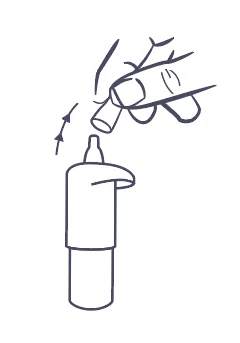
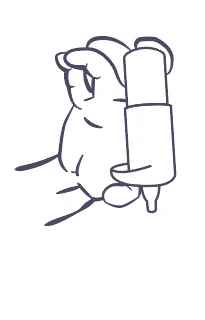
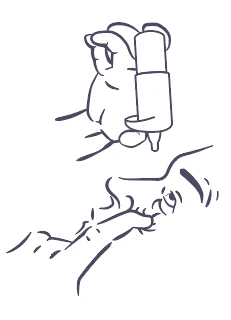
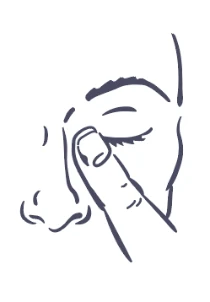
Figure 1. Figure 2. Figure 3. Figure 4.
Only one bottle should be used at a time.
If other eye medications such as eye drops or eye ointments are used, wait at least 5 minutes between applying Tipifree and the other eye medications. Eye ointments should be applied last.
Use of a higher than recommended dose of Tipifree
Rinse the eye thoroughly with warm water. Do not instill additional drops until the next scheduled dose.
Missed dose of Tipifree
Apply the next dose at the scheduled time. Do not use a double dose to make up for a missed dose. Never use more than one drop in the affected eye(s) once daily.
Stopping treatment with Tipifree
Do not stop using Tipifree without first consulting your doctor or the child's treating physician, as intraocular pressure in adult or pediatric patients will no longer be controlled, which may lead to vision loss.
If you have any further questions about the use of this medicine, consult your doctor or pharmacist.
4. Possible adverse reactions
Like all medicines, this medicinal product may cause adverse reactions, although not everyone experiences them.
You can usually continue using the eye drops unless the adverse reactions are severe.
If you have any concerns, contact your doctor or pharmacist. Do not stop using Tipifree without first consulting your doctor.
The following adverse reactions have been observed during the use of Tipifree.
Very common adverse reactions: may affect more than 1 in 10 people
Eye disorders: eye redness.
Common adverse reactions: may affect less than 1 in 10 people
Eye disorders: changes in iris colour (the coloured part of the eye), eye pain, sensation of eye discomfort, dry eye, eye itching, eye irritation.
Uncommon adverse reactions: may affect less than 1 in 100 people
Eye disorders: corneal disorders, eye inflammation, iritis (inflammation of the iris), intraocular inflammation, ocular surface inflammation with or without damage to the eye surface, light sensitivity, eye discharge, eyelid inflammation, eyelid redness, swelling around the eye, eyelid itching, blurred vision, increased tear production, conjunctival infection or inflammation, ectropion (abnormal outward turning of the lower eyelid), eye cloudiness, lumps on the eyelids, excessive eyelash growth.
General disorders: intensified allergic symptoms, headache, irregular heartbeat, cough, nasal congestion, throat irritation, darkening of the skin around the eyes, abnormal hair appearance, excessive hair growth.
Rare adverse reactions: may affect less than 1 in 1,000 people
Eye disorders: perception of flickering light, eyelid rash, misdirected eyelashes growing towards the eye, eye swelling, reduced vision, halo vision (seeing halos around lights), decreased eye sensation, inflammation of eyelid glands, pigmentation inside the eye, pupil dilation, eyelash thickening, change in eyelash colour, eye fatigue.
General disorders: viral eye infection, dizziness, unpleasant taste in mouth, irregular or slow heartbeat, increased or decreased blood pressure, shallow breathing, asthma, nasal allergy or inflammation of the nasal mucosa, dryness of the nasal mucosa, voice changes, gastrointestinal discomfort or peptic ulcer, constipation, dry mouth, skin redness or itching, rash, hair pigmentation changes, eyelash loss, joint pain, musculoskeletal pain, generalised weakness.
Frequency not known (frequency cannot be estimated from available data)
Eye disorders: posterior segment inflammation of the eye, enophthalmos (sunken eyeballs).
General disorders: depression, anxiety, insomnia, sensation of abnormal movement, tinnitus (ringing in the ears), chest pain, irregular heart rhythm, rapid heartbeat, asthma exacerbation, diarrhoea, nosebleeds, abdominal pain, nausea, vomiting, itching, abnormal hair growth, painful or involuntary urination, increased level of prostate-specific antigen (PSA).
The most common adverse reactions observed in children and adolescents during treatment with Tipifree were eye redness and excessive eyelash growth. Both of these adverse reactions were observed more frequently in children and adolescents compared to adults.
Reporting of adverse reactions
If any adverse reactions occur, including any not listed in this leaflet, inform your doctor or pharmacist. Adverse reactions can be reported directly to the Department of Monitoring of Adverse Drug Reactions of the Office for Registration of Medicinal Products, Medical Devices and Biocidal Products
Al. Jerozolimskie 181C
02-222 Warsaw
Phone: +48 22 4921 301
Fax: +48 22 4921 309
Website: https://smz.ezdrowie.gov.pl
Adverse reactions can also be reported to the marketing authorisation holder.
Reporting adverse reactions helps provide more information on the safety of this medicine.
5. How to store Tipifree medicine
Keep the medicine out of the sight and reach of children.
Do not use this medicine after the expiry date stated on the label of the bottle and the carton
after: EXP. The expiry date refers to the last day of the stated month.
There are no special storage temperature requirements for this medicine.
Do not freeze.
Store the bottle in the outer packaging to protect it from light.
After first opening, store the bottle in the outer packaging to protect it from light.
Period of use after first opening of the bottle:
- bottle containing 2.5 ml: 30 days
- bottle containing 7.5 ml: 90 days. The date of opening should be recorded in the designated space on the carton.
Medicines must not be disposed of via the sewage system or household waste. Ask your pharmacist how to dispose of medicines no longer in use. This will help protect the environment.
6. Contents of the pack and other information
What Tipifree contains
- The active substance is travoprost. Each ml contains 40 micrograms of travoprost.
- The other ingredients are: boric acid; macrogolglycerol hydroxystearate; propylene glycol (E 1520); sodium chloride; mannitol; sodium hydroxide (for pH adjustment); hydrochloric acid, diluted (for pH adjustment); purified water.
What Tipifree looks like and contents of the pack
Tipifree is a colourless, clear solution.
The container consists of an HDPE bottle with a multidose dropper pump (PP, LDPD, HDPE), a cap made of HDPE, and a dosing aid (made of PP), all contained in a cardboard box.
Each 10 ml bottle contains either 2.5 ml or 7.5 ml of solution.
The cardboard box contains 1 bottle.
Not all pack sizes may be marketed.
Marketing Authorisation Holder and Manufacturer
Marketing Authorisation Holder
POLPHARMA Pharmaceutical Works S.A.
Pelplińska Street 19, 83-200 Starogard Gdanski
tel. +48 22 364 61 01
Manufacturer
Jadran - Galenski Laboratorij d.d.
Svilno 20
51000 Rijeka
Croatia