Tiotropium adoh
Poland
Table of Contents
Tiotropium ADOH, 18 micrograms, inhalation powder in hard capsule
Tiotropium
Please read this leaflet carefully before using the medicine, as it contains
important information for the patient.
- Keep this leaflet so that you can read it again if necessary.
- If you have any doubts, please consult your doctor or pharmacist.
- This medicine has been prescribed for a specific individual. Do not share it with others. The medicine may harm another person, even if their symptoms are the same.
- If you experience any adverse reactions, including any not listed in this leaflet, inform your doctor or pharmacist. See section 4.
Leaflet Contents
- What Tiotropium ADOH is and what it is used for
- Important information before using Tiotropium ADOH
- How to use Tiotropium ADOH
- Possible side effects
- How to store Tiotropium ADOH
- Contents of the pack and other information
1. What Tiotropium ADOH is and what it is used for
Tiotropium ADOH helps patients with chronic obstructive pulmonary disease (COPD) to breathe more easily. COPD is a chronic lung disease that causes shortness of breath and cough. COPD is associated with chronic bronchitis and emphysema.
Because COPD is a chronic condition, Tiotropium ADOH must be taken every day, not only when breathing difficulties or other COPD symptoms occur.
Tiotropium ADOH is a long-acting bronchodilator that helps open the airways and facilitates airflow into and out of the lungs. Regular use of this medicine may also help manage persistent breathlessness associated with the disease. This medicine will help minimize the impact of the disease on the patient's daily life. It may also help the patient become more active. Daily use of Tiotropium ADOH also helps prevent sudden, short-term worsening of COPD symptoms, which may last for several days.
The effect of this medicine lasts for 24 hours; therefore, it should be taken only once daily. For correct dosage, see section 3, “How to use Tiotropium ADOH,” and the instructions for use provided at the end of this leaflet.
2. Important information before using Tiotropium ADOH
When not to use Tiotropium ADOH
- if the patient is allergic (hypersensitive) to tiotropium, the active substance of the medicine, or to any of the other ingredients of this medicine (listed in section 6).
- if the patient is allergic (hypersensitive) to atropine or its derivatives, such as ipratropium or oxitropium.
Warnings and precautions
Before starting to use Tiotropium ADOH, discuss this with your doctor or
pharmacist.
Consult your doctor if the patient:
- has narrow-angle glaucoma (an eye condition),
- has prostate gland problems,
- has difficulty passing urine,
- has kidney problems.
This medicine is indicated for the maintenance treatment of COPD and should not be used
to treat sudden attacks of breathlessness or wheezing.
Seek immediate medical advice if the patient experiences immediate allergic reactions such as
rash, swelling, itching, wheezing or breathlessness. These may occur after taking this medicine.
Seek immediate medical advice if the patient experiences chest tightness, cough, wheezing or
breathlessness immediately after inhaling this medicine.
Take care to avoid contact of the inhaled powder with the eyes, as this may cause precipitation or
worsening of narrow-angle glaucoma (an eye condition). Stop using tiotropium bromide and seek
immediate medical advice, preferably from an ophthalmologist, if symptoms or signs of narrow-angle
glaucoma occur. Eye pain or discomfort, blurred vision, seeing halos (aurae) around lights or
coloured images associated with redness of the eyes may indicate an acute attack of narrow-angle
glaucoma. Ocular symptoms may be accompanied by headache, nausea or vomiting.
Pay attention to oral hygiene. Dry mouth, which has been observed during anticholinergic treatment,
may be long-term and associated with dental caries.
Inform the doctor if the patient has suffered a heart attack within the last 6 months or has had unstable
or life-threatening irregular heartbeat or severe heart failure within the past year. It is important to
decide whether this medicine is appropriate for continued use.
Do not use Tiotropium ADOH more than once a day.
Children and adolescents
Tiotropium ADOH is not recommended for children and adolescents under 18 years of age.
Tiotropium ADOH and other medicines
Tell your doctor or pharmacist about all medicines currently taken or recently taken, including those
obtained without a prescription.
Please inform your doctor or pharmacist if you are using similar medicines for your lung condition,
such as ipratropium or oxitropium.
No specific adverse interactions have been reported when this medicine was used together with
other medicines for the treatment of COPD, such as reliever inhalers like salbutamol, methylxanthines,
e.g. theophylline and/or oral or inhaled corticosteroids, e.g. prednisolone.
Pregnancy and breastfeeding
If the patient is pregnant or breastfeeding, suspects she may be pregnant or is planning to have a
baby, she should consult her doctor or pharmacist before using this medicine. Do not use this medicine
unless advised by a doctor.
Driving and using machines
Dizziness, blurred vision or headache may affect the ability to drive or operate machinery.
Tiotropium ADOH contains lactose
When used according to the recommended dosage, one capsule delivers up to 12.48 mg of
monohydrated lactose. If the doctor has informed the patient of an intolerance to certain sugars or
an allergy to milk proteins (which may be present in small amounts in the monohydrated lactose
ingredient), the patient should contact the doctor before taking this medicine.
3. How to use Tiotropium ADOH
This medicine should always be used as directed by a doctor or pharmacist. If in doubt,
consult a doctor or pharmacist.
The recommended dose is inhalation of the contents of 1 capsule (18 micrograms of tiotropium) once daily.
Do not use more than the recommended dose.
Tiotropium ADOH is not recommended for children and adolescents under 18 years of age.
This medicine should be used every day at the same time of day. This is important because it works for 24
hours.
The capsules are intended for inhalation only and must not be swallowed. Do not ingest
the capsules orally.
The RS01 inhaler, into which the Tiotropium ADOH capsule must be inserted, creates holes in
the capsule and allows the powder to be inhaled.
Ensure that the RS01 inhaler is available and that you are able to use it correctly. Instructions
for cleaning the RS01 inhaler are provided at the end of this leaflet.
Ensure that the patient does not blow into the RS01 inhaler.
If there are any difficulties using the RS01 inhaler, ask your doctor, nurse, or
pharmacist to demonstrate how it works.
When taking this medicine, take care to avoid the powder getting into the eyes. If any
amount of powder gets into the eyes, it may cause blurred vision, eye pain and/or
redness. In such case, rinse the eyes immediately with warm water. Then consult your doctor immediately for further advice.
If the patient experiences worsening breathing, contact a doctor as soon as possible.
Use of a higher than recommended dose of Tiotropium ADOH
If more than 1 capsule of Tiotropium ADOH has been inhaled in one day, contact a doctor immediately.
The patient may be at increased risk of experiencing adverse effects such as dry mouth, constipation, difficulty passing urine, rapid heartbeat, or blurred vision.
Missing a dose of Tiotropium ADOH
If the patient forgets to take a dose, take it as soon as remembered, but do not take two doses at the same time or on the same day. Then take the next dose as usual.
Stopping Tiotropium ADOH treatment
Before stopping treatment with this medicine, consult your doctor or pharmacist. If treatment is stopped, symptoms and signs of COPD may worsen.
If you have any further questions about the use of this medicine, consult your doctor or pharmacist.
4. Possible side effects
Like all medicines, this medicine can cause side effects, although not everybody will get them.
The side effects listed below have been observed in people taking this medicine and are listed according to their frequency as common, uncommon, rare or unknown.
Serious side effects
Serious side effects including allergic reactions, which may cause swelling of the face or throat (angioedema) or other hypersensitivity reactions (such as sudden drop in blood pressure or dizziness), may occur individually or as part of a severe allergic reaction (anaphylactic reaction) after administration of Tiotropium ADOH, 18 micrograms. As with all inhaled medicines, some patients may experience unexpected chest tightness, cough, breathlessness or wheezing immediately after inhalation (bronchospasm). If any of these events occur, consult your doctor.
The side effects listed below have been observed in people taking this medicine and are listed according to their frequency as common, uncommon, rare or unknown.
Common (may affect up to 1 in 10 people):
- dry mouth, which is usually mild
Uncommon (may affect up to 1 in 100 people):
- dizziness
- headache
- taste disturbances
- blurred vision
- irregular heartbeat (atrial fibrillation)
- sore throat
- hoarseness
- cough
- heartburn (gastroesophageal reflux disease)
- constipation
- fungal infections of the mouth and throat (oral thrush)
- rash
- difficulty in passing urine (urinary retention)
- painful or difficult urination
Rare (may affect up to 1 in 1,000 people):
- difficulty sleeping (insomnia)
- seeing halos (coloured rings) around lights or coloured vision associated with redness of the eye (glaucoma)
- increased measured eye pressure
- irregular heartbeat (supraventricular tachycardia)
- rapid heartbeat (tachycardia)
- awareness of heartbeat (palpitations)
- chest tightness associated with cough, wheezing or breathlessness immediately after inhalation (bronchospasm)
- nosebleeds
- sore throat
- sinusitis
- intestinal blockage or lack of intestinal movement (intestinal obstruction, including paralytic ileus)
- gingivitis
- glossitis
- difficulty swallowing
- stomatitis
- nausea
- hypersensitivity, including immediate reactions
- severe allergic reaction causing swelling of the face or throat (angioedema)
- urticaria
- itching
- urinary tract infections
Frequency not known (cannot be estimated from the available data):
- dehydration
- dental caries
- severe allergic reaction (anaphylactic reaction)
- skin infections or skin ulcers
- dry skin
- joint swelling
Reporting of side effects
If you experience any side effects, including any not listed in this leaflet, tell your doctor, pharmacist or nurse. Side effects can be reported directly to the Department of Monitoring Adverse Drug Reactions of the Office for Registration of Medicinal Products, Medical Devices and Biocidal Products
Al. Jerozolimskie 181C
PL-02 222 Warsaw
Tel.: + 48 22 49 21 301
Fax: + 48 22 49 21 309
Website: https://smz.ezdrowie.gov.pl
Side effects can also be reported to the marketing authorization holder.
Reporting side effects helps provide more information on the safety of this medicine.
5. How to store Tiotropium ADOH
Keep this medicine out of sight and reach of children.
Do not use this medicine after the expiry date stated on the carton and bottle after: EXP.
The expiry date refers to the last day of the specified month.
After removing the first capsule from the bottle, continue using the capsules within the next 30 days.
No special storage precautions are required for this medicinal product.
Do not freeze.
Medicines must not be disposed of via wastewater or household waste. Ask your pharmacist how to dispose of medicines no longer required. These measures will help protect the environment.
6. Contents of the pack and other information
What Tiotropium ADOH contains
The active substance is tiotropium. Each capsule contains 18 micrograms of the active ingredient
tiotropium (as monohydrate bromide). During inhalation, 10 micrograms of tiotropium is
delivered to the mouthpiece of the RS01 inhaler.
The other ingredient is monohydrate lactose (which may contain trace amounts of milk proteins).
What Tiotropium ADOH looks like and contents of the pack
Tiotropium ADOH 18 micrograms, inhalation powder in hard capsules, is a transparent hard capsule.
The product is available in the following pack sizes:
Pack containing 30 capsules in a bottle and one RS01 inhaler in a cardboard box.
Pack containing 60 capsules in two bottles and one RS01 inhaler in a cardboard box.
Pack containing 90 capsules in three bottles and one RS01 inhaler in a cardboard box.
Not all pack sizes may be marketed.
Marketing Authorisation Holder
Adamed Pharma S.A.
Pieńków, ul. M. Adamkiewicza 6A
05-152 Czosnów
Tel: +48 22 732 77 00
Manufacturer
Pharmadox Healthcare Ltd.
KW20A Kordin Industrial Park
Paola PLA 3000
Malta
This medicinal product is authorised in the following European Economic Area countries
Germany Tiotropium AAA-Pharma 18 Microgram Hard Capsules for Inhalation Powder
Netherlands Tiotropium ADOH 18 microgram, inhalation powder in hard capsules
Poland Tiotropium ADOH 18 micrograms, inhalation powder in hard capsules
Instructions for use of the RS01 inhaler:
Dear Patient,
The RS01 inhaler allows you to inhale the medication contained in the Tiotropium ADOH capsule.
Please follow your doctor's instructions for use. Do not take more than the recommended dose.
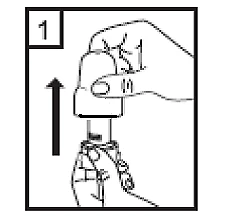 | 1 — Remove the cap from the mouthpiece. |
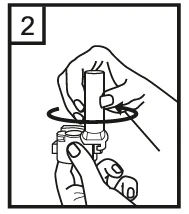 | 2 — Firmly hold the base of the device and rotate the mouthpiece in the direction indicated by the arrow shown on the device to open it. |
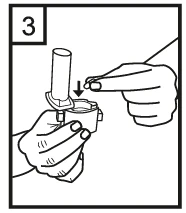 | 3 — Ensure fingers are completely dry. Remove one capsule from the packaging and place it horizontally into the capsule chamber in the base of the device. It is important to remove only one capsule from the packaging immediately before use. IMPORTANT: Do not place the capsule into the mouthpiece! |
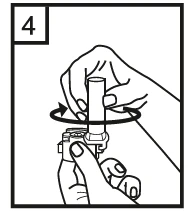 | 4 — Close by rotating the mouthpiece back until an audible "click" is heard. |
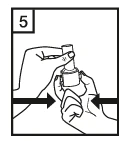 | 5 — How to release the powder from the capsule:
|
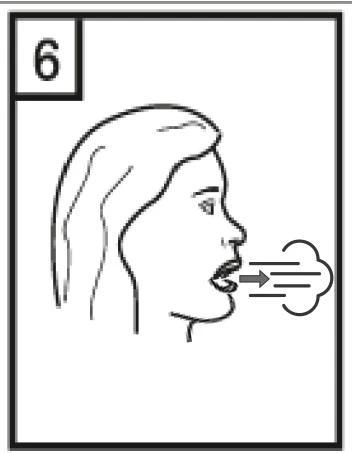
| 6 — Breathe out fully. IMPORTANT: Always avoid breathing into the mouthpiece. | |
 | 7 — How to inhale the powder into the airways:
|
| 8 — Open the capsule chamber and check whether any powder remains. If so, repeat steps 6, 7 and 8. | |
9 — After use, remove and discard the empty capsule. Follow the same instructions for any additional capsules as recommended by your doctor.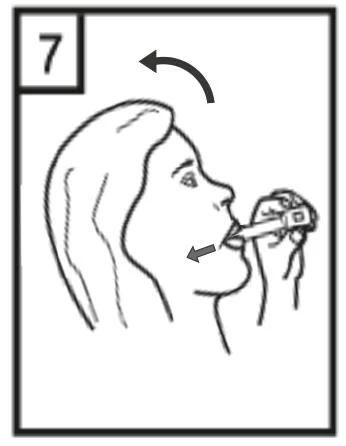 | |
| 10 — Wipe the mouthpiece and capsule chamber with a DRY, clean cloth to remove any dust residues. A clean, soft brush may also be used for this purpose. | |
DO NOT use water to clean the device.
Then close the mouthpiece and put the cap on.
After using the RS01 inhaler, always rinse the mouth and throat with water and spit out
the residue. This may help prevent the development of fungal infections in the mouth.