Timoptic 0.5%
Poland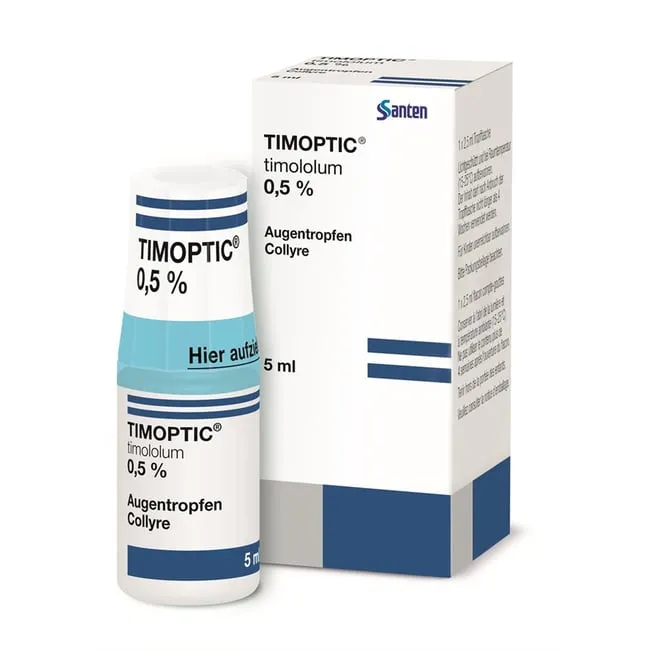
Table of Contents
Patient Information Leaflet
TIMOPTIC 0.5%, 5 mg/ml, eye drops, solution
Timolol
Please read this leaflet carefully before using this medicine, as it contains
important information for you.
- Keep this leaflet, as you may need to read it again.
- If you have any questions, please consult your doctor or pharmacist.
- This medicine has been prescribed for a specific individual. Do not pass it on to others. It may harm other people, even if their symptoms are the same.
- If you experience any adverse reactions, including any not listed in this leaflet, tell your doctor or pharmacist. See section 4.
Table of contents
- What Timoptic is and what it is used for
- Important information before using Timoptic
- How to use Timoptic
- Possible side effects
- How to store Timoptic
- Contents of the pack and other information
1. What Timoptic is and what it is used for
Timoptic is a medicine containing a beta-adrenergic receptor inhibitor that reduces intraocular pressure.
Timoptic is indicated for lowering intraocular pressure in patients with ocular hypertension and chronic open-angle glaucoma.
2. Important information before using Timoptic
When not to use Timoptic:
- if the patient is allergic to the active substance, other beta-adrenergic receptor blocking agents, or any of the other components of this medicine (listed in section 6);
- in patients with certain serious breathing disorders, such as bronchial asthma, currently or previously experienced;
- in patients with chronic obstructive pulmonary disease (a severe lung disease which may cause wheezing, difficulty breathing and/or long-term cough);
- in patients with diagnosed slow heart rate (bradycardia), overt heart failure, cardiac arrhythmias (irregular heartbeat), or cardiogenic shock.
If the patient has any of the conditions listed above, consult a doctor before taking this medicine.
Warnings and precautions
Before starting treatment with Timoptic, discuss it with your doctor or pharmacist. Inform your treating physician about any current or past medical conditions, such as:
- ischemic heart disease (symptoms include, among others, chest pain or pressure, shortness of breath, or a feeling of suffocation), heart failure, low blood pressure;
- disturbances in heart rate, for example, slow heartbeat;
- conditions related to poor blood circulation (e.g. Raynaud's disease or Raynaud's syndrome);
- lung diseases or breathing disorders (e.g. asthma or chronic obstructive pulmonary disease);
- diabetes or other disorders affecting blood sugar levels (because timolol may mask both subjective and objective symptoms of low blood sugar);
- hyperthyroidism (because timolou may mask both subjective and objective symptoms).
Before undergoing surgery, inform the doctor that you are using Timoptic, as it may affect the action of certain drugs used during anesthesia.
If the patient is allergic to any medicines, this should be reported to the doctor.
If an allergic reaction is suspected (e.g. rash, redness, or itching of the eyes), discontinue use of the medicine immediately and contact a doctor without delay.
While using Timoptic, inform your doctor if you develop an eye infection, eye injury, require eye surgery, or experience new symptoms or worsening of existing ones.
As with other ophthalmic medicines applied locally, Timoptic may also be absorbed into the systemic circulation.
Adverse effects observed with systemically administered beta-adrenergic receptor blockers may also occur during local application.
Patients who are already taking oral beta-adrenergic receptor blockers along with Timoptic should be monitored for possible additive effects of both drugs on intraocular pressure or on known systemic effects of beta-adrenergic receptor blockers. Concomitant use of two locally administered beta-adrenergic receptor blockers is not recommended.
Cases of choroidal detachment have been reported following administration of drugs that reduce aqueous humour secretion (e.g. timolol, acetazolamide) after filtration surgery.
Children and adolescents
In children and adolescents, medicinal products containing a lower concentration of timolol than Timoptic 0.5% should be used.
Timolol eye drops should be used with caution in children and adolescents.
Timolol should be used with particular caution in newborns, infants, and small children. If coughing, respiratory sounds, abnormal breathing, or abnormal breathing pauses (apnea) occur, treatment should be stopped immediately. Contact a doctor as quickly as possible. A portable monitor for detecting apnea may be helpful.
The use of timolol has been studied in infants and children aged from 12 days to 5 years who had elevated intraocular pressure or diagnosed glaucoma. For detailed information, consult your doctor.
Timoptic and other medicines
Inform your doctor about all medicines, including eye drops, currently used or recently used, as well as any medicines you plan to take, including those available without a prescription. It is especially important to inform about medications used to lower blood pressure or treat heart disease, diabetes, or depression (such as fluoxetine and paroxetine).
When certain medicines (e.g. quinidine, selective serotonin reuptake inhibitors) are used concomitantly with timolol, enhanced reactions such as bradycardia or depression have been observed.
Concomitant administration of Timoptic with an orally administered calcium channel blocker, a drug reducing catecholamine levels, an antiarrhythmic agent, a parasympathomimetic, or a beta-adrenergic blocking agent may lead to reduced arterial blood pressure and/or marked slowing of heart rate.
Orally administered beta-adrenergic receptor blockers may exacerbate hypertension that may occur after discontinuation of clonidine.
Pregnancy and breastfeeding
If the patient is pregnant or breastfeeding, suspects she may be pregnant, or is planning to have a child, she should consult a doctor or pharmacist before using this medicine.
Inform your doctor if you are pregnant or planning to become pregnant. Do not use Timoptic during pregnancy unless your doctor decides it is necessary.
Do not use Timoptic while breastfeeding. Timolol may pass into breast milk. Inform your doctor if you plan to breastfeed.
Driving and operating machinery
There are adverse effects associated with the use of Timoptic that may impair the ability to drive or operate machinery (see section 4). Until these symptoms have completely subsided, the patient should not drive or operate machinery.
Timoptic contains benzalkonium chloride and phosphates
This medicine contains approximately 0.003 mg of benzalkonium chloride per drop, equivalent to 0.10 mg/mL.
Benzalkonium chloride may be absorbed by soft contact lenses and may change their color. Remove contact lenses before instilling the drops and wait at least 15 minutes before reinserting them.
Benzalkonium chloride may also cause eye irritation, especially in individuals with dry eye syndrome or corneal disorders (the transparent layer at the front of the eye). If abnormal sensations, stinging, or pain in the eye occur after using the medicine, contact your doctor.
This medicine contains approximately 0.3 mg of phosphates per drop, equivalent to 11.8 mg/mL.
In patients with severe damage to the transparent, front part of the eye (cornea), phosphates may very rarely cause corneal clouding due to calcium deposits during treatment.
3. How to use Timoptic
This medicine should always be used exactly as directed by your doctor. If in doubt, consult your doctor or pharmacist.
Children and adolescents
Timolol products with a lower concentration than Timoptic 0,5% should be used in children and adolescents.
Before administering timolol, the doctor should perform a thorough medical evaluation.
The doctor will carefully assess the risk-benefit ratio associated with the use of timolol. If the benefits outweigh the risks, the medicine should be administered at the lowest available timolol concentration (0.1%) once daily.
In children, a 0.1% solution is usually sufficient to reduce intraocular pressure. If this dose does not adequately reduce intraocular pressure, administration twice daily with a 12-hour interval may be necessary.
Children, especially newborns, should be closely observed for one to two hours after the first dose and carefully monitored for adverse effects until surgical intervention is performed.
Duration of treatment
In children and adolescents, timolol is used for temporary treatment only.
Adults
In initial treatment of adults, timolol products with a lower concentration than Timoptic 0,5% should be used.
The usual initial dose is one drop of 0.25% timolol solution in the affected eye(s) in the morning and evening. In some cases, the doctor may increase the dose to one drop of Timoptic 0.5% in the affected eye(s) in the morning and evening.
If intraocular pressure stabilizes, the doctor may recommend using Timoptic once daily.
Do not change the dosing regimen prescribed by your doctor. If discontinuation of the medicine is necessary, inform your doctor immediately.
In some cases, the doctor may prescribe additional medicines, including other eye drops, to adequately reduce intraocular pressure.
If another medicine is used locally in the eye in addition to Timoptic, at least 15 minutes should be maintained between instillations of the different medicines. Ointments should always be applied last.
Do not let the dropper tip touch the eye or surrounding areas. This may contaminate the solution with bacteria and lead to eye infection, potentially causing serious damage or even loss of vision. To avoid possible contamination, avoid contact between the dropper and any surface.
Instructions for use
Do not use if the plastic tamper-evident band around the neck of the bottle is damaged or missing. When opening the bottle for the first time, remove the plastic tamper-evident band.
Each time you use the Timoptic medicine:
- Wash your hands.
- Open the bottle. Exercise particular care not to touch the dropper tip to the eye, skin around the eyes, or fingers. Failure to follow this instruction may result in contamination of the eye drops. Using contaminated eye drops may lead to dangerous complications and even loss of vision.
- Tilt your head backward and hold the bottle, with the bottom facing upward, over the eye.
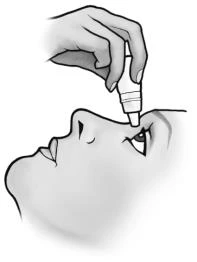
- Pull the lower eyelid downward and look
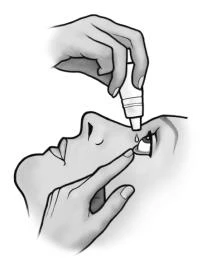
upward. Hold and gently squeeze the flattened sides of the bottle to release a single drop into the space between the lower eyelid and the eye.
-
After instilling the drop, release the lower eyelid. Press with your finger on the inner corner of the eye near the nose and gently close the eye for 3–5 minutes. This helps prevent the medicine from draining into the rest of the body.
-
To instill the medicine into the second eye, if directed by your doctor, repeat steps 3 to 5.
-
Replace the cap and close the bottle tightly.
Overdose of Timoptic
If too many drops are instilled or if the contents of the bottle are swallowed, symptoms such as dizziness, difficulty breathing, or a sensation of slowed heart rate may occur. Seek immediate medical advice.
Missed dose of Timoptic
Timoptic should be used as directed by your doctor. If you miss a dose, take it as soon as possible. However, if it is almost time for the next dose, do not take the missed dose; instead, return to your regular dosing schedule.
Do not use a double dose to make up for a missed dose.
4. Possible adverse reactions
Like all medicines, this medicine can cause adverse reactions, although not everybody gets them.
If the patient experiences an allergic reaction, including urticaria, swelling of the face, lips, tongue and (or)
throat, which may cause difficulty in breathing or swallowing, the use of the medicine must be discontinued
and immediate contact must be made with a doctor or the nearest hospital's Emergency Department.
Like other ophthalmic medicines applied locally, timolol is absorbed into the bloodstream. It may cause
the same types of adverse reactions as intravenous and/or orally administered beta-adrenergic receptor
blocking medicines. The frequency of systemic adverse reactions after local ocular administration is lower
than after oral or injected administration.
The adverse reactions listed below include those observed across the entire group of ocularly administered
ß-blockers.
The following adverse reactions have been observed during clinical trials and after marketing of timolol
maleate in any form administered locally to the eye.
Common (occurring in 1 to 10 out of 100 patients):
- headache
- eye irritation symptoms, including burning and stinging, itching, lacrimation, redness, conjunctivitis, blepharitis, keratitis, decreased corneal sensitivity, and dry eye
Uncommon (occurring in 1 to 10 out of 1,000 patients):
- dizziness, depression
- visual disturbances, including refractive disorders (in some cases due to discontinuation of miotic medication)
- bradycardia, syncope
- dyspnoea
- nausea, gastrointestinal disturbances
- weakness, fatigue
Rare (occurring in 1 to 10 out of 10,000 patients):
- symptoms of allergic reaction, including anaphylaxis, angioedema, urticaria, localised or generalised rash
- insomnia, nightmares, memory loss, paraesthesia (tingling and numbness), exacerbation of myasthenia symptoms, stroke, decreased libido
- diplopia, ptosis, choroidal detachment after filtering surgery
- tinnitus
- arrhythmia, hypotension, chest pain, heart block, cerebral ischaemia, congestive heart failure, palpitations, cardiac arrest, oedema, claudication [gait disturbance most commonly caused by mechanical (limb shortening or stiffness) or functional (pain, acute muscle ischaemia) factors], cold hands and feet (Raynaud's phenomenon)
- bronchospasm (especially in patients with pre-existing bronchospastic conditions), respiratory failure, cough
- diarrhoea, dry mouth
- alopecia, psoriasiform rash or psoriasis exacerbation
- systemic lupus erythematosus
- Peyronie's disease (corporal fibrosis causing painful erection and penile curvature)
Frequency unknown (cannot be estimated from available data):
- abdominal pain, vomiting, taste disturbances
- muscle pain
- sexual dysfunction, decreased libido
- hallucinations
- hypoglycaemia
- pruritus, skin rash
- syncope, stroke, cerebral ischaemia
- blurred vision
Laboratory test findings: clinically significant changes in basic laboratory parameters were rarely associated with oral administration of timolol maleate. Slight increases in blood urea nitrogen, serum potassium, uric acid and triglycerides, as well as slight decreases in haemoglobin, haematocrit and HDL-cholesterol, occurred, but were neither progressive nor associated with clinical symptoms.
Adverse reactions observed during oral administration of timolol maleate may also occur during administration of timolol maleate in the form of eye drops.
Reporting of adverse reactions
If any adverse reactions occur, including any not listed in this leaflet, the patient should inform their doctor or pharmacist. Adverse reactions can be reported directly to the Department of Monitoring of Adverse Drug Reactions at the Office for Registration of Medicinal Products, Medical Devices and Biocidal Products, Al. Jerozolimskie 181C, 02-222 Warsaw, Tel: +48 22 49 21 301, Fax: +48 22 49 21 309, Website: https://smz.ezdrowie.gov.pl
Adverse reactions may also be reported to the marketing authorisation holder.
Reporting adverse reactions helps provide more information on the safety of the medicine.
5. How to store Timoptic 0,5%
Keep this medicine out of sight and reach of children.
Store below 30°C.
Store in the original packaging to protect from light.
Do not use this medicine after the expiry date stated on the container following "EXP".
The expiry date refers to the last day of the stated month.
Duration of use after first opening the bottle: 4 weeks.
Medicines should not be disposed of via wastewater or household waste. Ask your pharmacist how to dispose of medicines no longer required. This will help protect the environment.
6. Contents of the pack and other information
What Timoptic contains
- The active substance is timolol (as timolol maleate), 5 mg/ml.
- The other ingredients are: sodium dihydrogen phosphate dihydrate (as monohydrate), disodium phosphate dodecahydrate (as anhydrous), benzalkonium chloride 50% solution (as benzalkonium chloride), sodium hydroxide 1N solution, water for injections.
See section 2 "Timoptic contains benzalkonium chloride and phosphates".
What Timoptic looks like and contents of the pack
Timoptic is available in bottles containing 5 ml of sterile eye drop solution,
in a cardboard box.
Marketing Authorisation Holder and Manufacturer
Marketing Authorisation Holder
Santen Oy
Niittyhaankatu 20
33720 Tampere
Finland
Manufacturer
Laboratoires Merck Sharp & Dohme – Chibret
Mirabel Plant, Route de Marsat – Riom
63963 Clermont-Ferrand
Cedex 9, France
Santen Oy
Kelloportinkatu 1
33100 Tampere
Finland