Timo-comod 0.5 %
Poland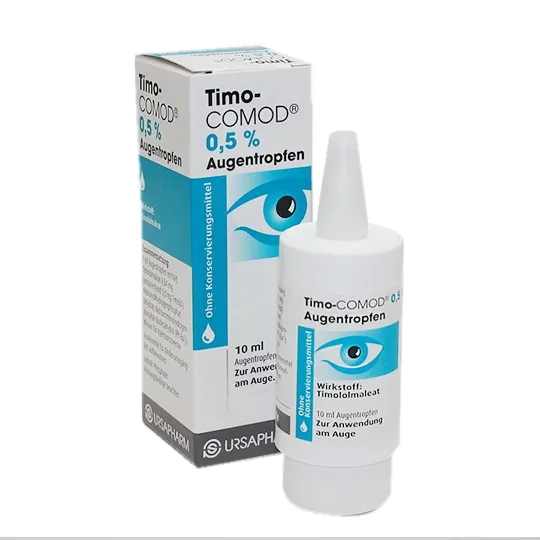
Table of Contents
URSAPHARM * Timo-COMOD 0.5 %, eye drops * MA-No. 9316 *
Application for variation
Package leaflet: information for the patient
Timo-COMOD 0.5 %
5 mg/ml, eye drops, solution
Timolol
Please read carefully all the information in this leaflet before using this medicine, as it contains
important information for the patient.
- Keep this leaflet, so that you can read it again if necessary.
- If you have any further questions, please consult your doctor or pharmacist.
- This medicine has been prescribed for a specific individual. Do not pass it on to others. The medicine may harm other people, even if their symptoms are the same.
- If any adverse reactions occur in the patient, including any adverse reactions not listed in this leaflet, inform your doctor or pharmacist immediately. See section 4.
Contents of the leaflet:
- What Timo-COMOD 0.5 % is and what it is used for
- Important information before using Timo-COMOD 0.5 %
- How to use Timo-COMOD 0.5 %
- Possible side effects
- How to store Timo-COMOD 0.5 %
- Contents of the pack and other information
1. What Timo-COMOD 0.5 % is and what it is used for
Timo-COMOD 0.5 % eye drops are a solution. Timo-COMOD 0.5 % contains as the active substance timolol maleate, which belongs to a group of medicines known as beta-adrenolytics (beta-adrenergic receptor blockers). The action of the medicine is to reduce intraocular pressure.
Timo-COMOD 0.5 % is indicated for the treatment of elevated intraocular pressure occurring in conditions such as ocular hypertension, chronic open-angle glaucoma, including glaucoma in aphakic patients.
2. Important information before using Timo-COMOD 0.5 %
When not to use Timo-COMOD 0.5 %
- if the patient is allergic (hypersensitive) to the active substance, beta-blockers, or any of the other ingredients of this medicine (listed in section 6);
- in patients with current or past history of bronchial asthma;
- in patients with severe chronic obstructive pulmonary disease (COPD);
- in patients with sick sinus syndrome;
- in patients with second- or third-degree atrioventricular block not controlled by a pacemaker;
- in patients with overt heart failure;
- in patients with cardiogenic shock;
- in patients with severe allergic rhinitis;
- in patients with corneal degeneration.
Edition 07/2024
URSAPHARM * Timo-COMOD 0.5 %, eye drops * MA-No. 9316 *
Application for variation
Warnings and precautions
Before starting treatment with this medicine, discuss with your doctor if you currently have or have had any of the following conditions in the past:
- coronary heart disease (symptoms may include chest pain or tightness, shortness of breath or angina), heart failure, low blood pressure, or Prinzmetal's angina. In such patients, the doctor may consider using alternative medications instead of Timo-COMOD 0.5 %;
- first-degree atrioventricular block;
- cardiac rhythm disorders such as bradycardia (slow heart rate);
- mild or moderate chronic obstructive pulmonary disease (COPD);
- circulatory disorders such as Raynaud's disease or Raynaud's syndrome;
- diabetes, as timolol may mask symptoms of low blood sugar;
- hyperthyroidism, as timolol may mask its symptoms;
- corneal diseases.
Inform your doctor before surgery that you are using Timo-COMOD 0.5 %, as timolol may alter the effects of certain drugs used during anaesthesia.
Contact lenses must be removed before instilling Timo-COMOD 0.5 % and at least 15 minutes should be waited before reinserting them.
Use with caution in patients with cerebral circulation disorders. If impaired cerebral perfusion is detected, the doctor may consider alternative therapy.
Like other ophthalmic medicines applied locally, Timo-COMOD 0.5 % may be systemically absorbed and may cause adverse effects similar to those observed with oral beta-blockers.
Before initiating treatment with Timo-COMOD 0.5 %, heart failure should be adequately compensated. In patients with a history of severe heart disease, the doctor should monitor for signs of heart failure and regularly check pulse rate.
After administration of timolol, adverse reactions affecting the respiratory and cardiovascular systems have been reported, including deaths due to bronchospasm in patients with bronchial asthma, and, rarely, deaths due to heart failure.
In patients receiving oral beta-blockers concurrently with Timo-COMOD 0.5 %, the risk of enhanced effect on intraocular pressure and increased incidence of systemic adverse effects resulting from beta-adrenergic receptor blockade should be considered. Concomitant use of two locally administered beta-blockers is not recommended.
Skin rashes and/or dry eye symptoms associated with beta-blocking agents have been reported.
The reported frequency of these adverse effects is low, and in most cases they resolve after discontinuation of treatment. The doctor may consider stopping the medication if these symptoms cannot be explained by other causes. Discontinuation of beta-blocker therapy should be gradual and under medical supervision.
Cases of choroidal detachment have been reported following administration of drugs that reduce aqueous humour production (e.g. timolol, acetazolamide) after filtration surgery.
In patients with angle-closure glaucoma, the primary treatment goal is reopening the drainage angle, which requires pupil constriction using a miotic agent. Timo-COMOD 0.5 % has no or minimal effect on pupil size. If Timo-COMOD 0.5 % is used to reduce elevated intraocular pressure in patients with angle-closure glaucoma, a miotic agent should be used concomitantly.
Edition 07/2024
URSAPHARM * Timo-COMOD 0.5 %, eye drops * MA-No. 9316 *
Application for variation
If another eye condition occurs during treatment (e.g. trauma, surgical procedure or infection), immediate medical advice should be sought regarding continued use of the medicine from a multi-dose container. Bacterial keratitis associated with the use of ophthalmic solutions stored in multi-dose containers has been reported. Such containers were inadvertently contaminated by patients, most of whom had coexisting corneal disease or epithelial damage of the ocular surface.
Ophthalmic solutions may become contaminated with bacteria leading to eye infections if not stored or used properly. Use of contaminated solutions may result in serious eye damage and, consequently, loss of vision.
Risk of anaphylactic reaction
When beta-blockers are used in patients with atopy or a history of severe anaphylactic reactions to multiple allergens, increased sensitivity to re-exposure to allergens—either accidental or during diagnostic or therapeutic procedures—should be anticipated. Such patients may not respond to usual doses of epinephrine (adrenaline) used in the treatment of anaphylactic reactions.
Caution is advised in patients with muscle weakness, in whom worsening of symptoms such as double vision, drooping eyelids, or generalised weakness has been observed.
Children and adolescents
Extreme caution should be exercised when using timolol-containing solutions in children and adolescents with glaucoma. Due to the potential for central nervous system effects, this medicinal product is not recommended for use in preterm infants and neonates.
Particular caution is required when using timolol in newborns, infants, and young children due to the risk of apnoea and Cheyne-Stokes respiration.
If coughing, wheezing, breathing difficulties, or pathological breathing pauses (apnoea) occur, timolol-containing medication should be discontinued immediately and medical advice should be sought urgently. A portable apnoea monitor may be beneficial.
Timo-COMOD 0.5 % and other medicines
Inform your doctor or pharmacist about all medicines you are currently taking, have recently taken, or plan to take.
Note: If other ophthalmic medicines are used simultaneously, an interval of at least 15 minutes should be maintained between each product.
Ophthalmic ointments should always be applied last.
No detailed studies on interactions between timolol eye drops and other medicinal products have been conducted. Timo-COMOD 0.5 % may alter the effect of other medicines taken by the patient or its own effect may be altered by other medicines, including other eye drops used in glaucoma treatment.
Inform your doctor or pharmacist about all medicines you are currently taking, have recently taken, or plan to take.
In particular, inform your doctor if you are taking or plan to take:
- calcium channel antagonists;
- beta-blockers;
- antiarrhythmics (including amiodarone);
- drugs releasing catecholamines;
- cardiac glycosides;
- parasympathomimetics;
- guanethidine;
- adrenaline;
- CYP2D6 inhibitors (e.g. quinidine, fluoxetine, paroxetine);
Edition 07/2024
URSAPHARM * Timo-COMOD 0.5 %, eye drops * MA-No. 9316 *
Application for variation
- pilocarpine;
- nifedipine;
- verapamil;
- diltiazem.
Tell your doctor if you are taking or plan to take medicines that lower blood pressure, heart medications, or antidiabetic drugs.
Pregnancy and breastfeeding
If you are pregnant, breastfeeding, think you may be pregnant, or are planning to have a baby, you should consult your doctor or pharmacist before using this medicine.
Pregnancy:
Timo-COMOD 0.5 % should not be used during pregnancy unless considered essential by your doctor.
Breastfeeding:
Timo-COMOD 0.5 % should not be used during breastfeeding. Timolol may pass into breast milk. Consult your doctor before using this medicine during breastfeeding.
Driving and operating machinery
Even when used correctly and at recommended doses, blurred vision may occur after instillation of the eye drops. This may impair the ability to react quickly while driving or operating machinery. This effect may be intensified by alcohol.
Patients should not drive or operate machinery until these symptoms have completely resolved.
Timo-COMOD 0.5 % contains phosphates
The medicine contains 133.6 mg of phosphates in each 10 ml, equivalent to 13.36 mg/ml.
In patients with severe damage to the transparent front part of the eye (cornea), phosphates may, very rarely, cause corneal calcification and clouding during treatment due to calcium accumulation.
3. How to use Timo-COMOD 0.5 %
This medicine should always be used as directed by your doctor. If you have any doubts, consult your
doctor or pharmacist.
The recommended dose is 1 drop of Timo-COMOD 0.5 % twice daily into the conjunctival sac of the affected eye.
Instructions for instilling eye drops:
Before each use, remove the cap from the dispenser.
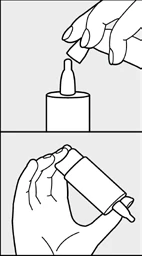
Hold the bottle with the dropper tip pointing downwards, place your thumb on the top
of the bottle, and position your index and middle fingers on its base.
Warning! Before first use, press the base of the bottle several times until the first drop of solution appears.
Edition 07/2024
URSAPHARM * Timo-COMOD 0.5 %, eye drops * MA-No. 9316 *
Application for variation
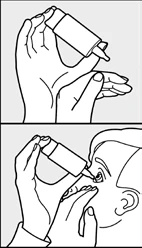
Support the hand holding the bottle against the other hand as shown in the illustration.
Tilt your head slightly backwards, use your free hand to gently pull down the lower eyelid, then quickly and firmly press the base of the bottle.
This activates the mechanism to deliver one single drop of solution.
Thanks to the COMOD system, the drop size and delivery speed will be consistent every time, regardless of the pressure applied to the base of the bottle.
After instillation, close the eyelid slowly to allow even distribution of the solution over the eye surface.
If necessary, repeat the above steps for the other eye.
After instilling Timo-COMOD 0.5%, press with your finger on the inner corner of the eye (as shown in the adjacent figure) and hold for 2 minutes.
This helps prevent timolol from entering the systemic circulation.
After each use, securely replace the cap, ensuring the dropper tip remains dry.
Avoid contact between the dropper tip and the eye or facial skin.
Timo-COMOD 0.5% eye drops do not contain preservatives. A special pump known as the COMOD system is used. Unlike conventional eye drop containers, pressure must be applied to the base of the bottle during instillation (as shown in the illustration).
If you feel the medicine's effect is too strong or too weak, consult your doctor.
Use in children and adolescents:
Dosing:
Before administering timolol, a thorough medical evaluation should be performed. The physician must carefully assess risks and benefits. If benefits outweigh risks, it is recommended to use eye drops with the lowest timolol concentration (0.1%) once daily. In children and adolescents, a 0.1% timolol concentration should generally be sufficient to control intraocular pressure. If intraocular pressure cannot be controlled with this dose, twice-daily administration at 12-hour intervals may be necessary.
Patients, especially newborns, should be closely observed for one or two hours after the first dose and carefully monitored for adverse effects until surgical treatment is performed.
Method of administration:
Only one drop of timolol-containing eye drops should be instilled at a time. After instillation, keep the eye closed as long as possible (e.g., 3–5 minutes) and press on the inner corner of the eye to minimize systemic absorption of the drops. Do not touch the dropper tip to the eye, eyelid, surrounding areas, or any other surface, as this may cause contamination of the dropper.
Edition 07/2024
URSAPHARM * Timo-COMOD 0.5 %, eye drops * MA-No. 9316 *
Application for variation
Treatment duration:
In children and adolescents, timolol is used for short-term treatment only.
Use of more than the recommended dose of Timo-COMOD 0.5%
Immediately rinse the eyes with water and seek medical advice from a doctor or pharmacist without delay.
Overdose may lead to severe hypotension, heart failure, cardiogenic shock, and bradycardia, up to circulatory arrest.
Additionally, respiratory disorders, bronchospasm, vomiting, disturbances in consciousness, and generalized seizures may occur.
The physician will administer general supportive measures, monitor vital functions, and, if necessary, apply life-supporting treatments in an intensive care setting.
Missing a dose of Timo-COMOD 0.5%
Do not use a double dose to make up for a missed dose.
Stopping treatment with Timo-COMOD 0.5%
Consult your doctor before discontinuing treatment.
If you have any further questions about the use of this medicine, consult your doctor or pharmacist.
4. Possible adverse effects
Like all medicines, this medicine can cause adverse effects, although not everyone will experience them.
The patient can usually continue using this medicine unless the adverse effects are serious. In case of
doubt, consult a doctor or pharmacist. If the patient experiences allergic reactions, including rash,
swelling of the face, lips, tongue and/or throat, which may cause difficulty in breathing or swallowing,
or if other serious adverse effects occur, treatment with Timo-COMOD must be discontinued and
medical advice must be sought immediately from a doctor or the nearest hospital Emergency
Department.
The frequency of possible adverse effects listed below is defined using the following convention:
Very common (affects more than 1 in 10 patients)
Common (affects 1 to 10 in 100 patients)
Uncommon (affects 1 to 10 in 1,000 patients)
Rare (affects 1 to 10 in 10,000 patients)
Not known (frequency cannot be estimated from available data)
Like other medicines applied locally to the eye, timolol may be absorbed into the bloodstream. This may
lead to adverse effects similar to those observed with systemically administered beta-adrenergic blocking
agents. The frequency of adverse effects is lower with topical ocular administration compared to systemic
administration. Adverse effects include reactions observed with ophthalmic beta-blockers:
Frequency not known:
- systemic lupus erythematosus, generalized allergic reaction, including angioedema (swelling of the face, lips, throat, limbs, mucous membranes), urticaria, localized and generalized rash, pruritus, anaphylactic reaction,
- hypoglycaemia (low blood sugar levels), hyperglycaemia (high blood sugar levels),
- insomnia, depression, nightmares, memory loss,
- syncope, stroke, cerebral ischaemia, worsening of subjective and objective symptoms of myasthenia (a form of muscle weakness), dizziness, somnolence, paraesthesia (disturbances in skin sensation), headache, dizziness, fatigue, difficulty concentrating, increased dream vividness,
Edition 07/2024
URSAPHARM * Timo-COMOD 0.5 %, eye drops * MA-No. 9316 *
Application for variation
- subjective and objective symptoms of eye irritation (e.g. burning, stinging, itching, pricking, lacrimation, redness), blepharitis, keratitis (inflammation of the front, outer surface of the eyeball), blurred vision and choroidal detachment (separation of the vascular layer located beneath the retina, containing blood vessels) following filtration surgery, decreased corneal sensitivity, dry eyes, corneal erosion (damage to the front surface of the eyeball), ptosis (drooping eyelid), diplopia (double vision), conjunctivitis, refractive changes (blurred vision),
- bradycardia (slowed heart rate), chest pain, palpitations, heart block, oedema, cardiac arrhythmias, congestive heart failure (heart disease characterized by shortness of breath and swelling of feet and legs due to fluid retention), cardiac arrest, atrioventricular block (second and third degree), sinoatrial block, worsening of angina pectoris,
- hypotension (low blood pressure), Raynaud's phenomenon (arterial constriction in the hands leading to ischaemia), cold hands and feet, pulmonary oedema; worsening of arterial insufficiency, vasodilation, intermittent claudication, cerebrovascular episodes, cerebral ischaemia,
- bronchospasm (particularly in patients with pre-existing conditions associated with bronchospasm), dyspnoea, cough, respiratory failure, respiratory sounds,
- taste disturbances, nausea, dyspepsia, diarrhoea, dry mouth, abdominal pain, vomiting,
- alopecia, psoriasiform rash (skin rash with white-silvery appearance) or exacerbation of psoriasis, skin rash, pruritus, sweating, desquamative dermatitis,
- muscle pain, joint pain,
- sexual dysfunction, decreased libido, Peyronie's disease (plastic induration of the penis), impotence,
- difficulty in urination,
- weakness, feeling of fatigue, fainting, headache, chest pain, limb pain, decreased exercise tolerance,
- thrombocytopenic purpura (bleeding disorders due to low platelet count),
- hallucination.
Notes:
As with any glaucoma treatment, intraocular pressure and the cornea should be monitored regularly.
During treatment with timolol eye drops, symptoms of low blood sugar may worsen.
After discontinuation of treatment, effects may persist for several days. If treatment with Timo-COMOD
0.5% has been stopped after long-term use, the pressure-lowering effect may persist for another 2–4
weeks. When beta-adrenergic blocking agents are administered to one eye, the pressure-lowering effect
may also affect the untreated eye. Timo-COMOD 0.5% is not suitable for use in patients with nocturnal
rise in intraocular pressure.
Very rarely, corneal calcification may occur in patients with significantly damaged corneas due to the
use of eye drops containing phosphates.
Reporting of adverse effects
If any adverse effects occur, including any not listed in this leaflet, inform a doctor, pharmacist, or nurse.
Adverse effects can be reported directly to the Department for Monitoring Adverse Drug Reactions of the
Office for Registration of Medicinal Products, Medical Devices and Biocidal Products:
Al. Jerozolimskie 181C, 02-222 Warsaw, tel.: 22 49-21-301, fax: 22 49-21-309, website:
https://smz.ezdrowie.gov.pl .
Adverse effects can also be reported to the marketing authorization holder.
Reporting adverse effects helps to provide more information on the safety of the medicine.
Edition 07/2024
URSAPHARM * Timo-COMOD 0.5 %, eye drops * MA-No. 9316 *
Application for variation
5. How to store Timo-COMOD 0.5 %
Keep the medicine out of the sight and reach of children.
Do not use this medicine after the expiry date stated on the label. The expiry date refers to the last day of the specified month.
Store below 25°C.
Shelf life after first opening the bottle: 12 weeks.
Medicines must not be disposed of via wastewater or household waste. Ask your pharmacist how to dispose of medicines no longer required. Such measures help protect the environment.
6. Contents of the pack and other information
What Timo-COMOD 0.5% contains
The active substance is timolol.
1 ml of ophthalmic solution contains 5.0 mg of timolol (as timolol maleate 6.84 mg).
Other components: disodium dihydrate phosphate, disodium phosphate dodecahydrate, water for
injections.
What Timo-COMOD 0.5% looks like and contents of the pack
Timo-COMOD 0.5% is a clear, colourless ophthalmic solution.
The cardboard box contains 1 bottle with a dispenser (COMOD-system) holding 10 ml of ophthalmic solution.
Marketing Authorisation Holder and Manufacturer
Marketing Authorisation Holder:
URSAPHARM Poland sp. z o.o., Wybrzeże Gdyńskie 27, 01-531 Warsaw, Poland
Telephone: 22 732 07 90
Fax: 22 732 07 99
e-mail: [email protected]
Manufacturer:
URSAPHARM Arzneimittel GmbH, Industriestraße, 66129 Saarbrücken, Germany
Edition 07/2024